
Bonsai species guides
Every species grows, waters, and prunes a little differently. Pick your tree below for a full care guide tailored to it.
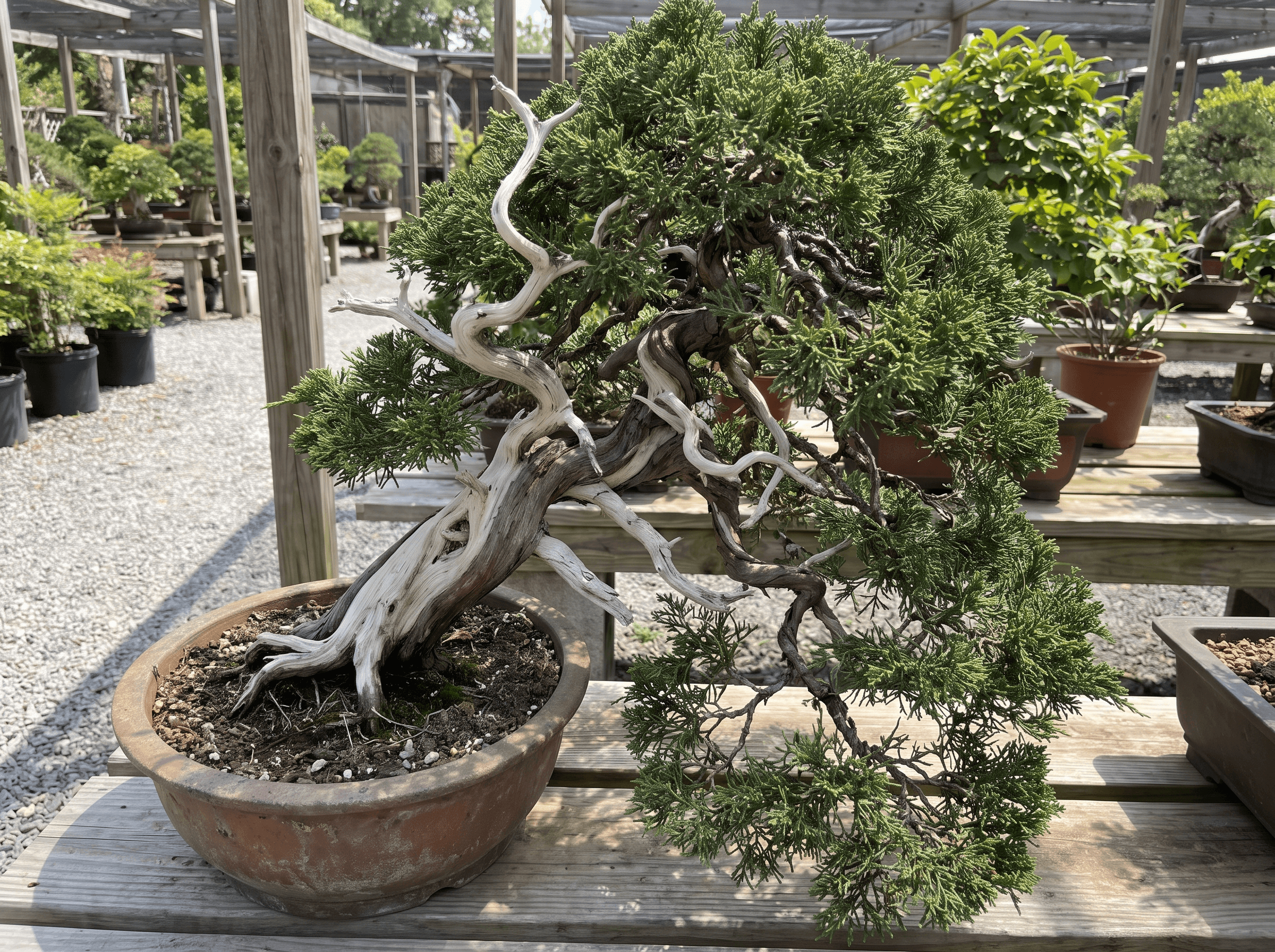
Juniper Bonsai
Juniperus spp. (most commonly J. chinensis and J. procumbens)
Juniper bonsai care is where most people start, and for good reason: it's the tree everyone pictures when they hear the word bonsai, tough, endlessly shapeable, and one of the few conifers that genuinely forgives a beginner's mistakes.
Read the guide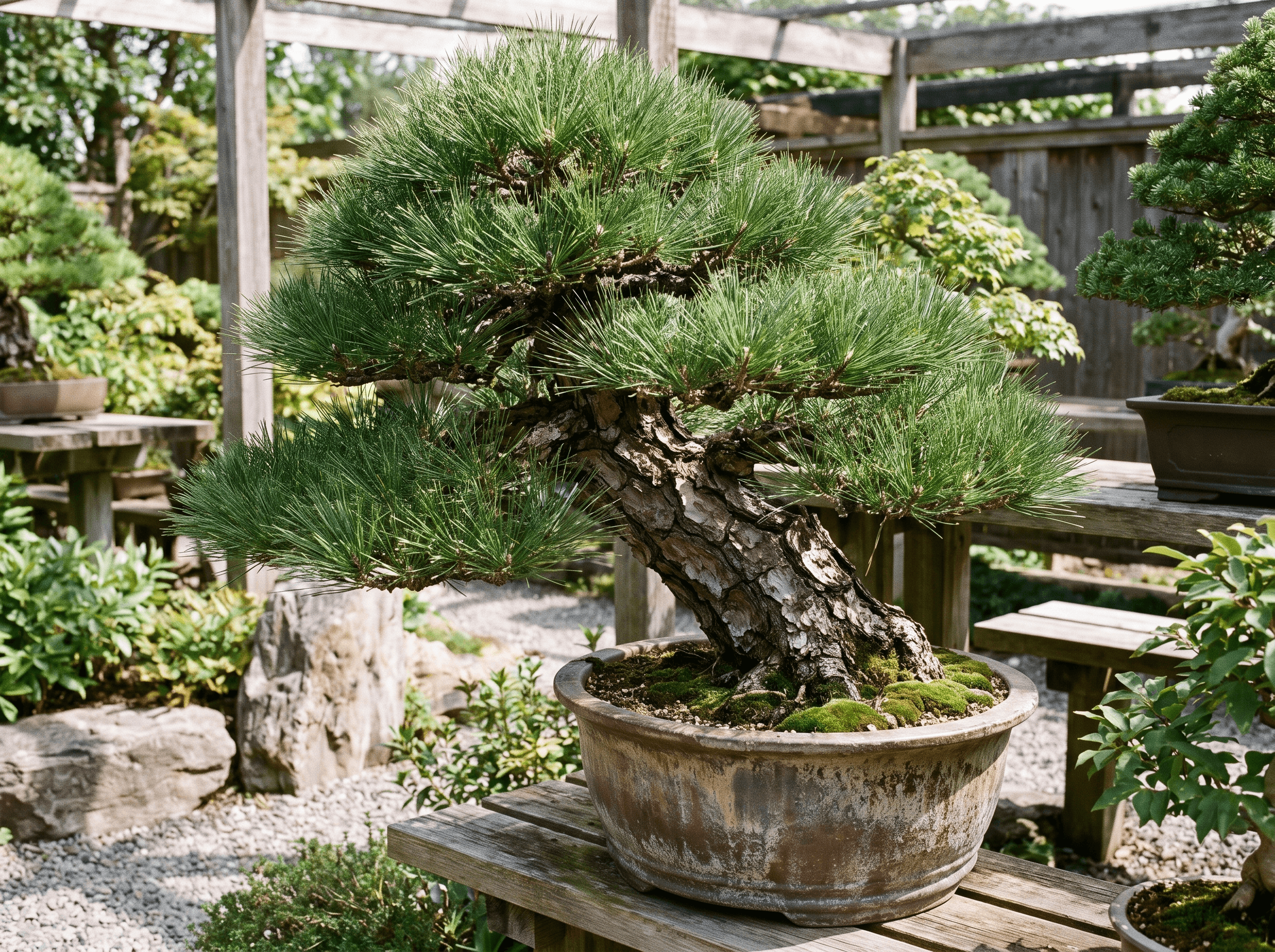
Pine Bonsai
Pinus thunbergii (Japanese black pine) and P. sylvestris (Scots pine)
Pine bonsai care is the technical test that separates people who've done a bit of bonsai from people who've done a lot of it, and the two-flush candle-pruning technique that makes a classical pine silhouette possible is worth learning properly rather than guessing at.
Read the guide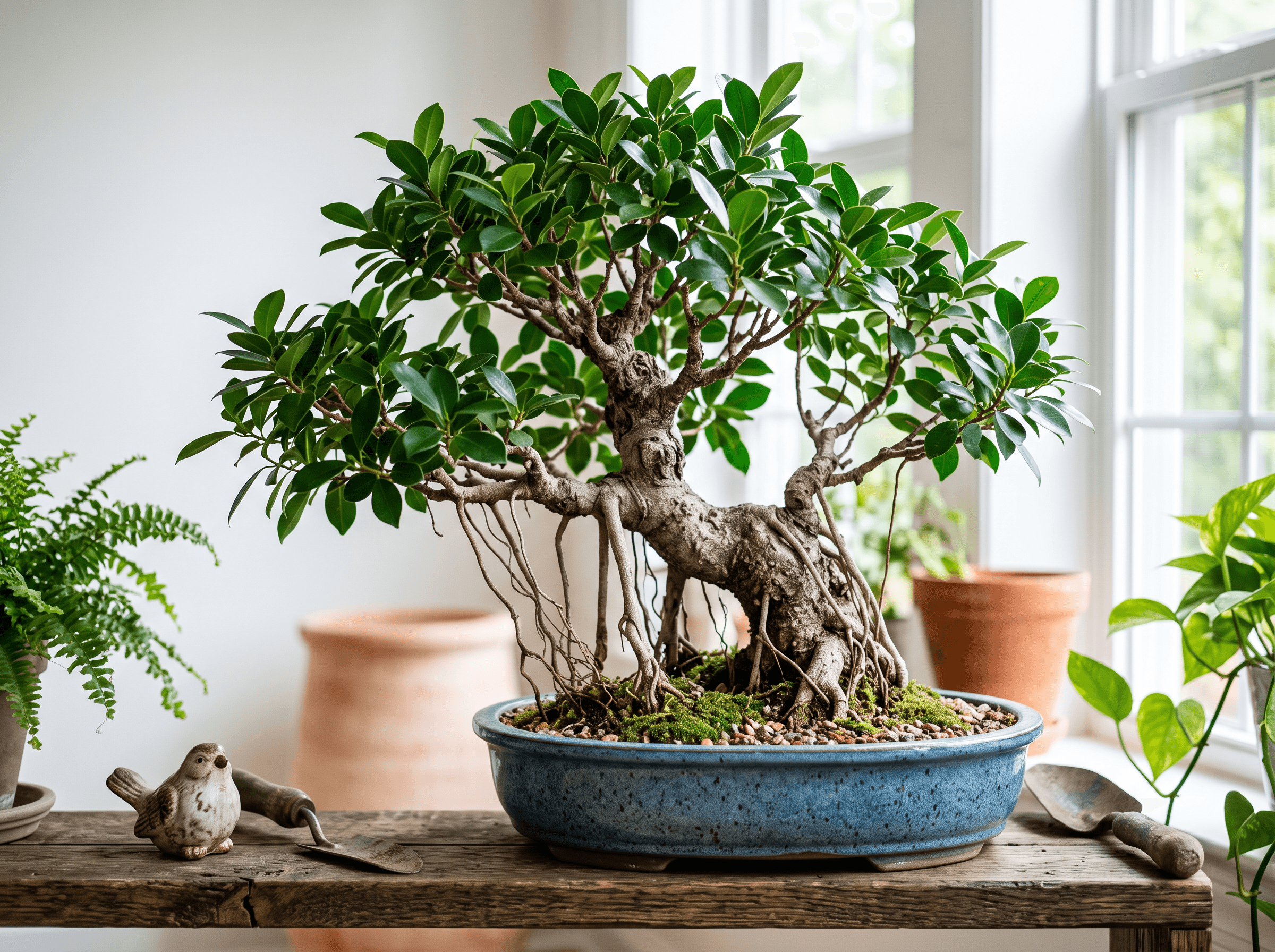
Ficus Bonsai
Ficus microcarpa, F. retusa, and F. benjamina
Ficus bonsai care is the easiest place to start if you want a tree that can actually live on a windowsill and survive the mistakes every beginner makes, and after twenty years of watching people kill trees they weren't equipped for, I still point almost everyone here first.
Read the guide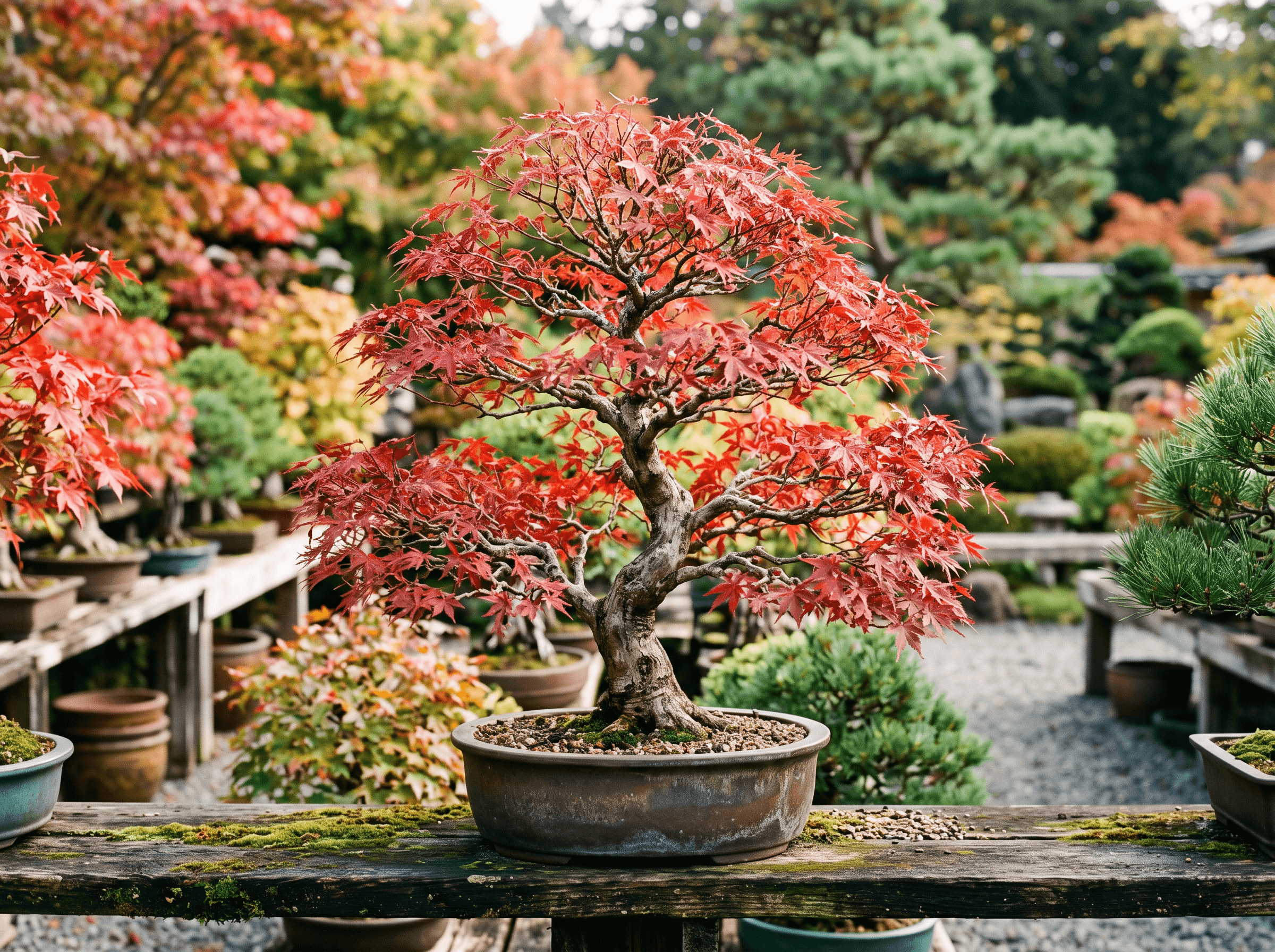
Japanese Maple Bonsai
Acer palmatum
Japanese maple bonsai care rewards patience with the finest ramification and the best autumn colour of any species I grow, but that thin, delicate bark is genuinely unforgiving of strong afternoon sun, and getting placement wrong is the single most common way people ruin one.
Read the guide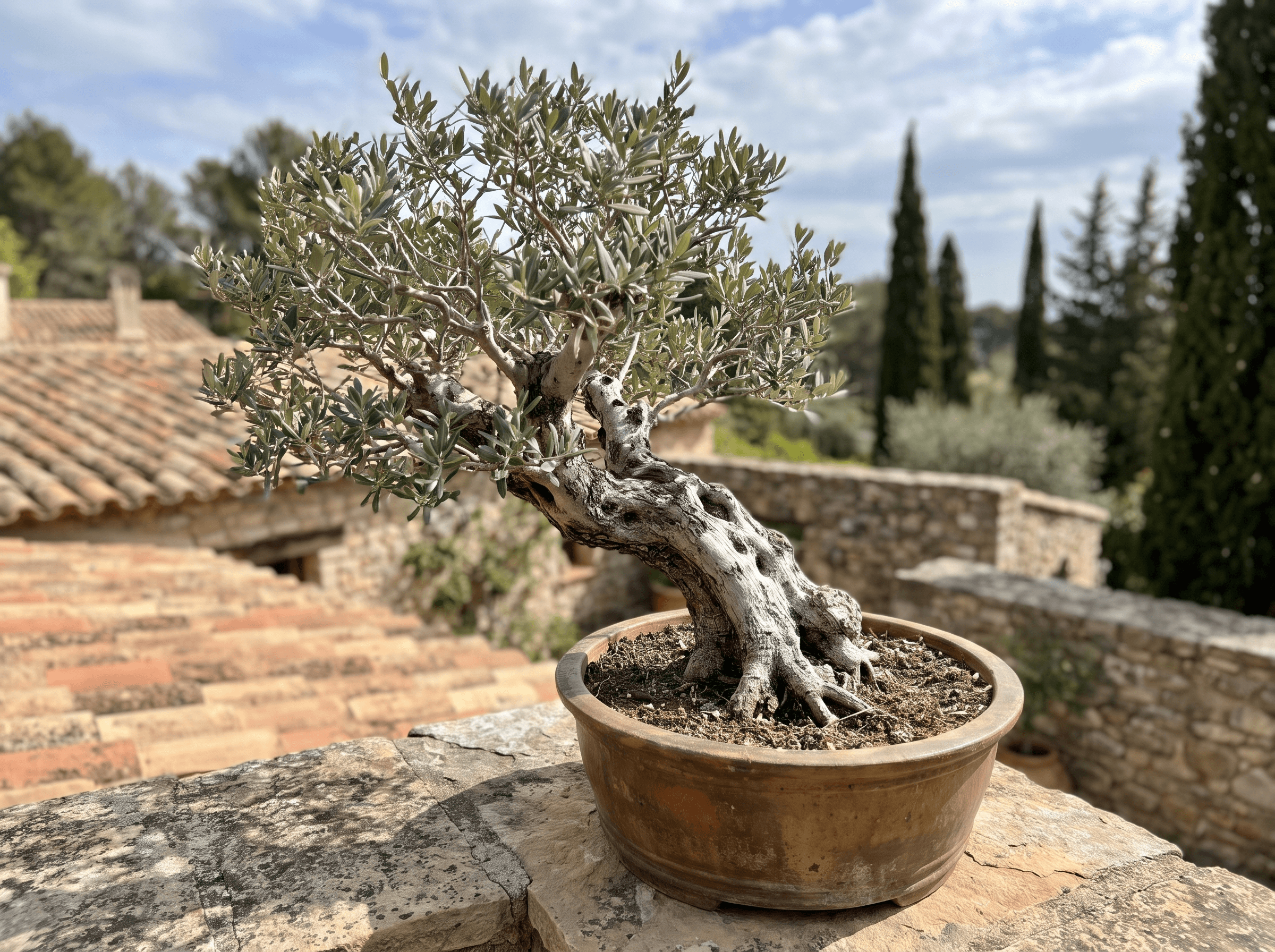
Olive Bonsai
Olea europaea
Olive bonsai care is about as Southern Italian as bonsai gets: tough, drought-hardy, and capable of looking a hundred years old on a trunk that's really only twenty, provided you don't drown it.
Read the guide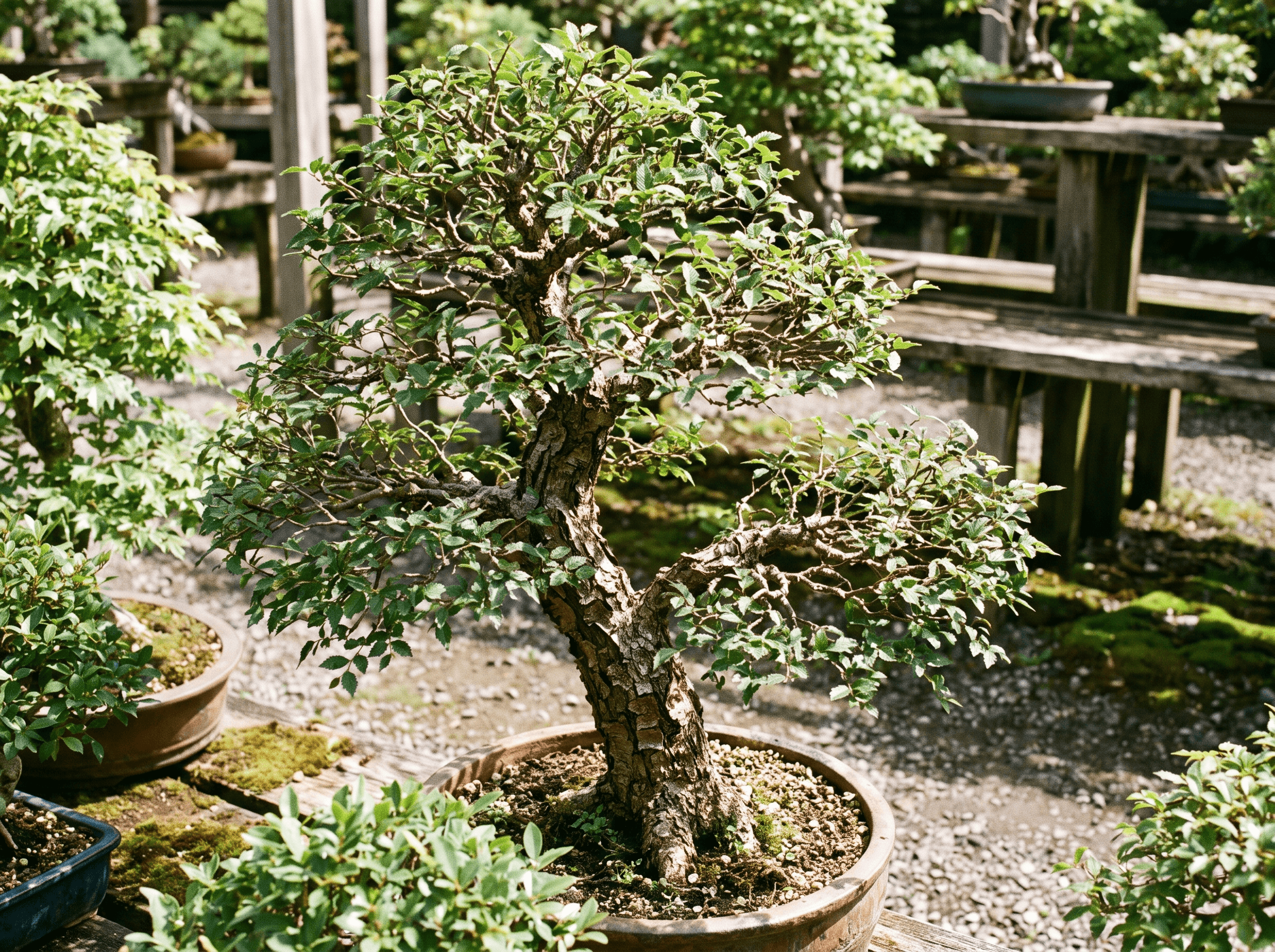
Chinese Elm Bonsai
Ulmus parvifolia
Chinese elm bonsai care makes it the tree I recommend most often as a second species, since it ramifies faster and forgives more mistakes than almost anything else you'll grow, small leaves included.
Read the guide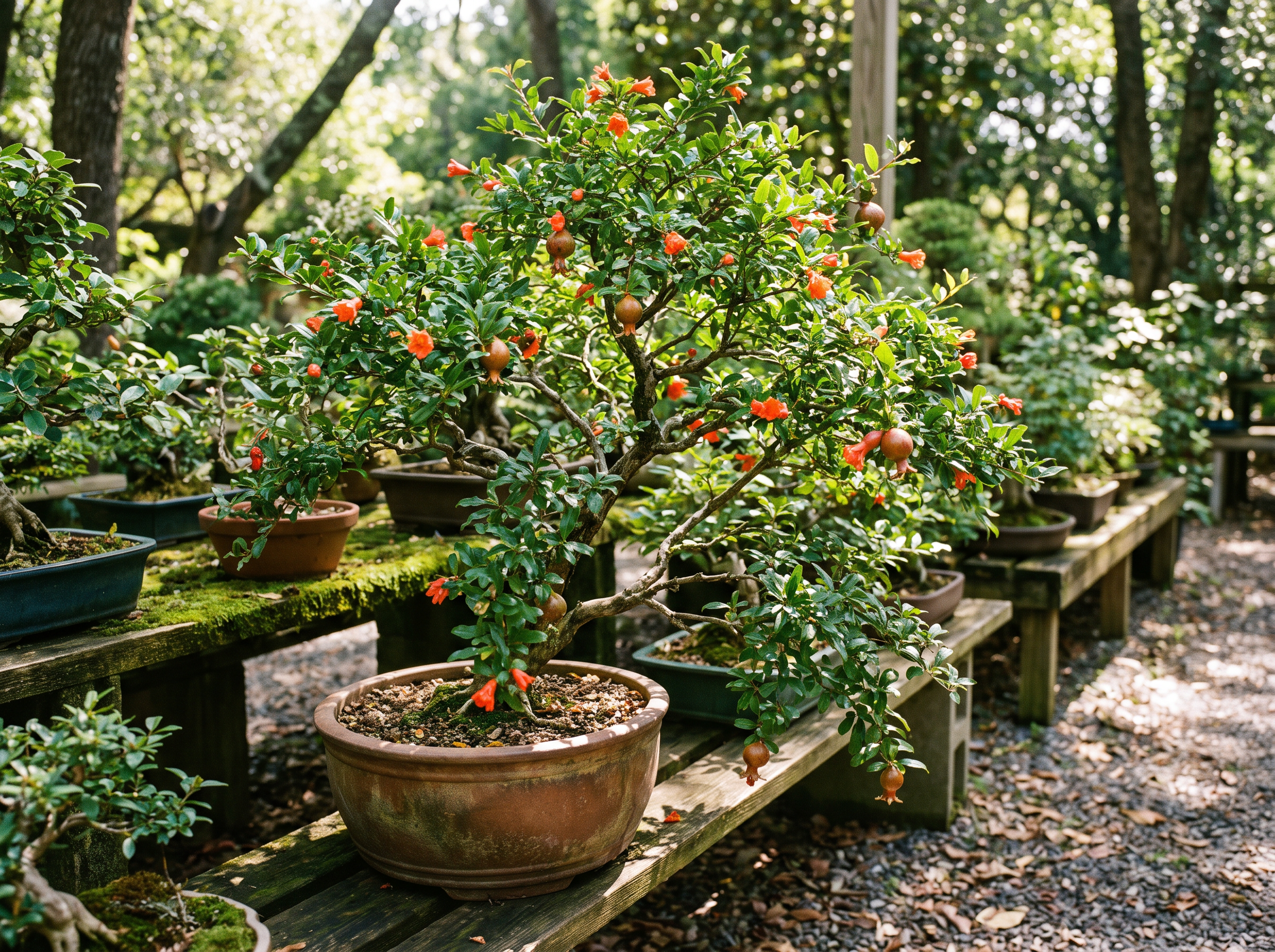
Pomegranate Bonsai
Punica granatum
Pomegranate bonsai care rewards generosity with sun: it's one of a handful of bonsai species that actually flowers and fruits properly in a small pot, orange-red blooms in summer and tiny ornamental fruit that follows.
Read the guide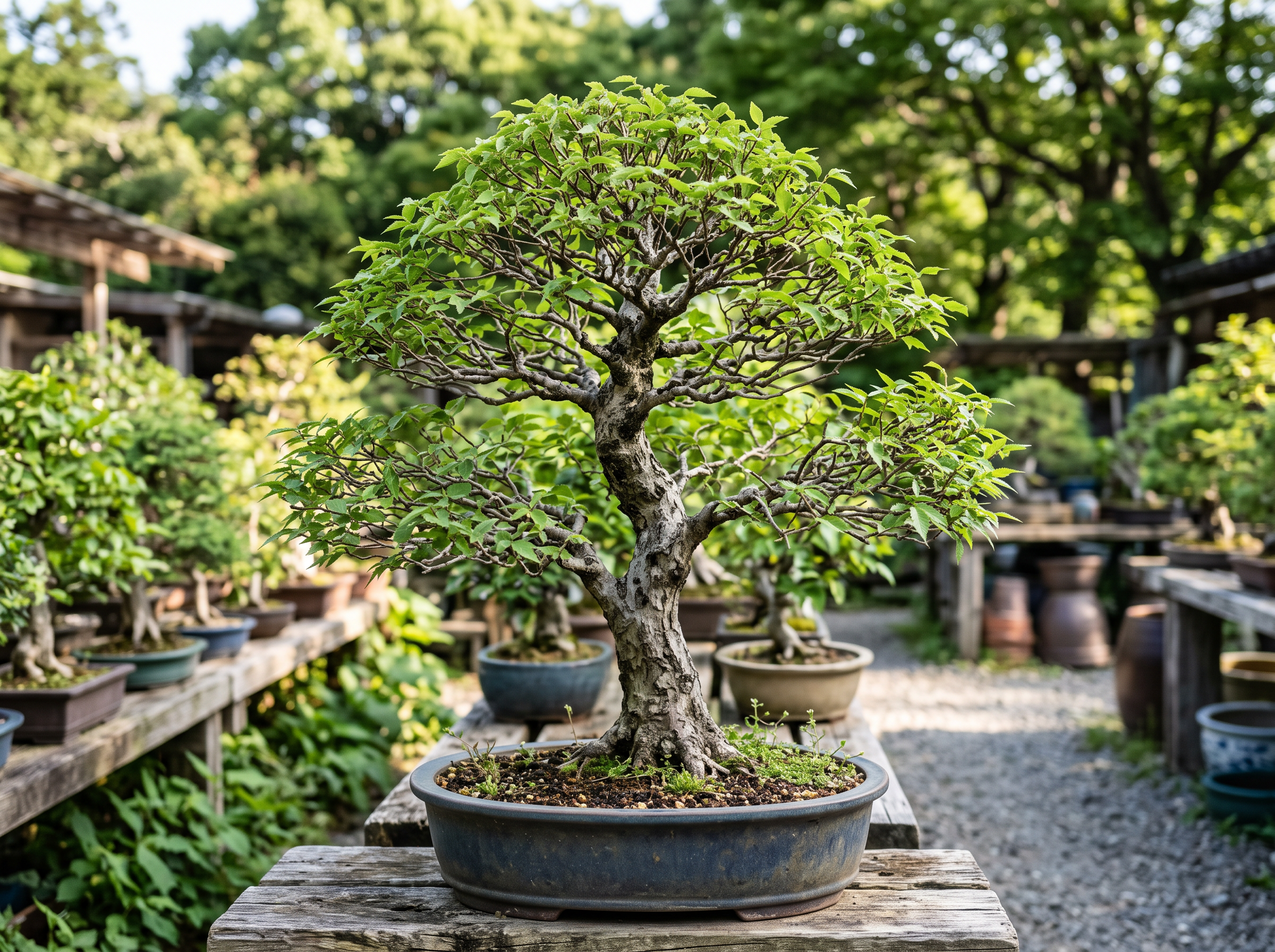
Zelkova Bonsai
Zelkova serrata (Japanese zelkova)
Zelkova bonsai care is mostly about persistence: it's the tree behind the classic broom-shaped silhouette you've probably seen in every beginner's guide, and building that fine, symmetrical canopy is more about consistency than any single difficult technique.
Read the guide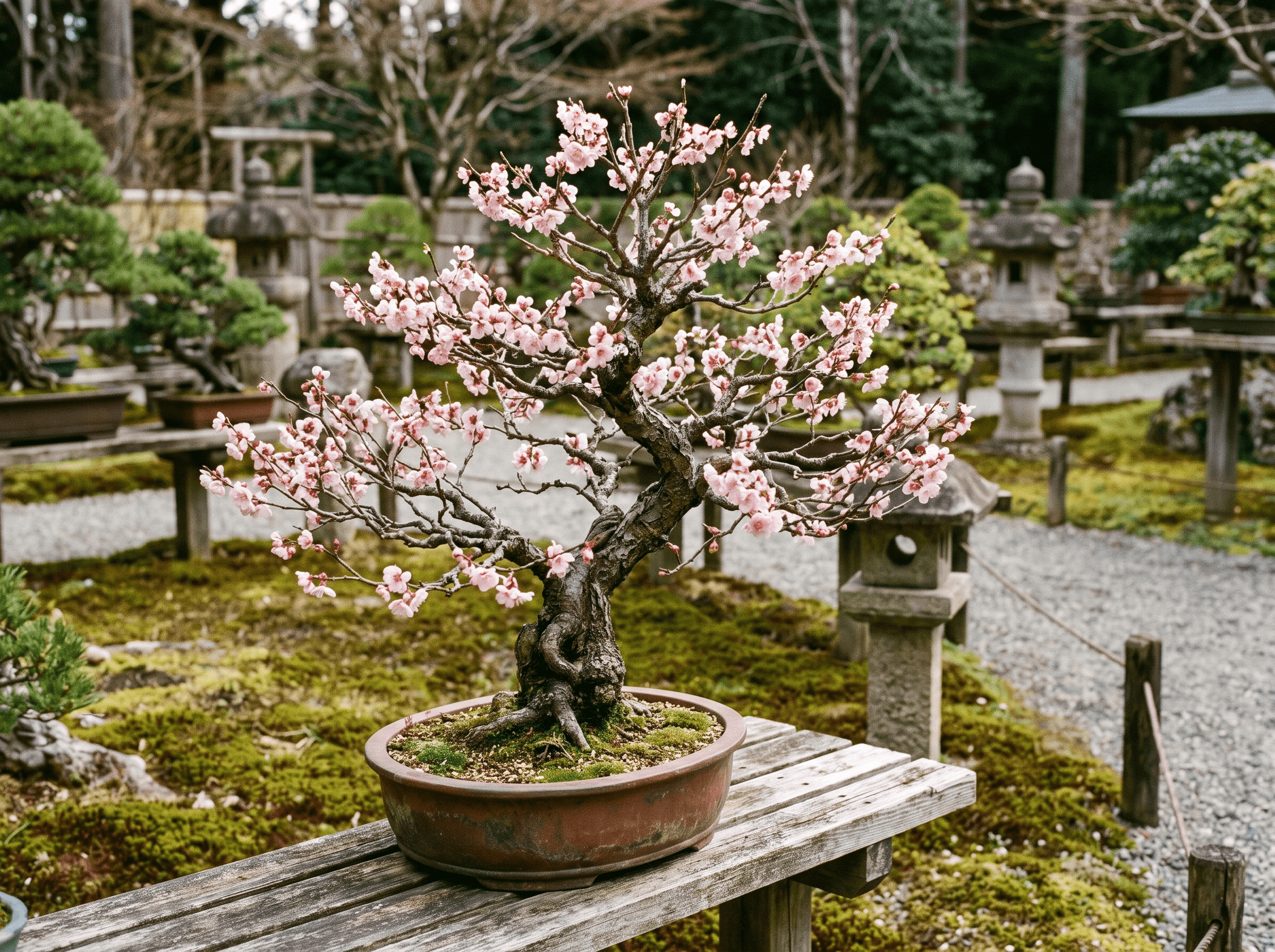
Prunus Bonsai Care: Flowering Apricot and Plum Bonsai
Prunus mume and P. cerasifera (flowering apricot and plum)
Prunus bonsai care comes down to one thing above everything else, a canopy of flowers opening in late winter before a single leaf appears, and getting the pruning timing wrong is the fastest way to trade next year's entire flower show for nothing.
Read the guide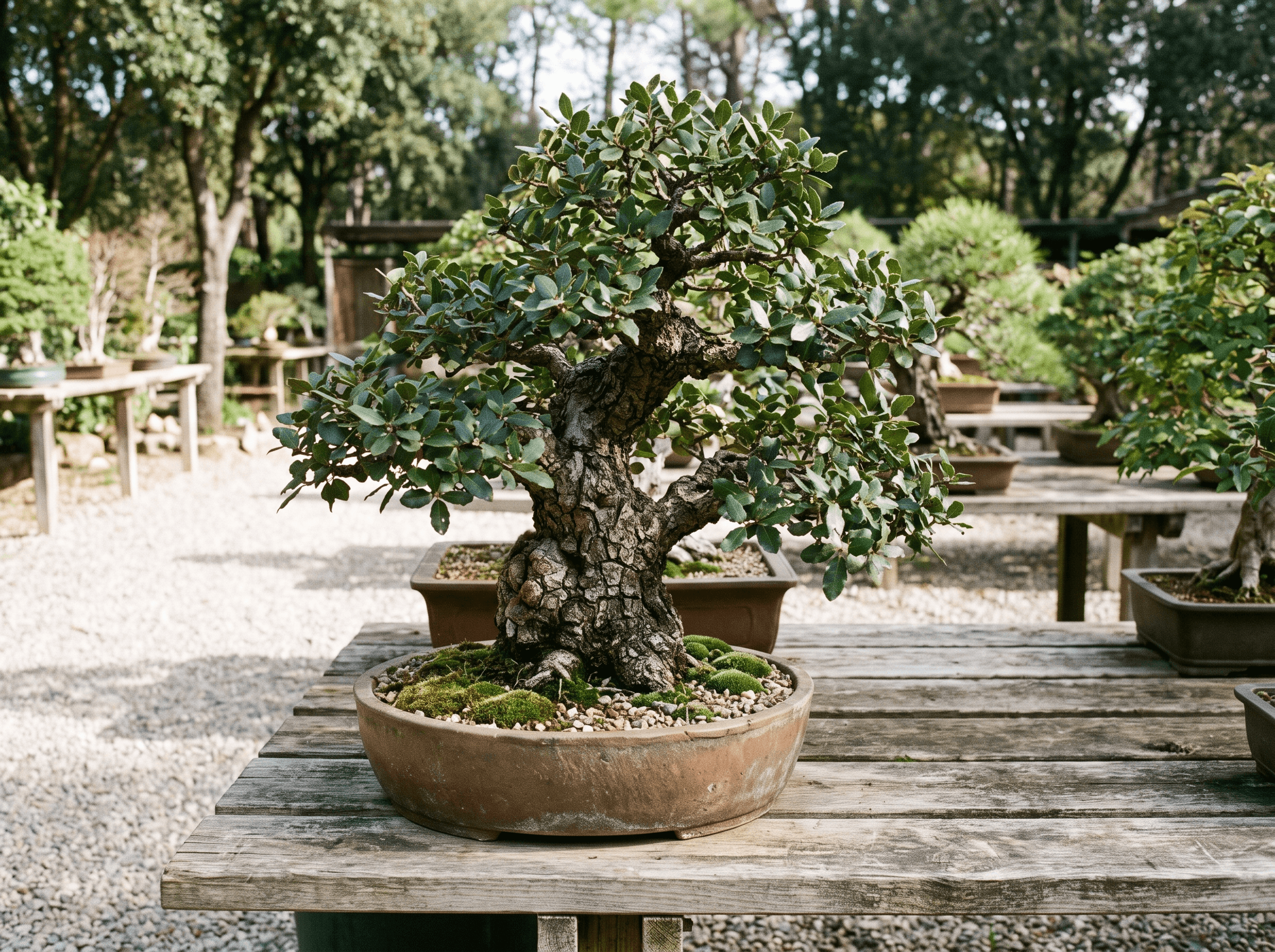
Oak Bonsai Care
Quercus spp. (commonly Q. ilex and Q. robur)
Oak is a bonsai for growers who don't mind waiting years for a branch to do what a maple does in one season, and here in the south the evergreen holm oak barely blinks at our summers.
Read the guide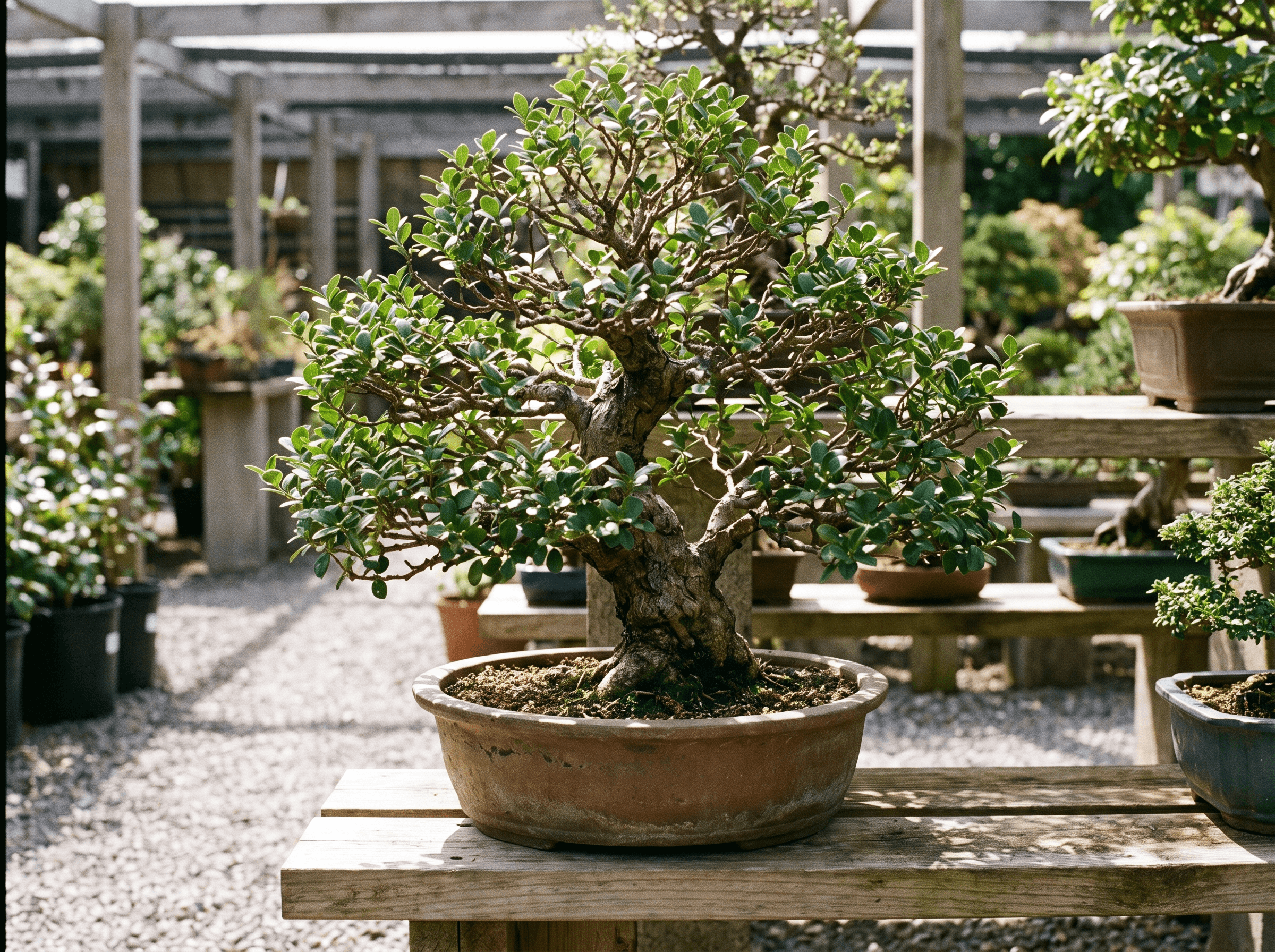
Lonicera Bonsai Care
Lonicera nitida (boxleaf honeysuckle)
Lonicera is the bonsai equivalent of a hedge that never stops trying to become a hedge again, which sounds like a complaint but is actually what makes it such forgiving material for anyone still learning to prune with confidence.
Read the guide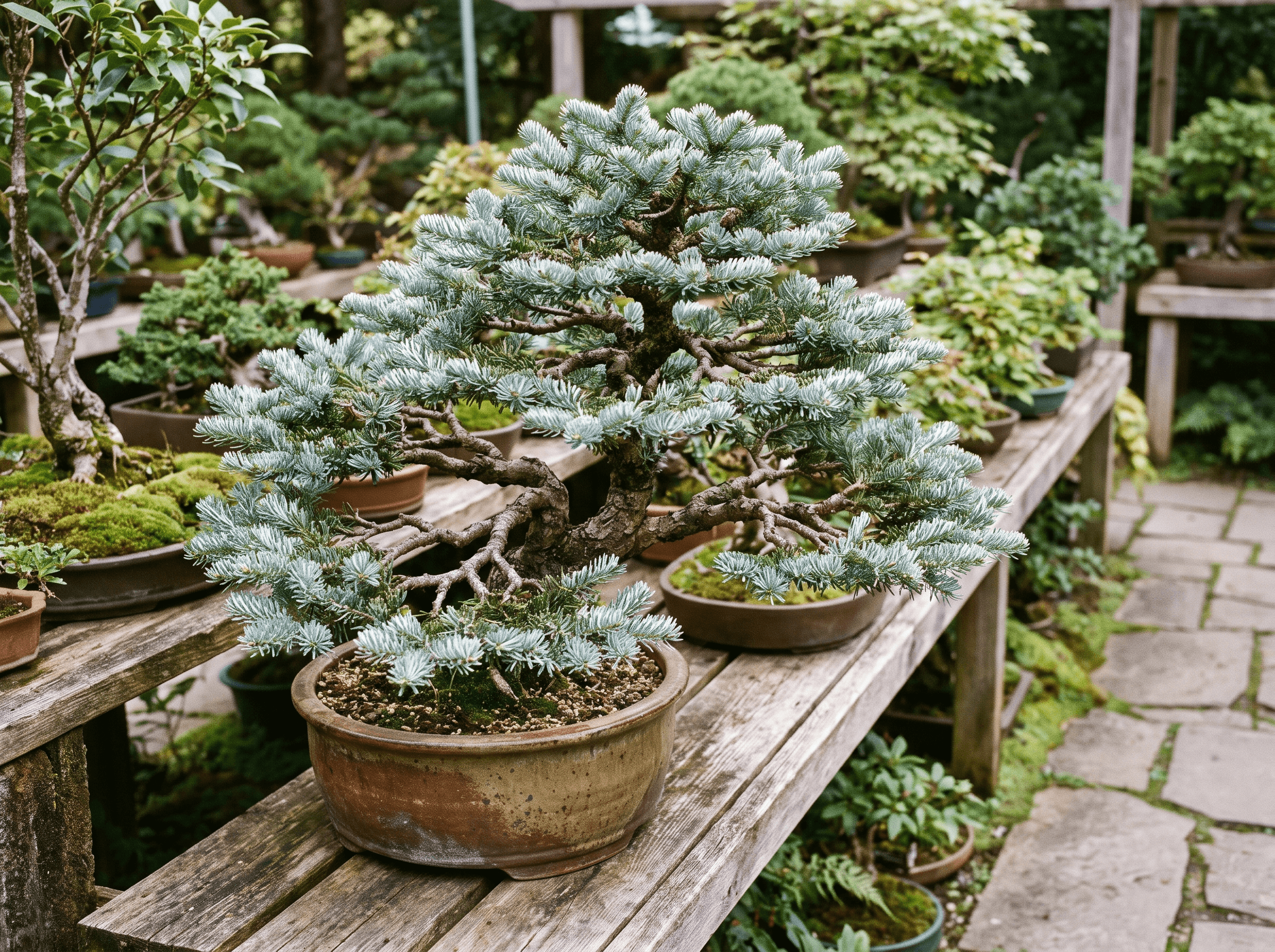
Fir Bonsai Care
Abies spp.
Fir is a conifer I respect more than I market, honestly, since it asks for a level of patience and root-care caution that most people don't expect from something that looks, at first glance, like just another pine.
Read the guide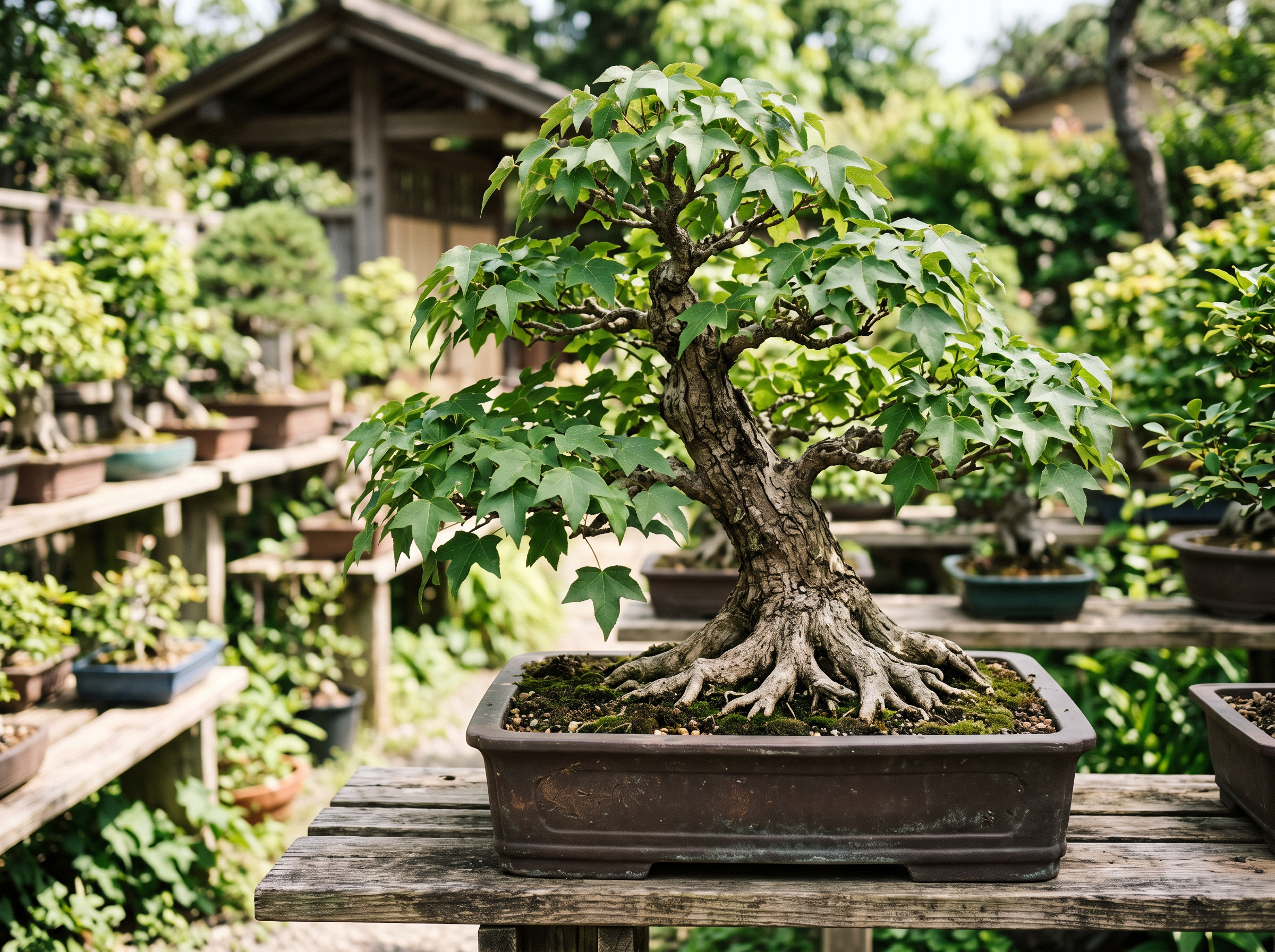
Trident Maple Bonsai Care
Acer buergerianum
Trident maple is the tree I hand to someone who's outgrown juniper and wants to see what deciduous bonsai can really do, since it forgives almost every mistake a Japanese maple would punish severely.
Read the guide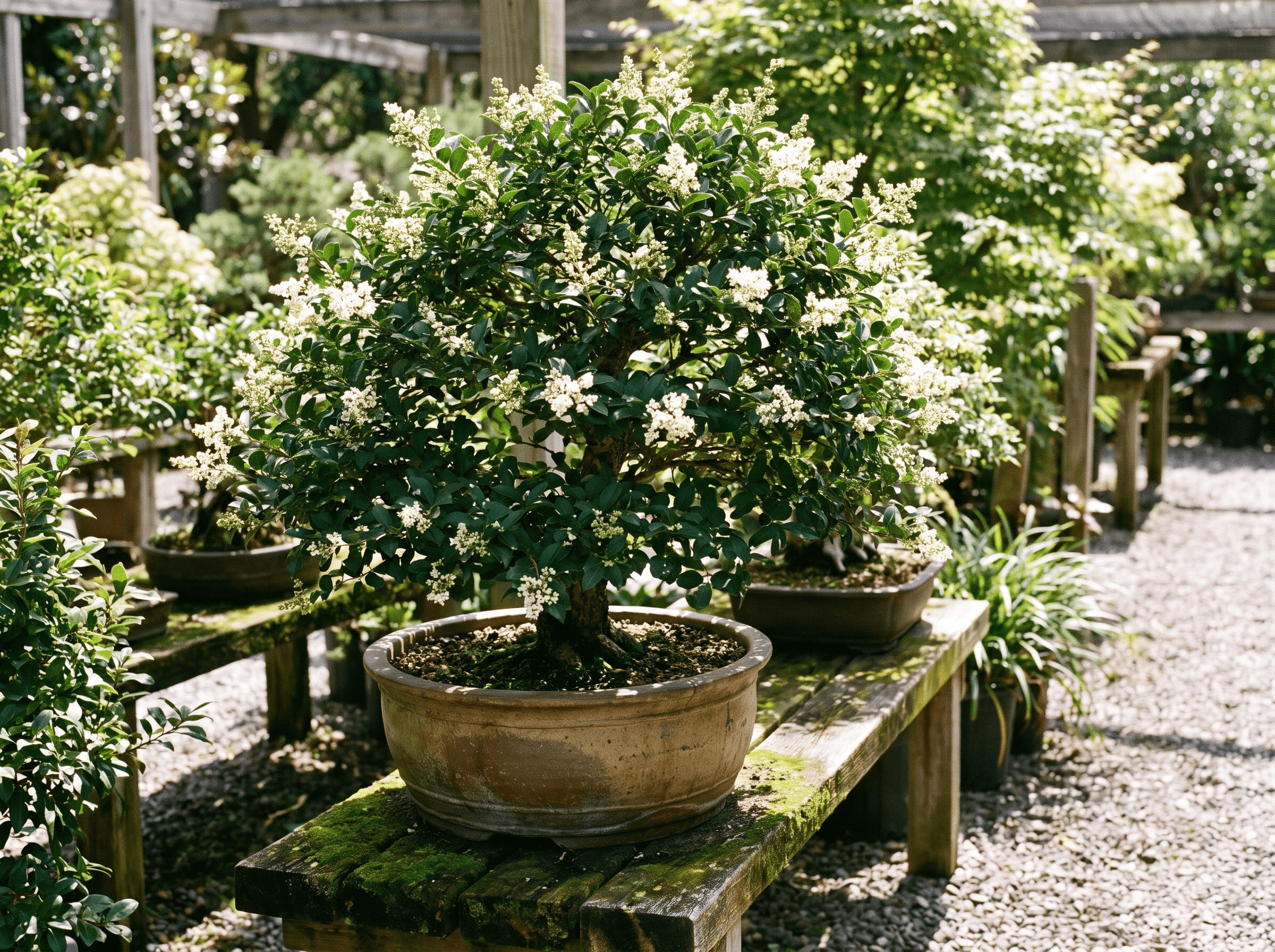
Chinese Privet Bonsai Care
Ligustrum sinense
Chinese privet is about as forgiving as bonsai material gets, the kind of shrub you can genuinely learn hard-pruning technique on without worrying you'll kill it.
Read the guide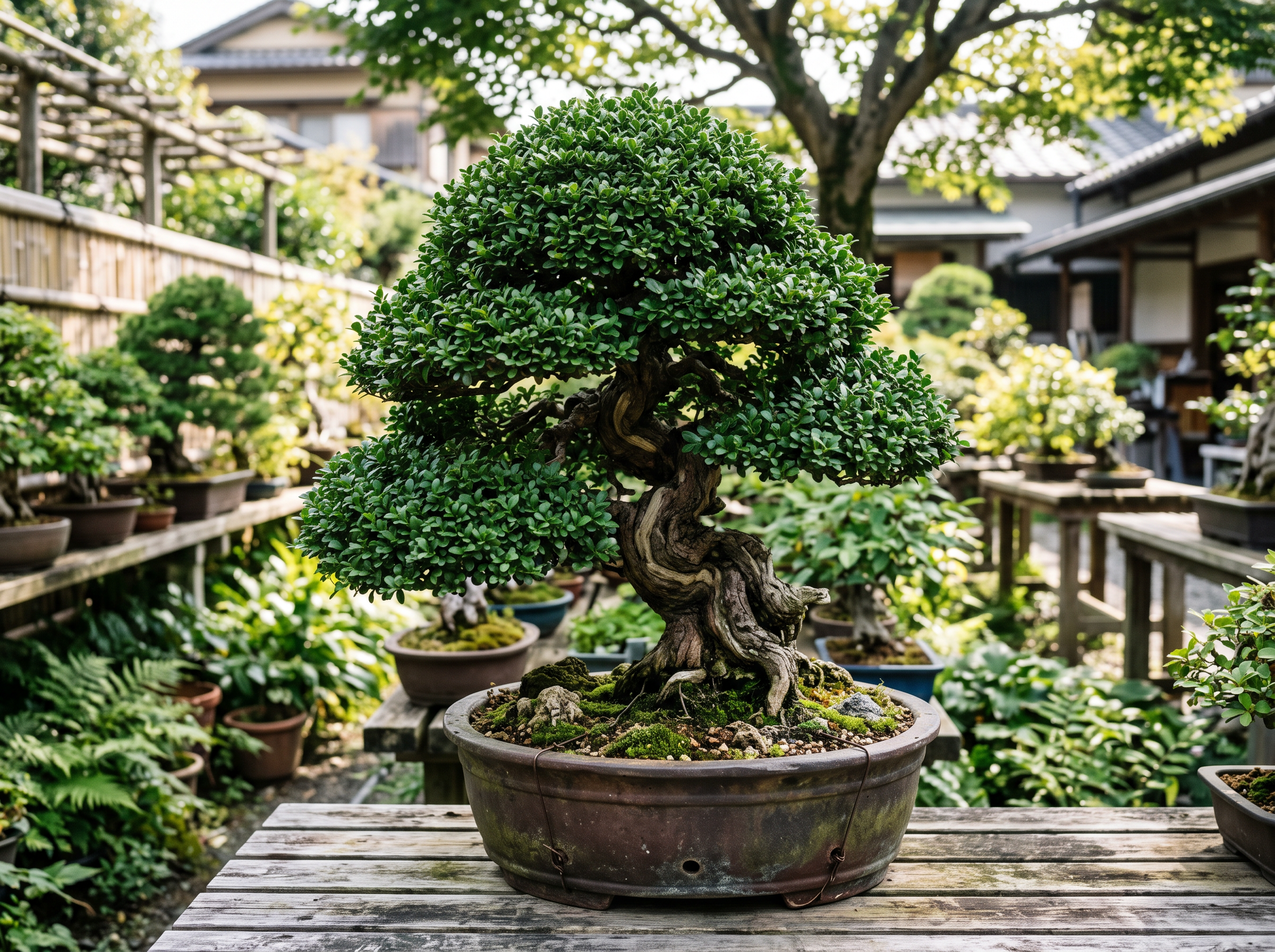
Boxwood Bonsai Care
Buxus sempervirens / B. harlandii
Boxwood tests patience in a different way than oak does, growing so slowly that a season's progress can be hard to see, but rewarding that patience with some of the densest, most refined foliage in bonsai.
Read the guide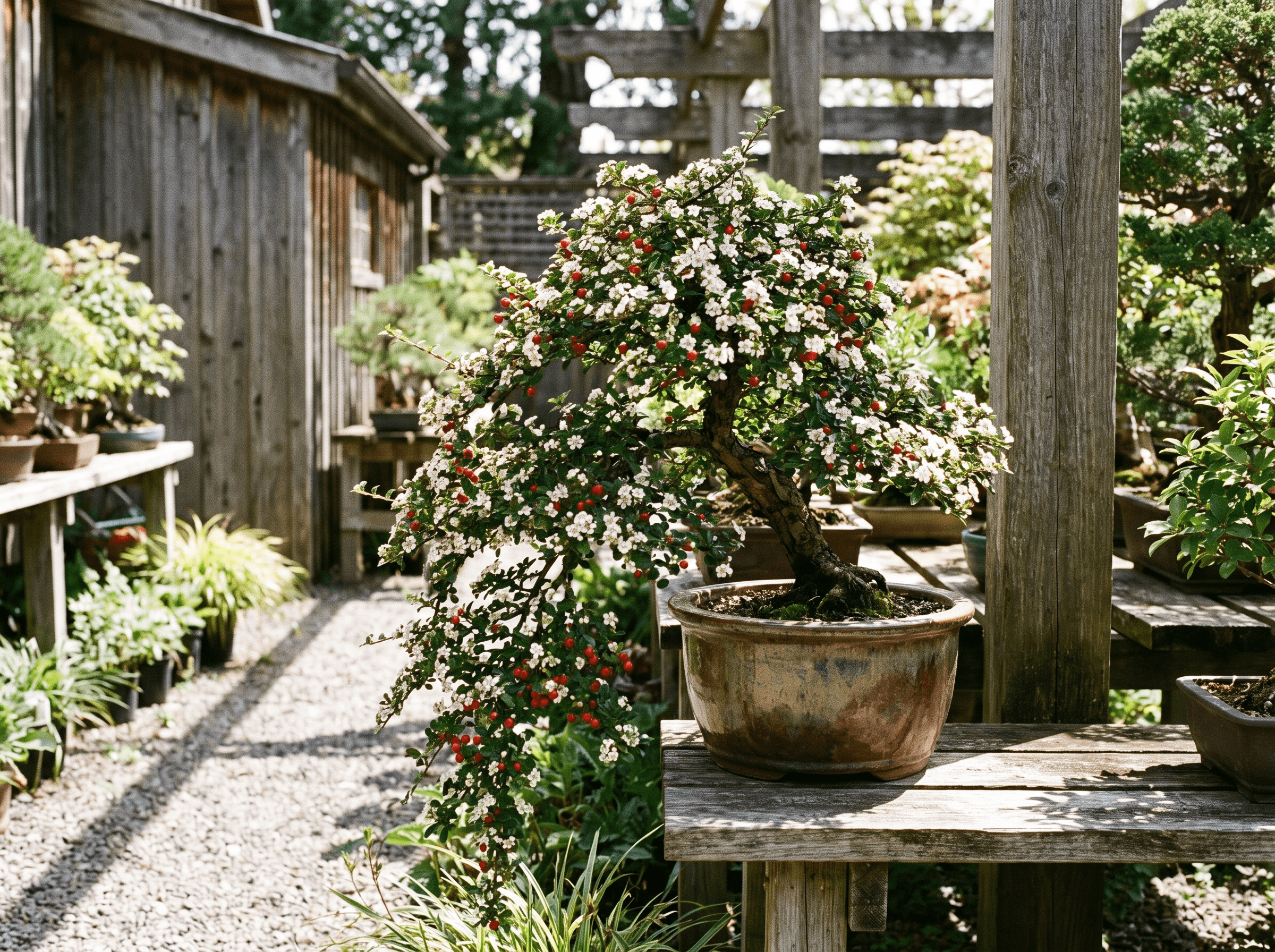
Cotoneaster Bonsai Care
Cotoneaster horizontalis / C. microphyllus
Cotoneaster is one of the few bonsai species that gives you flowers and berries without asking for the fussy, high-maintenance care that usually comes with flowering material, and its naturally cascading habit does a lot of the styling work for you.
Read the guide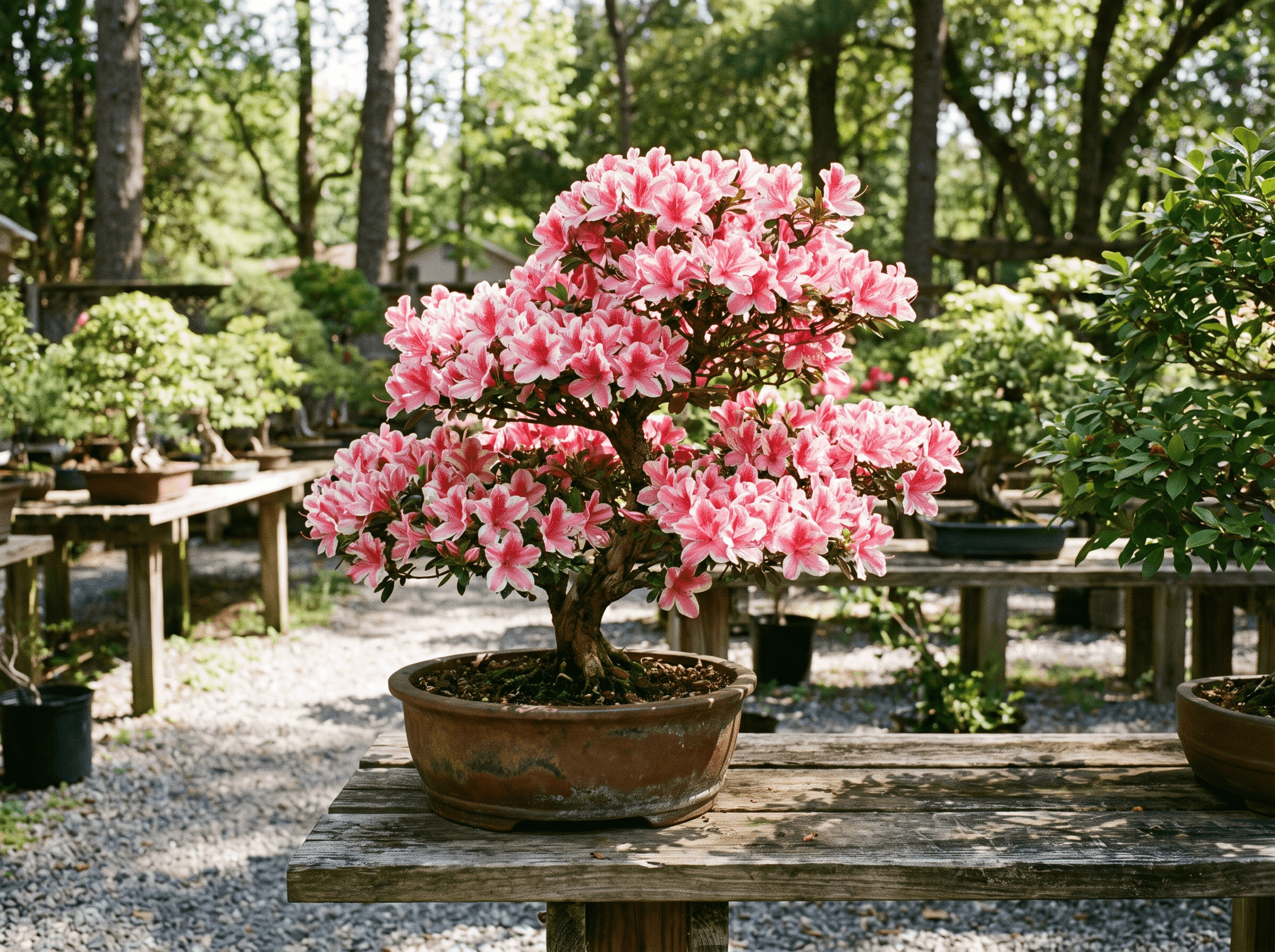
Satsuki Azalea Bonsai Care
Rhododendron indicum (Satsuki)
Satsuki azalea is grown for one thing above all else, an early-summer flower display so spectacular it justifies the acidic soil and careful watering the species demands the rest of the year.
Read the guide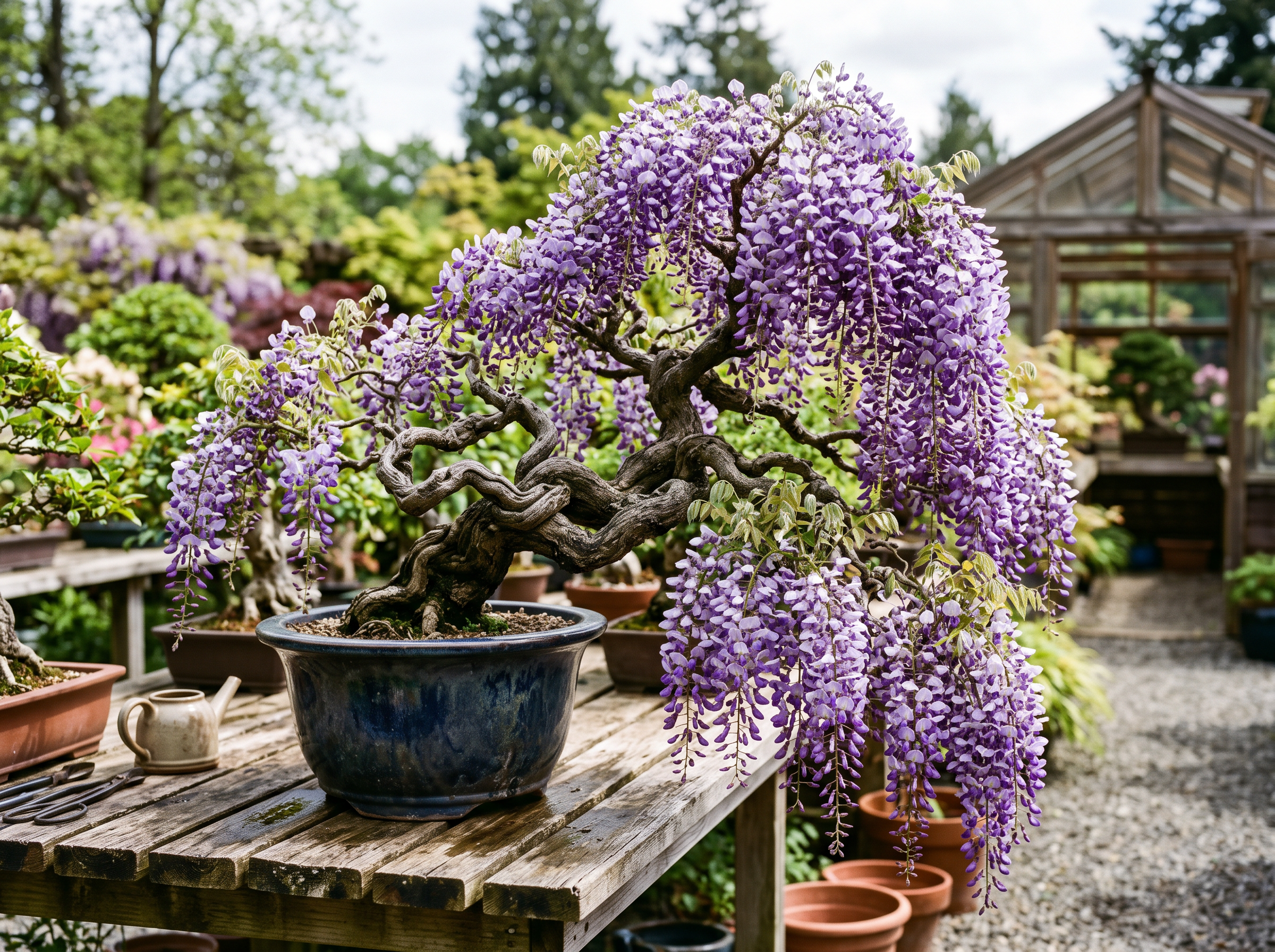
Wisteria Bonsai Care
Wisteria floribunda / Wisteria sinensis
Wisteria bonsai is grown for one thing above everything else: the hanging racemes of flowers that turn a plain woody vine into the most photographed tree in a collection for two or three weeks a year.
Read the guide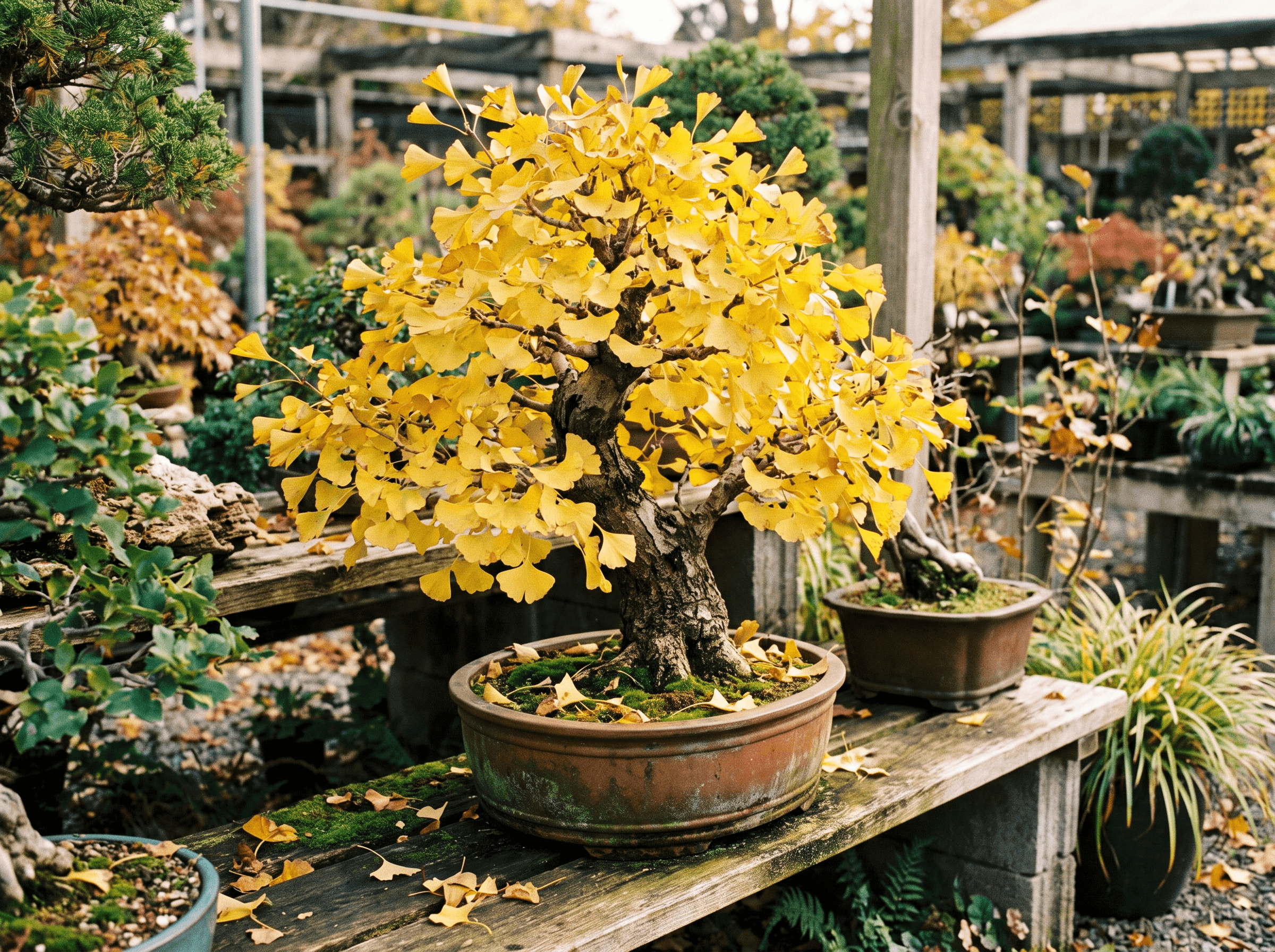
Ginkgo Bonsai Care
Ginkgo biloba
Ginkgo is one of the oldest tree species alive, part of an ancient lineage stretching back hundreds of millions of years, and as bonsai it rewards patience with a fan-leafed canopy that turns a single, uniform gold almost overnight in autumn.
Read the guide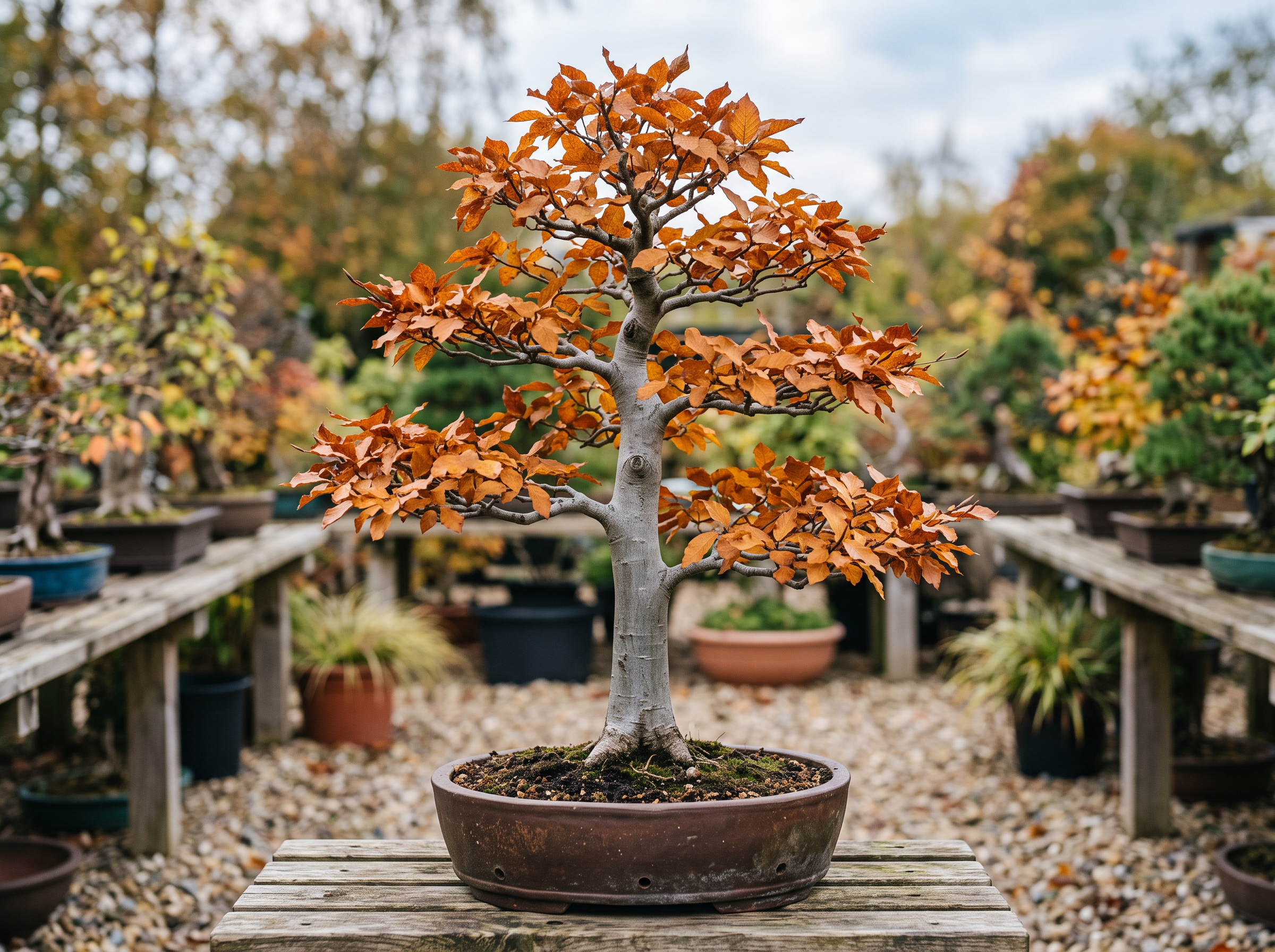
European Beech Bonsai Care
Fagus sylvatica
European beech is a classic choice for the formal upright bonsai silhouette, prized for its smooth grey bark and for its odd habit of holding dead, papery leaves through winter when it's grown a certain way.
Read the guide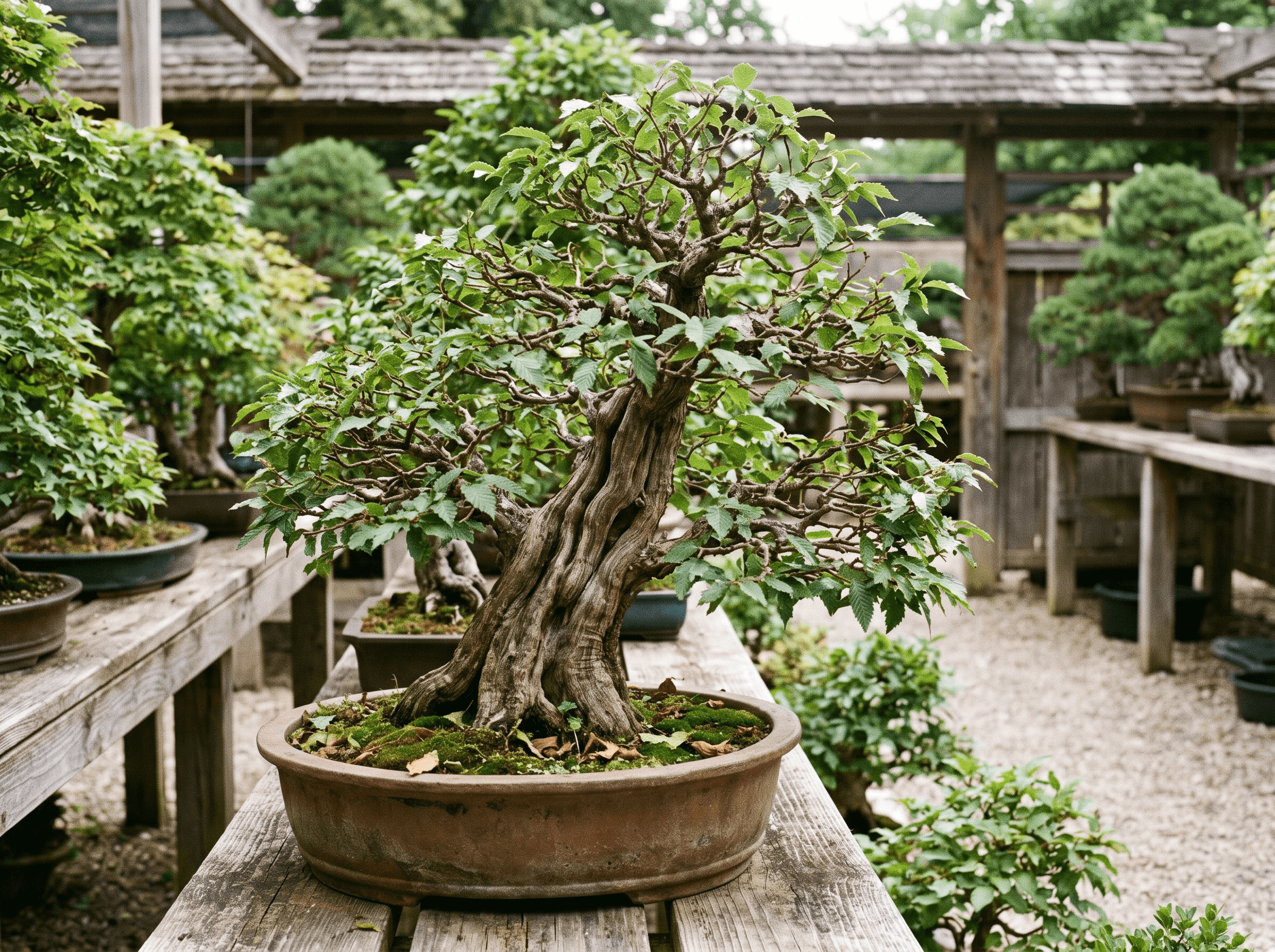
Hornbeam Bonsai Care
Carpinus betulus (European) / Carpinus turczaninowii (Korean)
Hornbeam does everything beech does as bonsai, straight trunks, fine ramification, good winter silhouette, but buds back more reliably after hard pruning and develops a distinctive fluted, muscular trunk that beech never quite matches.
Read the guide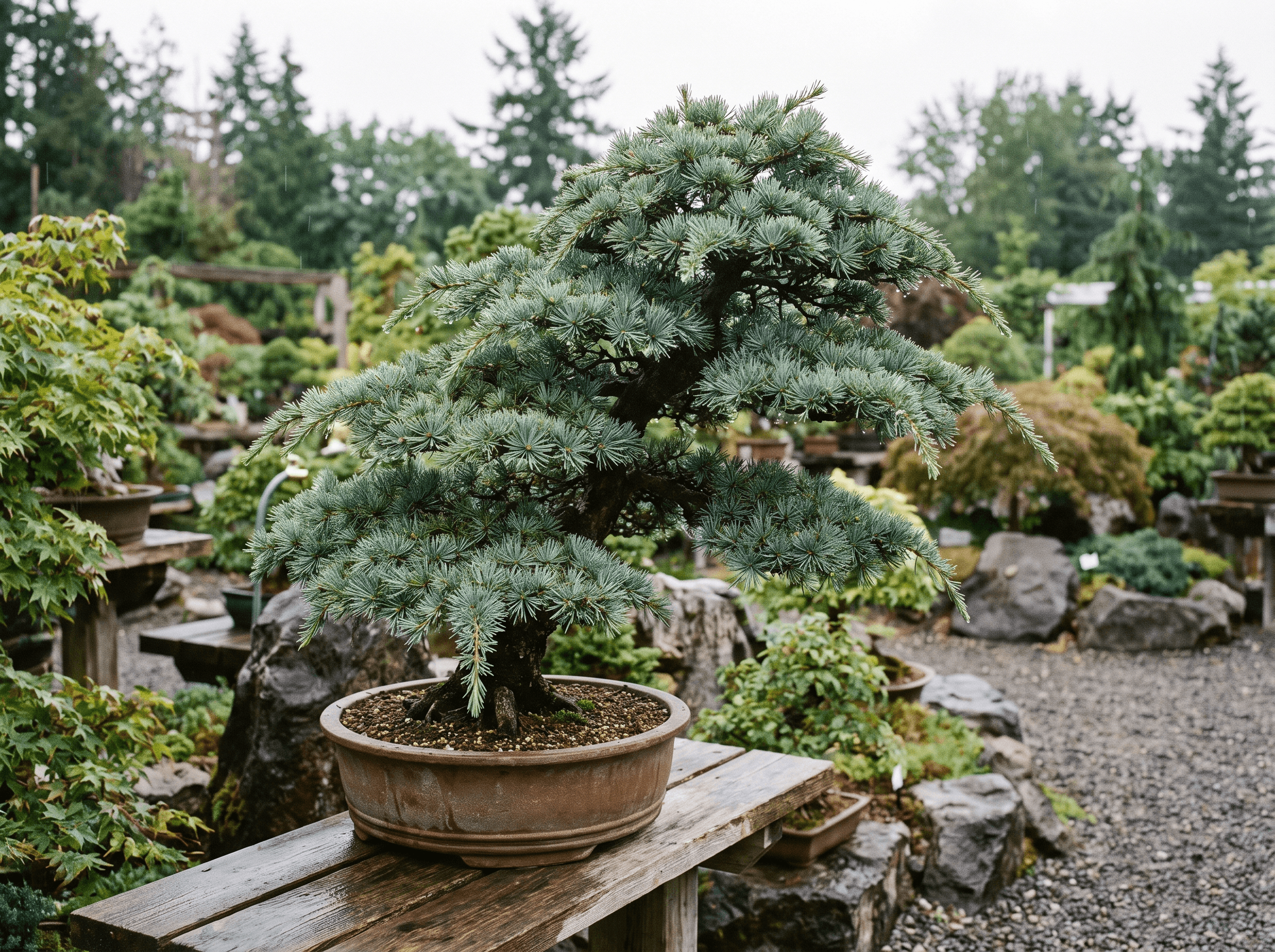
Cedar Bonsai Care
Cedrus atlantica / Cedrus libani
True cedar makes a bonsai unlike anything else in a conifer collection, with distinctive layered, drooping branch pads that read as instantly recognisable even to people who know nothing else about the species.
Read the guide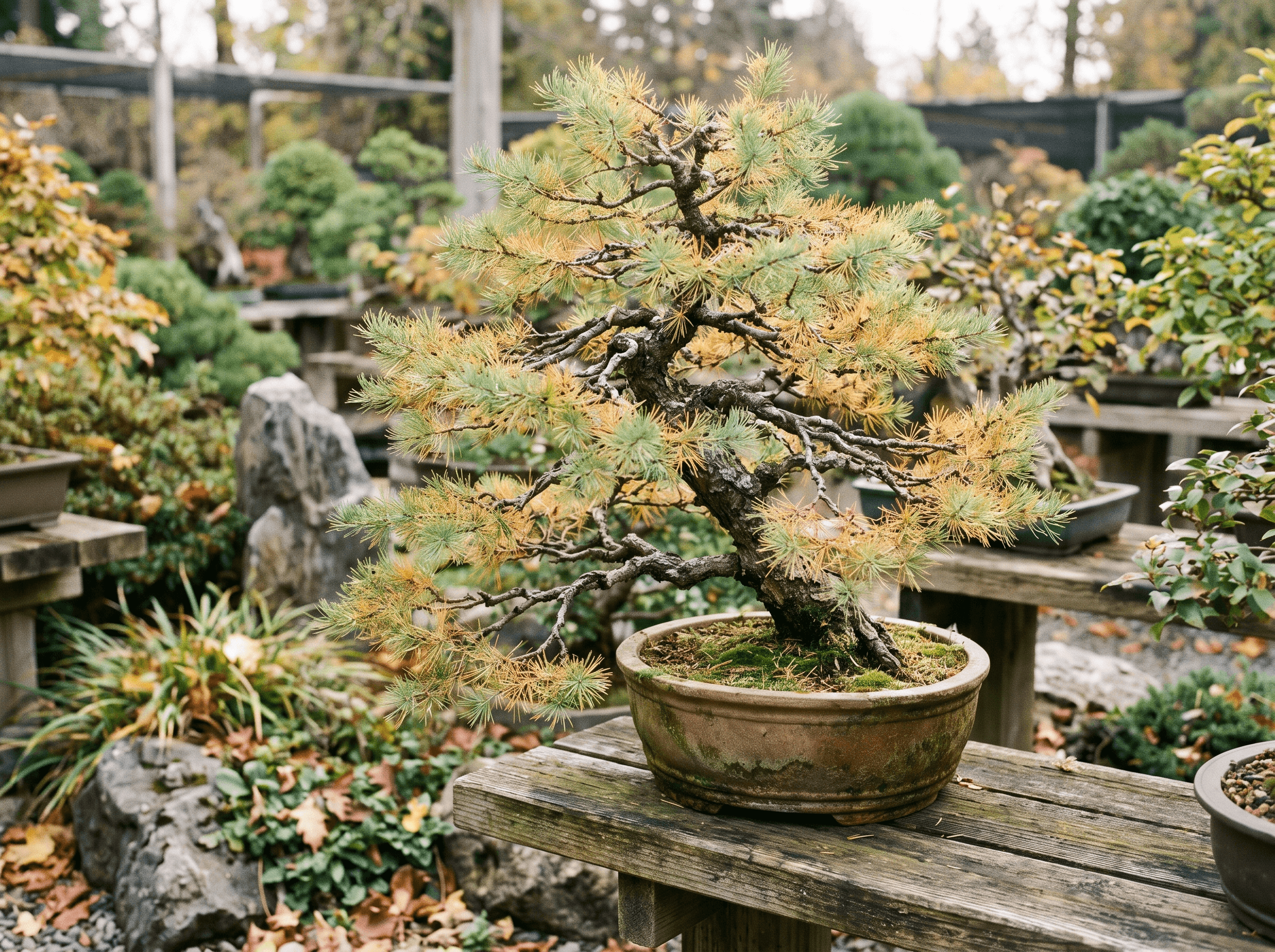
Larch Bonsai Care
Larix decidua / Larix kaempferi
Larch breaks the rule most people assume applies to every conifer: it's deciduous, dropping its soft needles every autumn after they turn a warm gold, and that alone makes it one of the more distinctive species you can grow as bonsai.
Read the guide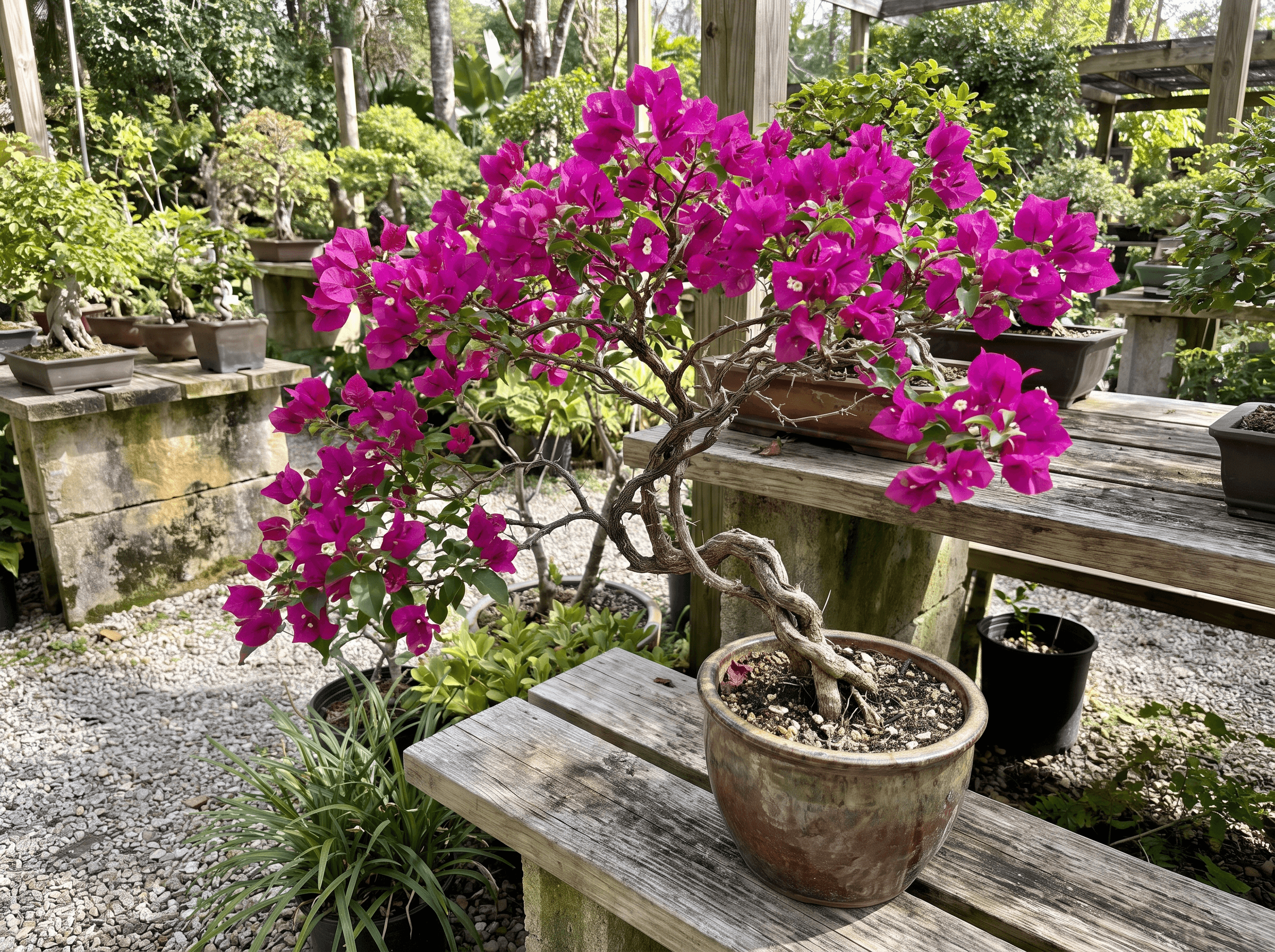
Bougainvillea Bonsai Care
Bougainvillea glabra / Bougainvillea spectabilis
Bougainvillea bonsai is grown for pure colour, vivid papery bracts wrapped around tiny true flowers, on a thorny, sprawling vine that needs constant management but rewards it with one of the most eye-catching displays in warm-climate bonsai.
Read the guide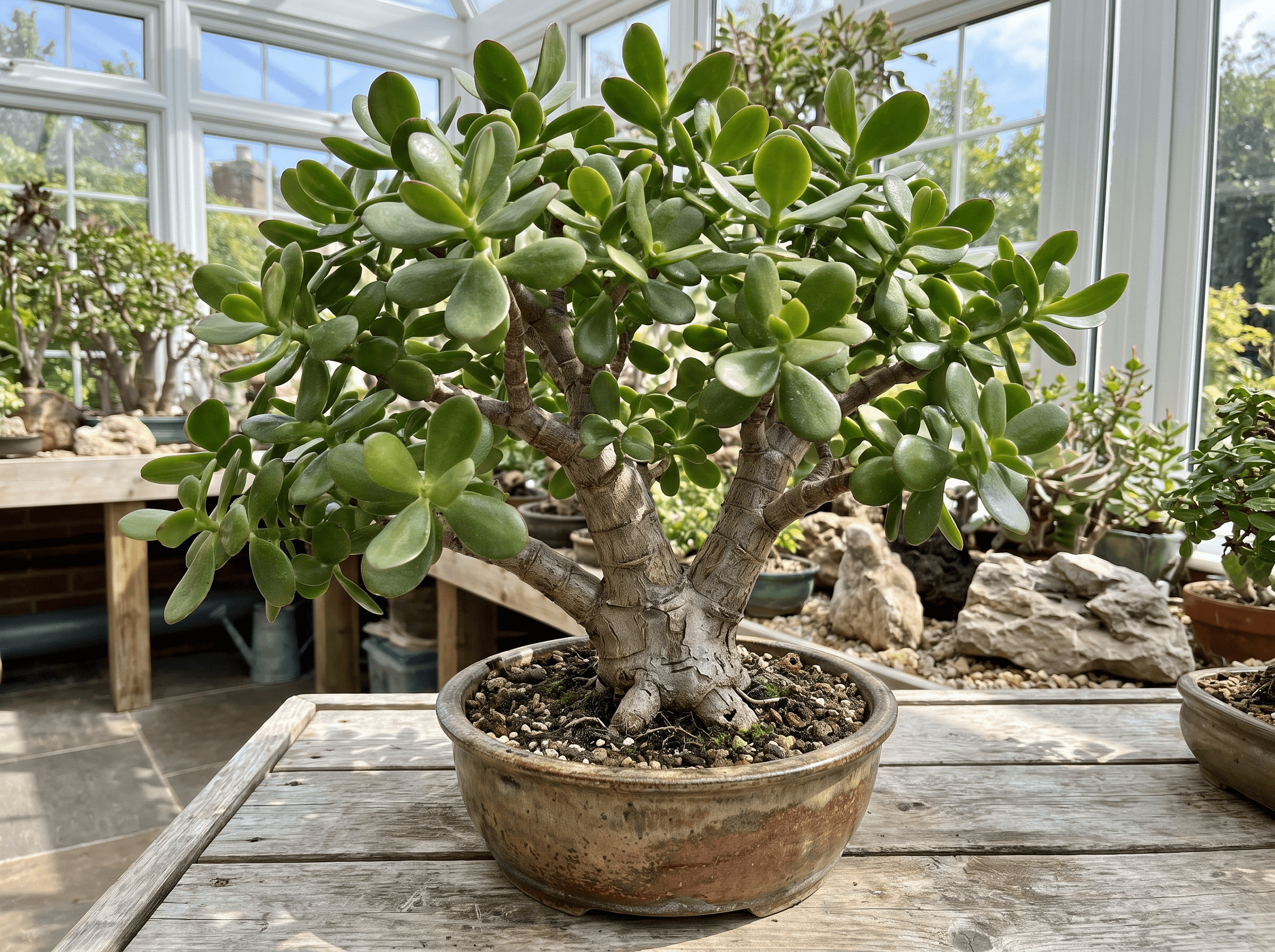
Jade Plant Bonsai Care
Crassula ovata
Jade plant is a succulent, not a true tree, and that single fact explains almost everything about why it's one of the most forgiving and widely recommended species for anyone growing bonsai indoors.
Read the guide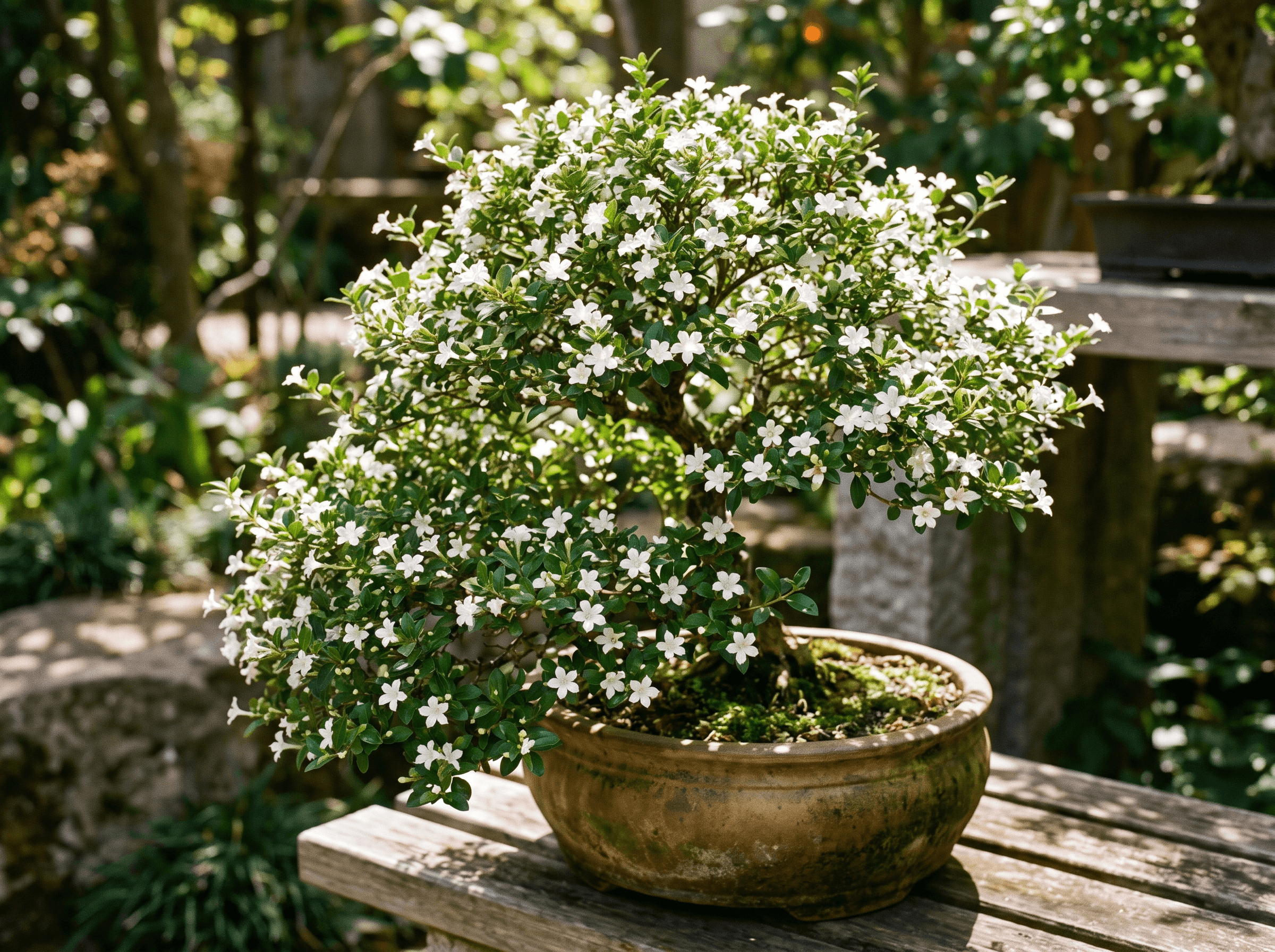
Serissa Bonsai Care
Serissa japonica (also sold as Serissa foetida)
Serissa flowers almost the whole year round and looks effortless in a nursery display, which is exactly why so many people buy one and lose it within a season.
Read the guide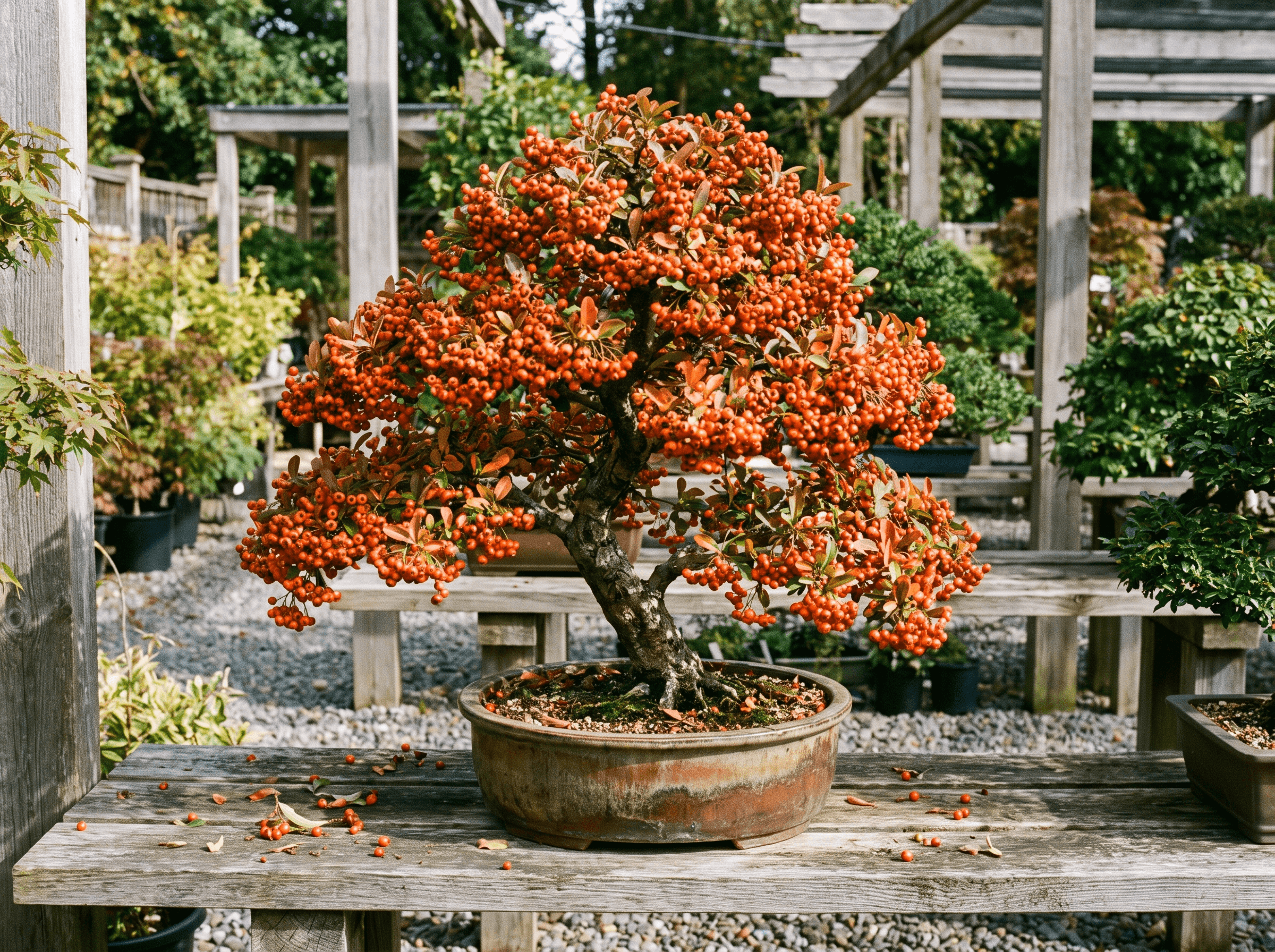
Pyracantha Bonsai Care
Pyracantha coccinea (Firethorn)
A pyracantha loaded with orange-red berries through the winter months is one of the most striking sights on any bonsai bench, and it's also one of the least fussy trees to grow toward that result.
Read the guide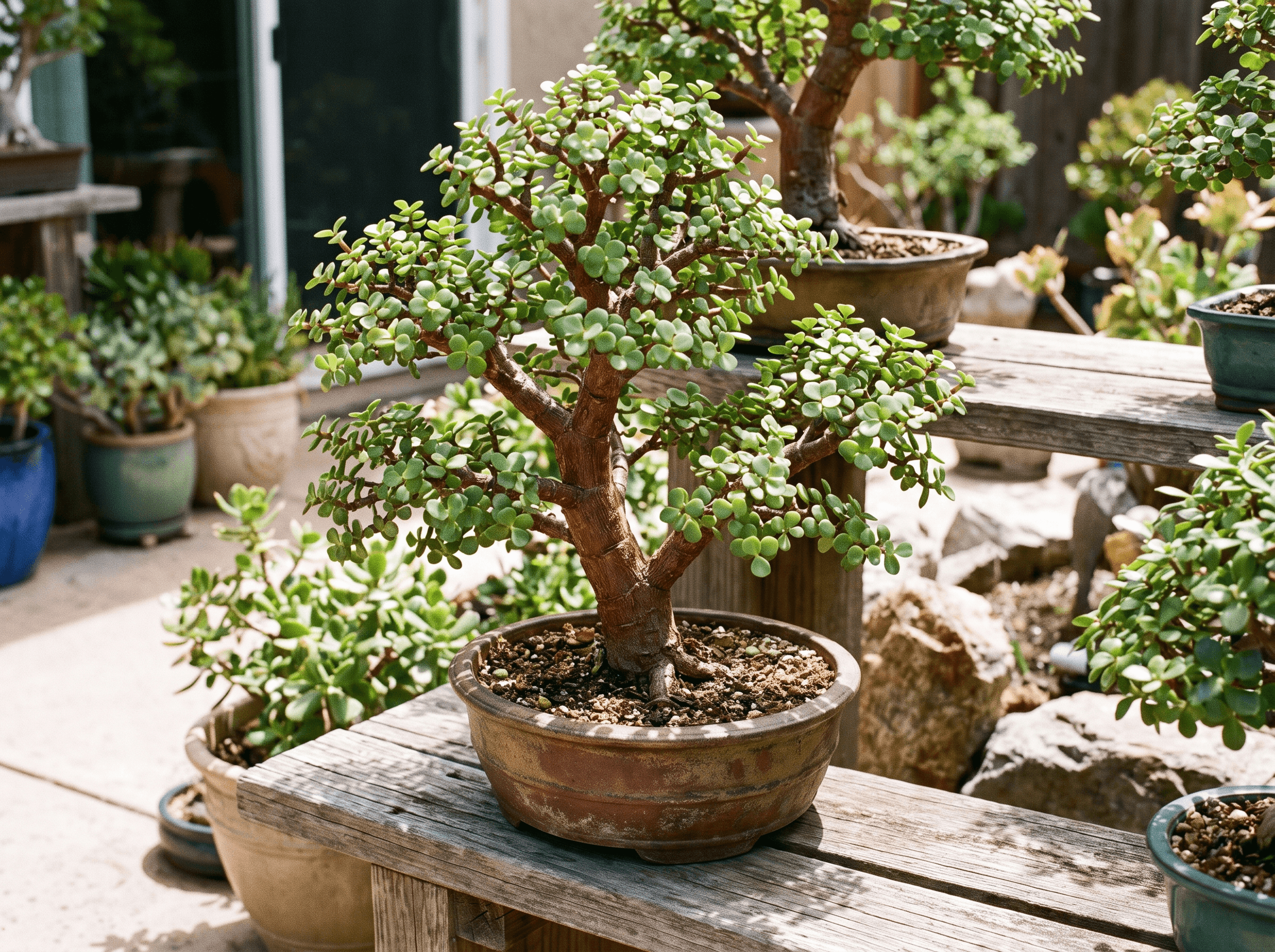
Portulacaria Bonsai Care
Portulacaria afra (Elephant Bush, dwarf jade)
Portulacaria gets mistaken for jade constantly, and while the confusion is understandable, this is a tougher, faster-growing, more forgiving plant that happens to be one of the best entry points into bonsai I know of.
Read the guide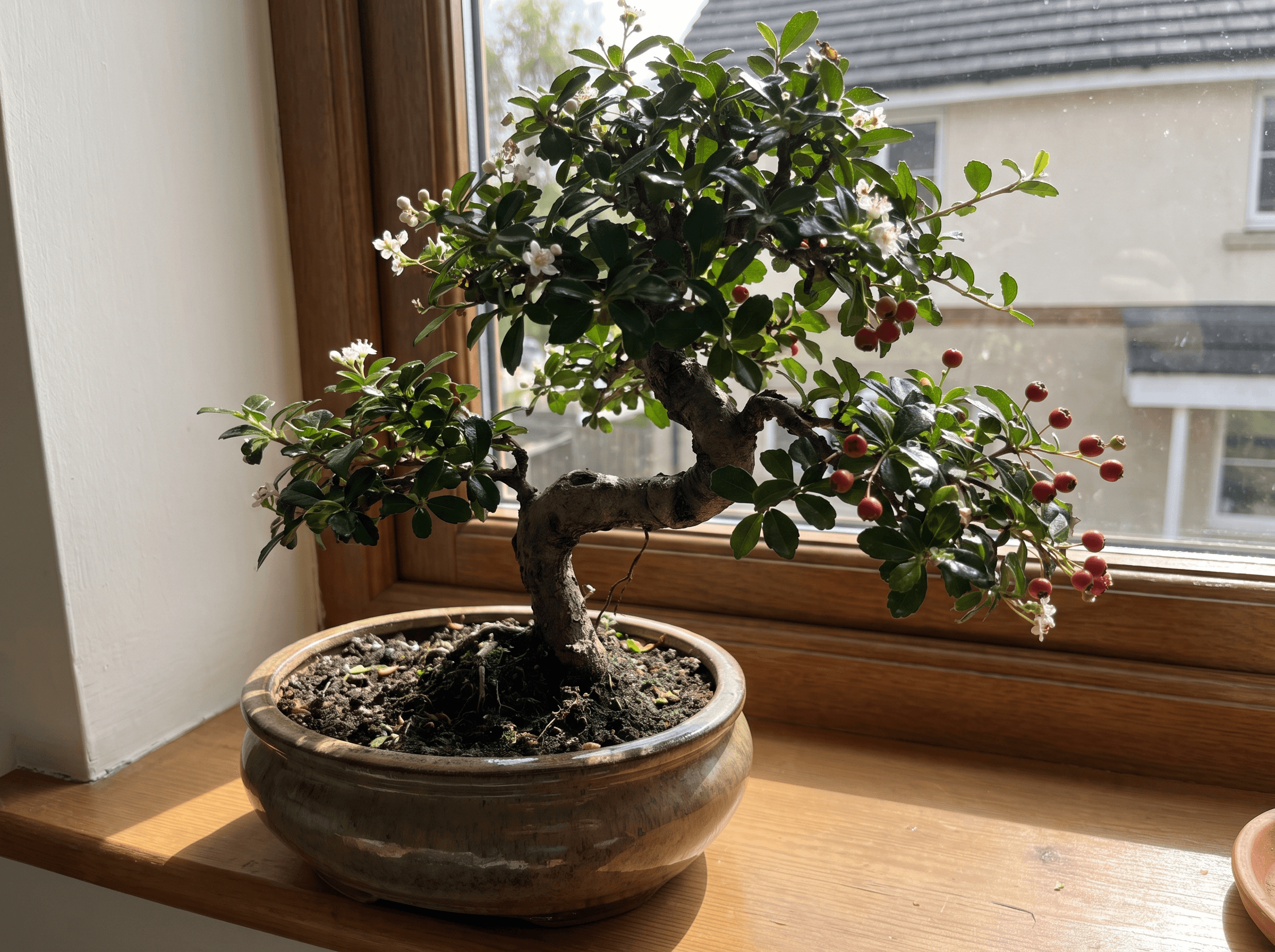
Carmona Bonsai Care
Carmona retusa, syn. Ehretia microphylla (Fukien Tea)
Carmona is one of the most common imported indoor bonsai on the market, and also one of the most likely to sulk the moment it changes hands, which is why so many end up back at the nursery within a month of purchase.
Read the guide
Hinoki Cypress Bonsai Care
Chamaecyparis obtusa
Hinoki cypress is the conifer I reach for when someone wants that classic, refined Japanese-garden look, but it asks for more even moisture and patience than the junipers most people start with.
Read the guide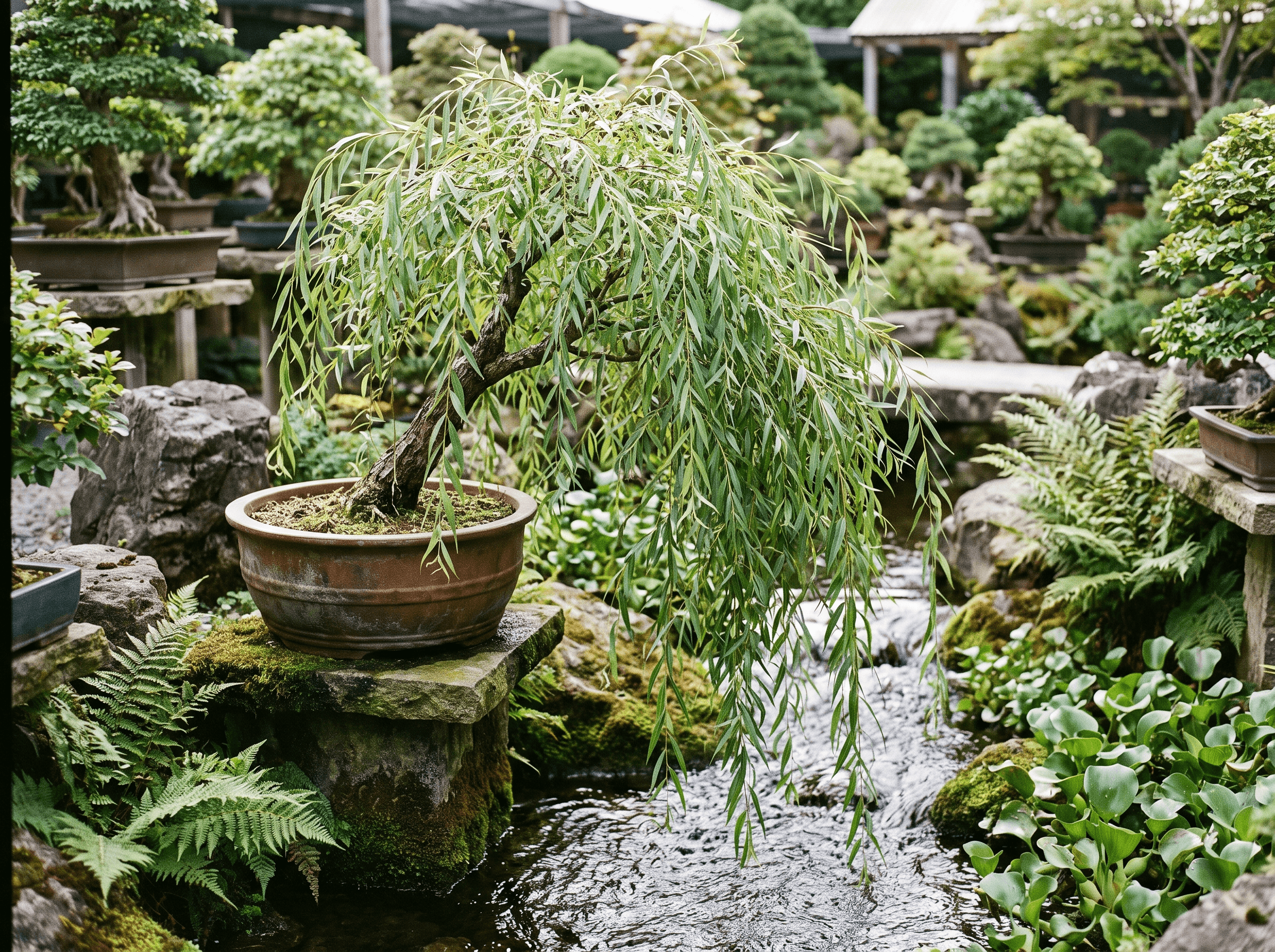
Willow Bonsai Care
Salix babylonica and Salix caprea
Willow breaks nearly every rule I'd normally give a beginner about bonsai care, it wants constant water instead of a drying cycle, and that's exactly what makes the long, pendulous branching this tree is grown for actually work.
Read the guide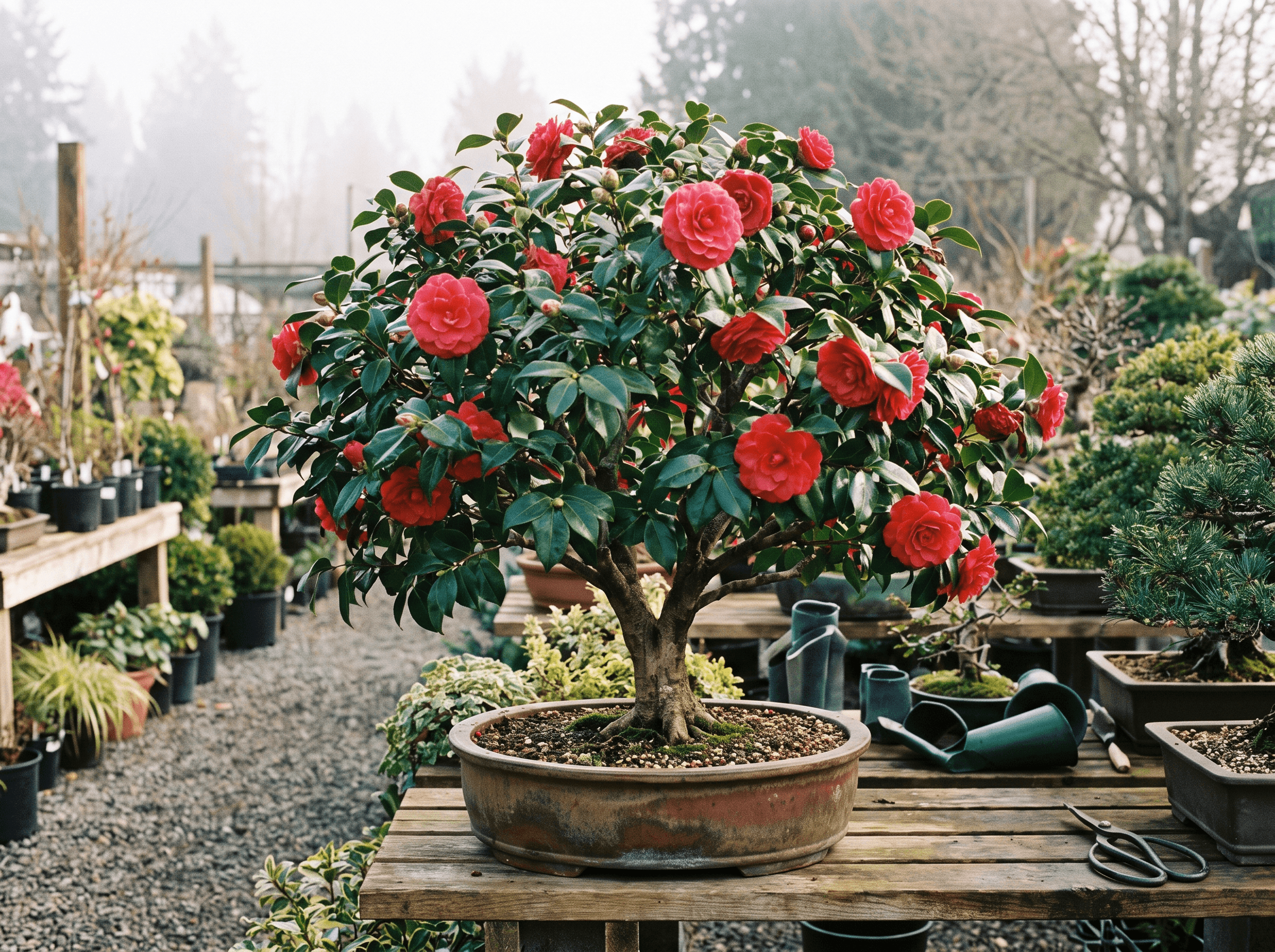
Camellia Bonsai Care
Camellia japonica and Camellia sinensis
A camellia in full flower during the dead of winter is one of the few genuine surprises a bonsai collection can offer, but getting there means treating the soil chemistry and the flowering tree with real care through the months leading up to bloom.
Read the guide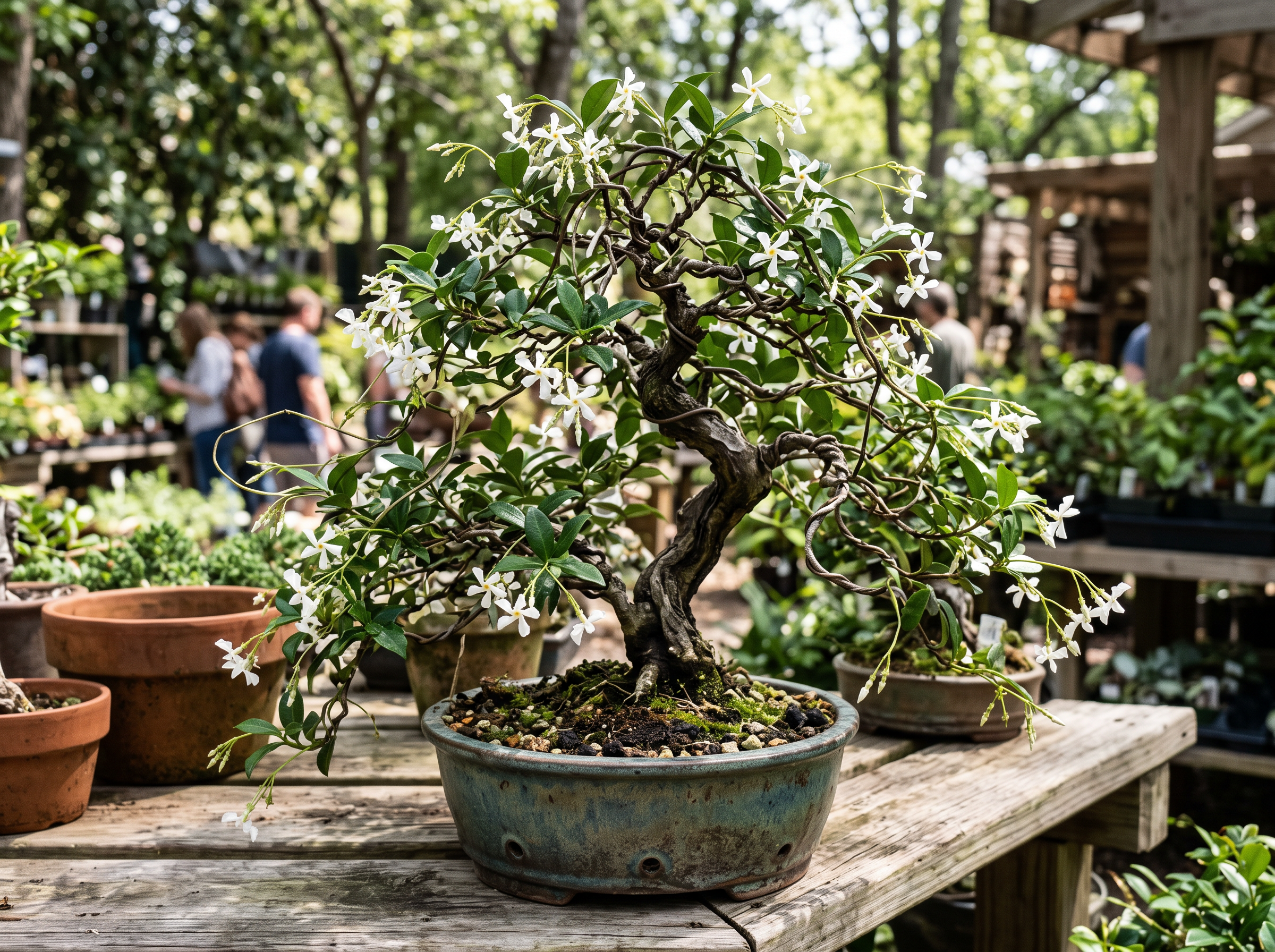
Star Jasmine Bonsai Care
Trachelospermum jasminoides
Star jasmine as bonsai is really an exercise in constant redirection: the plant wants to climb and twine, not sit still in a tree shape, and the whole craft here is convincing it otherwise, season after season.
Read the guide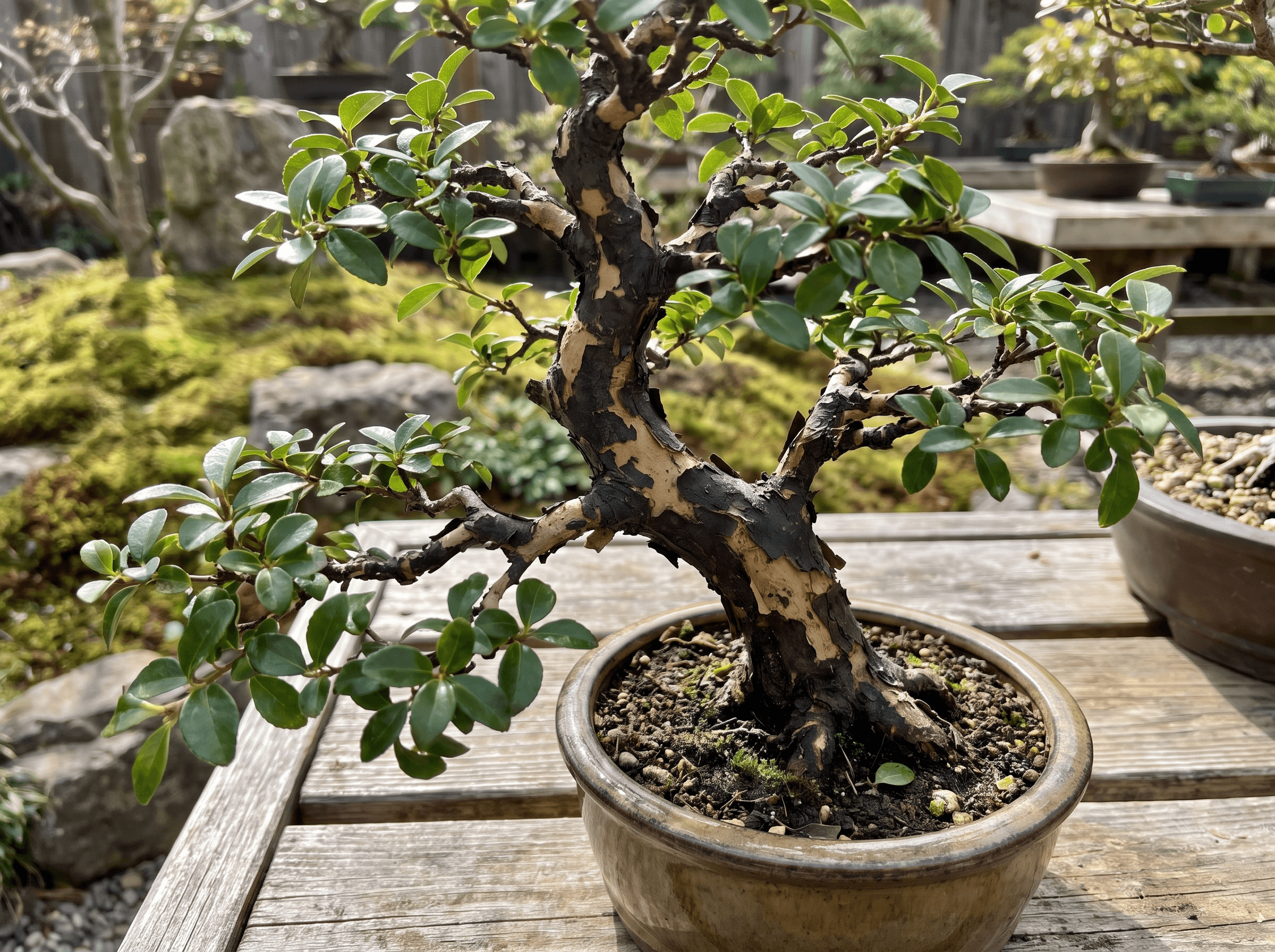
Sageretia Bonsai Care
Sageretia theezans (Chinese Sweet Plum)
Sageretia theezans, sold in most nurseries as Chinese Sweet Plum, has some of the prettiest bark you'll find on any bonsai, and one of the shortest tempers for dry indoor air.
Read the guide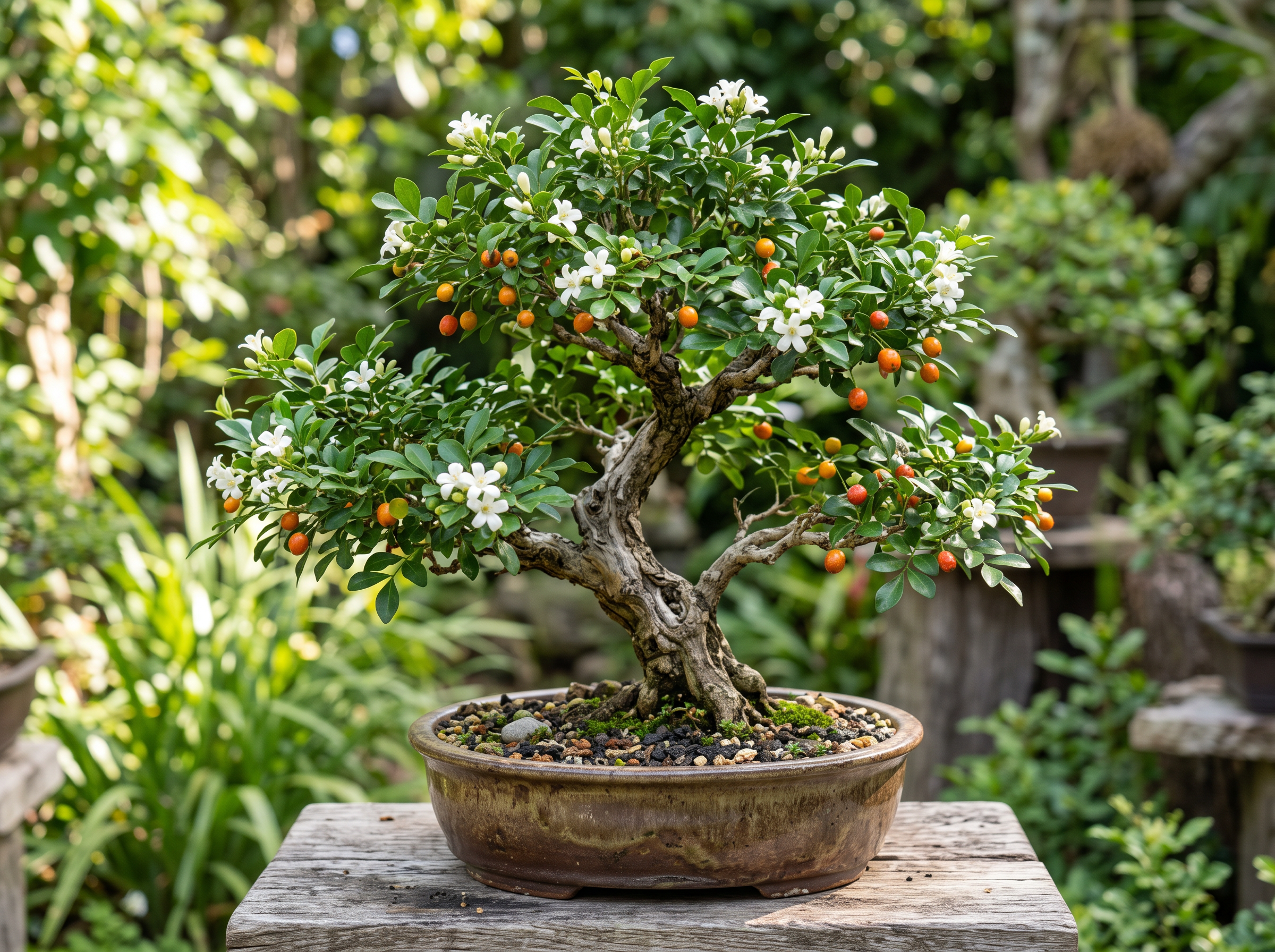
Jasmine Orange Bonsai Care
Murraya paniculata
Jasmine Orange is the one bonsai in my collection people notice with their nose before their eyes, and once it flowers you'll understand why it's such a fixture of Southeast Asian bonsai traditions.
Read the guide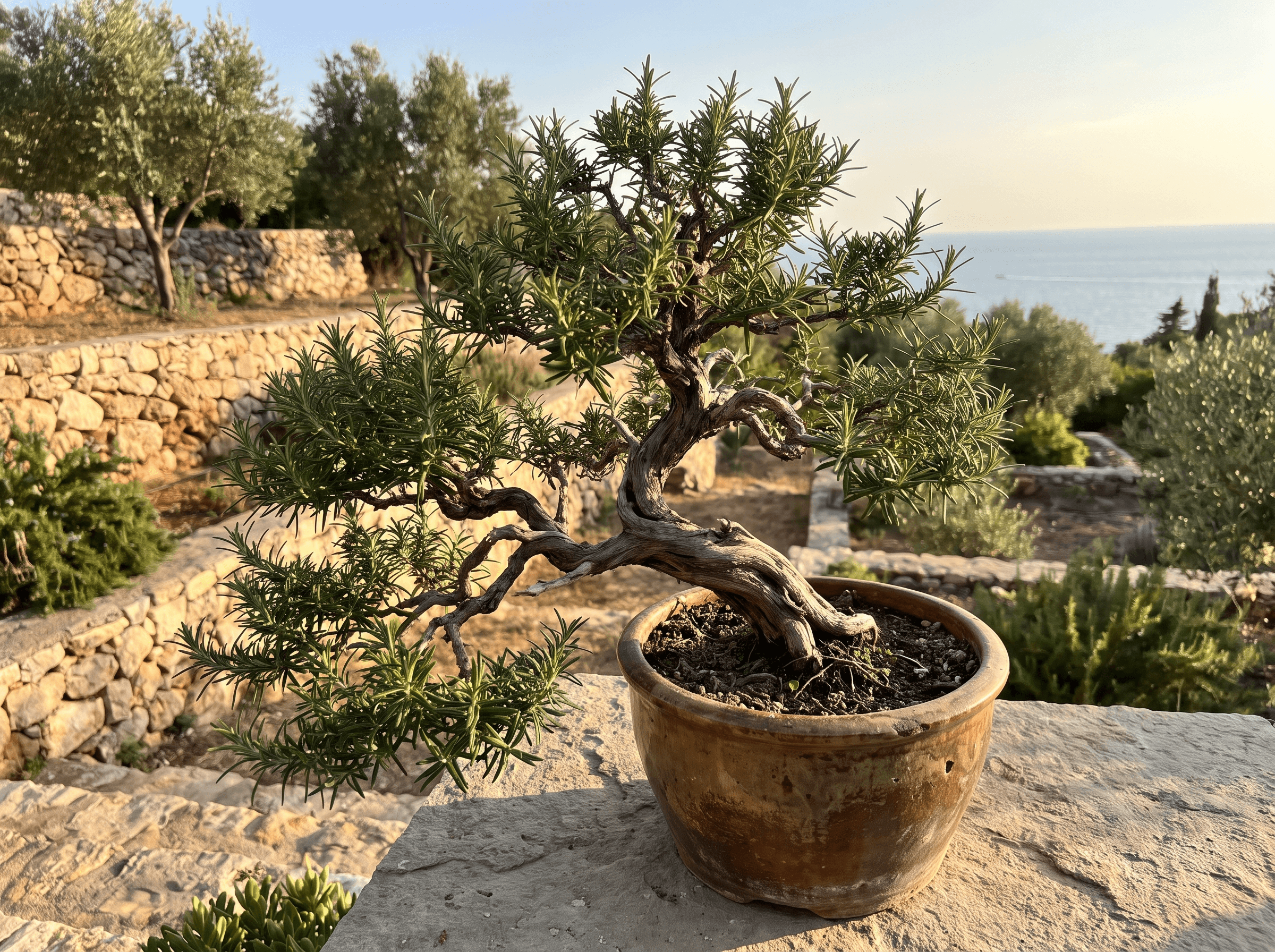
Rosemary Bonsai Care
Salvia rosmarinus (syn. Rosmarinus officinalis)
Rosemary bonsai is the rare tree in this collection you could technically pick a sprig from for the kitchen, and the rare tree that will punish overwatering faster than almost anything else I grow.
Read the guide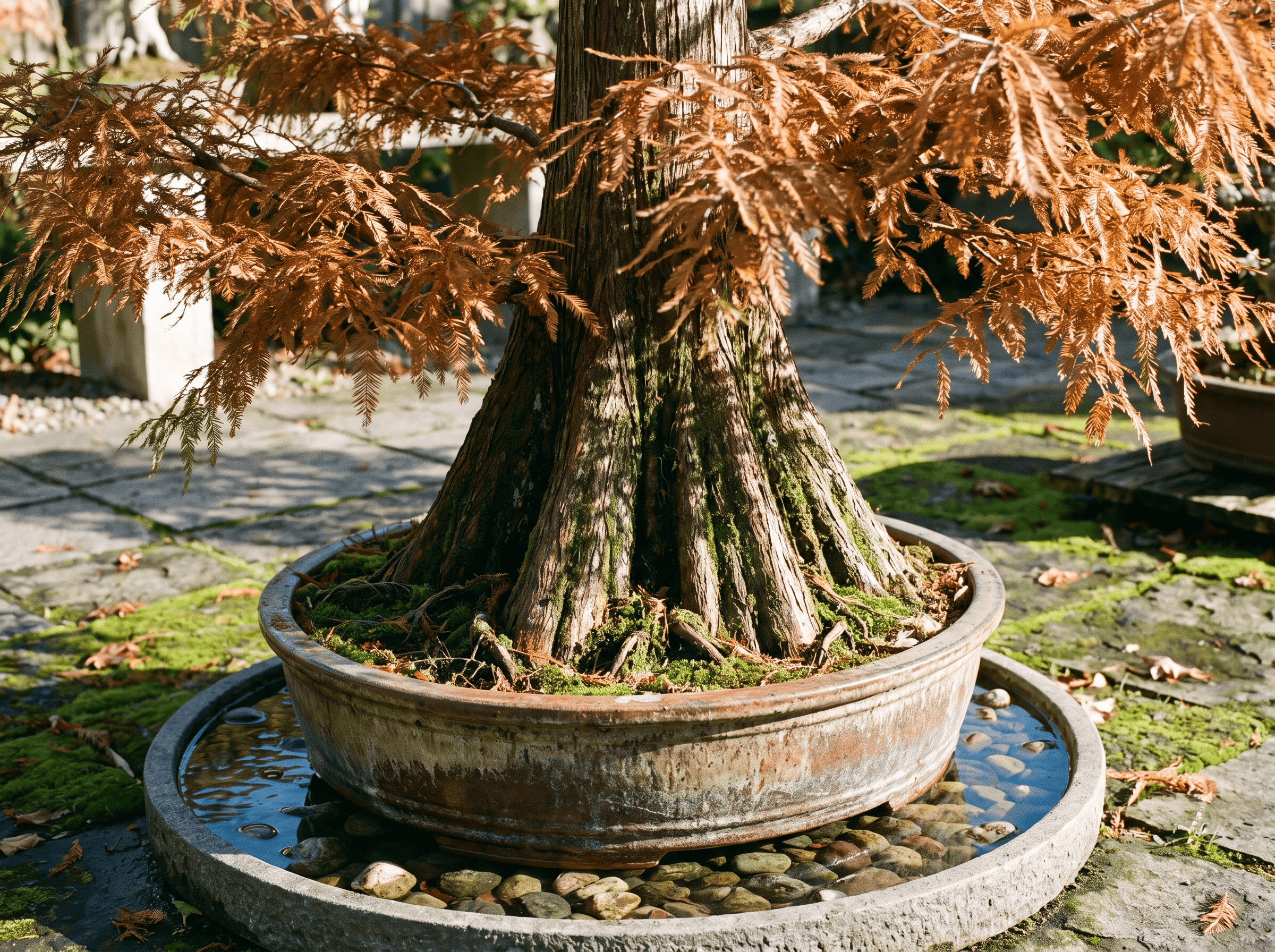
Bald Cypress Bonsai Care
Taxodium distichum
Bald cypress is the conifer on this list that tolerates sitting in a puddle better than any other, and it's also one of the very few deciduous conifers you'll find in bonsai, dropping its needles every autumn like a broadleaf tree.
Read the guide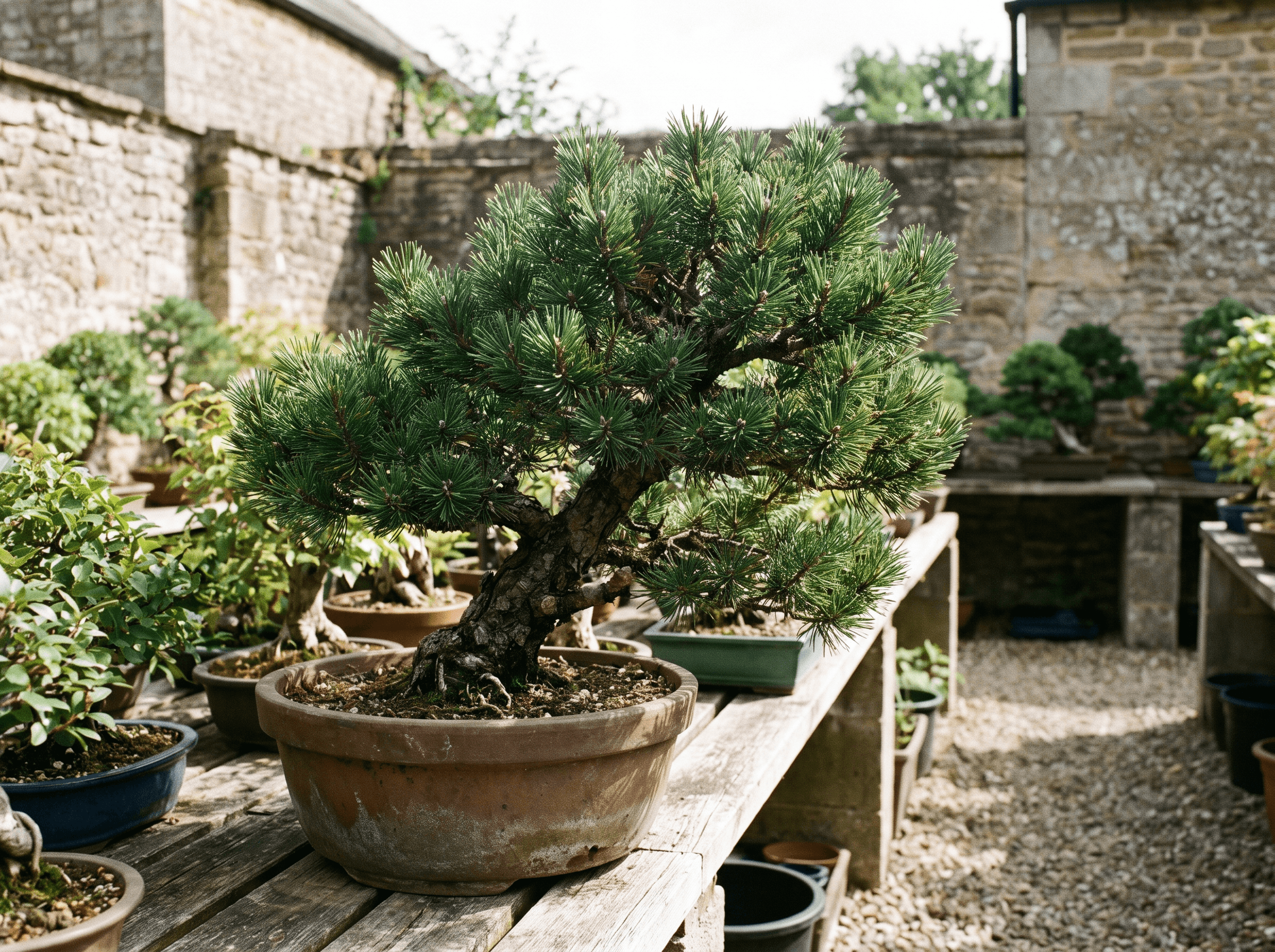
Mugo Pine Bonsai Care
Pinus mugo
Mugo pine is naturally a dwarf, so where a black pine has to be trained into looking compact, a mugo often starts that way, dense and shrubby right off the garden centre shelf.
Read the guide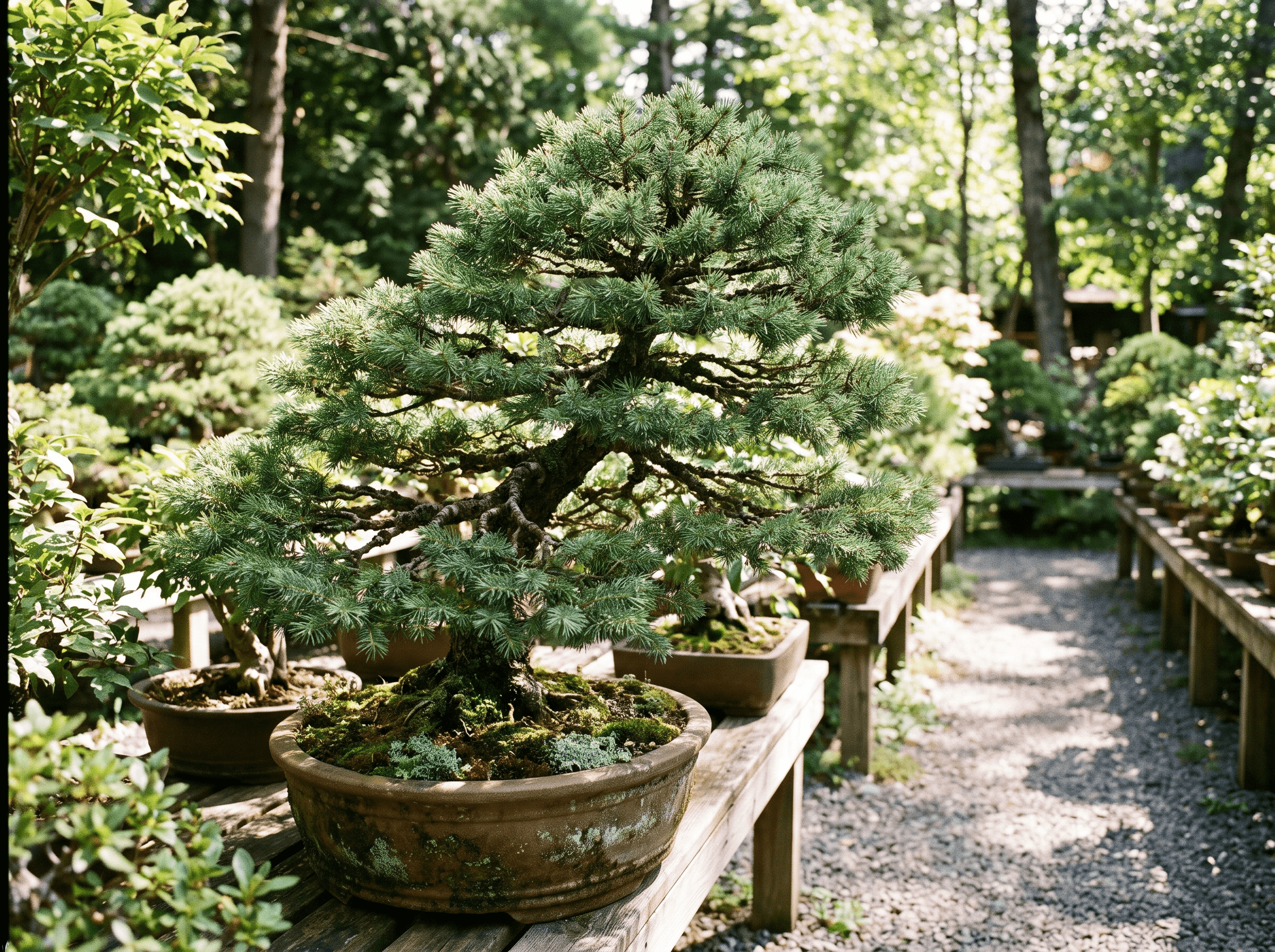
Spruce Bonsai Care
Picea abies / P. glauca (dwarf Alberta spruce)
Spruce rewards patience with detail few other conifers can match, its fine, short needles reduce beautifully, and while it can sometimes push a little new growth from older wood when it's healthy and well managed, that backbudding is limited and shouldn't be relied on the way it can be with true old-wood budders like juniper.
Read the guide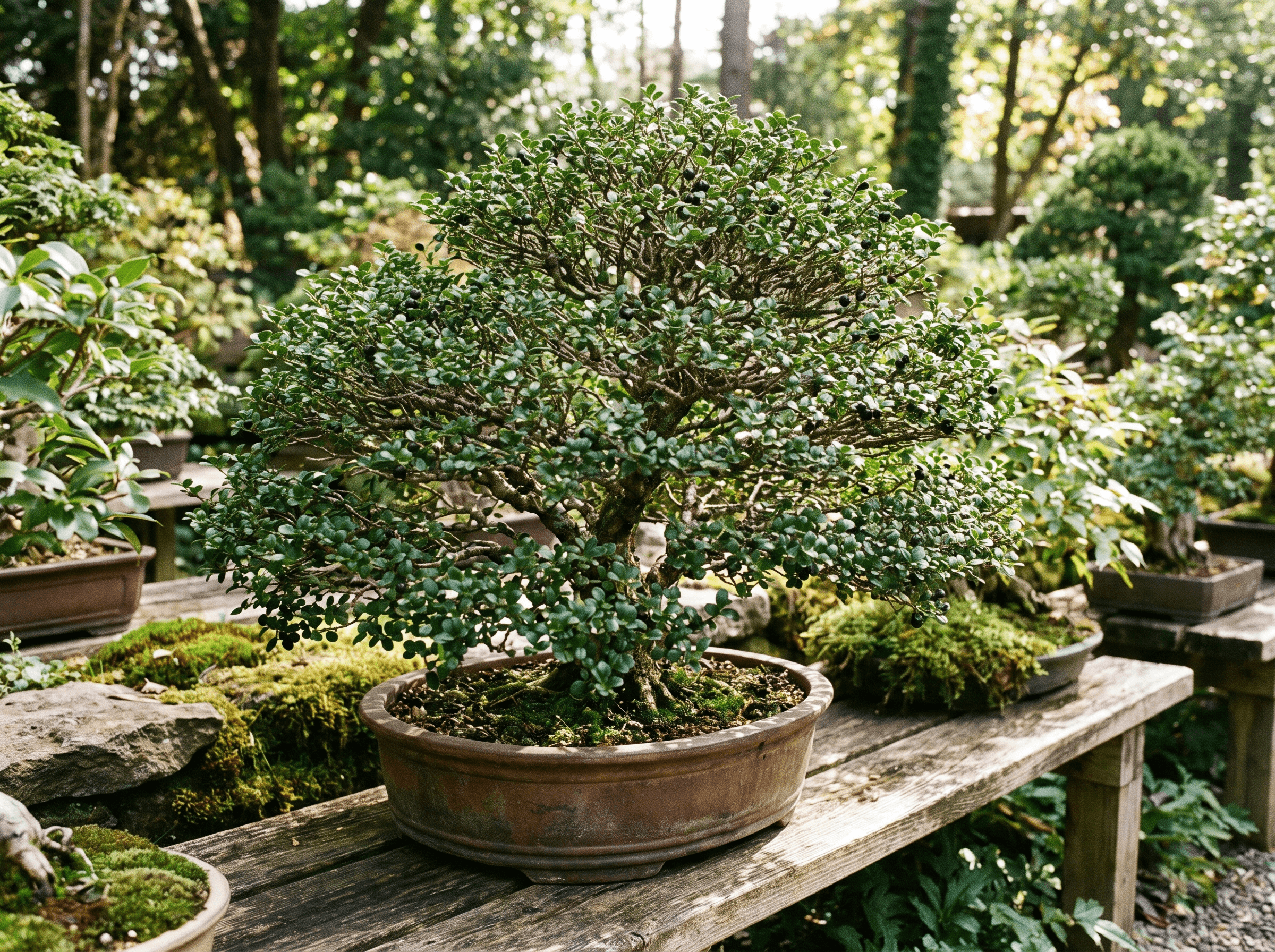
Japanese Holly Bonsai Care
Ilex crenata
Japanese holly is holly with the sharp edges filed off, small rounded leaves instead of spiny ones, and while it still wants real light to do its best work, it tolerates a shadier courtyard spot better than most outdoor bonsai species would.
Read the guide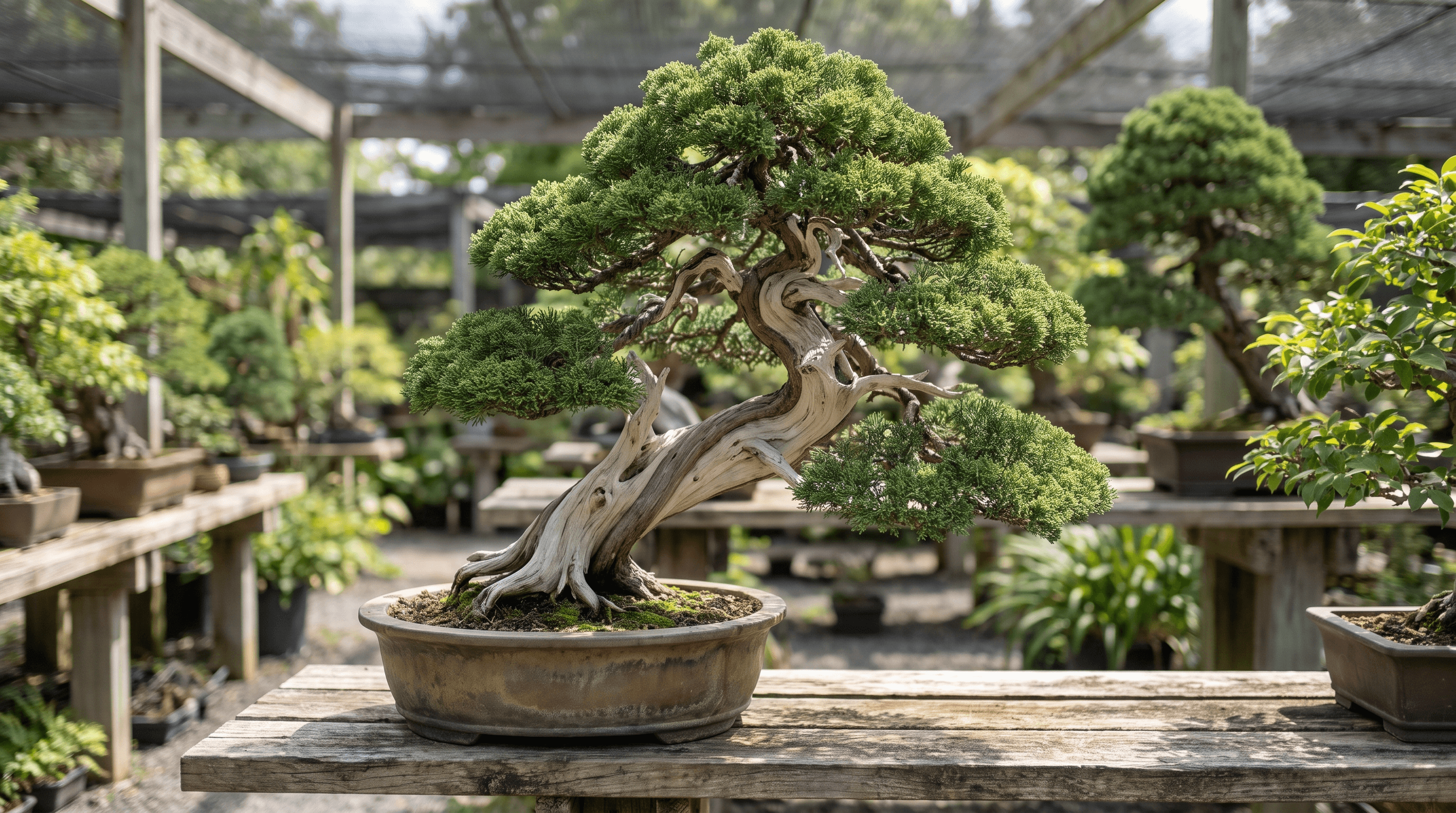
Shimpaku Juniper Bonsai
Juniperus chinensis 'Shimpaku'
Shimpaku is the juniper most serious growers reach for first, and once you've worked with its foliage and its deadwood side by side, it's obvious why: nothing else in the genus combines that density of fine growth with wood that carves so cleanly.
Read the guide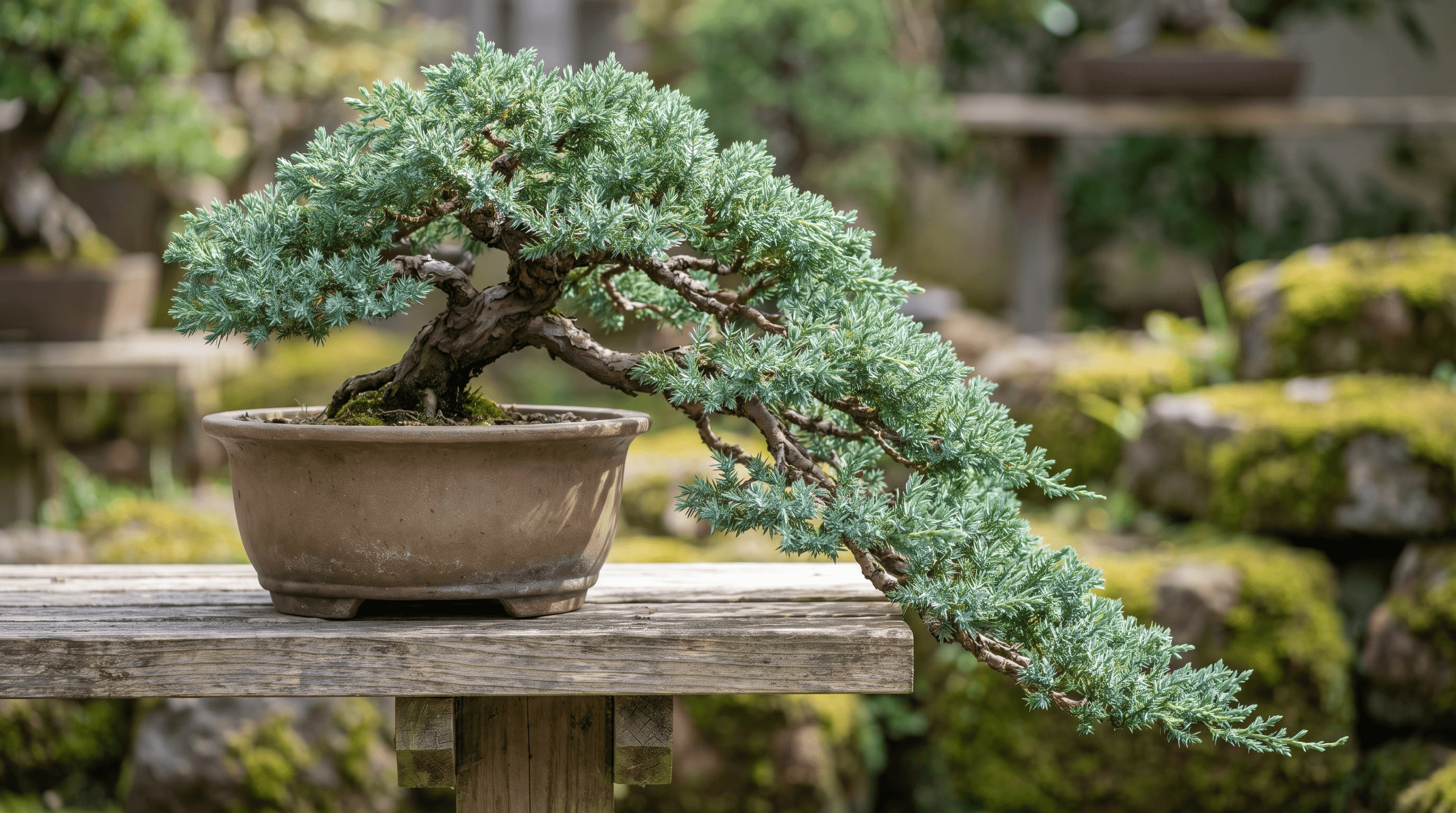
Japanese Garden Juniper Bonsai
Juniperus procumbens 'Nana'
If you've ever bought a juniper bonsai from a garden centre or a shopping mall kiosk, there's a decent chance it was this one: procumbens Nana is the workhorse of commercial bonsai, and it earns that reputation honestly.
Read the guide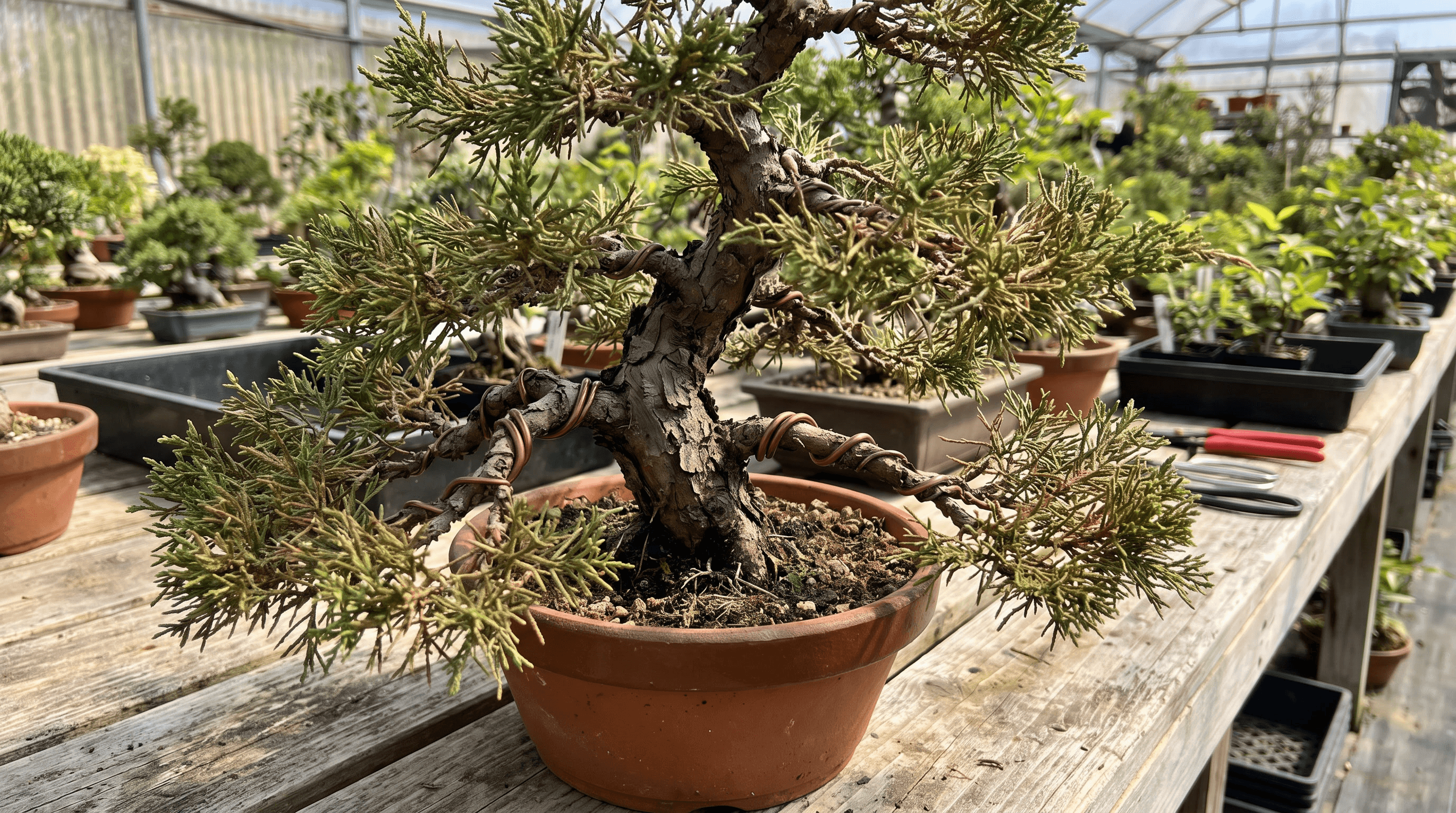
Chinese Juniper Bonsai
Juniperus chinensis
Chinese juniper is less a single look and more a family tree: it's the species behind most of the prized upright juniper cultivars in bonsai, and understanding the species itself helps make sense of why its named cultivars vary as much as they do.
Read the guide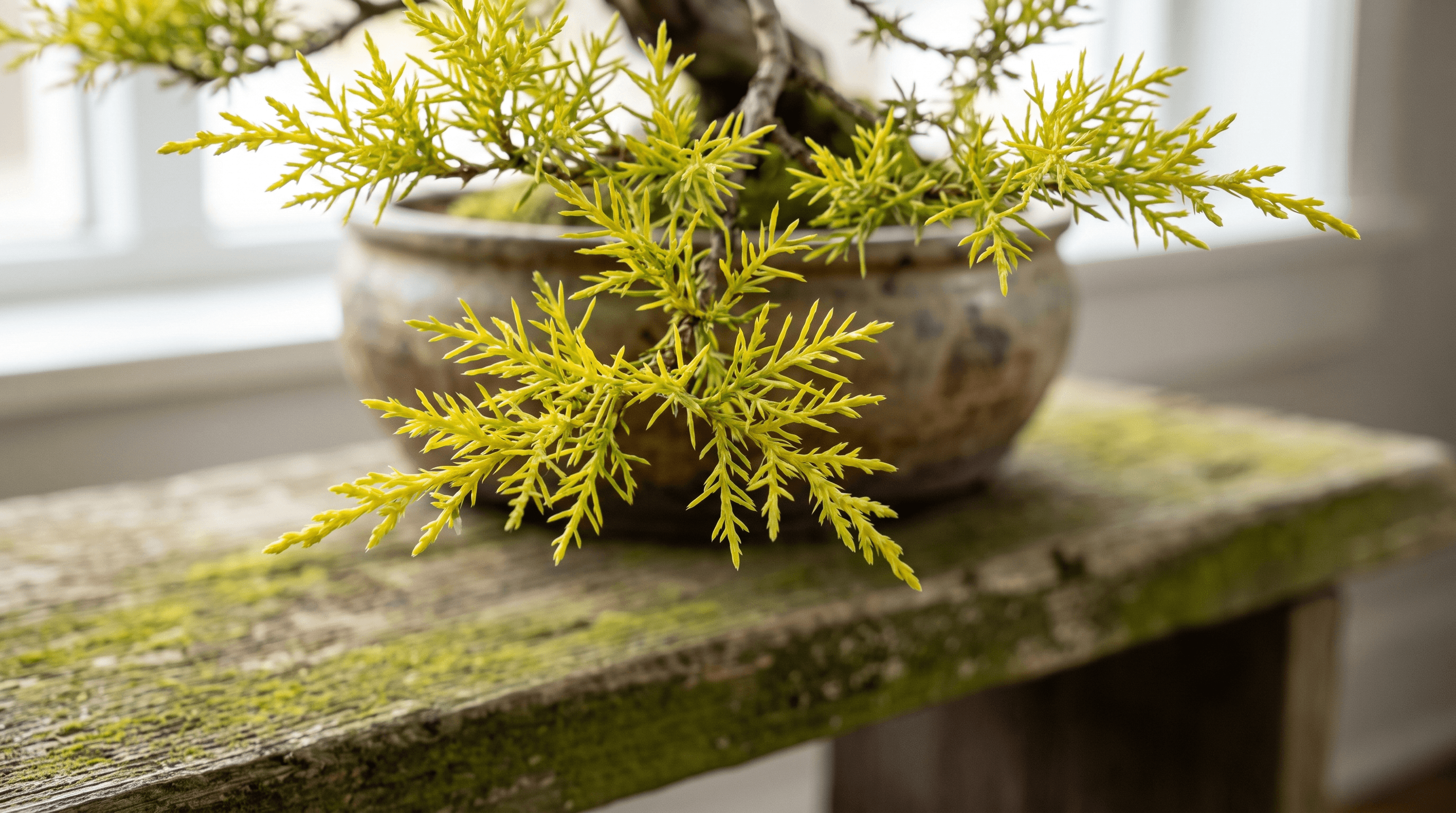
Itoigawa Juniper Bonsai
Juniperus chinensis 'Itoigawa'
If you've ever heard a bonsai grower say a juniper's foliage is exceptionally fine, they were probably talking about Itoigawa, a Shimpaku form of Chinese juniper prized for foliage sprays finer and brighter than the standard.
Read the guide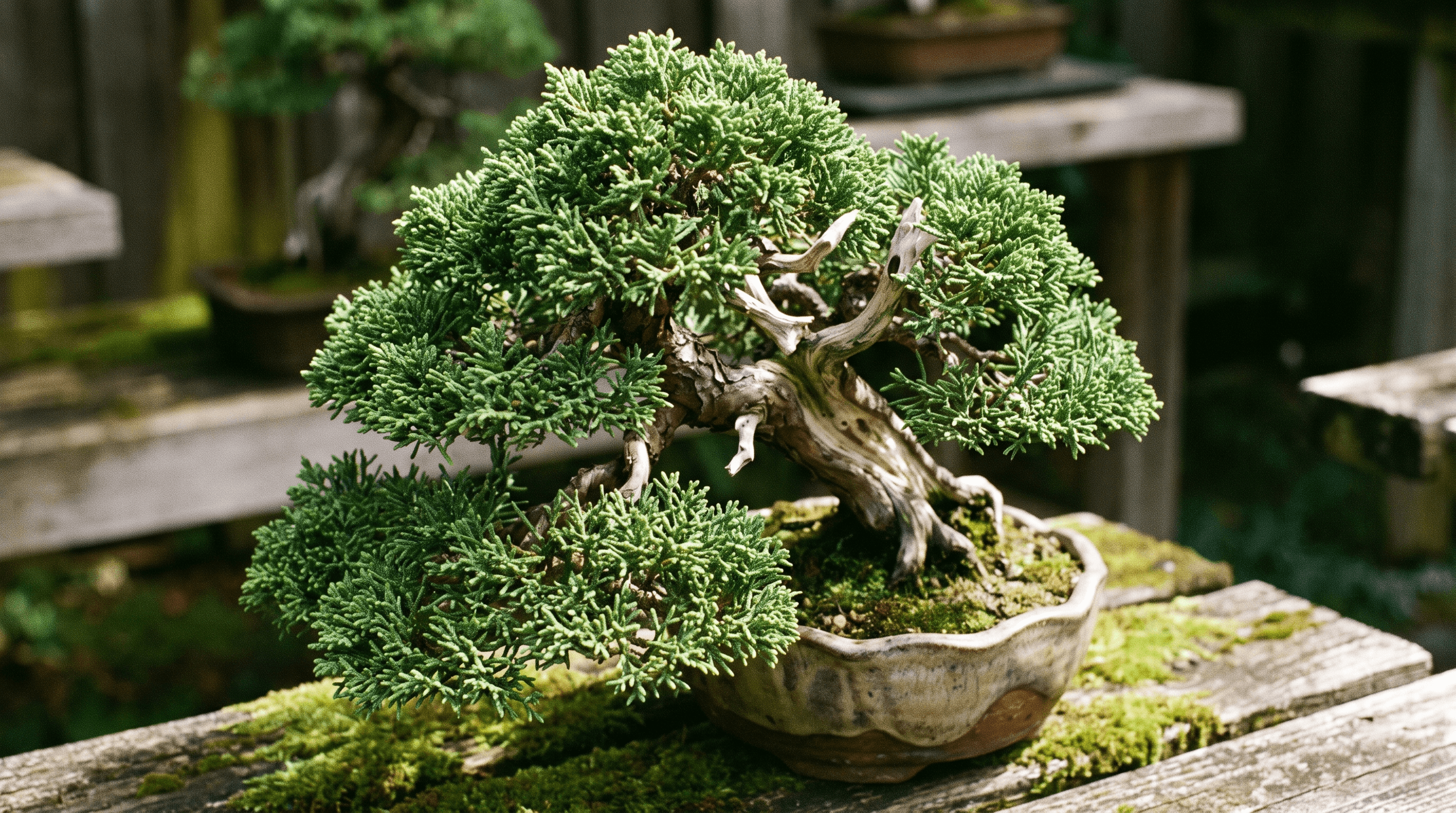
Kishu Juniper Bonsai
Juniperus chinensis 'Kishu'
Kishu is the juniper I reach for when someone wants a shohin or small bonsai that still looks convincingly aged, because the foliage is tight and fine enough to stay in scale even on a tree you can hold in one hand.
Read the guide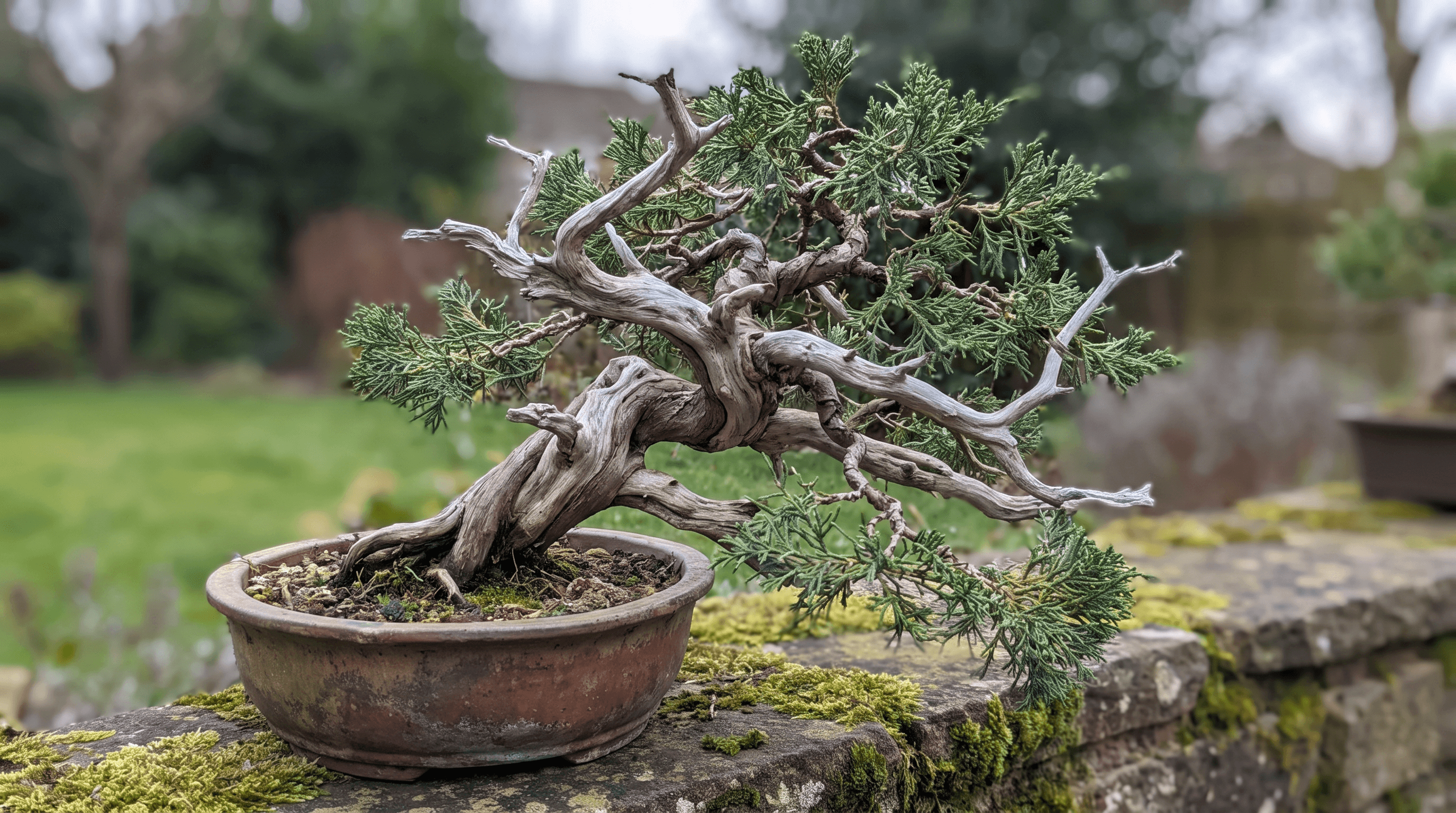
Sabina Juniper Bonsai
Juniperus sabina
Sabina is one of the classic native European junipers used for bonsai, though its natural range actually extends much further east into Asia, and many of the finest examples I've seen weren't grown in a nursery pot at all, they were pulled off a mountainside with deadwood already carved by decades of wind, snow, and rot before anyone ever touched them with a tool.
Read the guide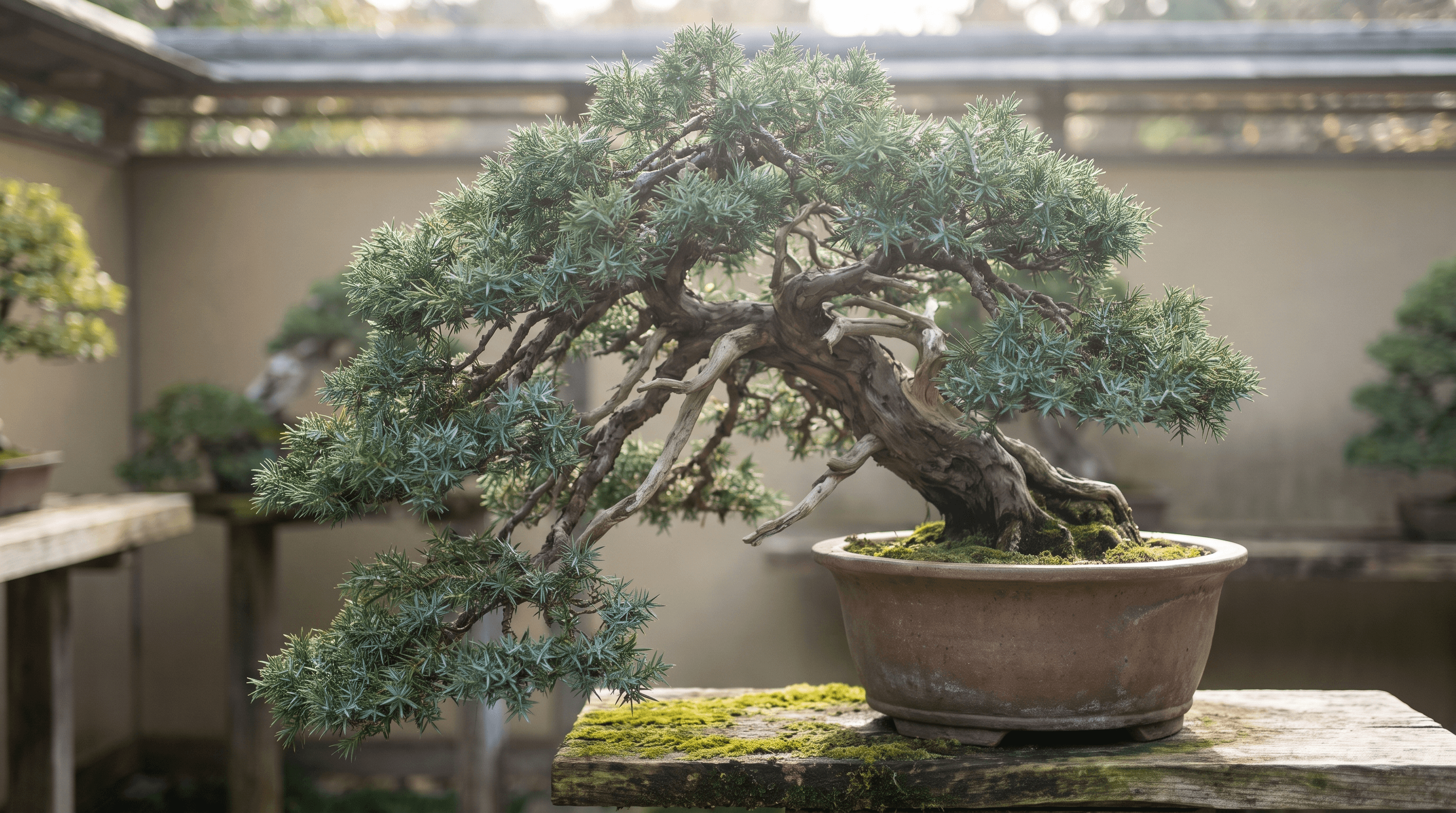
Needle Juniper Bonsai
Juniperus rigida
Needle juniper is one of the classic species in traditional Japanese bonsai, and it earns its name honestly: the foliage is genuinely sharp, arranged in fine pendulous sprays that hang and cascade in a way no scale-foliage juniper really matches, and working close to an untrimmed one without care is a good way to leave a session with scratched hands and forearms.
Read the guide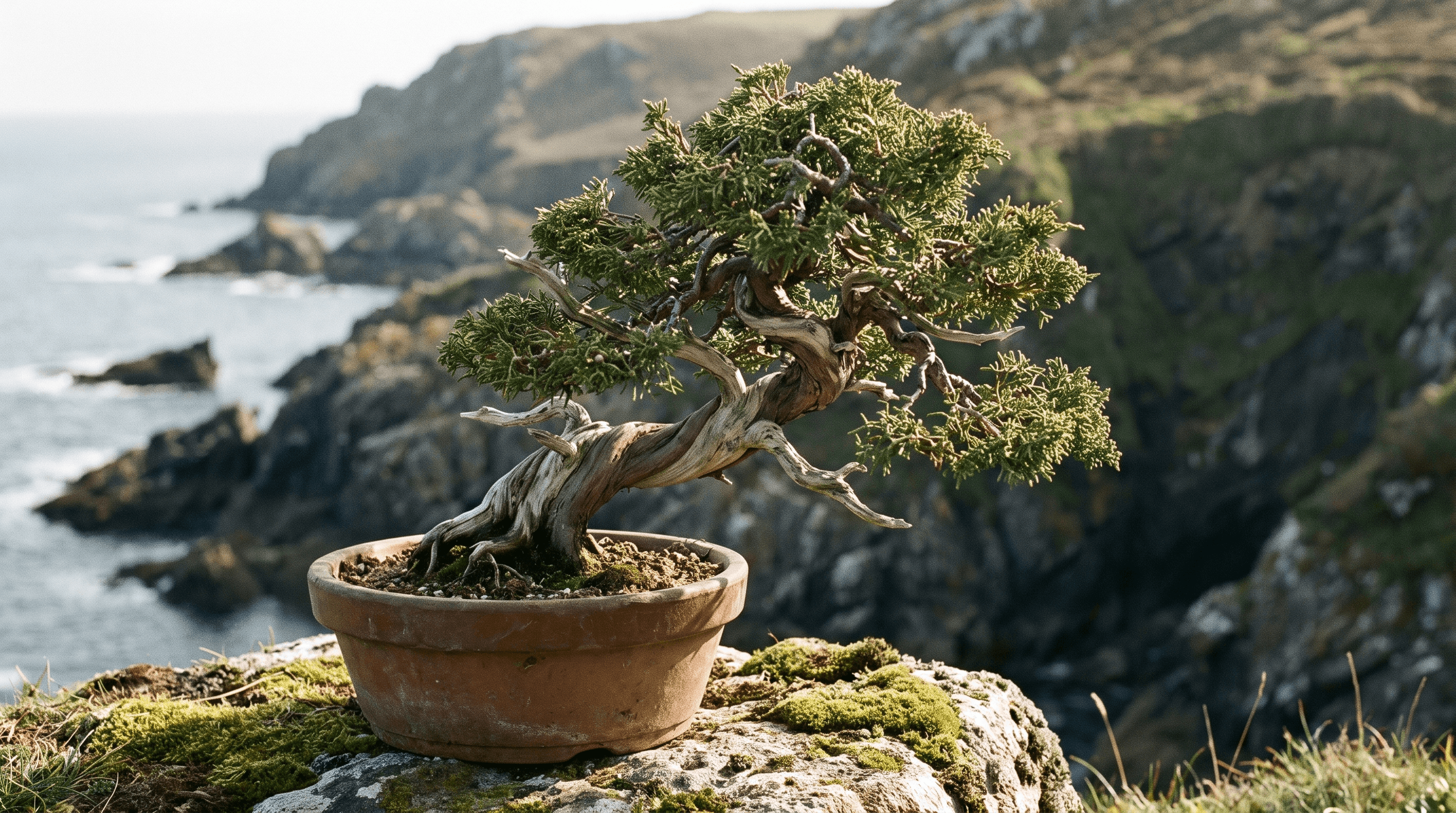
Common Juniper Bonsai
Juniperus communis
Common juniper has the widest natural range of almost any conifer in the northern hemisphere, and that gives collected material a genuine character that's hard to buy, but I'll say this plainly up front: it's also one of the more difficult junipers to get established in a pot after collection, and I've seen good, promising trees lost in the first year or two by growers who treated it like an easy nursery cultivar.
Read the guide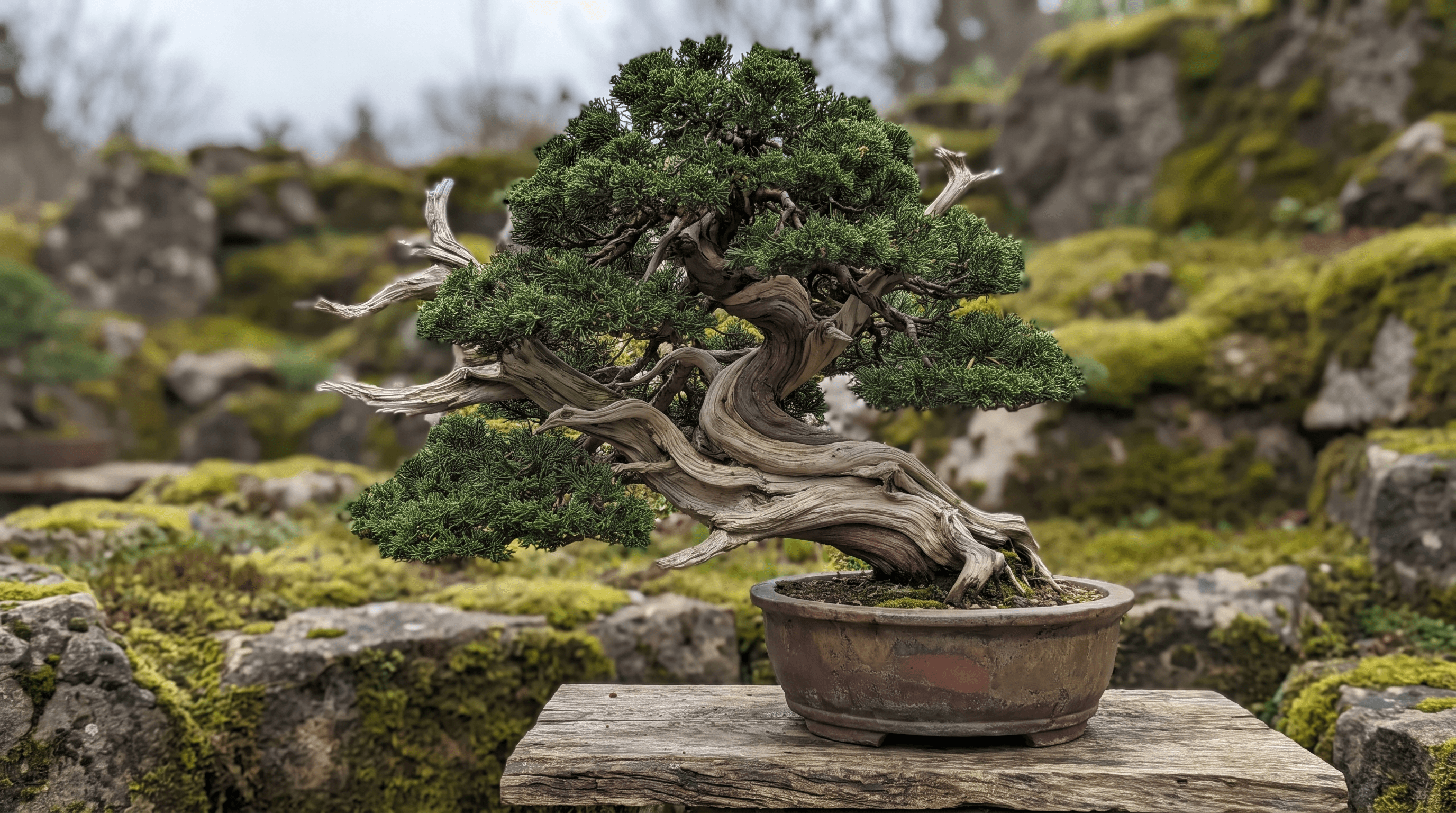
Rocky Mountain Juniper Bonsai
Juniperus scopulorum
Rocky Mountain juniper is the species behind most of the great American juniper bonsai you've seen in magazines, and the reason is simple: the trunk usually wasn't grown in a training pot, it was pulled out of a rock crevice at altitude after surviving on its own for a very long time.
Read the guide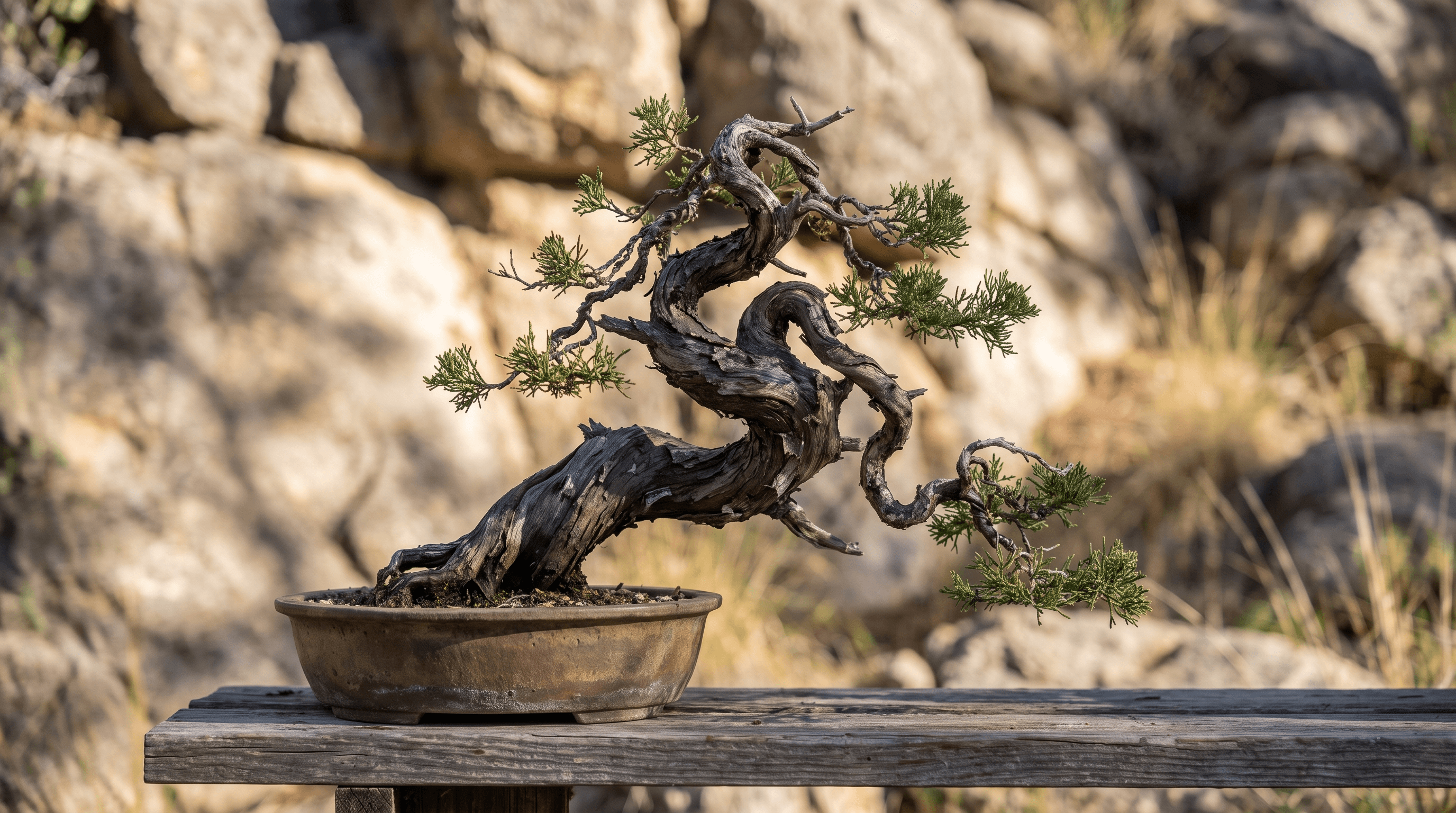
California Juniper Bonsai
Juniperus californica
California juniper is the species people mean when they talk about a bonsai trunk that looks like it's frozen mid-twist, and unlike a lot of what's sold as bonsai stock, that movement almost never comes from wire, it comes from decades of surviving on a dry, wind-scoured hillside before anyone dug it up.
Read the guide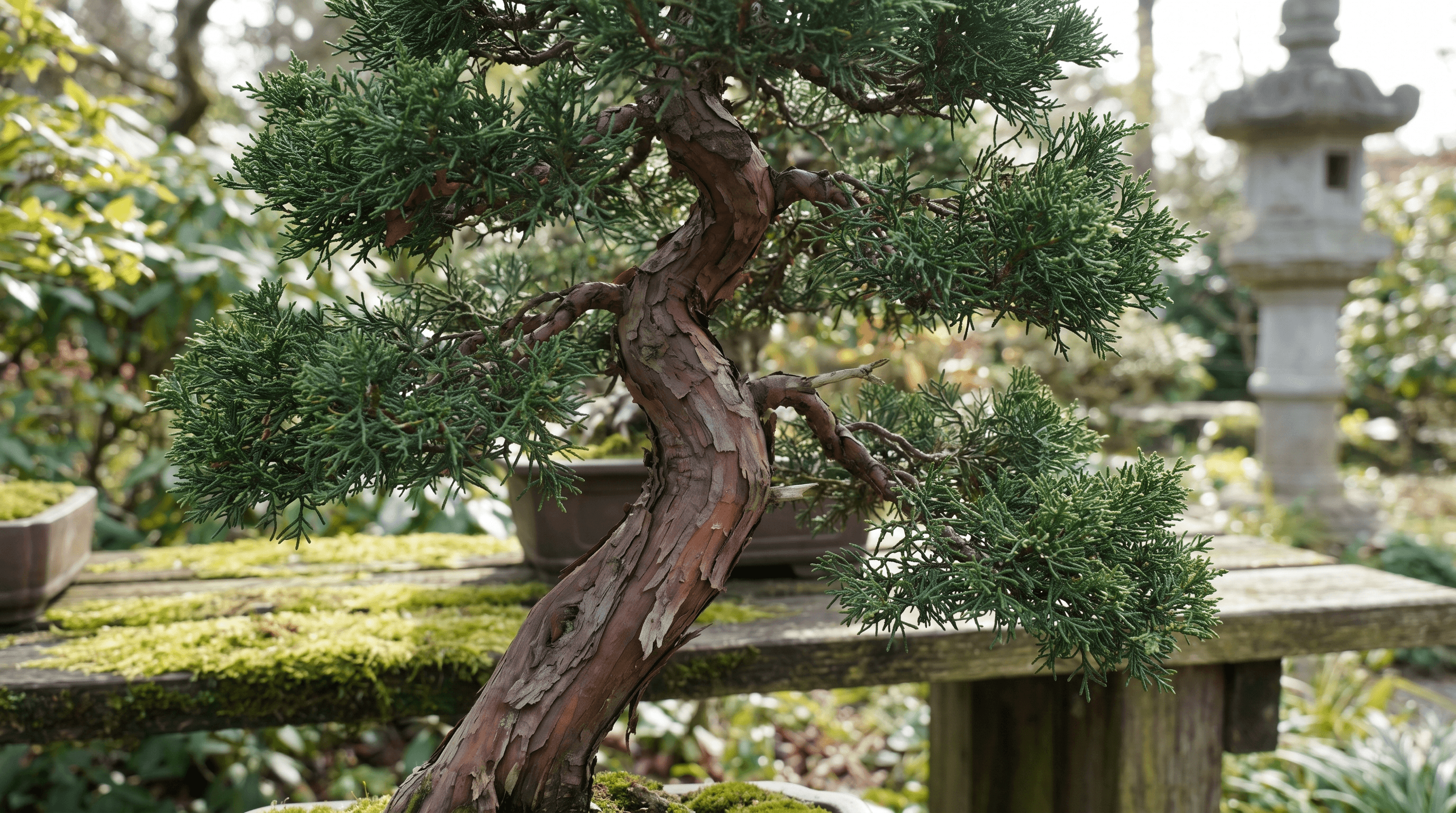
Eastern Red Cedar Bonsai
Juniperus virginiana
Eastern red cedar is a juniper wearing another tree's name, and if you searched for a cedar bonsai and landed here, you're in the right place, this species has nothing to do with true cedars beyond an old, misleading common name and some aromatic reddish wood.
Read the guide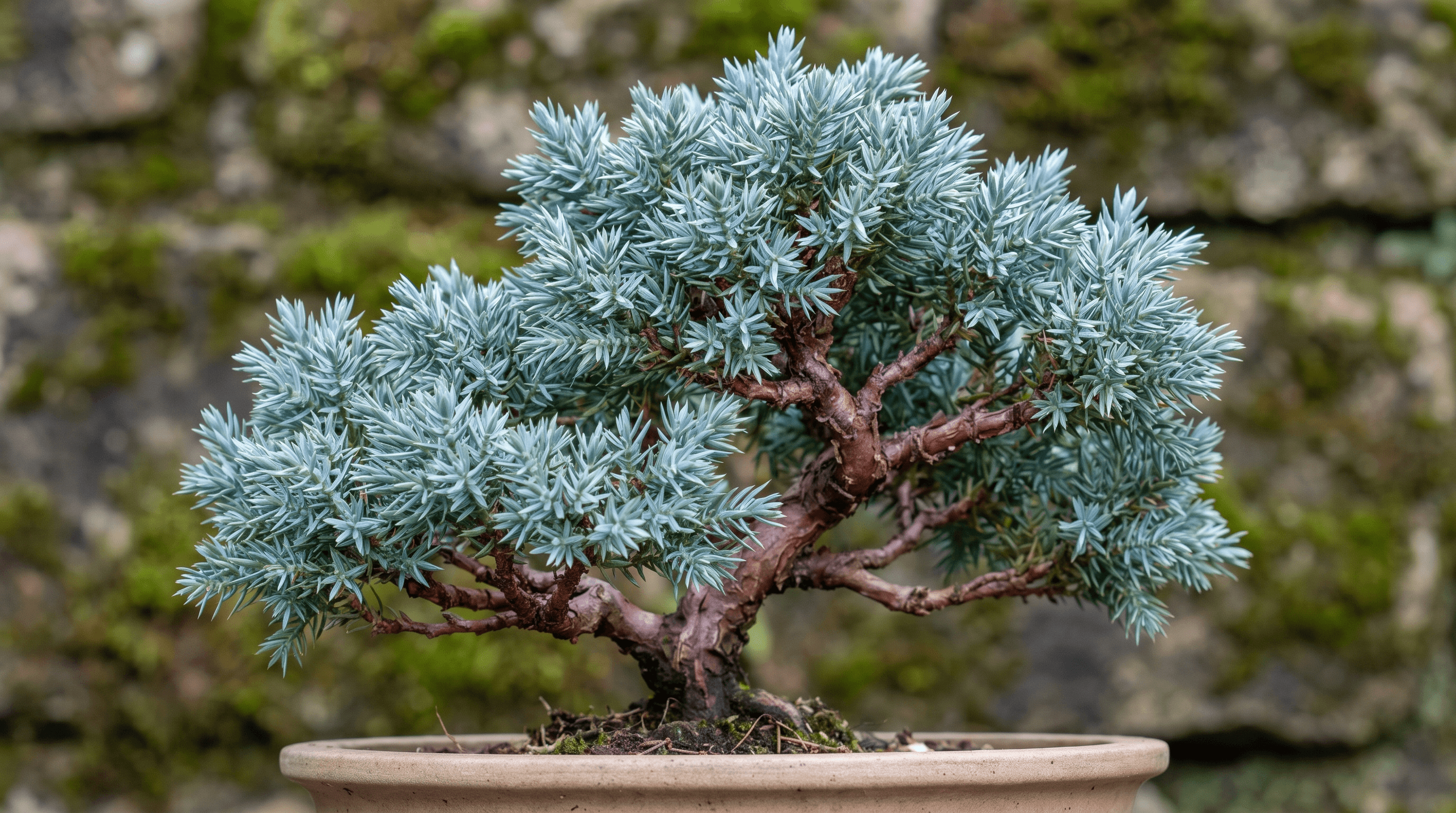
Blue Star Juniper Bonsai
Juniperus squamata 'Blue Star'
Blue Star juniper is the one people pick up at a garden centre for the colour alone, and honestly that's a fair reason: the blue-grey foliage is unlike almost anything else on the bonsai bench, though the plant underneath it behaves quite differently from the junipers most bonsai guides assume you're working with.
Read the guide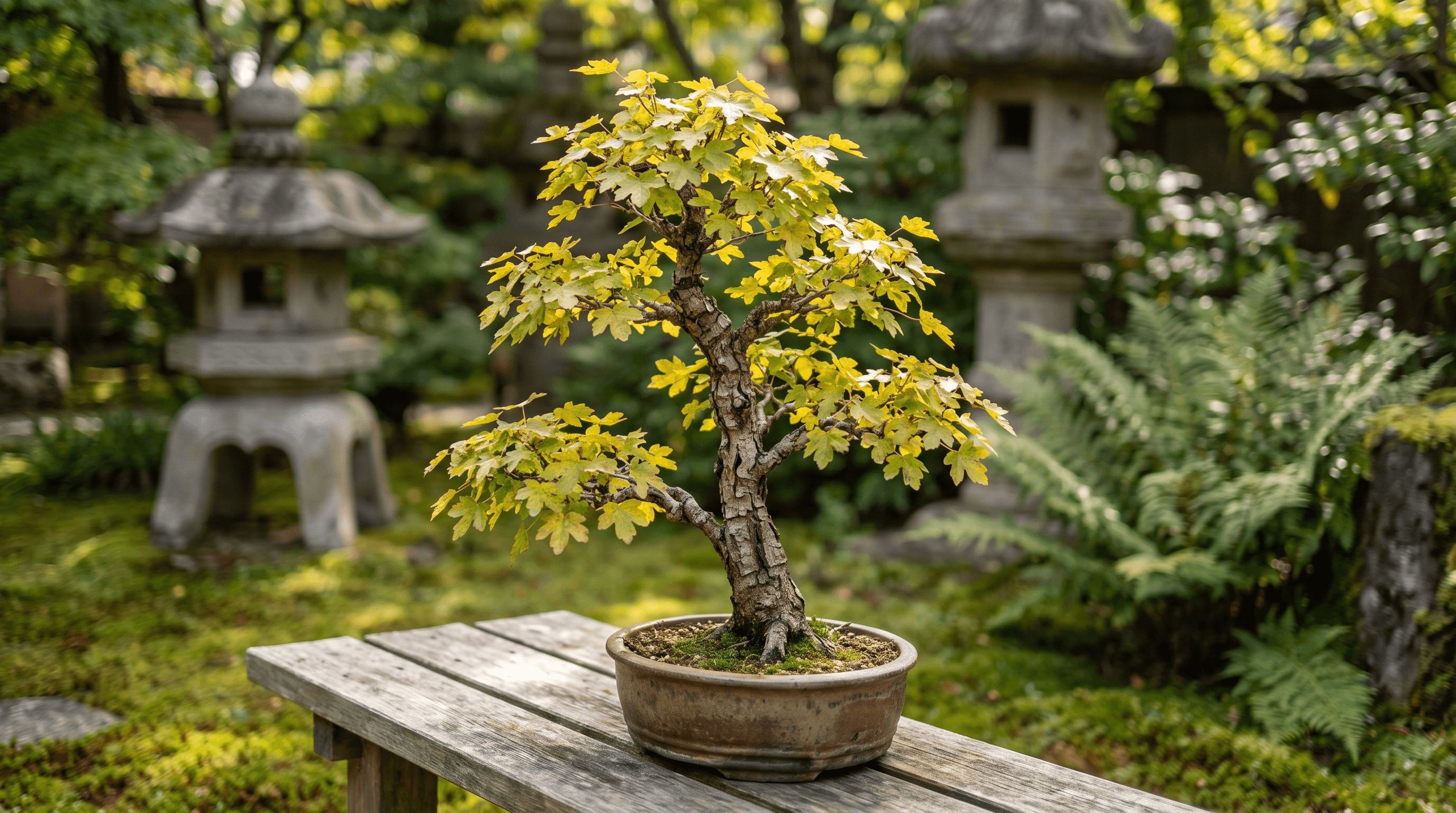
Field Maple Bonsai
Acer campestre
Field maple bonsai care is mostly a matter of temperament rather than fuss: this is a hedgerow tree from across Europe that shrugs off wind, poor soil, and a proper hard winter, and the trade-off for that toughness is a quieter, more golden autumn colour and a slightly slower path to fine ramification.
Read the guide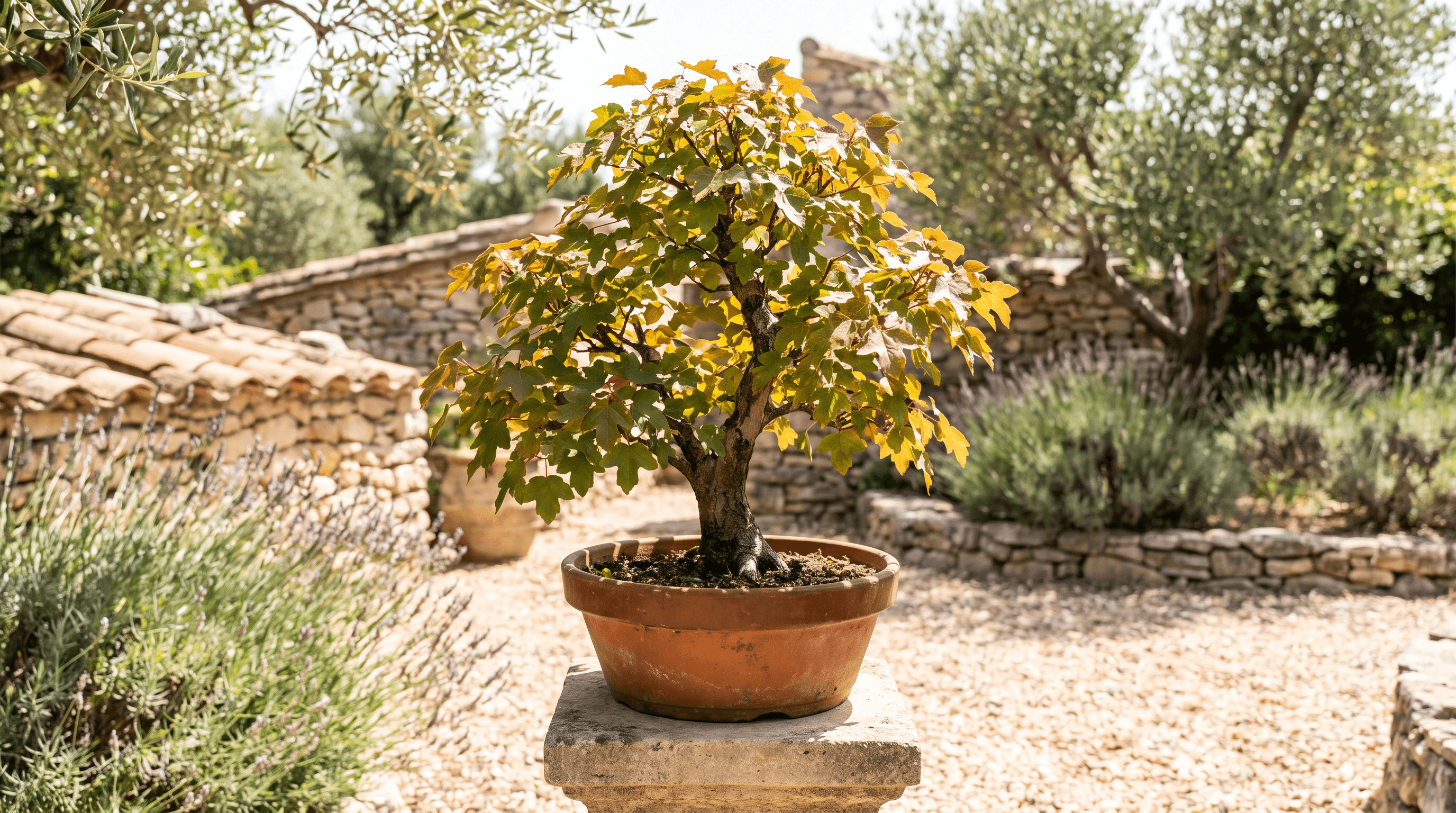
Montpellier Maple Bonsai
Acer monspessulanum
Montpellier maple bonsai care flips the usual maple rulebook: this is a Mediterranean native that tolerates full sun and short dry spells better than most maples, and for anyone gardening in a hot, dry southern climate like mine, that trait makes it one of the more practical maples you can grow.
Read the guide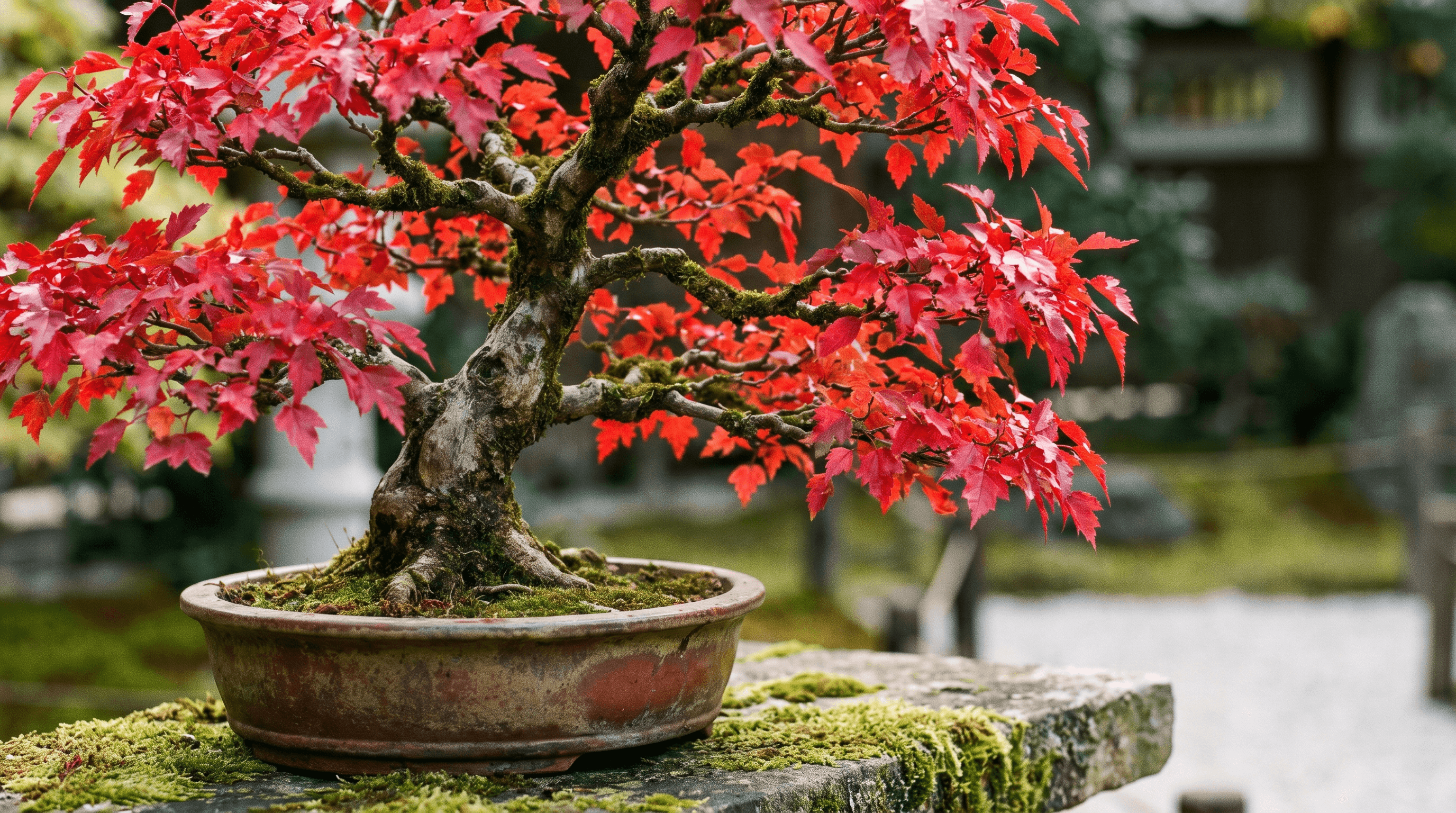
Amur Maple Bonsai
Acer tataricum subsp. ginnala (syn. Acer ginnala)
Amur maple bonsai care is what I recommend when someone wants strong red autumn colour but gardens somewhere with a proper harsh winter, since this is a species from the cold river valleys of northeast Asia with a genuinely stronger cold-hardiness rating than Japanese maple, and in my experience it also responds quickly to pruning.
Read the guide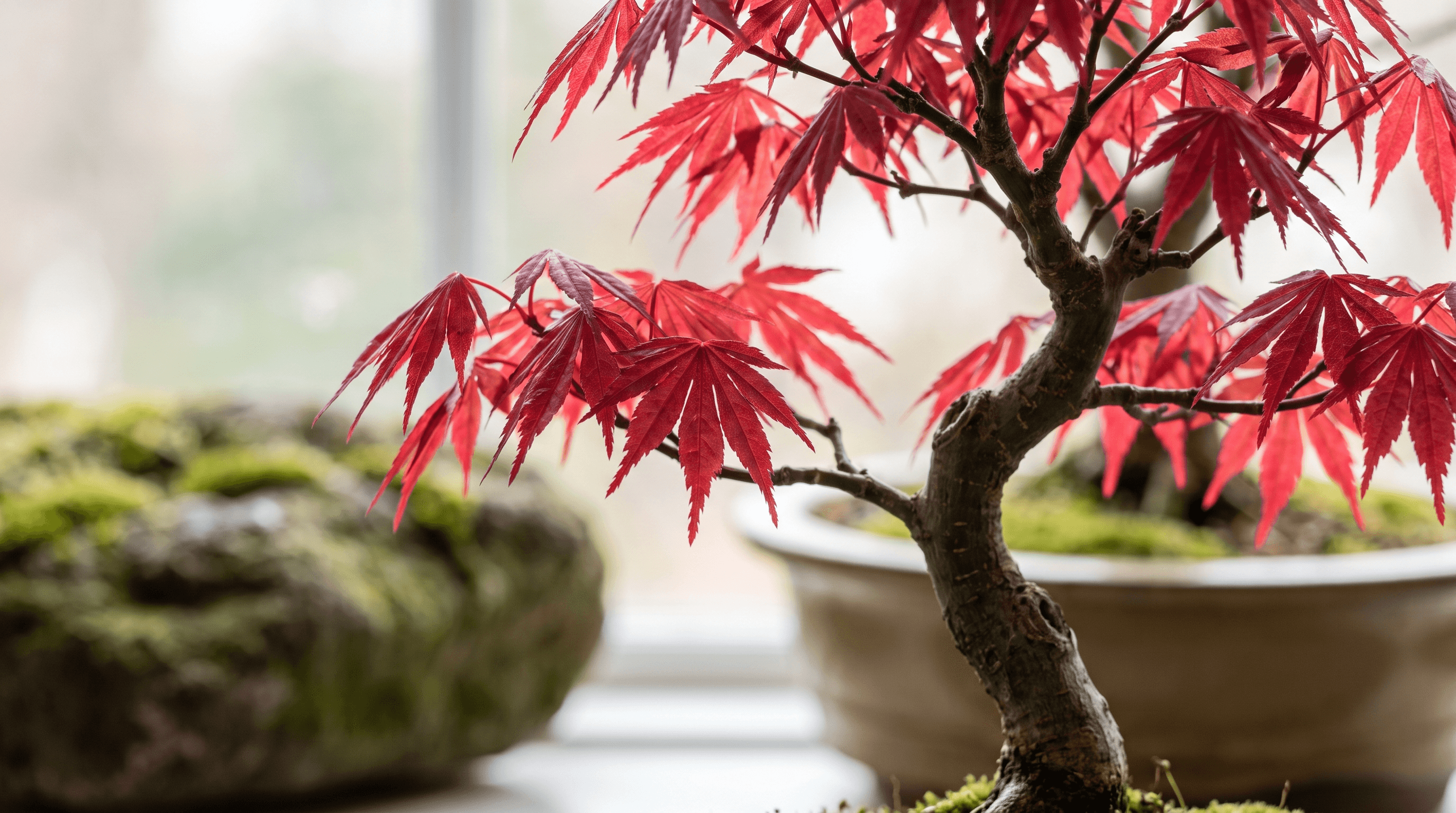
Deshojo Maple Bonsai
Acer palmatum 'Deshojo'
Deshojo is grown for one thing above everything else: the new spring growth comes out a bright, almost lacquered red, and for the first few weeks of the season the whole canopy looks like it's on fire before it settles down toward green for summer. It's one of the more popular Japanese maple cultivars I sell for exactly that reason, but the spring colour is also the part people misjudge, either by keeping it too shaded overall or by leaving the tender new growth in sun harsh enough to scorch the very leaves they're trying to show off.
Read the guide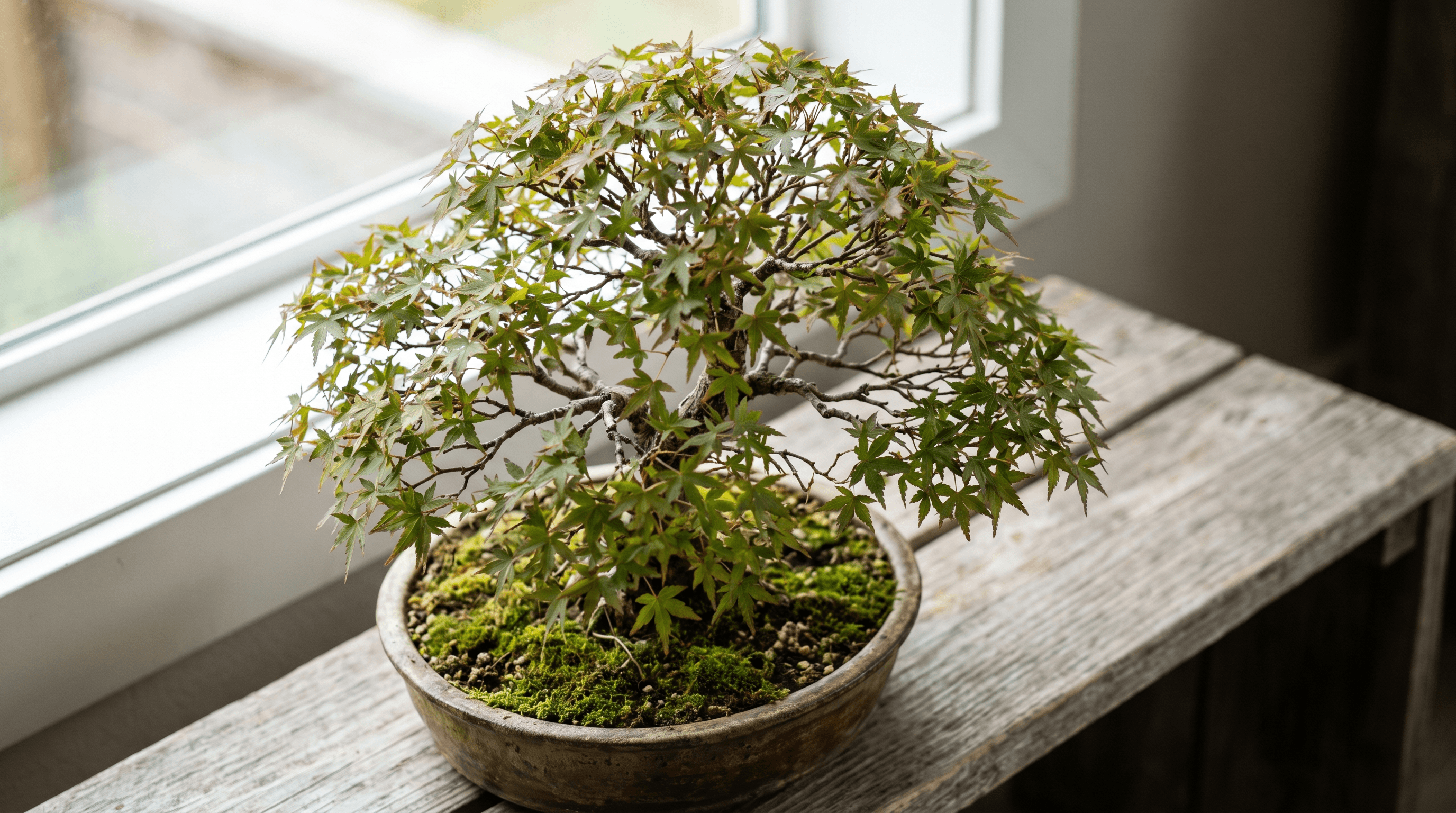
Kiyohime Maple Bonsai
Acer palmatum 'Kiyohime'
Kiyohime is a dwarf Japanese maple cultivar grown for small leaves and very short internodes, meaning new growth stays compact and close together instead of stretching out the way a standard Japanese maple does. That habit makes it one of the better maples I recommend for shohin and other small sizes, and for anyone chasing fine, detailed ramification without spending years fighting the tree's natural tendency to throw long, leggy shoots.
Read the guide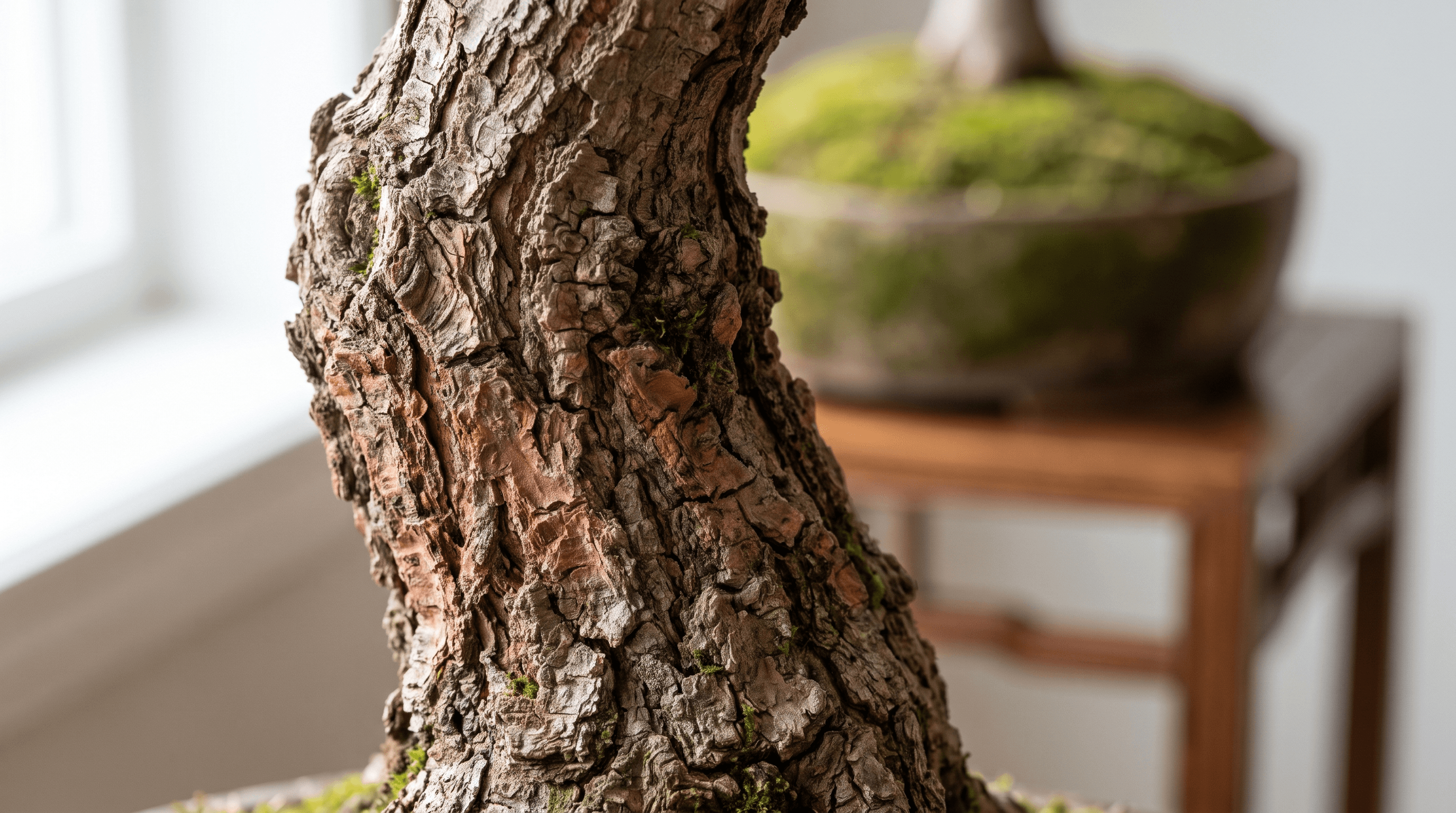
Arakawa Maple Bonsai
Acer palmatum 'Arakawa'
Arakawa is the Japanese maple cultivar grown for its bark rather than its foliage. Given time, the trunk and older branches develop a rough, corky, almost bark-plated texture that's genuinely unusual for a maple, most of which stay smooth-barked their whole lives, and that texture is treated as a legitimate styling feature in its own right, separate from whatever the leaves or autumn colour happen to be doing.
Read the guide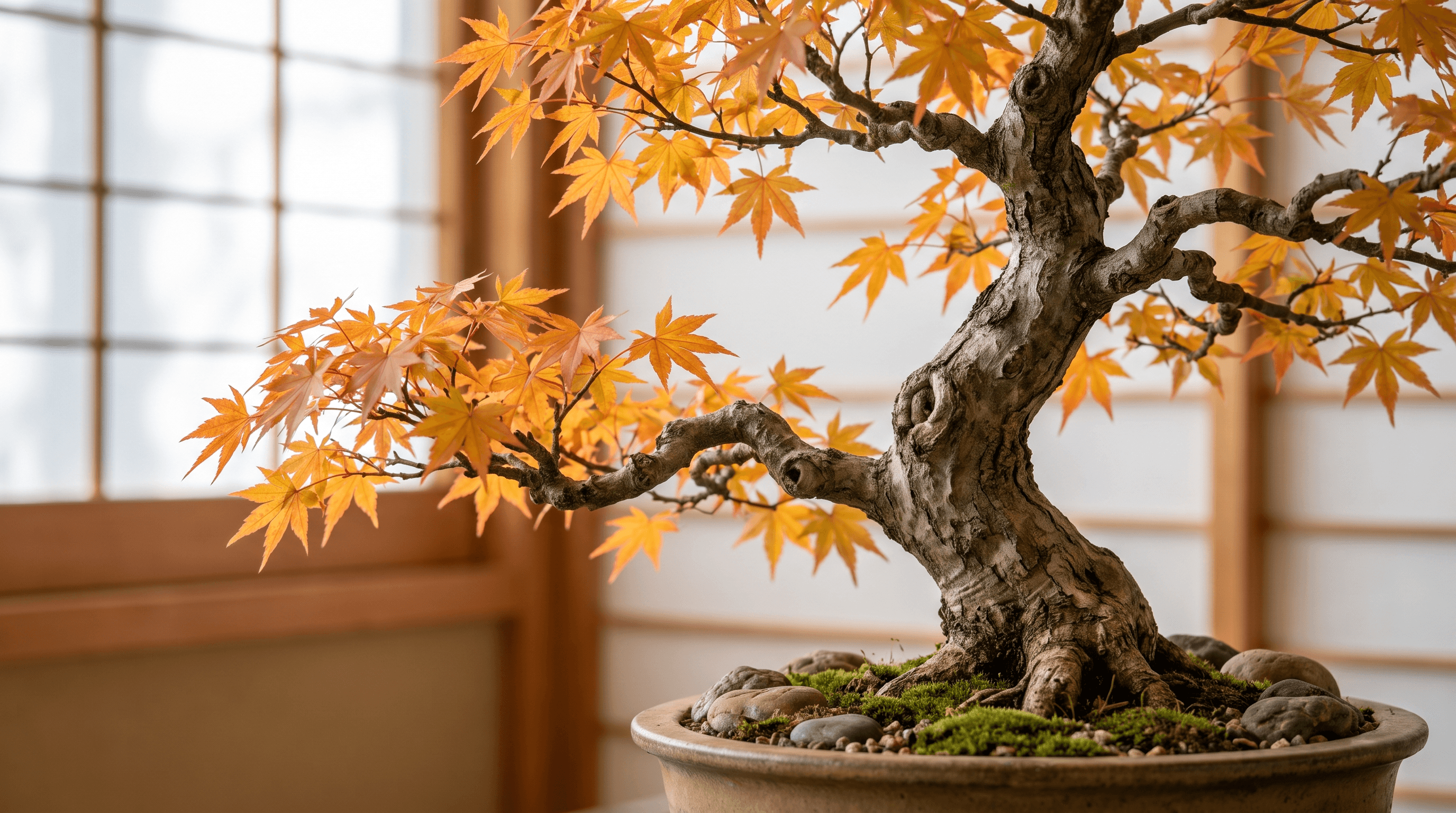
Katsura Maple Bonsai
Acer palmatum 'Katsura'
Katsura is a Japanese maple cultivar grown for spring foliage that opens orange to yellow rather than the red most people picture when they think of a colour-cultivar maple. That warm, glowing spring flush is genuinely distinctive against the more common red-spring cultivars in the same species, and it settles toward green through summer before the tree colours again in autumn, giving Katsura two separate colour displays a year rather than one.
Read the guide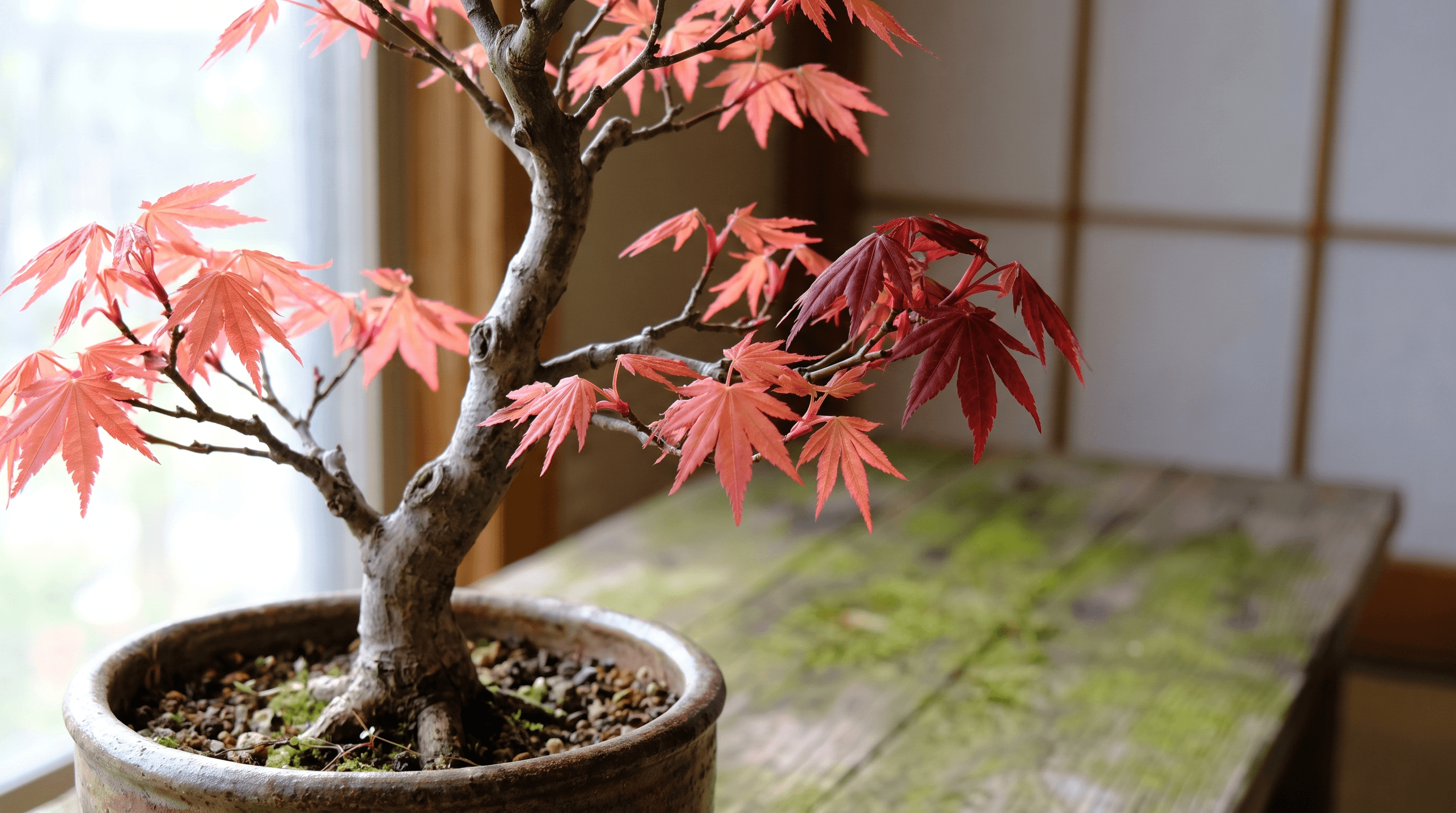
Seigen Maple Bonsai
Acer palmatum 'Seigen'
Seigen is grown for one thing above everything else: the intensity of its spring flush, when new leaves emerge in a pink-red so strong it stops people walking past the nursery. The intensity and duration of that spring colour are influenced by light, temperature and growing conditions, while the tender flush also needs protection from scorch in the weeks around budbreak.
Read the guide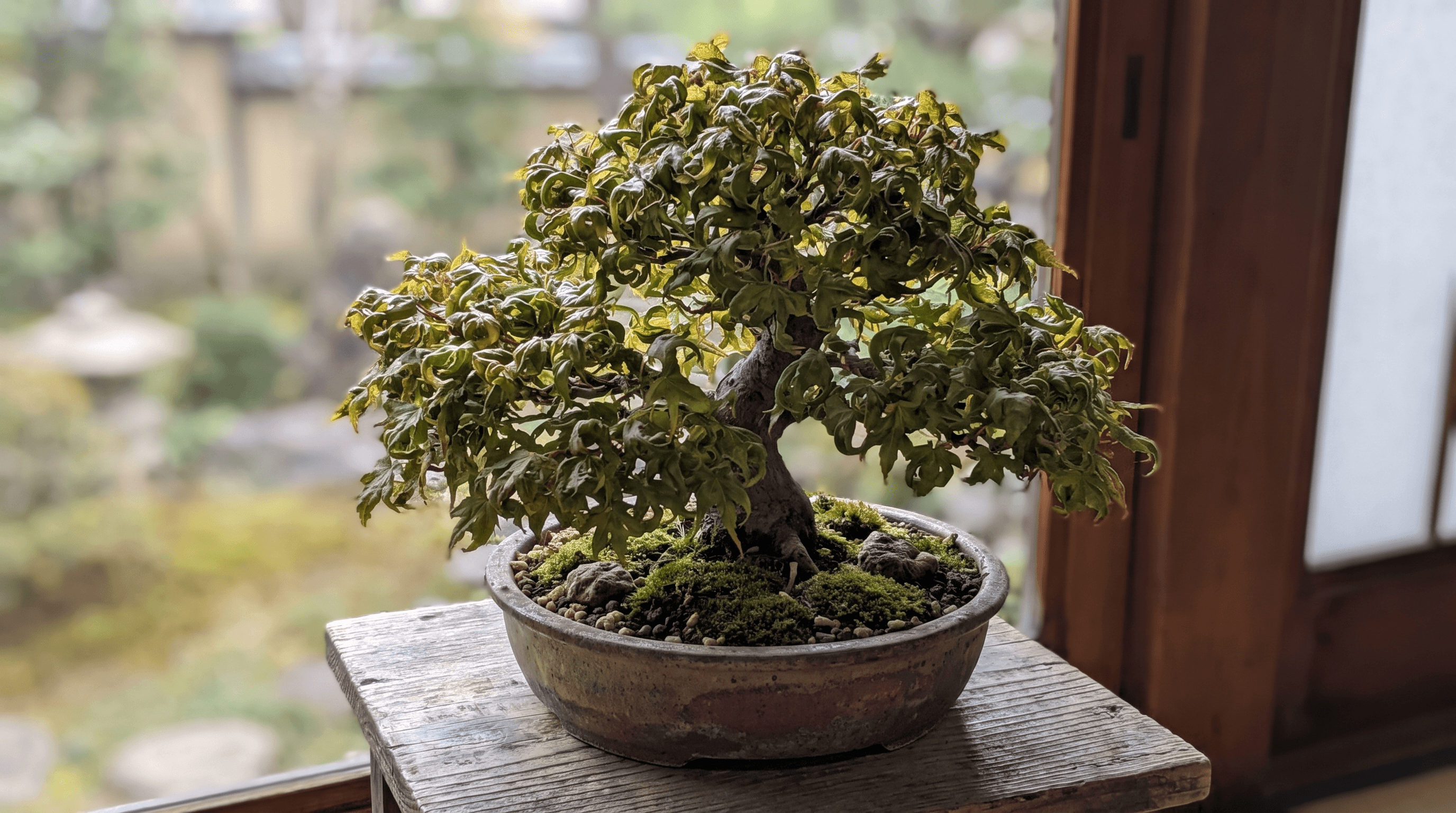
Shishigashira Maple Bonsai
Acer palmatum 'Shishigashira'
Shishigashira, the lion's head maple, is grown for a leaf that doesn't behave like a normal Japanese maple leaf at all, tightly curled and crinkled with short internodes and a naturally dense, slow-growing habit, and that unusual texture changes how you approach pruning and styling more than it changes basic day-to-day care.
Read the guide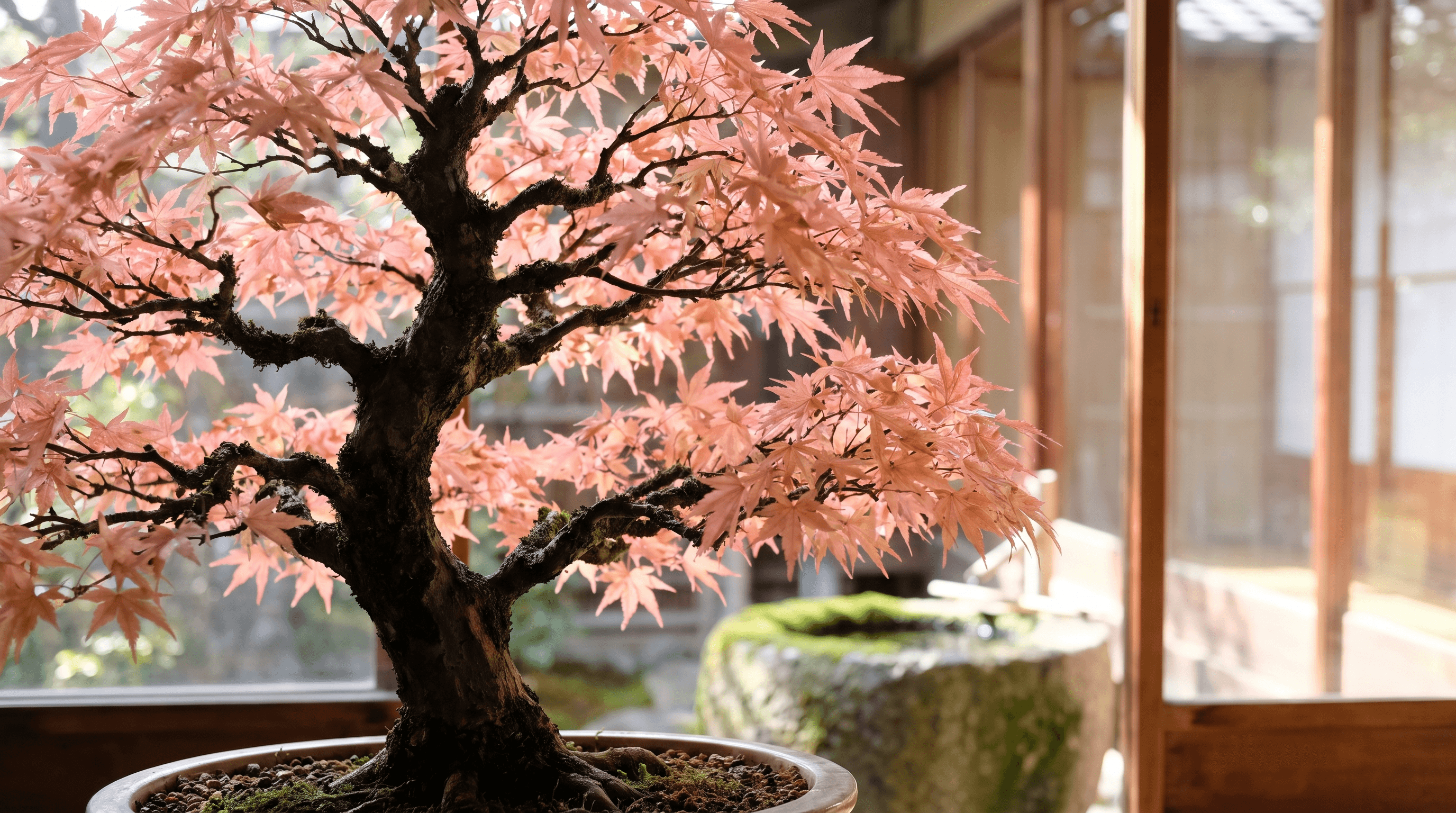
Beni Chidori Maple Bonsai
Acer palmatum 'Beni Chidori'
Beni Chidori is another of the red-spring Japanese maple cultivars, opening in a shrimp-pink flush each spring that settles toward green as summer arrives. It's similar in character to Deshojo and Seigen, and the three do get confused in the trade from time to time, but they're distinct cultivars with their own spring colour, vigour and leaf character rather than names you can swap for each other.
Read the guide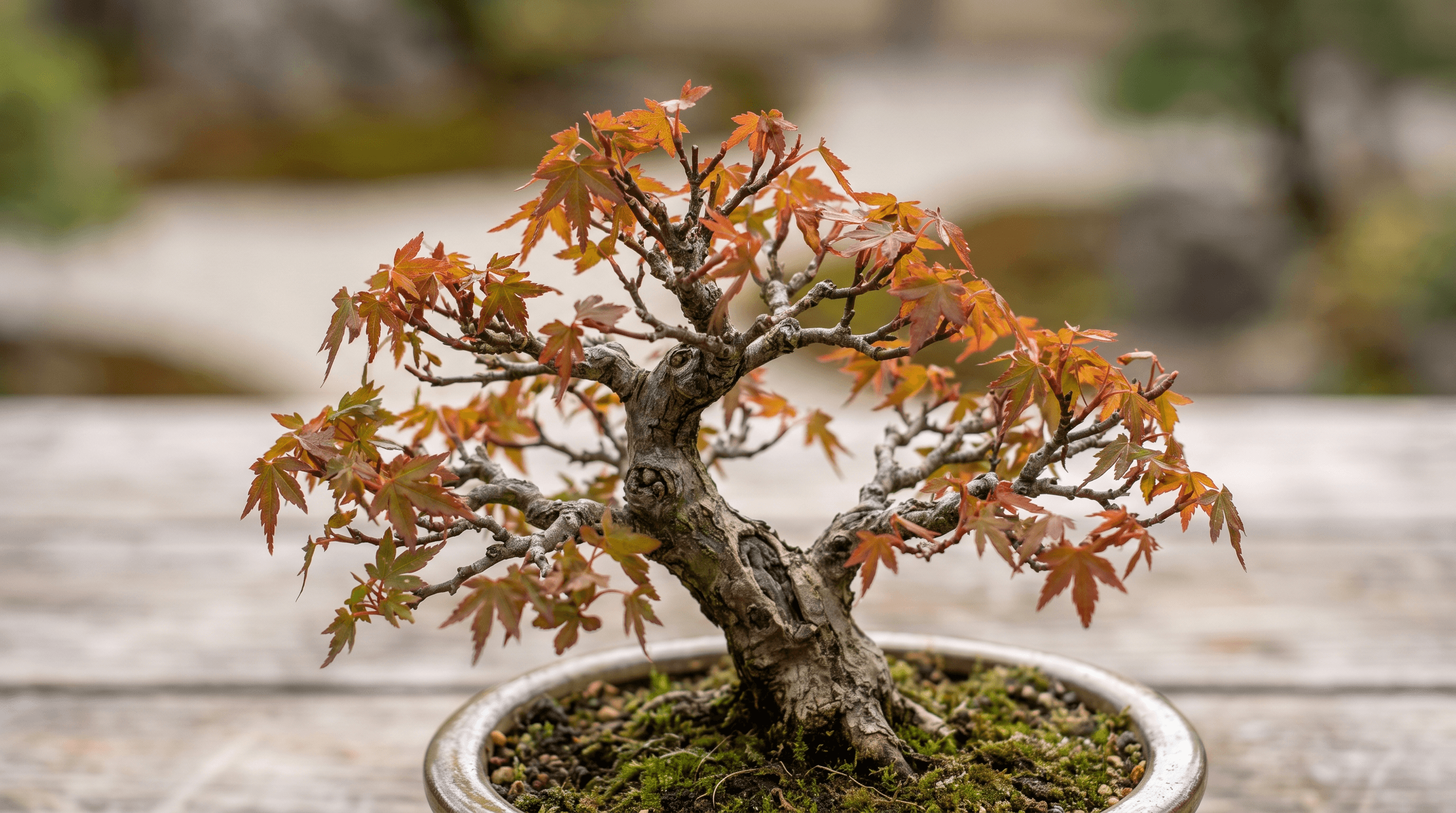
Kotohime Maple Bonsai
Acer palmatum 'Kotohime'
Kotohime is grown for one reason above all: leaves that stay genuinely tiny even on an older, well-developed tree, smaller than almost any other Japanese maple cultivar I work with. That trait makes it one of the best choices going for true shohin and mame sizes, but the flip side is a tree that is fussier about consistent care than a standard Japanese maple, mostly because it spends its life in a smaller pot than its own root system might otherwise call for.
Read the guide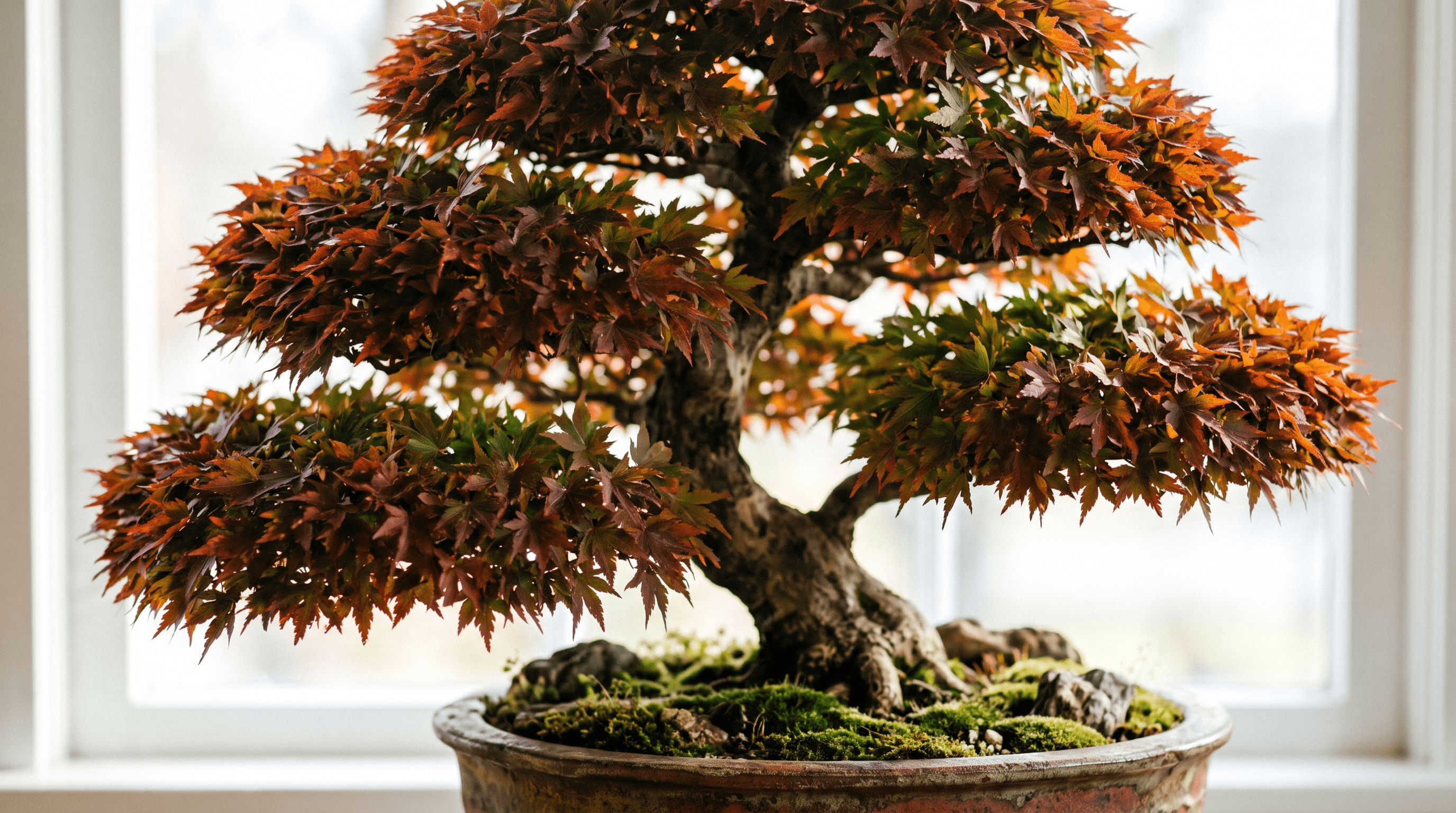
Mikawa Yatsubusa Maple Bonsai
Acer palmatum 'Mikawa Yatsubusa'
Mikawa Yatsubusa is one of the classic dwarf Japanese maple cultivars, grown less for a single showy trait like leaf colour and more for the way its foliage naturally stacks into tight, layered pads as it grows. That pad-forming habit is what growers reach for it specifically to exploit, and it's also why the pruning approach here ends up a bit different from a standard Japanese maple, less about building ramification from nothing and more about keeping naturally dense growth from crowding itself out.
Read the guide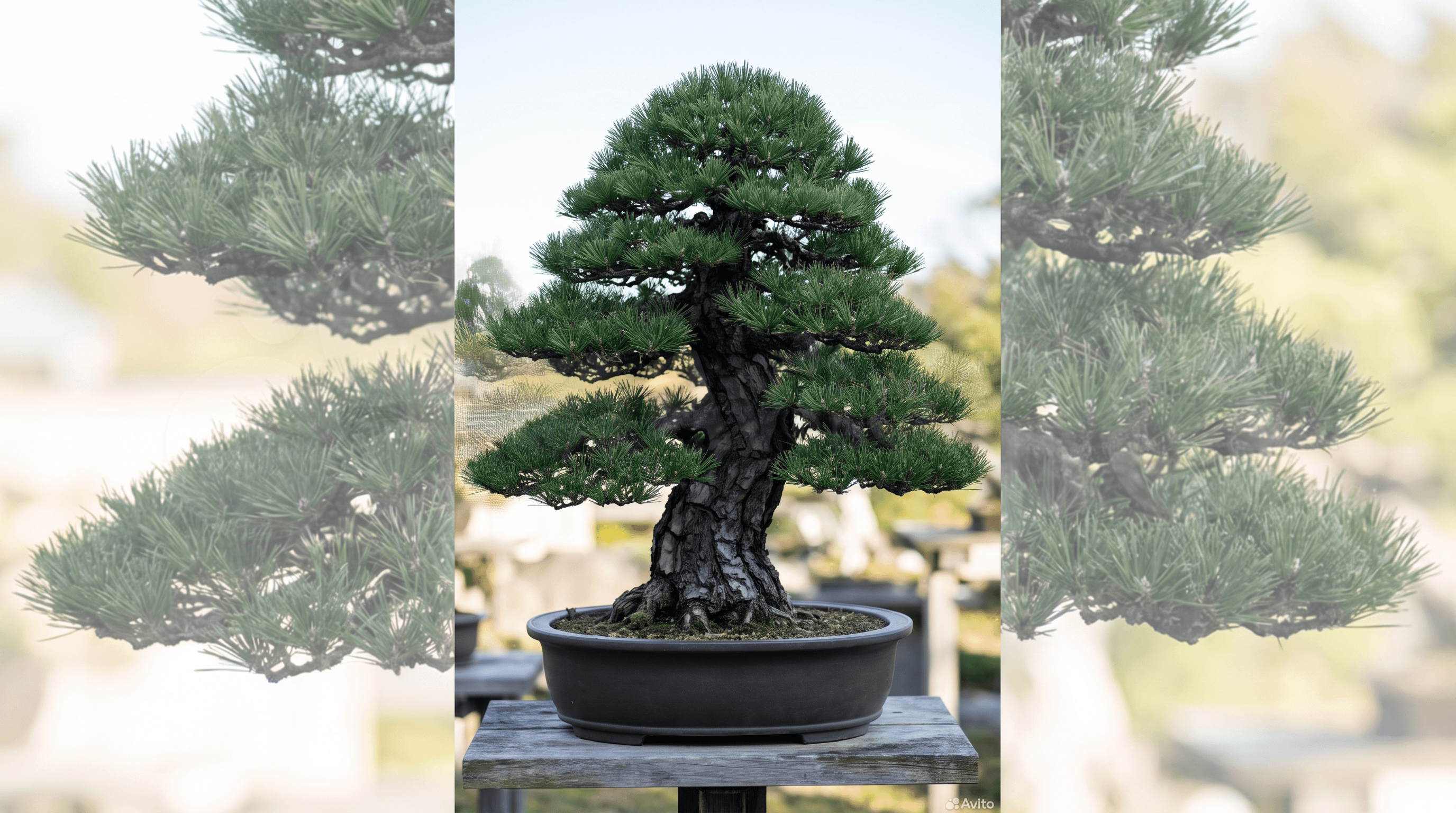
Japanese Black Pine Bonsai
Pinus thunbergii
Japanese black pine is the tree most people picture when they close their eyes and think "bonsai pine": a thick, muscular trunk wrapped in rugged dark bark, carrying dense tiered pads built up over years of decandling. It's also the clearest example of a two-flush pine, and understanding what that actually means is the difference between growing a convincing black pine and growing a shrub with pine needles on it.
Read the guide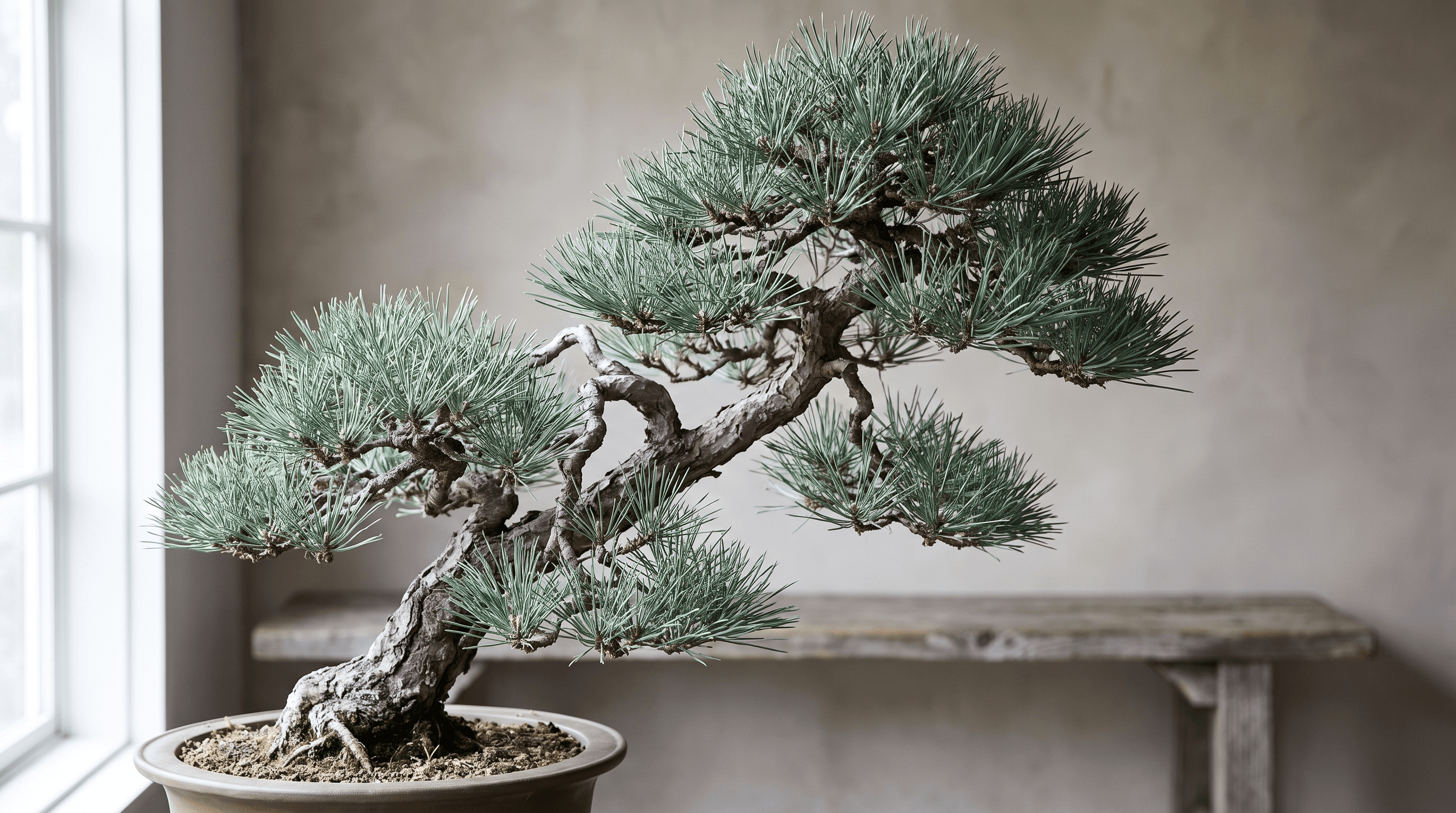
Japanese White Pine Bonsai
Pinus parviflora
Japanese white pine carries a completely different mood from black pine: fine blue-green needles, a soft, refined silhouette, and a reputation as one of the most treasured species in Japanese bonsai. It's also managed in a genuinely different way. White pine is a single-flush tree, not decandled, and mixing up the two techniques is one of the most common mistakes I see people bring over from black pine care.
Read the guide