
Rosemary Bonsai Care
Salvia rosmarinus (syn. Rosmarinus officinalis)
Rosemary bonsai is the rare tree in this collection you could technically pick a sprig from for the kitchen, and the rare tree that will punish overwatering faster than almost anything else I grow.
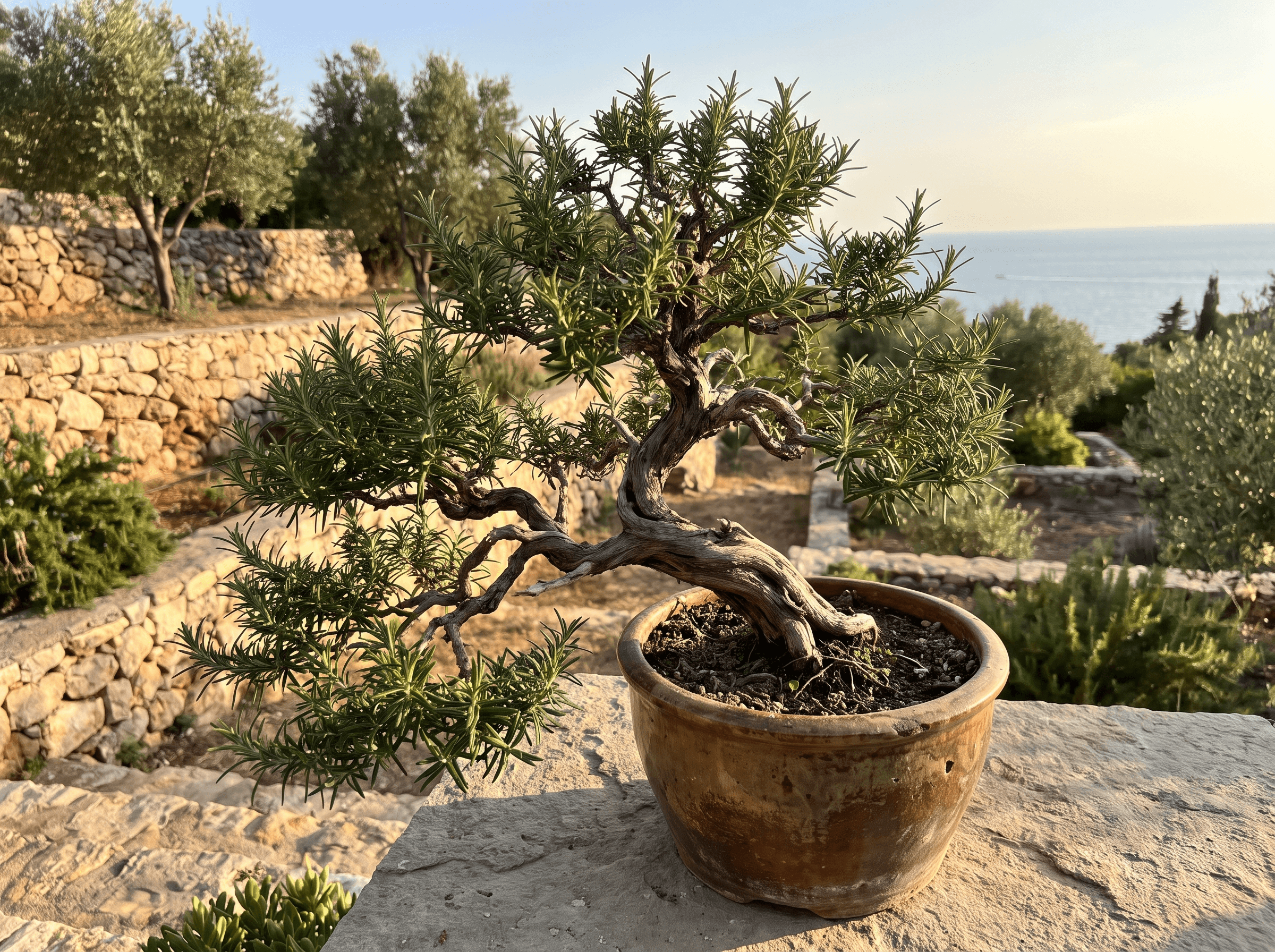
Rosemary getting reclassified botanically into the Salvia genus a few years back caused a bit of confusion, but growers, myself included, still mostly call it Rosmarinus out of habit, and either name points to the same plant most people already know from the herb garden. What surprises newcomers is how well it takes to bonsai training. Old rosemary bushes left to grow for years develop genuinely gnarled, woody, fissured bark and thick, twisting lower trunks that look far older than the plant's actual age, which is exactly the kind of character bonsai growers chase.
It comes from the dry, rocky, sun-baked hillsides of the Mediterranean, and if you've ever seen it growing wild along a coastal path here in the south you'll know it thrives on neglect in one very specific sense: it wants poor, fast-draining soil and it wants to be left alone with water, not fussed over. That's the trap most beginners fall into. They treat it like a typical bonsai needing regular attention and end up overwatering a plant that's adapted to thin, fast-draining Mediterranean soil, and root rot can set in before they realise what's happening.
The common misconception is that because rosemary is such an easy, tough garden herb, it must be an easy bonsai too. In the ground, it's nearly indestructible. In a shallow bonsai pot, the margin for error on watering shrinks dramatically, and rosemary is particularly sensitive to sitting wet in a container. Get the drainage and sun right, though, and it's a genuinely low-fuss, fast-developing tree with real character in the trunk.
Care
Light
Full sun, as much as you can possibly give it. Rosemary is a plant of open, exposed Mediterranean hillsides and it wants direct sun for most or all of the day, outdoors whenever your climate allows it. Indoors it tends to struggle, since even a bright windowsill often falls short of what this plant wants, and you'll see weak, stretched, sparse growth as a result. If you have to keep it inside for any period, a strong grow light running many hours a day helps considerably, but honestly this is a tree that belongs outside in full sun whenever weather permits.
Watering
This is one of the most important things to get right with rosemary bonsai, and where most people go wrong. Water thoroughly, then let the mix approach dryness before watering again, rather than keeping it constantly damp. Rosemary is adapted to fast-draining Mediterranean ground and is particularly sensitive to wet feet in a container, root rot can develop in a pot that stays soggy. Aim for that dry-then-thoroughly-water rhythm rather than leaning hard toward either extreme, and check the pot's actual weight and the soil's actual dryness rather than watering on a fixed schedule.
Temperature & hardiness
Cold hardiness varies noticeably by cultivar. As a species, rosemary is generally rated hardy in something like USDA zones 8 to 10, with a handful of tougher cultivars surviving into zone 7, though a harsh frost can still damage shoots even on a hardy plant. A container-grown bonsai is meaningfully less cold-tolerant than the same rosemary planted in open ground, since the roots have far less insulation in a shallow pot. If you don't know which cultivar you have, it's safest to treat it as moderately frost-sensitive and bring it into an unheated but sheltered space, like a cold frame or an unheated porch, during hard freezes. In a mild Mediterranean climate it can often stay outdoors year-round with minimal fuss, which is one of the real advantages of growing it here in the south.
Soil & potting
An extremely free-draining, mineral-heavy substrate matters a great deal for rosemary. A mix leaning heavily toward pumice, lava rock, or coarse grit, roughly four parts mineral aggregate to one part akadama or organic component, suits it well. Think of the mix as replicating a thin, gritty, rocky Mediterranean hillside rather than rich garden soil. Drainage is one of the most important things to get right with this species, since a mix that holds water even slightly too long is a common reason rosemary bonsai fail.
Fertilizing
Rosemary doesn't need heavy feeding, it's adapted to poor, nutrient-thin soils and can actually get leggy and soft with overly rich fertilising. A light, balanced feed through the growing season, spring into summer, at a diluted rate is plenty, tapering off in autumn and stopping through winter dormancy or any cold protection period. If in doubt, feed less than you think this tree needs rather than more.
Pruning & wiring
Rosemary backbuds reasonably well on younger wood and tolerates regular trimming through the growing season to build density, though like many woody Mediterranean shrubs it's less reliable at pushing new growth from very old, bare wood, so avoid cutting hard into old trunk sections and expecting fresh shoots. Wiring works on younger, still-flexible branches, but older wood becomes stiff and brittle fairly quickly and snaps rather than bends, so structural work is best done early while branches are still pliable. This is also where the tree's best asset shows itself: as trunks age they develop genuinely attractive, gnarled, fissured bark, so it's often worth exposing and featuring older trunk sections rather than hiding them under dense foliage.
Repotting
Repotting is generally needed roughly every two years for younger, actively growing trees and less often as the tree matures and root growth fills the pot more slowly, typically timed for spring as new growth begins. Given how sensitive rosemary is to wet roots, repotting into a genuinely free-draining mix matters, and it's a good opportunity to correct a mix that's been holding too much moisture. Trim roots moderately rather than aggressively, and go easy on watering for the first couple of weeks afterward while new roots establish, since a freshly repotted rosemary is especially unforgiving of overwatering during that window.
Common problems
Root rot from overwatering is the biggest threat to rosemary bonsai, and it can move quickly, a plant that looked fine a week ago can suddenly show wilting, dulling foliage, or a soft, dark base at the soil line once the roots have been sitting wet too long. Because the symptoms of root rot and drought stress can look superficially similar, wilting, dry-looking foliage, it's worth actually checking the soil moisture and root health before assuming the plant needs more water, since watering a rotting root system only makes things worse. Powdery mildew can appear in overly humid, poor-airflow conditions, showing as a pale dusty coating on leaves, which is another argument for keeping this species outdoors in open air rather than crowded and enclosed. Scale, aphids, leafhoppers, spider mites, and in some regions rosemary beetle can all turn up too, though this species tends to be fairly resilient against pests compared to how vulnerable it is to wet roots.
Styling
Rosemary's real strength as bonsai is trunk character rather than fine ramification, older specimens develop thick, twisting, deeply fissured woody bark that looks genuinely ancient well before the tree actually is, so informal upright and slanting styles that show off the lower trunk tend to suit it best. Cascade and semi-cascade forms also work nicely, echoing how rosemary naturally tumbles over rocky Mediterranean slopes in the wild. Because old wood doesn't backbud reliably, styling decisions on mature trunks are worth taking slowly and permanently rather than planning to correct them later with a hard cutback, since that option may simply not be available on older material.
Common questions
Why is my rosemary bonsai dying even though I water it regularly?
Regular watering is very likely the problem rather than the solution. Rosemary is particularly sensitive to wet roots and root rot can set in fast in a pot that stays consistently damp. Let the soil dry out noticeably between waterings, check for a free-draining mix, and resist the urge to water on a fixed schedule.
Can I use rosemary bonsai leaves for cooking?
Yes, it's the same plant as culinary rosemary, so trimmings are genuinely usable in the kitchen. Just be mindful that heavy harvesting for cooking and disciplined bonsai pruning for shape aren't always the same goal, and don't strip a developing tree bare just because the leaves are edible.
How cold hardy is rosemary bonsai?
It varies by cultivar, some varieties tolerate light frost, others are more tender, and as a species rosemary is generally rated hardy to around USDA zone 8, with a few tougher cultivars surviving zone 7. A bonsai in a shallow pot is less cold-tolerant than the same plant in open ground. If you're unsure which cultivar you have, treat it as moderately frost-sensitive and protect it in an unheated, sheltered space during hard freezes rather than risking it outdoors.
What soil is best for rosemary bonsai?
An extremely free-draining, mineral-heavy mix, leaning heavily on pumice, lava rock, or coarse grit rather than organic material. Drainage matters more for rosemary than for almost any other bonsai species, since it evolved on thin, rocky, sun-baked Mediterranean soil and has very little tolerance for anything that holds water too long.
Why won't old wood on my rosemary bonsai backbud?
Rosemary is less reliable than many species at pushing new growth from old, bare wood. It's best to avoid hard cuts into old trunk sections expecting recovery shoots, and instead do structural shaping while branches are still young and flexible.
Does rosemary bonsai need full sun?
Yes, as much direct sun as you can give it. It's adapted to open, exposed Mediterranean hillsides and struggles badly in shade or indoors, producing weak, stretched, sparse growth. Outdoors in full sun is where this species genuinely thrives.
Is rosemary a good beginner bonsai?
It can be, if you fully accept that overwatering is the main risk. Beginners used to watering more attentively often kill rosemary through kindness. If you can commit to letting it dry out between waterings and giving it strong sun, it's a fast-developing, low-fuss tree with real trunk character.
You might also like
General guidance based on 20+ years of practice. Every tree and every climate is different — when in doubt, ask us.