
European Beech Bonsai Care
Fagus sylvatica
European beech is a classic choice for the formal upright bonsai silhouette, prized for its smooth grey bark and for its odd habit of holding dead, papery leaves through winter when it's grown a certain way.
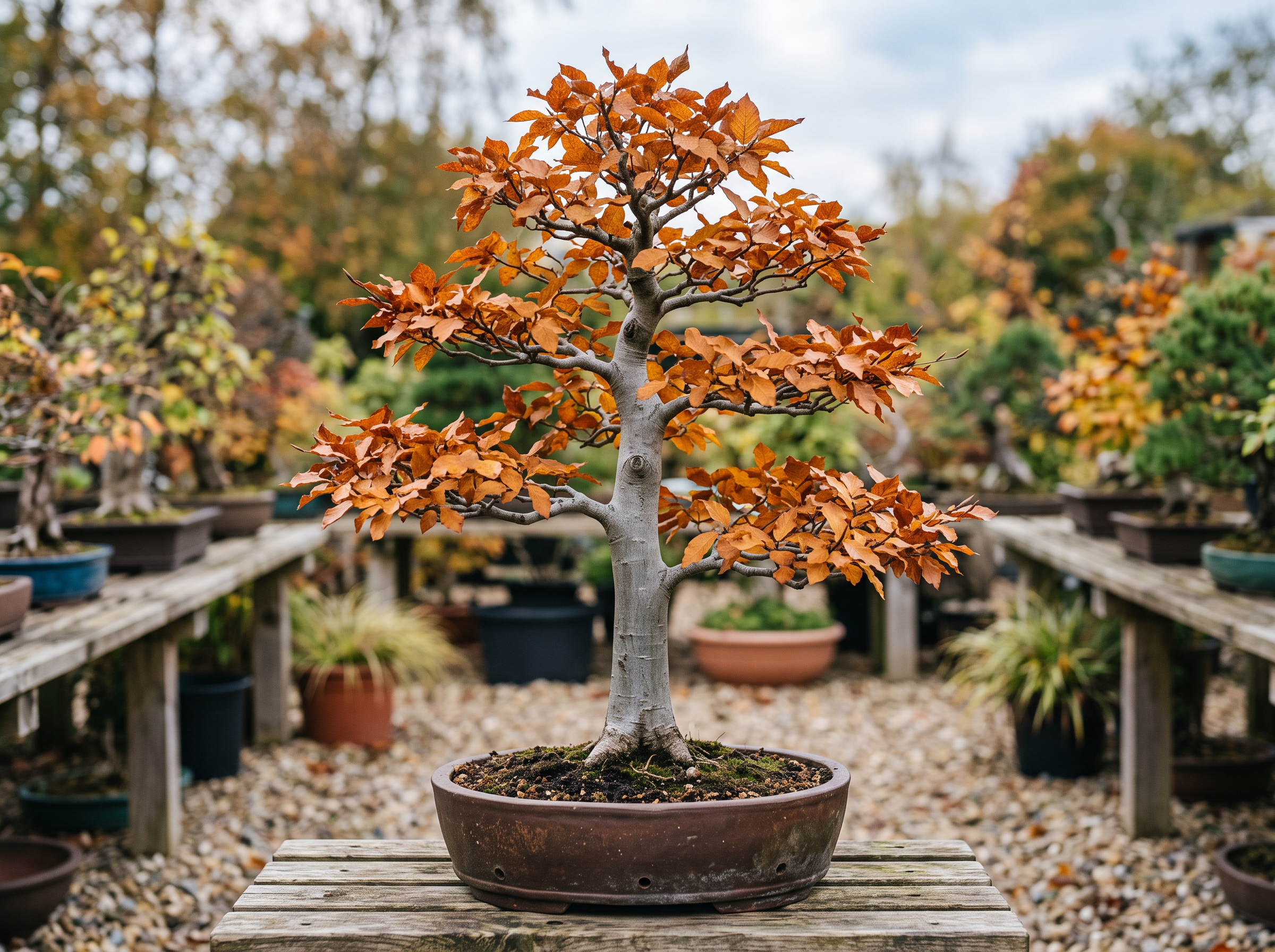
Beech has a quiet elegance that takes a while to appreciate if you're used to more dramatic species. There's no bright deadwood, no hanging flowers, no explosive autumn colour. What you get instead is smooth, pale grey bark that stays clean and unbroken even on old, thick trunks, and a naturally straight, tapering growth habit that suits it particularly well to formal upright style. If you want to learn straight-trunk technique properly, beech and hornbeam are where most serious growers start.
The detail that surprises newcomers most is marcescence, the tendency for a beech to hold onto its dried, tan-coloured leaves right through winter instead of dropping them like a normal deciduous tree. In nature this happens mainly on young trees and lower branches. As bonsai, how strongly your tree does this can be influenced by the timing of your pruning through the growing season, particularly later summer pruning, so it's not entirely a fixed trait, and a lot of growers manage their trees with an eye toward a fuller marcescent display for winter viewing.
It's an outdoor deciduous tree and not a difficult one, but it has one real weakness: hot, direct sun scorches the leaves badly, especially in a Mediterranean summer, turning the margins brown and crisp well before autumn should arrive. In my experience it also thickens fairly slowly compared with faster-growing species, so building a substantial trunk from young material takes real patience. Neither of those is a reason to avoid beech, but they shape how you should plan for it from the start.
Care
Light
Beech does best in a spot with morning sun and afternoon shade, or dappled light through the hottest part of the day, particularly in warmer climates. Full, unbroken summer sun through the middle of the day scorches the thin leaves badly, leaving crisp brown margins that don't recover once damaged. In cooler, cloudier climates full sun causes fewer problems, so adjust to your own conditions, but as a general rule I treat beech as a part-shade tree here in the south rather than a full-sun one.
Watering
Keep the soil consistently moist through the growing season without letting it become waterlogged. Beech has fine, fibrous roots that dry out and suffer quickly if the pot goes completely dry, and scorched, curling leaf edges are as often a watering problem as a sun problem, the two frequently compound each other in a hot summer. I water thoroughly and check more than once a day during peak summer heat, easing off somewhat as the weather cools into autumn.
Temperature & hardiness
This is a genuinely cold-hardy deciduous tree that needs a real winter outdoors with proper dormancy to stay healthy long-term. Where beech actually struggles most is heat and sun exposure in summer, so plan your placement around shade in the hot months. That said, don't treat winter as an afterthought either: roots confined to a shallow pot are far more exposed to freezing than roots in open ground, so protect the pot itself from hard, extended freezes rather than assuming the species' general cold hardiness covers container-grown trees automatically.
Soil & potting
A free-draining bonsai mix with decent water retention suits beech well, something with more organic content than a strict conifer mix, closer to what you'd use for maple. The fine root system responds well to a mix that holds moisture evenly without staying soggy. Poor drainage combined with the tree's steady water needs is a common way to end up with weak, stressed growth, so balance retention against drainage rather than favouring one extreme.
Fertilizing
Feed with a balanced fertiliser through the growing season, spring into early autumn, tapering off as growth slows and stopping through winter dormancy. Beech responds well to steady, moderate feeding rather than heavy doses, and because it thickens on the slower side, consistent feeding through the growing season genuinely helps push development rather than being a nice-to-have.
Pruning & wiring
Prune new shoots back to one or two leaf pairs during the growing season to build ramification; this pruning timing, especially later summer work, is also one of the factors that can encourage a beech to hold its dried leaves into winter rather than dropping them cleanly in autumn. Wiring works well on the flexible young shoots typical of formal and informal upright styles, though I check regularly since beech bark, while smooth, can still scar if wire is left biting in too long. Structural work is best done in late winter while the tree is bare and you can see the branch framework clearly.
Repotting
Repot every two years for younger, vigorously growing trees, extending to three years or more as the tree matures, in early spring before the buds break. Beech has a fine, fibrous root system that responds well to root work when it's done carefully, but I still keep root reduction conservative in any single session rather than an aggressive bare-root each time. Keep a newly repotted beech sheltered from strong sun and wind for a couple of weeks afterward while the fine roots re-establish.
Common problems
Leaf scorch from too much direct sun or inconsistent watering is the issue I see most, showing up as crisp brown edges or patches on the leaves that won't green back up once damaged, though the tree usually recovers fine the following spring. Aphids can cluster on soft new growth in spring, scale and mealybugs occasionally show up on stems and the undersides of leaves, and powdery mildew can appear as a pale, dusty coating in humid, still conditions with poor airflow. Beech is also susceptible to a few foliage-feeding caterpillars depending on your region, worth checking for if you notice ragged holes appearing quickly in the leaves. Yellowing between the leaf veins can point to chlorosis from very calcareous water, similar to the pH issues seen on azalea, so watering source is worth considering if other causes don't explain it. Weak, sparse growth or an unusually thin canopy often points to a root problem, either a pot that's gone completely dry at some point during summer or drainage that's poor enough to be suffocating the fine roots. If your tree drops all its leaves cleanly in autumn instead of holding some through winter and you were hoping for a marcescent display, pruning timing is one factor worth looking at, though it's not the only influence.
Styling
Beech is a classic choice for formal upright style, valued for its naturally straight, tapering trunk and clean, unbroken grey bark that only improves with age. Informal upright and group plantings, forests of several beech trunks planted together to mimic a stand of trees in woodland, are also classic uses for this species and show off the pale bark and fine branching particularly well in winter once the canopy is bare or holding its marcescent leaves. It isn't a species suited to dramatic deadwood or twisted, windswept trunk lines the way juniper or cedar can be. Beech's appeal is quieter and more architectural, built on trunk line, bark, and the discipline of fine ramification rather than theatrical shaping.
Common questions
Why does my beech bonsai keep its dead leaves in winter?
This is marcescence, a natural trait where the tree holds onto dried, papery leaves through winter instead of dropping them cleanly like most deciduous trees. As bonsai, how strongly this happens can be influenced by your pruning timing through the growing season, particularly later summer work, and many growers keep this in mind if they want a fuller marcescent display.
Can beech bonsai be kept in full sun?
Not in a hot climate. Beech leaves scorch easily in strong direct sun, especially through the middle of a Mediterranean summer day. Morning sun with afternoon shade, or dappled light, works much better than full unbroken exposure in warm regions, though cooler, cloudier climates can generally handle more direct sun.
Why is my beech bonsai growing so slowly?
Beech naturally thickens and develops fairly slowly compared with faster-growing species, so a certain amount of patience is simply part of working with this tree. Consistent feeding through the growing season and good watering discipline help, but there's no way to rush beech much beyond its own pace.
Is European beech a good beginner bonsai species?
It's a reasonable choice for someone willing to be patient and attentive to sun and watering, since it isn't especially difficult once you understand its scorch sensitivity. It's less forgiving of hot, unshaded placement than tougher species like elm, so it suits a grower who can provide the right spot rather than a completely hands-off beginner tree.
When should I prune beech bonsai?
Ongoing shoot pruning during the growing season, cutting back to one or two leaf pairs, builds ramification and also influences marcescence. Bigger structural cuts are best done in late winter while the tree is bare, when you can see the whole branch framework clearly before new growth starts.
How often does beech bonsai need repotting?
Every two years for a younger, actively growing tree, stretching to longer intervals as it matures and root growth slows, always in early spring before the buds break.
What's the difference between beech and hornbeam for bonsai?
They're often compared because they're used similarly and look somewhat alike, but in my experience hornbeam buds back more reliably after hard pruning and develops a distinctive fluted trunk with age, while beech is prized specifically for its smoother bark and classic formal upright habit. Many growers keep both for that contrast.
You might also like
General guidance based on 20+ years of practice. Every tree and every climate is different — when in doubt, ask us.