
Olive Bonsai
Olea europaea
Olive bonsai care is about as Southern Italian as bonsai gets: tough, drought-hardy, and capable of looking a hundred years old on a trunk that's really only twenty, provided you don't drown it.
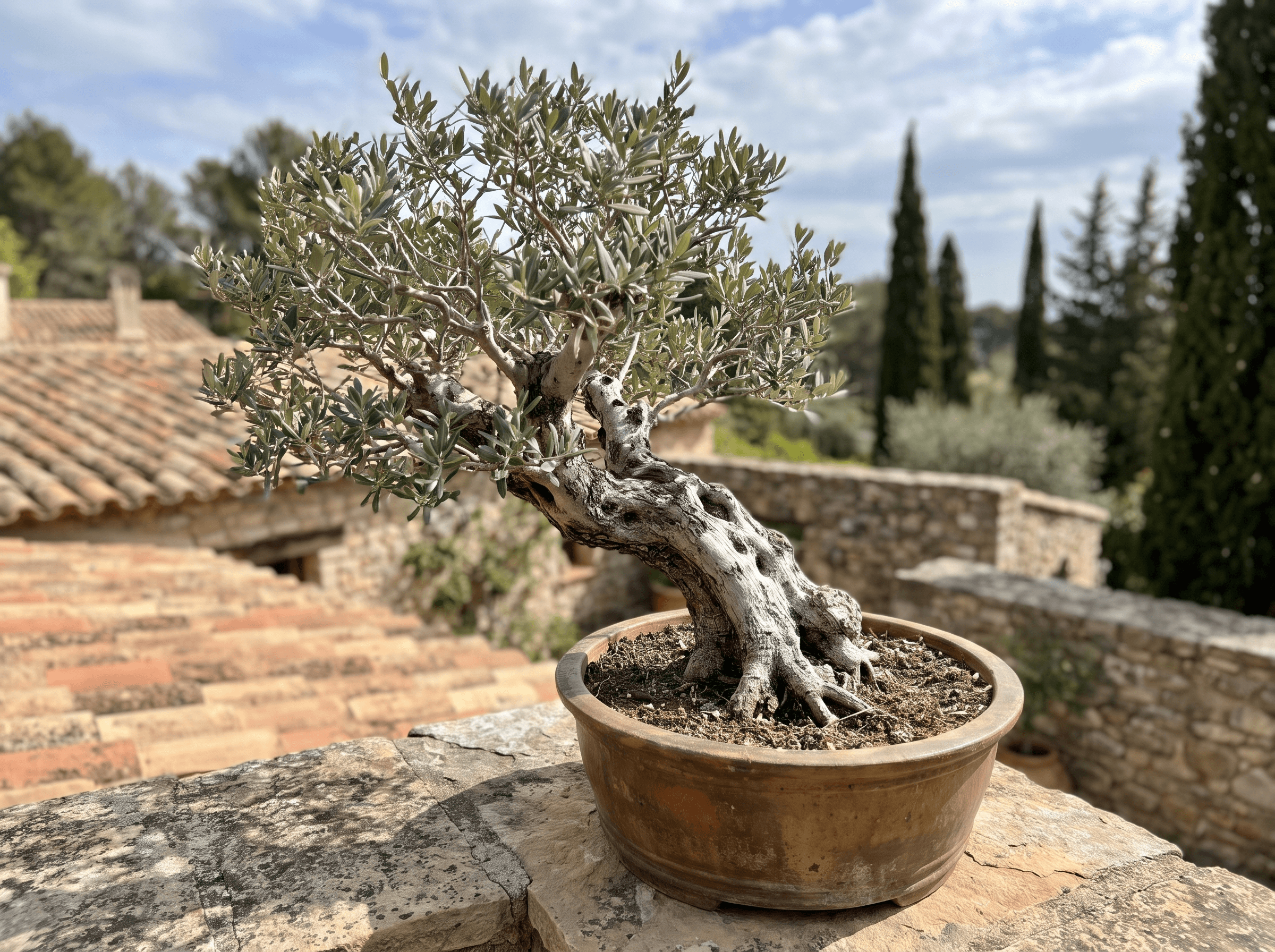
Olive is a tree I don't have to convince anyone about down here, everyone's seen a gnarled old olive in a grove and knows roughly what it should look like. That instinct actually helps with bonsai, because the whole appeal of olive as a bonsai subject is exactly that: thick, twisting, deeply textured bark and a trunk that reads as ancient even on relatively young material. Few species fake age as convincingly as olive does, which is part of why it's such a popular choice for people who want a dramatic, characterful tree without waiting fifty years for the bark to develop.
It's also a genuinely forgiving tree once it's established, which surprises people who assume anything Mediterranean and drought-tolerant must be fussy about heat or light. It isn't. Olive handles full sun and dry spells better than almost anything else in this guide, a legacy of thousands of years growing on rocky, thin-soiled hillsides across the region. The one thing it will not tolerate is wet feet. Give an olive constantly damp, poorly drained soil and it will decline and eventually rot at the roots, regardless of how much sun and warmth it's getting elsewhere.
The other thing worth knowing early is that olive is more cold-sensitive than its tough, drought-hardy reputation suggests. Young or recently repotted trees in particular are noticeably more vulnerable to frost damage than old, established ones, and even mature trees have real limits once temperatures drop into sustained, hard frost. If you're growing olive somewhere with cold winters rather than the mild coastal climate it evolved for, protecting the roots and, for younger material, the whole tree during cold snaps isn't optional, it's the difference between a tree that thrives and one that struggles every spring to recover.
Care
Light
As much sun as you can give it, full stop. Olive is a full-sun Mediterranean species through and through, and it genuinely struggles in shade, producing sparse, leggy growth and thin foliage rather than the dense, silvery-green canopy you want. A south-facing spot outdoors with unobstructed light for most of the day is ideal, and unlike maple, there's essentially no risk of scorch from strong sun on established olive foliage. If growth looks thin or the tree seems to be reaching toward one direction, insufficient light is usually the first thing I'd check.
Watering
Water thoroughly once the mix has become dry or nearly dry at depth, rather than keeping it constantly moist the way a maple would, and this is the single biggest adjustment people coming from other species need to make. The mistake I see constantly is people watering an olive on the same schedule as their juniper or maple, which keeps the roots wetter than the tree wants and eventually causes root problems. When in doubt with an established olive, lean toward letting it dry down a bit further rather than watering preemptively; it handles a missed watering far better than it handles one too many.
Temperature & hardiness
This is where olive's tough reputation needs a caveat. Established olives can tolerate light frost, but stronger or prolonged freezing can cause real damage, and exactly where that threshold sits depends on the tree's age, how hardened-off it is going into winter, and the specific conditions, with young or recently repotted trees being noticeably more vulnerable than old, established ones. In most of southern Italy hard freezes are rarely an issue outdoors, but if you're further north or at altitude, or if you get an unusual cold snap, protecting the pot and, for younger trees, the whole canopy matters. A cold frame, an unheated but frost-free space, or simply moving the pot against a sheltered wall during a cold snap is usually enough.
Soil & potting
Excellent drainage is non-negotiable for olive, arguably more important here than for any other species in this guide, since root rot from wet soil is the main way olives actually die in cultivation. A coarse, mineral mix heavy on pumice and lava rock, with only a modest proportion of akadama or organic component, suits olive well. If you're repurposing a mix you use for a moisture-loving species like maple, don't; olive wants to dry out between waterings, and a retentive mix works directly against that. When in doubt, err toward more drainage rather than less.
Fertilizing
Feed through the main growing season, spring into early autumn, with a balanced fertilizer at a moderate rate, easing off as growth slows toward winter. Olive isn't a heavy feeder, and overfeeding tends to push soft, leggy growth rather than the tight, characterful foliage you actually want on an aged-looking specimen. I keep feeding fairly light and consistent through the season rather than pushing hard, since a slower-grown olive generally holds its refined look better than one that's been forced along.
Pruning & wiring
Olive back-buds reasonably well from older wood, which makes it forgiving for structural work, including reduction cuts on a trunk that's gotten away from you. Pinch and trim new shoots through the growing season to maintain density and shape, and don't be shy about removing vigorous, upward-growing shoots that disrupt the silhouette, since olive tends to throw strong growth in odd places if left unchecked. Wiring works well on younger branches while they're still flexible, though older wood can be genuinely stiff and prone to snapping, so major trunk or branch movement is best planned early, on younger material, rather than attempted on a thick, mature branch. Bark on older olive is thick and textured, which is exactly the character people want, so avoid wiring so tightly that it scars that bark unnecessarily.
Repotting
Repot every two to three years for younger, actively growing trees, stretching out as the tree ages and growth slows. Many growers repot in spring as the weather warms and before the main growth push, though some olive specialists prefer waiting until active growth is clearly underway in reliably warm conditions, since cool, wet spring weather can set an olive back rather than help it; which approach works best can depend on your local climate, so it's worth watching what experienced growers near you do. Because drainage is so important to this species, repotting is also your chance to refresh a mix that's broken down and started holding more water than it should. On a healthy, established olive you can generally remove around a third of the root mass, but go gently on young or recently acquired trees until you've seen how vigorously they're growing. After repotting, water thoroughly as normal, then keep the tree a little more sheltered from harsh sun and wind for a couple of weeks while new roots establish, letting the mix approach dryness between waterings rather than keeping it constantly damp out of habit.
Common problems
Root rot from overwatering is by far the most common way an olive bonsai gets into real trouble, showing up as yellowing, dropping leaves and, in advanced cases, a soft or discoloured trunk base near the soil line. Because olive is so associated with drought tolerance, people are often slow to suspect wet soil as the cause and waste time looking elsewhere first. Cold damage on young trees is the other major risk, showing up as blackened, wilted foliage or dieback on branch tips after an unexpectedly cold night, and it's worth knowing that recovery can be slow even when the tree ultimately survives. Scale insects occasionally settle on olive stems and are worth checking for periodically, particularly on a tree kept in a sheltered, low-airflow spot. Sparse, leggy growth with long gaps between leaves is almost always a light problem rather than anything more serious.
Styling
Olive's whole appeal as bonsai material is the trunk, so styles that showcase it work best: informal upright and semi-cascade forms that let a thick, twisting, deeply textured trunk dominate the composition, often with relatively restrained foliage so the bark and movement stay the visual focus. Because mature olive bark develops such convincing age character even on comparatively young material, it's a favourite species for people specifically chasing that ancient, gnarled look without decades of trunk development. Deadwood techniques are used occasionally, though far more sparingly than with juniper, since olive's real strength is live, textured bark rather than dramatic dead sections. Root-over-rock and exposed nebari styling also suit olive well, echoing the way old olives grow on thin, rocky hillside soil in the wild.
Common questions
How often should I water an olive bonsai?
Less often than you'd think if you're coming from a species like maple or juniper. Let the soil dry out noticeably between waterings, then water thoroughly. Olive is drought-tolerant once established, and overwatering, not underwatering, is the more common way people run into trouble with it.
How cold-hardy is olive bonsai?
Moderately hardy but not indestructible. Established olives tolerate light frost, but stronger or prolonged freezing can cause real damage, and young or recently repotted trees are noticeably more vulnerable than old, established ones. In most of southern Italy this rarely matters outdoors, but further north or at altitude, winter protection for the pot and young trees is worth arranging.
Why does my olive bonsai have yellowing, dropping leaves?
This is the classic sign of root rot from soil that's staying too wet. Check drainage and your watering habits before anything else; olive wants to approach dryness between waterings, and a mix or schedule better suited to a thirstier species like maple will eventually cause exactly this problem.
Can olive bonsai grow outdoors year-round?
Yes, in most mild or Mediterranean climates that's exactly where it belongs and does best. In colder regions, protect the pot during hard freezes and consider extra protection for young or recently repotted trees, since they're more cold-sensitive than mature, established specimens.
Why does my olive bonsai look old even though it's young?
That's the species doing what it's known for. Olive bark develops thick, twisting, deeply textured character relatively quickly compared to many other bonsai species, which is exactly why it's so popular with people chasing an aged, ancient look without decades of trunk development to get there.
Is olive a good bonsai for beginners?
Fairly good, with one adjustment: you have to unlearn the instinct to water frequently. Once you get comfortable letting the soil dry out between waterings, olive is tolerant of sun, heat, and pruning mistakes, and it holds up well through southern Italian summers with minimal fuss.
Does olive bonsai need excellent drainage?
Yes, more than almost any other species in this guide. Wet, retentive soil is the single most common cause of olive decline, so a coarse, mineral-heavy mix with strong drainage matters more here than the exact ratio of ingredients does.
You might also like
General guidance based on 20+ years of practice. Every tree and every climate is different — when in doubt, ask us.