
Pyracantha Bonsai Care
Pyracantha coccinea (Firethorn)
A pyracantha loaded with orange-red berries through the winter months is one of the most striking sights on any bonsai bench, and it's also one of the least fussy trees to grow toward that result.
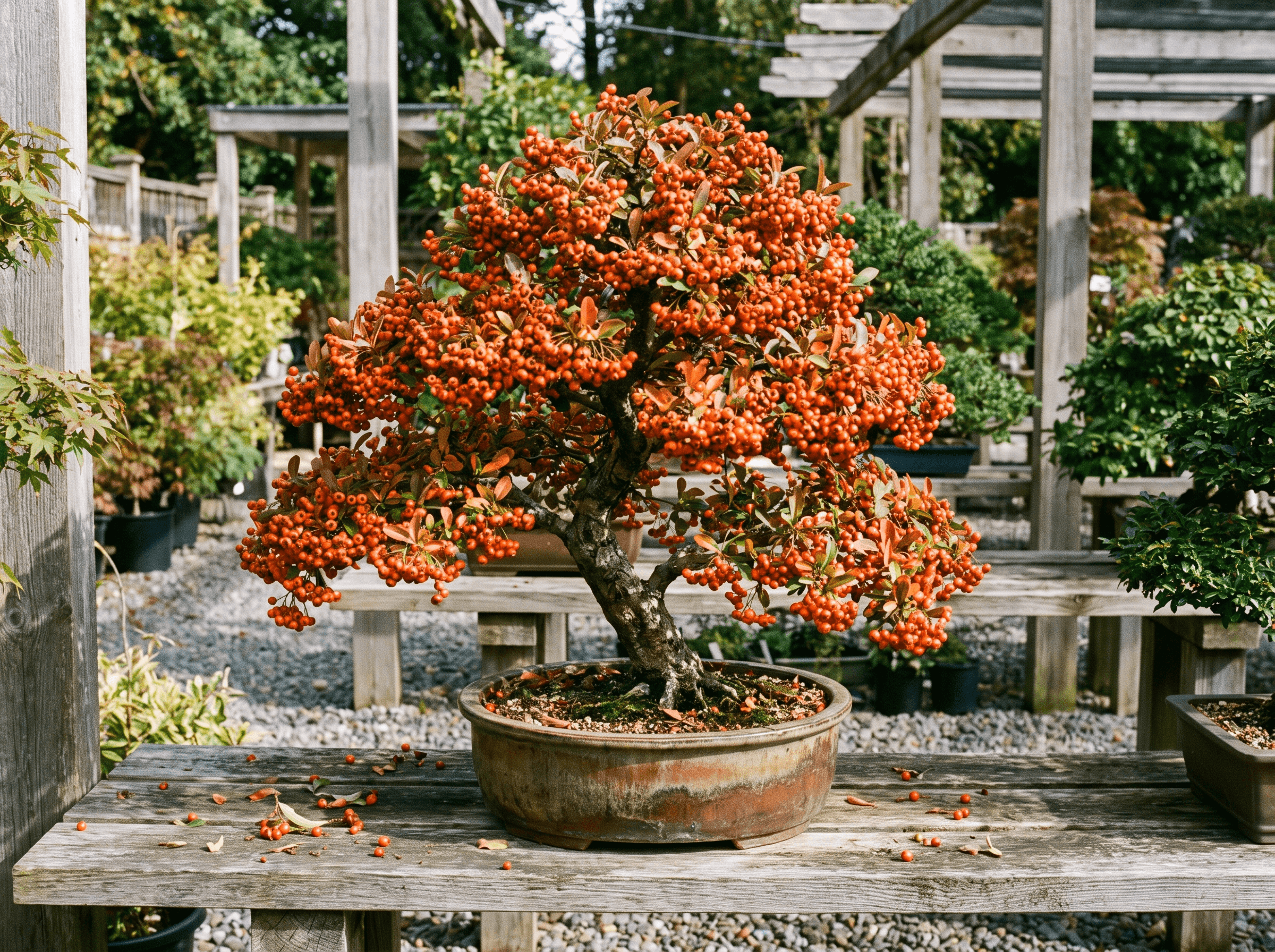
Pyracantha is a berry tree first and a bonsai second, at least in terms of what people grow it for. Clusters of small white flowers appear in late spring, and by autumn those clusters have turned into masses of orange or red berries that hang on well into winter, long after most deciduous species have gone bare. That combination of persistent fruit and evergreen foliage is genuinely rare in bonsai material, and it's the reason I keep a few in the collection even though the tree itself, structurally, isn't the most refined-looking species without its fruit.
It's also one of the toughest common bonsai subjects around. Firethorn tolerates hard pruning, recovers from neglect better than most flowering or fruiting species, and doesn't ask for anything exotic in terms of soil or watering. The name comes from the thorns, and they're not decorative, real spines along the branches that will draw blood if you're careless working close to the trunk. I always work pyracantha with gloves on for anything beyond light pinching.
The one thing people underestimate is how much this tree wants full sun. It tolerates partial shade without dying, but flowering and fruiting are noticeably better in strong sun, and in a humid climate a pyracantha kept in a shaded, poorly ventilated spot is far more prone to disease. Grown right, in full sun with decent airflow, it's a genuinely low-drama tree that rewards you with a spectacular display every winter for very little fuss the rest of the year.
Care
Light
Full sun, as much as you can give it. Pyracantha flowers and fruits on wood that gets strong light exposure, and a tree kept in partial shade will still grow well but produce a noticeably thinner berry display. It's also a species where good airflow around the foliage matters almost as much as light itself, since dense, shaded, still air is exactly the condition that invites the fungal problems this genus is prone to.
Watering
Keep the soil evenly moist through the growing season rather than cycling it toward dryness, pyracantha's rootball shouldn't be allowed to dry out while it's actively growing, flowering, or carrying fruit, since dryness at any of those points is a common cause of dropped flowers or berries. It still needs good drainage and shouldn't sit waterlogged, but treat this species as wanting consistent moisture rather than a dry-down cycle between waterings. In summer heat, especially with a tree in full sun and a shallow bonsai pot, check daily, since that's when water demand is highest and a missed watering at the wrong moment can cost you part of the berry display.
Temperature & hardiness
This is a hardy, tough shrub that handles a wide range of temperatures without complaint and does well left outdoors year-round across most of Italy, including through winter while it's carrying its berry display. Some protection for the pot itself during unusually hard frosts is sensible, since roots in a shallow container are more exposed than roots in open ground, but the tree doesn't need to be brought indoors or given special winter treatment the way a subtropical species would.
Soil & potting
A standard free-draining bonsai mix works well, akadama, pumice, and lava rock in roughly even parts, or a similar coarse, mineral-heavy local equivalent. Pyracantha isn't especially fussy about soil composition compared to some of the more sensitive flowering species, but drainage still matters, particularly given how prone the genus is to fungal disease in humid conditions. Wet, slow-draining soil around the roots only adds to that risk.
Fertilizing
Feed through the growing season with a balanced fertiliser, and consider switching to something lower in nitrogen and higher in phosphorus and potassium from mid-summer onward, since that supports flower and fruit development rather than pushing excess leafy growth at the expense of berries. I feed roughly every two weeks through spring and summer and taper off through autumn as the berries mature and the tree's energy shifts away from active growth.
Pruning & wiring
Pyracantha tolerates hard pruning extremely well and back-buds reliably even from old wood, which makes it forgiving to shape aggressively if a tree needs a serious reduction. The trade-off to manage is that flowering happens mainly on shoots produced the previous year, so the more of that older wood you strip away, the less of this year's flowers and fruit you'll get. I do most of my hard structural work, cutting back into old wood, in early spring or late summer, and save lighter trimming of new growth for right after flowering, which keeps more of the berry-bearing wood intact than one big cutback right before bloom would. Wiring works fine on younger, more flexible branches, but go slowly and wear thick gloves, the thorns are sharp enough to be a genuine hazard, not just an inconvenience.
Repotting
Repot every two years for a younger tree, stretching toward three to five years as it matures and vigour slows, ideally in early spring before new growth starts. Pyracantha handles root work reasonably well given how vigorously it grows back, but avoid repotting during flowering or while the berries are developing, since that's a stress point where the tree can drop both flowers and fruit in response. Keep the tree in a sheltered spot afterward and water normally, watching the soil closely rather than deliberately cutting back on watering, since freshly root-pruned trees still need consistent moisture to recover well.
Common problems
Fireblight is the problem that worries me most with pyracantha, a bacterial disease that causes shoot tips to blacken and die back as if scorched, spreading quickly in warm, wet conditions and requiring prompt removal of affected wood well back into healthy tissue. Scab shows up as dark, scabby lesions on leaves, fruit, and young shoots; in my experience it's worse in humid conditions with poor airflow, so good spacing and avoiding overhead watering that leaves foliage wet for long periods seems to help, though that's a general precaution rather than a guaranteed fix. Aphids cluster on new growth in spring and are usually manageable with a strong hose spray or insecticidal soap before numbers build up. And thorn injuries are worth mentioning as their own hazard, not a plant health issue exactly, but a real one, keep gloves on hand any time you're pruning or wiring past light tip work.
Styling
In my experience pyracantha responds well to informal upright and cascade-leaning styles, and because the berries hang below the branch line, a form that lets the fruit clusters display outward and downward tends to show them off best, though that's a stylistic preference rather than a rule. It's also a strong candidate for clump or multi-trunk plantings, since the naturally twiggy, thorny growth habit reads well at a slightly wilder, more shrub-like scale than a single formal trunk. Heavy deadwood work isn't really this species' strength, the appeal is in the contrast between dark evergreen foliage and bright fruit rather than an aged, weathered trunk, so I'd personally focus styling energy on branch structure and berry display rather than jin or shari.
Common questions
Why doesn't my pyracantha produce berries?
The most common cause is insufficient light, this species needs full sun to fruit well. Over-pruning right before flowering season, removing the previous year's growth that would have carried this year's berries, is the other common cause. Feeding too heavily with high-nitrogen fertiliser can also push leafy growth at the expense of flowers and fruit.
Is pyracantha safe to prune with all those thorns?
Yes, but wear proper gloves for anything beyond light pinching of soft new growth. The thorns are genuine spines, not soft decorative growth, and they will puncture skin easily. Most experienced growers keep a dedicated pair of thick gloves just for working on this species.
What is fireblight and how do I know if my pyracantha has it?
Fireblight is a bacterial disease that causes shoot tips to blacken and wilt suddenly, as if scorched by fire, hence the name. It spreads fastest in warm, humid weather. Remove affected branches promptly, cutting well back into clean healthy wood, and disinfect your tools between cuts to avoid spreading it further.
Can pyracantha bonsai stay outdoors all winter?
Yes, it's a hardy shrub and generally does fine left outdoors through an Italian winter, berries and all. Some pot protection during unusually severe frosts is sensible since bonsai containers expose roots more than open ground does, but no special indoor overwintering is needed.
How often should I water a pyracantha bonsai?
Keep the soil evenly moist through the growing season rather than letting it cycle toward dryness, especially while the tree is flowering or carrying fruit, both are water-sensitive periods where a dry spell can cause drop. It still needs good drainage and shouldn't sit waterlogged. Check daily during hot summer weather, since demand is highest then.
When is the best time to prune a pyracantha bonsai?
Save hard structural cuts into old wood for early spring or late summer, and keep trims of new growth lighter right after flowering rather than stripping too much wood at once. Since flowering happens mainly on shoots produced the previous year, the more of that wood you remove, the fewer flowers and berries you'll get.
Why are the leaves on my pyracantha getting scabby dark spots?
That's most likely scab, a fungal disease that tends to be worse in humid conditions and worsened by poor airflow and wet foliage. Improve spacing and ventilation around the tree, avoid overhead watering that leaves foliage wet for long periods, and remove badly affected leaves and fruit where practical.
You might also like
General guidance based on 20+ years of practice. Every tree and every climate is different — when in doubt, ask us.