
Cotoneaster Bonsai Care
Cotoneaster horizontalis / C. microphyllus
Cotoneaster is one of the few bonsai species that gives you flowers and berries without asking for the fussy, high-maintenance care that usually comes with flowering material, and its naturally cascading habit does a lot of the styling work for you.
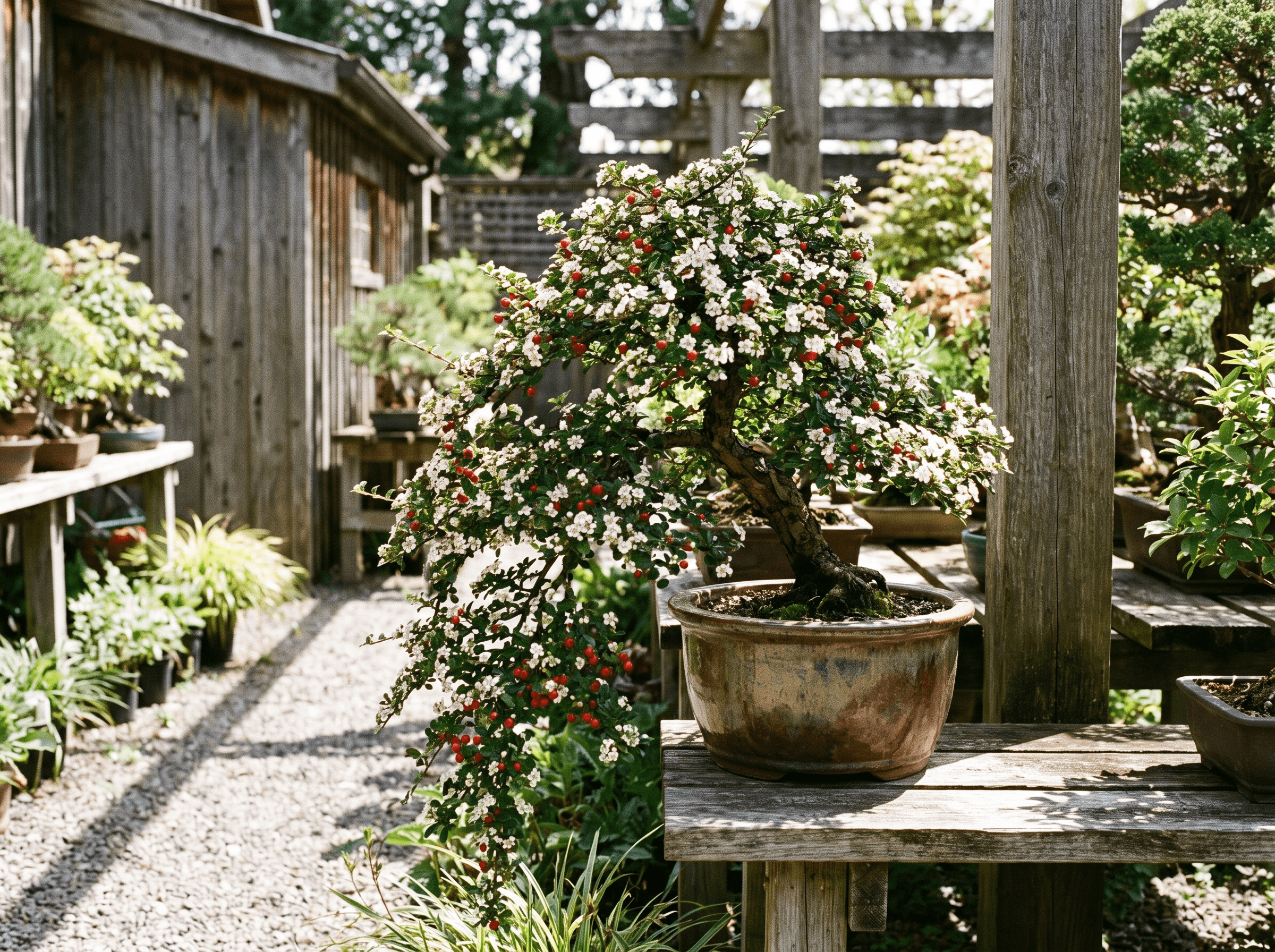
I like recommending cotoneaster to people who want something a bit more visually interesting than a straightforward foliage tree but who aren't ready to take on satsuki azalea's soil demands or a fruiting species that needs constant vigilance. Cotoneaster horizontalis and Cotoneaster microphyllus both produce small white flowers, generally from late spring into summer depending on the species, followed by red berries that persist well into winter, giving genuine seasonal interest across most of the year rather than one brief flowering window.
What really sets cotoneaster apart structurally is its natural growth habit. Left to its own devices it spreads and cascades rather than growing upright, which makes it, in my experience, some of the best-suited material available for cascade and semi-cascade bonsai styles, since you're working with the plant's genuine tendency rather than fighting it with wire the whole time. Horizontalis in particular has a horizontal, layered branching pattern in the wild that translates almost directly into bonsai styling with minimal correction needed.
It's a tough, forgiving plant generally, tolerating poor soil and inconsistent care better than more delicate flowering species, which is part of why it's such practical, low-stress material despite the ornamental payoff. I wouldn't call it difficult at any stage of development, the main skill involved is really just letting the plant's natural cascading tendency guide the styling rather than working against it.
Care
Light
Full sun is ideal, and cotoneaster flowers and fruits more reliably with strong light through the growing season, similar to most flowering and fruiting bonsai species. It tolerates some partial shade without serious decline, but expect a reduction in flower and berry production in a shadier spot, which somewhat defeats the point of growing it in the first place given the seasonal display is the main draw.
Watering
Water when the topsoil starts to dry and water thoroughly. Cotoneaster is fairly tolerant of watering inconsistency compared to more delicate flowering species, handling brief dry spells reasonably well, though consistent moisture through flowering and fruit development in spring and summer supports a better berry display than a plant left to swing between drought and heavy watering.
Temperature & hardiness
Hardy through most temperate outdoor climates in open ground, but a cotoneaster growing in a shallow bonsai pot is more exposed to cold than the same plant in a garden bed, so it's worth giving the pot some shelter or insulation whenever temperatures drop much below around minus 5 Celsius, not only during the most extreme freezes. The berries often persist well into winter, giving the tree visual interest even after other deciduous or semi-deciduous species have gone bare.
Soil & potting
A standard free-draining bonsai mix works well, and cotoneaster is genuinely tolerant of poor soil, more so than most species covered on this site, which makes it forgiving material if you're converting raw nursery stock or a garden specimen into a training pot without ideal substrate on hand initially. As with any species started in less-than-ideal soil, transition it into proper bonsai mix over the first year or two rather than relying on that tolerance indefinitely.
Fertilizing
Feed through the growing season, spring into early autumn, with a balanced fertiliser, and consider a bloom-supporting formulation with a bit more phosphorus around flowering time if you want to maximize the berry display, since flower and fruit production draws more heavily on the plant's resources than foliage growth alone. Ease off as growth slows into autumn and stop through winter dormancy.
Pruning & wiring
Cotoneaster is tough and forgiving of pruning, tolerating fairly hard cuts without much drama, though I'd time any major structural pruning to avoid removing too much of the current season's flower or berry-bearing wood if the display matters to you that year. Wiring works well on the naturally cascading branches, since you're mostly encouraging and refining a tendency the plant already has rather than forcing an unnatural shape, which makes styling cascade and semi-cascade forms genuinely more intuitive with this species than with an upright-growing tree you're trying to bend downward artificially.
Repotting
Repot young, actively developing trees roughly every one to two years, easing to every two to three years as the tree matures. Early spring, before flowering begins, is the standard window, since repotting during or right before a heavy flower and fruit set puts unnecessary extra stress on the tree. Cotoneaster recovers from repotting reasonably well given its overall tolerant nature, and the roots can be pruned fairly freely at that time compared with a more root-sensitive species.
Common problems
Fireblight is a genuine concern for cotoneaster, a bacterial disease causing blackened, scorched-looking shoot tips that can spread through a planting if not addressed, and it's worth knowing your local disease pressure and pruning out affected wood promptly with sterilized tools if you see it. Aphids commonly cluster on new growth and flower buds in spring. Powdery mildew can show up in humid, still conditions. If berry production seems disappointing despite an otherwise healthy tree, low light during flowering or inconsistent watering through fruit development are the usual culprits rather than any disease, cotoneaster needs decent sun and steady moisture at the right time of year to fruit well.
Styling
Cascade and semi-cascade are cotoneaster's natural strength, and I'd steer most development toward one of these forms rather than fighting the plant's genuine tendency to spread and trail. Horizontalis's naturally horizontal, layered branching pattern also suits informal upright or even a low, spreading style that echoes how it grows in open ground. The seasonal display, white flowers giving way to red berries that hold into winter, adds a dimension most foliage-only bonsai species don't offer, and I'd design the overall silhouette with sightlines to the berries in mind, since that's genuinely the visual payoff people grow this species for.
Common questions
Is cotoneaster a good species for cascade bonsai?
Yes, one of the best available in my experience. Its naturally cascading, spreading growth habit suits cascade and semi-cascade styles more intuitively than species you'd need to force downward with heavy wiring against their natural upright tendency.
Why isn't my cotoneaster producing berries?
Low light during flowering or inconsistent watering through the fruit development period are the usual causes on an otherwise healthy tree. Cotoneaster needs decent sun and steady moisture at the right time of year to fruit reliably.
How long do cotoneaster berries last?
The red berries typically persist well into winter, giving the tree seasonal interest even after many deciduous species have gone fully bare. This lasting display is a big part of why the species is popular for bonsai.
Does cotoneaster bonsai need special soil?
No, it's genuinely tolerant of poor soil compared to most bonsai species, though a standard free-draining bonsai mix still gives the best long-term results and is worth transitioning to over the tree's first year or two.
What is fireblight and does it affect cotoneaster?
Fireblight is a bacterial disease causing blackened, scorched-looking shoot tips, and cotoneaster is genuinely susceptible to it. Prune out affected wood promptly with sterilized tools and be aware of local disease pressure in your area.
When should I prune cotoneaster bonsai?
Cotoneaster tolerates fairly hard pruning generally, but time major structural cuts to avoid removing too much current-season flower or berry-bearing wood if the seasonal display matters to you that particular year.
Is cotoneaster bonsai cold hardy?
Yes, in open ground it handles real winter cold well across most temperate outdoor climates. A bonsai in a shallow pot is more exposed than the same plant in a garden bed, though, so give the pot some shelter or insulation whenever temperatures drop much below around minus 5 Celsius rather than waiting for only the most extreme freezes.
You might also like
General guidance based on 20+ years of practice. Every tree and every climate is different — when in doubt, ask us.