
Chinese Juniper Bonsai
Juniperus chinensis
Chinese juniper is less a single look and more a family tree: it's the species behind most of the prized upright juniper cultivars in bonsai, and understanding the species itself helps make sense of why its named cultivars vary as much as they do.
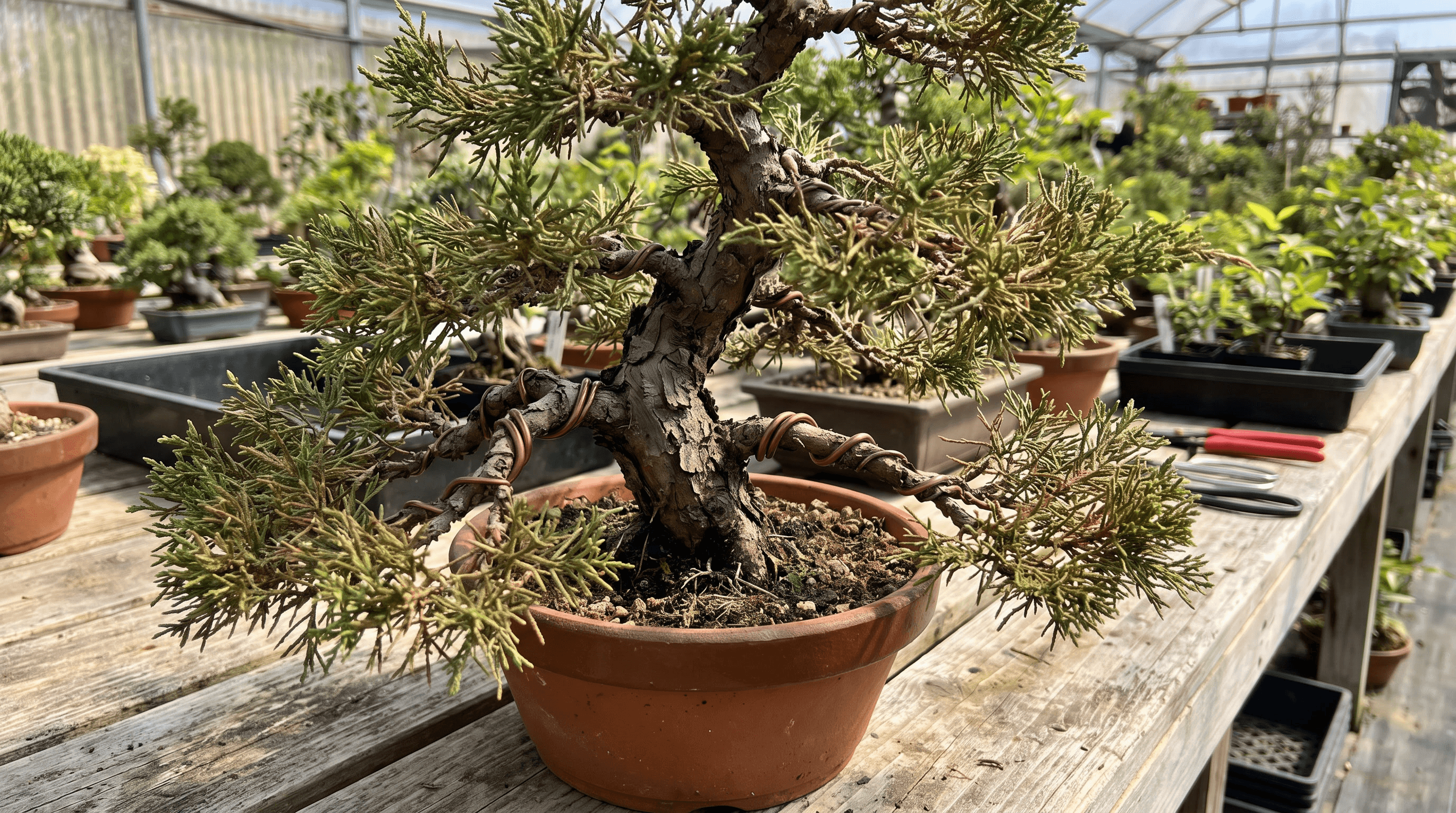
When people talk about growing Shimpaku, Itoigawa, or Kishu, they're really talking about named selections of Juniperus chinensis, chosen over generations for specific traits like foliage fineness or growth habit. This page is about the straight species, meaning chinensis sold without one of those named bonsai cultivars or regional selections attached, whether it started as seed-grown stock or an unnamed cutting. It's genuinely different material from its famous offspring, usually coarser in foliage texture and more variable from tree to tree, since it doesn't carry the guaranteed consistency a named cultivar does.
That variability isn't a flaw so much as a fact to work with. A batch of chinensis seedlings or nursery stock can range from fairly fine, tight foliage to noticeably coarser, more open growth, and you often don't know exactly what you've got until the tree has a season or two of growth behind it. In my own experience, and among growers I talk to, straight chinensis is often selected for development work because inexpensive nursery stock can be vigorous and responds well to unrestricted growth: a trunk that thickens readily, good tolerance for structural work, and wood that takes deadwood carving reasonably well, if not always to the same standard as the best Shimpaku material.
Plain chinensis is also, in my experience, often among the more affordable and available forms of juniper bonsai material, since it doesn't carry a cultivar premium, though availability and pricing vary by market. For someone building trunk thickness on developing material, or practicing structural techniques before working on more refined, expensive stock, it's honestly a smart place to spend your effort. I keep several straight chinensis specimens in development for exactly that reason, they're where I try things I wouldn't risk on a named Itoigawa.
Care
Light
Full sun for the strongest, most compact growth, though chinensis tolerates some partial shade better than you might expect from a conifer this vigorous. Grown in heavier shade for an extended period it does thin out and stretch, the same as its named cultivars, but because straight species material is often coarser to begin with, the drop in quality from insufficient light can be harder to notice early since the foliage doesn't have fine detail to lose in the first place. Give it real outdoor sun where you can, and rotate the pot if one side of your growing space gets more exposure than the other.
Watering
Water thoroughly when the topsoil starts to dry, and let the mix approach dryness again before the next watering. It's not immune to root rot in a poorly draining pot, and that remains the more serious watering risk over time compared to occasional underwatering.
Temperature & hardiness
Genuinely cold-hardy and needs a real outdoor winter with proper dormancy, exactly like every other juniper on this site. There's no cultivar-specific exception here, straight chinensis is no more or less hardy than its named selections in most practical terms, and it should never be brought indoors to avoid winter cold. Protect the pot itself in prolonged severe freezes if needed, but keep the tree outside through the season.
Soil & potting
A fast-draining, mineral-heavy mix, akadama, pumice, and lava rock in roughly even parts or a similar coarse, inorganic local substitute, suits chinensis well. Young nursery stock can be vigorous, so it's worth checking root density at each repot rather than assuming a fixed interval, but this comes down to the individual tree's vigor and age more than anything reliably true of straight chinensis as a group.
Fertilizing
Feed through the growing season with a balanced or slightly nitrogen-forward fertiliser, tapering off into autumn and stopping through dormancy. Straight chinensis, especially younger developing material, generally responds well to somewhat heavier feeding aimed at building trunk girth and root mass, since you're less concerned about preserving a specific fine foliage character the way you would be with Shimpaku or Itoigawa. Once a tree is further along and you're refining ramification rather than building bulk, ease off toward a more moderate feeding routine.
Pruning & wiring
Let healthy shoots extend through the season, then selectively prune overly long runners back with sharp scissors to a suitable lateral shoot or deeper within the foliage, the same basic technique as any juniper. Avoid repeatedly pinching every tip or shearing the foliage like a hedge, both weaken the tree and leave browned foliage. Because straight chinensis foliage tends to be coarser and less densely packed than a named cultivar's, it's often more forgiving of being left a little longer between pruning sessions without looking obviously untidy, which again makes it decent practice material. Wiring is well tolerated and chinensis holds a bent shape reliably, useful for building the kind of strong trunk movement you'll want established before grafting on finer cultivar foliage, which is actually a common technique: growing a vigorous chinensis trunk and rootstock, then grafting Shimpaku, Itoigawa, or another refined cultivar's foliage on top once the structure is where you want it. As always, leave live foliage on any branch you're reducing rather than cutting back to bare wood.
Repotting
Repot in early spring, using roughly every two years as a starting point and inspecting root density and drainage each time rather than following a fixed schedule. Young, vigorously growing chinensis can sometimes need it sooner, so check rather than assume. Work the outer roots gently rather than a full bare-root, and get the tree back into a fast-draining mix promptly, with a sheltered spot and reduced watering for the first couple of weeks afterward.
Common problems
The problems are the standard juniper list: browning foliage from watering issues or too little light, spider mites in hot, dry, stagnant air, and a soft or blackening trunk base pointing to root rot from a waterlogged pot. Because straight chinensis is so often sold as inexpensive, mass-produced nursery or landscape stock, it's worth checking a new specimen's roots and trunk base carefully before committing to it as bonsai material, since quality control on cheap seedling stock varies a lot more than it does on named, deliberately propagated cultivars. If growth looks unusually weak or uneven across a young multi-stem specimen, that's sometimes just genetic variability within the species rather than a care problem, worth keeping in mind before you assume something's wrong.
Styling
Straight chinensis handles the full range of common juniper styles, formal and informal upright, windswept, semi-cascade, and takes wiring and structural pruning well enough for serious trunk development work. Where it's used most deliberately, though, is as rootstock and trunk-building material rather than as the star of a finished refined display, growers often develop a vigorous chinensis trunk for years before grafting on Shimpaku, Itoigawa, or another finer cultivar's foliage to combine strong structure with refined detail. Used on its own, an unrefined chinensis with good natural taper and movement can absolutely make a fine finished bonsai too, it just won't usually match the foliage fineness of its named descendants without that graft.
Common questions
What's the difference between Chinese juniper and Shimpaku juniper?
Shimpaku is a traditional bonsai form of Juniperus chinensis, selected and propagated for finer, denser, softer foliage and wood well suited to deadwood carving. Plain Chinese juniper refers to material sold without that or any other named cultivar attached, which tends to be coarser in foliage and more variable from tree to tree since it doesn't carry the guaranteed traits of a named selection.
Is Chinese juniper the same as Shimpaku, Itoigawa, or Kishu?
No, but they're closely related. Shimpaku, Itoigawa, and Kishu are all specific named forms within the species Juniperus chinensis, each selected for particular foliage or growth characteristics. Plain Chinese juniper is material sold without one of those cultivar names attached.
Is Chinese juniper a good beginner bonsai species?
Yes, arguably a very practical one. It's tough, tolerates a fair range of care mistakes, and is often more affordable than named cultivar material, making it good for learning fundamentals and practicing techniques before working on more refined stock. The same outdoor, cold-hardy requirements apply as with any juniper.
Why does my Chinese juniper's foliage look different from a Shimpaku I've seen?
Because they're different material even within the same species. Unnamed chinensis grown from seed varies in foliage texture and doesn't have the guaranteed fineness of a deliberately selected and propagated cultivar like Shimpaku. Some straight chinensis is fairly fine, some is noticeably coarser, and there's no way to know for certain until the tree has grown for a season or two.
Can Chinese juniper be grafted with Shimpaku or Itoigawa foliage?
Yes, this is a common and well-established technique, and chinensis is one of several juniper species used as rootstock for it. Growers often develop a vigorous chinensis trunk and root system for years, then graft on Shimpaku, Itoigawa, or another refined cultivar's foliage once the trunk structure is established, combining strong development with fine, dense top growth. The same refined foliage is also grafted onto other juniper species used as rootstock, not chinensis exclusively.
Does Chinese juniper need the same winter care as other junipers?
Yes, exactly the same. It's a genuinely cold-hardy conifer that needs real outdoor winter dormancy regardless of whether it's straight species or a named cultivar. Bringing it indoors to avoid winter cold disrupts its growth cycle and is one of the most common ways beginners accidentally kill it.
General guidance based on 20+ years of practice. Every tree and every climate is different — when in doubt, ask us.