
Ficus Bonsai
Ficus microcarpa, F. retusa, and F. benjamina
Ficus bonsai care is the easiest place to start if you want a tree that can actually live on a windowsill and survive the mistakes every beginner makes, and after twenty years of watching people kill trees they weren't equipped for, I still point almost everyone here first.
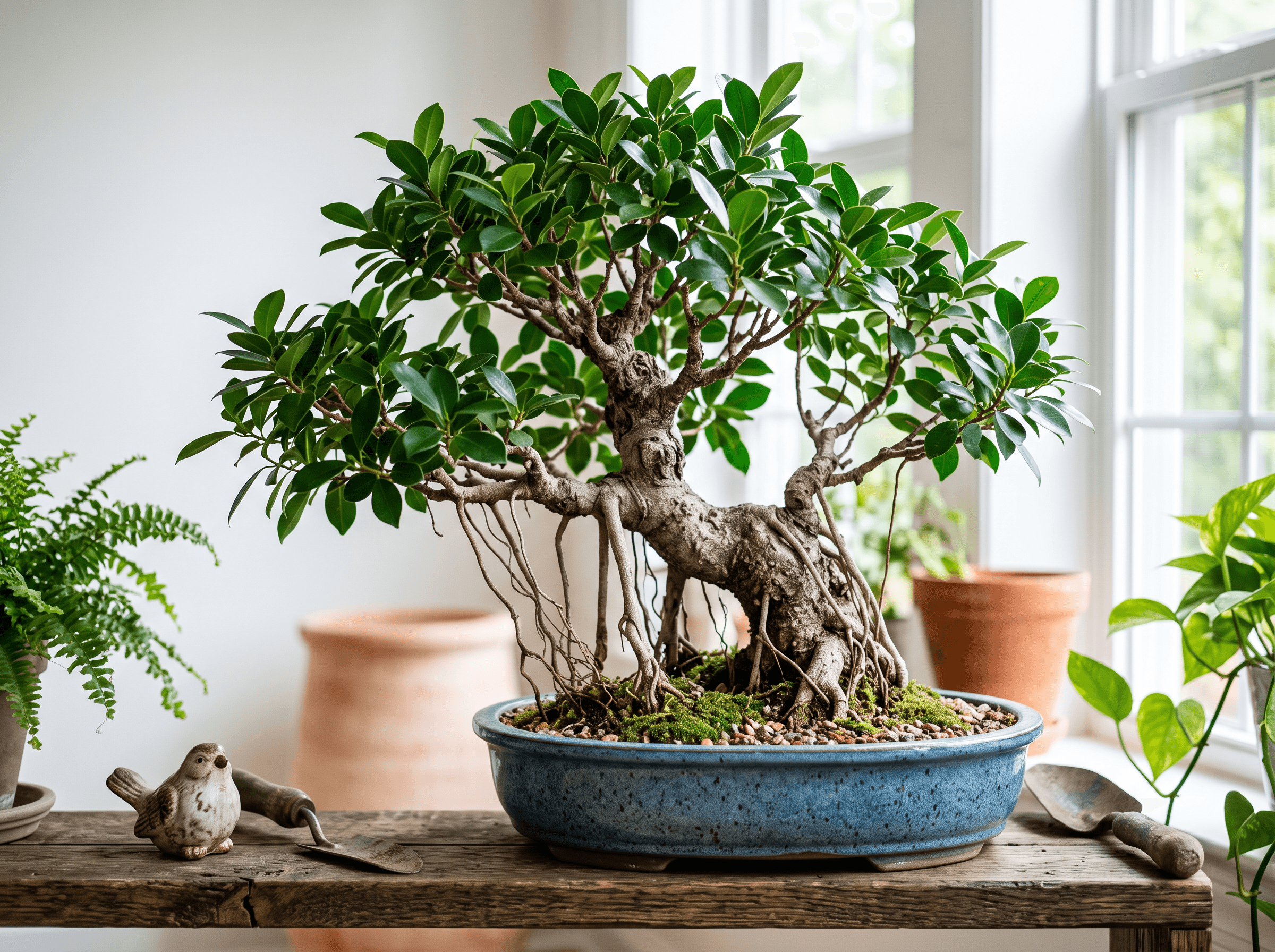
Ficus is, without much competition, the easiest genuinely good bonsai species to keep indoors. Most of what makes bonsai hard for beginners, the outdoor exposure, the winter dormancy, the narrow watering window, simply doesn't apply here. Ficus is a tropical tree that's happy in normal room temperatures year-round and tolerates the low humidity of a heated or air-conditioned home far better than almost anything else people try to grow inside. That's the whole reason it ends up as the default recommendation for a first tree kept indoors, and it deserves that reputation.
The species sold as bonsai vary a bit, F. microcarpa and F. retusa are the most common in nurseries, while F. benjamina shows up too, but they're all forgiving in the same broad ways. What sets ficus apart visually is aerial roots: given enough humidity and a bit of encouragement, mature ficus will drop root-like growths from the branches down toward the soil, and training these into a banyan-style trunk cluster is one of the signature styling moves for the species, a look very few other common bonsai subjects can produce.
The one thing that surprises new owners is the sap. Cut a branch or leaf and you'll get a white, sticky latex bleeding from the wound, which looks alarming the first time but is completely normal and not a sign of disease or damage. It can irritate skin a little, so I'd rinse it off rather than leave it, but otherwise ignore it. The bigger misconception is that ficus is delicate because it's tropical. It's the opposite: ficus tolerates hard pruning, root disturbance, and inconsistent watering better than most other bonsai species, which is exactly why it survives beginner mistakes that would kill a pine or maple outright.
Care
Light
Give it the brightest spot you have. A south-facing windowsill works well indoors, and ficus is one of the few species that genuinely thrives outdoors in full sun during warm months too, which is worth doing if your climate allows it, since outdoor light intensity beats even a bright window. Indoors year-round is fine as a permanent arrangement, unlike junipers or pines, but low light will still slow growth and produce sparser, larger leaves rather than the tight, small-leaved look you want. If you move a ficus outdoors for summer and back in for winter, do it gradually over a week or two rather than all at once, since a sudden light change can trigger some leaf drop even on an otherwise healthy tree.
Watering
Water thoroughly when the top of the soil is dry to the touch, then let it approach dry again before the next watering. Ficus is genuinely tolerant of an imperfect schedule; a missed watering or two won't kill it the way it might a maple, and it recovers well from an occasional overwatering mistake as well. That tolerance is a big part of why it's the recommended starting species. It still prefers not to sit permanently soggy, so decent drainage matters, but the margin for error here is wider than on anything else in this guide. Indoor heating in winter dries pots out faster than people expect, so check more often during the colder months rather than assuming indoor trees need less water.
Temperature & hardiness
Ficus is a tropical tree with essentially no cold tolerance and does best avoiding sustained temperatures much below about 15 degrees Celsius, with real risk building the closer nights get to 10 degrees Celsius, which is exactly why it works so well as a permanent indoor tree in temperate climates. Normal household temperatures suit it fine, and it doesn't need or want the cold dormancy that conifers and deciduous species require. If you're in a warm enough climate to leave it outdoors through summer, bring it in well before the first cool autumn nights, since a sudden cold snap can cause rapid leaf drop and, if severe enough, real damage to the tree.
Soil & potting
Ficus isn't as fussy about soil composition as conifers are, but it still wants reasonable drainage rather than a dense, water-retentive potting mix. A standard bonsai substrate of akadama, pumice, and lava is the reliable choice; a simpler mix of coarse organic compost blended with perlite or pumice for drainage can work as a lower-cost substitute if you keep a closer eye on watering. What matters more than the exact recipe is avoiding a mix that stays soggy for days, since even a tolerant species like ficus will eventually develop root problems in consistently waterlogged soil.
Fertilizing
Because ficus can grow more or less year-round indoors rather than going properly dormant, it benefits from fairly steady feeding, lighter in winter when growth slows but rarely stopping completely the way it would for an outdoor deciduous tree. A balanced liquid feed every couple of weeks during active growth, tapering to monthly through the darker winter months, keeps growth steady without pushing overly leggy shoots. Ficus responds quickly to feeding, so if leaves start looking pale or growth stalls for no obvious reason, a fertilizing schedule that's too sparse is often the simplest explanation.
Pruning & wiring
Ficus tolerates hard pruning better than almost any species I grow, which makes it genuinely forgiving to practice technique on. You can cut back into old wood and expect strong back-budding, and leaves reduce well over repeated pruning cycles, so a tree that started with large, ungainly leaves can be refined considerably over a couple of seasons. Expect the white latex sap to bleed from any cut; it stops on its own after a few minutes and isn't a sign of a problem. Wiring works fine on ficus, but branches can be brittle at sharp bends, so take it slow on older wood. The real signature technique for the species is training aerial roots: keeping humidity up around the trunk, sometimes with damp sphagnum moss, encourages them to develop and thicken, and guiding them down into the soil over time builds the banyan-style multi-trunk look ficus is known for.
Repotting
Young, vigorously growing ficus can be repotted every one to two years; older, more established trees can stretch to every three years or so. Because ficus doesn't have a strict dormancy period, the repotting window is more flexible than for outdoor species, and early spring, as growth is starting to pick up, is the standard recommendation; warm, actively growing conditions later in spring or summer can also work if that's when the tree is putting on strong growth. Ficus tolerates root pruning better than many species, but healthy roots should still be reduced conservatively unless you know from experience that the individual tree is especially vigorous, and it typically bounces back within a few weeks with fresh growth.
Common problems
Leaf drop is the complaint I hear most, and with ficus it's almost always a reaction to a sudden change: a house move, a cold draft, a big swing in light levels, or a repot, rather than a sign the tree is dying. Give it a stable spot and it usually pushes new leaves within a few weeks. Scale insects are a genuine pest risk for ficus, showing up as small, brown, immobile bumps along stems, and they're worth checking for periodically since they can build up unnoticed on a tree that's otherwise being cared for correctly. Root rot from prolonged overwatering does happen, though ficus tolerates wet conditions better than most species before it becomes a real problem. Persistently wet soil, a sour smell from the pot, weak growth, and yellowing that doesn't match a recent environmental change are the signs worth checking; by the time they show up, the issue has usually been going on for a while. Pale, washed-out leaf colour with no other symptoms is most often a feeding issue rather than anything more serious.
Styling
Ficus is the species best suited to banyan and aerial-root styling, where exposed roots hanging from the branches down to the soil are trained and thickened over years to create the look of a tree that's grown itself into a small forest. Informal upright and clump or multi-trunk styles work particularly well too, since ficus naturally produces multiple trunks readily and tolerates the heavy pruning needed to shape them. Because it reduces leaf size and back-buds so reliably under repeated pruning, ficus is also a genuinely good species to practice ramification technique on without much risk of losing the tree, which is part of why so many people cut their teeth on it before moving to more demanding species.
Common questions
Can ficus bonsai live indoors permanently?
Yes, and this is exactly what makes it such a popular choice. Ficus is tropical and doesn't need a cold dormancy period the way conifers and deciduous trees do, so a bright indoor spot works as a year-round home rather than a compromise.
Why does my ficus bleed white sap when I prune it?
That's normal latex sap, not a sign of damage or disease. It's characteristic of the species and stops on its own within a few minutes of a cut being made. It can mildly irritate skin, so I'd rinse it off, but there's nothing to treat on the tree itself.
Why is my ficus dropping leaves?
Almost always a reaction to change: a new location, a cold draft, a sudden shift in light, or a recent repot. It's rarely a sign the tree is dying, and a stable environment usually brings new growth back within a few weeks. Persistent drop with no obvious trigger is worth checking against watering and pests.
Is ficus a good first bonsai?
Yes, genuinely one of the best. It tolerates low indoor humidity, inconsistent watering, and hard pruning better than most other species, and it doesn't demand the outdoor exposure and winter dormancy that trip up so many beginners with junipers or pines.
How do I grow aerial roots on my ficus?
Raise the humidity around the trunk and branches, sometimes by wrapping the area in damp sphagnum moss, which encourages aerial roots to form and elongate. As they develop, guide them down toward the soil; over time they thicken and can visually merge with the trunk and base, building the banyan-style look ficus is known for.
Can I keep ficus bonsai outdoors?
Only in warm weather. Ficus has essentially no cold tolerance and does best coming indoors well before nights regularly drop toward 10 to 15 degrees Celsius in autumn. If your climate is warm year-round it can stay outside permanently, but any transition between indoors and outdoors should happen gradually.
How hard can I prune a ficus bonsai?
Harder than most species. Ficus back-buds reliably from old wood and tolerates significant leaf and branch removal in a single session better than conifers or maples, which is part of why it's such a forgiving tree to learn pruning technique on.
You might also like
General guidance based on 20+ years of practice. Every tree and every climate is different — when in doubt, ask us.