
Larch Bonsai Care
Larix decidua / Larix kaempferi
Larch breaks the rule most people assume applies to every conifer: it's deciduous, dropping its soft needles every autumn after they turn a warm gold, and that alone makes it one of the more distinctive species you can grow as bonsai.
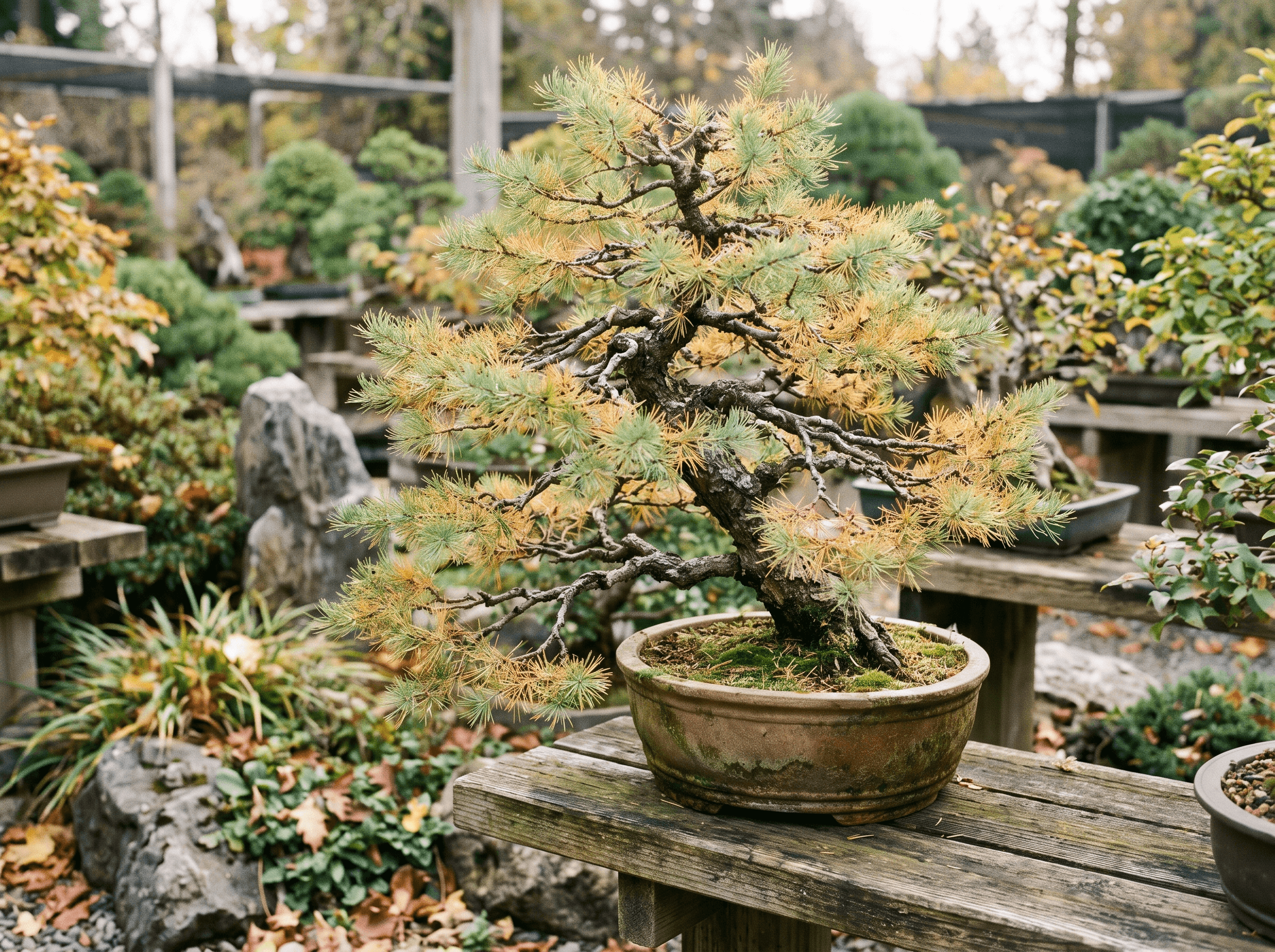
The first time someone new to bonsai sees a bare larch in winter, they usually assume it's dead or dying. It isn't. Larch is one of the few conifers that sheds its needles completely each autumn, going through the same gold-then-bare cycle as a deciduous broadleaf tree, then flushing soft, bright green new needle clusters again in spring. That cycle is a big part of the appeal, you get a genuine seasonal display from a tree that still has the fine, needle-like foliage texture of a conifer, which is a combination almost nothing else in bonsai offers.
Larch is also refreshingly vigorous and forgiving compared to some of the more delicate conifers. It grows readily, tolerates hard pruning well when the timing is right, and generally bounces back from mistakes that would set back a struggling pine or spruce. That combination of interesting seasonal behaviour and genuine toughness is why larch has become a favourite for naturalistic, wild-tree styling, the kind of gnarled, weathered silhouette that looks like it was collected from a windswept mountainside rather than grown deliberately on a bench.
It's a strictly outdoor tree and needs a real, cold winter dormancy to stay healthy, so it does best in climates with a reliable cold season rather than a consistently mild one. It also doesn't love hot, dry summers, the foliage can look stressed and thin in prolonged heat without adequate water, so growers in hotter climates need to pay closer attention to summer watering and some shade relief than they would with a tougher, more heat-adapted conifer.
Care
Light
Full sun through most of the year, larch is not a shade-tolerant tree and needs strong light to keep growth compact and healthy. In a genuinely hot climate, some relief from the most intense afternoon sun in high summer helps prevent stress, since larch handles heat less comfortably than it handles cold, but the default placement should still be as much sun as you can reasonably give it.
Watering
Larch wants consistently moist soil through the growing season and is noticeably less drought-tolerant than pine or juniper. It genuinely dislikes prolonged heat combined with dryness, and foliage will thin and look stressed quickly if the pot goes dry during a hot spell. I water thoroughly and check at least once a day through summer, more during a heatwave, easing back once the weather cools and again more once the tree drops its needles and enters dormancy.
Temperature & hardiness
This is a genuinely cold-hardy tree that requires real winter cold to complete its dormancy cycle properly, and it's one of the more clearly seasonal bonsai species in that sense, you'll see the full gold-and-bare winter silhouette rather than an evergreen canopy. Protect the pot from extended hard freezes as with any bonsai in a shallow container, but larch handles cold winters comfortably. Where it struggles more is hot, dry summer stretches, so factor that into placement and watering attention during the warmer months rather than worrying primarily about winter.
Soil & potting
A free-draining bonsai mix, akadama with pumice and lava rock in typical conifer proportions, works well for larch, similar to what suits pine. Good drainage matters, but given how much larch dislikes drying out completely in summer heat, I lean toward a mix with slightly better moisture retention than I'd use for a strict full-sun, drought-tolerant conifer, to reduce the risk of the pot flashing dry on a hot day.
Fertilizing
Feed through the growing season with a balanced fertiliser, starting as the new needles flush in spring and continuing through summer, then tapering off as the tree prepares to drop its foliage in autumn and stopping through dormancy. Larch is a vigorous grower and responds well to steady feeding, which supports the strong extension growth this species is known for and which you'll then be managing through pruning.
Pruning & wiring
Larch is genuinely forgiving of hard pruning, tolerating significant cutback and reduction work better than most conifers, which is a large part of why it suits the aggressive, naturalistic styling many growers reach for with this species. Structural cuts are best done in winter or very early spring, before the new needles push, while lighter shoot shortening through the growing season, once new extension growth has hardened a little, helps manage its vigour and build ramification. Larch typically responds to well-timed hard pruning with strong new growth rather than dieback. Wiring is most effective during dormancy or very early spring, while the branch structure is easy to see and before the soft new shoots that damage easily have emerged; this is central to achieving the twisted, weathered trunk lines associated with wild-collected mountain material. Check wire regularly since this species can thicken quickly and wire left on too long will scar.
Repotting
Repot every two years for a younger, vigorously growing larch, extending to two or three years or more as the tree matures. Timing matters more with larch than with many species: aim for the window right as buds begin to swell but before needles fully emerge, since repotting too early or too late is more likely to set the tree back. The root system responds reasonably well to work done at the right time, but larch can resent heavy-handed root reduction, so I keep root pruning conservative rather than bare-rooting the way I might with a tougher deciduous species. I still keep a newly repotted tree sheltered from harsh sun and wind for a couple of weeks afterward while it re-establishes, particularly given how sensitive this species is to drying out.
Common problems
Thin, sparse, or prematurely browning foliage in summer is the complaint I hear most with larch, and it almost always traces back to insufficient watering during a hot, dry stretch rather than disease, since this species handles drought noticeably worse than pine or juniper. Aphids and adelgids can occasionally cluster on new shoots in spring, worth checking for if growth looks distorted or sticky. Needle cast and a few fungal issues can show up in consistently damp, poorly ventilated conditions, so good airflow around the foliage matters. Because larch is naturally vigorous, an oddly weak or slow-growing tree is more often a sign of root trouble, either drought stress or a pot that's become too congested, and is worth checking at the roots directly rather than assuming it's simply a slow year.
Styling
Larch is one of the classic choices for naturalistic, wild-tree styling, the kind of weathered, wind-shaped silhouette meant to evoke a tree collected from a harsh mountain environment rather than deliberately grown on a bench. Its tolerance for hard pruning and strong wiring response make twisted trunks, informal upright forms, and windswept or semi-cascade styles all genuinely achievable rather than aspirational, and growers often lean into an irregular, asymmetric branch structure that mimics how larch actually grows at altitude in the wild, rather than forcing a tidier, more formal silhouette. The seasonal cycle adds another layer to any of these styles, since the same tree reads quite differently in spring's soft green flush, autumn's gold needle colour, and winter's bare, sculptural branch structure.
Common questions
Is it normal for my larch bonsai to lose all its needles?
Yes, completely normal. Larch is one of the few deciduous conifers and drops its needles every autumn after they turn gold, then flushes new soft green growth again in spring. A bare larch in winter is healthy, not dying.
Does larch bonsai need winter cold?
Yes, a genuine cold dormancy period is essential for this species to stay healthy long-term, so it does best in a climate with a reliable cold season. It should be kept outdoors year-round rather than brought inside.
Why does my larch bonsai look stressed in summer?
Larch dislikes hot, dry conditions more than most conifers and is noticeably less drought-tolerant than pine or juniper. Thin or browning foliage in a hot stretch is usually a watering issue rather than disease, so check that the pot isn't drying out between waterings.
Can larch bonsai take hard pruning?
Yes, it's genuinely one of the more forgiving conifers for hard structural pruning, tolerating significant cutback well when the work is timed for winter or very early spring, and typically responding with strong new growth. This is part of why it's so popular for aggressive, naturalistic styling work.
Is larch a good beginner bonsai species?
It's a reasonable choice for a beginner willing to pay close attention to summer watering, since it's vigorous and forgiving of pruning mistakes, but it does need a genuinely cold winter climate and more watering vigilance in heat than a tougher conifer like juniper.
When should I wire a larch bonsai?
Wiring is most effective during dormancy or very early spring, before the soft new shoots that bruise and damage easily have emerged, and it's central to shaping the twisted, weathered trunk lines associated with naturalistic larch styling. Check the wire regularly since larch can thicken quickly and wire left on too long will cut into the bark.
Why does my larch bonsai have such vigorous, leggy growth?
Larch is naturally a vigorous grower, more so than many conifers, and left unmanaged it will throw long extension growth quickly. Regular shoot shortening through the growing season, once new growth has hardened a little, keeps that vigour channelled into ramification rather than bare, leggy shoots.
You might also like
General guidance based on 20+ years of practice. Every tree and every climate is different — when in doubt, ask us.