
Chinese Elm Bonsai
Ulmus parvifolia
Chinese elm bonsai care makes it the tree I recommend most often as a second species, since it ramifies faster and forgives more mistakes than almost anything else you'll grow, small leaves included.
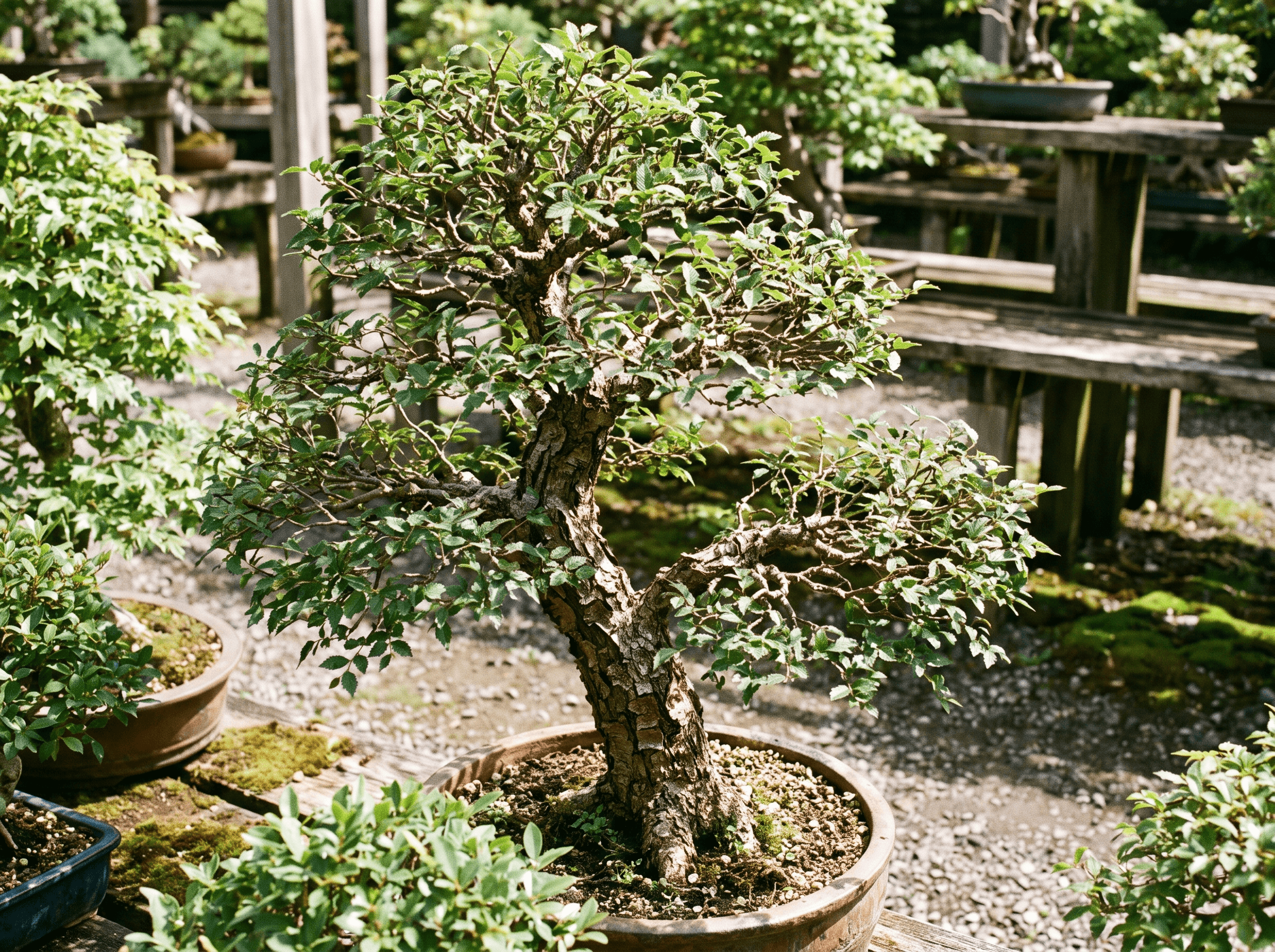
If juniper is the classic first bonsai and ficus is the classic first indoor bonsai, Chinese elm is the classic next step, and honestly it could just as easily be someone's first tree too. It's an extremely forgiving species: tolerant of inconsistent watering, quick to recover from an overly hard prune, and genuinely fast at building the kind of dense, twiggy branch structure that takes years to achieve on a pine or maple. I've had elm cuttings develop usable ramification in a couple of growing seasons, which is not something I'd say about most trees.
One thing that trips people up is the indoor-versus-outdoor question, because Chinese elm sits in a genuinely flexible middle ground, though it's fundamentally a temperate, outdoor tree rather than a tropical one like ficus. In a mild climate it does very well kept outdoors year-round like a juniper, and that's where it grows most vigorously. In a colder climate or without reliable outdoor space, an acclimated elm can also tolerate a bright indoor spot reasonably well, though it won't match the vigor of a tree grown outdoors, and it still benefits enormously from real outdoor time during warmer months if you can manage it. That flexibility is part of what makes it such a widely recommended species: it adapts to a lot of different living situations better than junipers or maples do, without being quite as indoor-tolerant as a genuinely tropical species.
The small, glossy leaves reduce impressively well with regular pruning, which combined with the fast ramification is why elm shows up so often in classical-looking bonsai despite being, relatively speaking, an easy tree to grow. There's also a corky-bark cultivar that's particularly prized, developing deeply fissured, rugged bark texture at a younger age than the standard form, which adds real trunk character without decades of waiting.
Care
Light
Bright light suits Chinese elm best, and it's genuinely adaptable on this front compared to most species. Outdoors in full sun to light partial shade works well and tends to produce the tightest growth and best leaf reduction. Kept indoors, it wants the brightest spot available, ideally a south-facing window, and while it will tolerate less than that better than a juniper ever could, growth gets noticeably leggier and leaves larger the dimmer the spot. If you can give it real outdoor time during the warmer months even while wintering it indoors, that seasonal boost in light intensity makes a visible difference to density.
Watering
Water when the soil surface starts to dry, then water thoroughly, similar to the general rhythm you'd use for a juniper. Elm is fairly tolerant of both slightly inconsistent watering and brief dry spells, which is part of its beginner-friendly reputation, though it doesn't want to sit permanently wet any more than most bonsai species do. Indoors, where the pot dries more slowly than outdoors in sun and wind, check before watering rather than sticking to a fixed schedule, since indoor overwatering is a more common mistake than underwatering with this species.
Temperature & hardiness
Chinese elm is genuinely adaptable here, which is unusual for a temperate deciduous tree. In mild to moderate climates it's hardy enough to live outdoors year-round with only pot protection during hard freezes, similar to how you'd treat a juniper, and frost tolerance in general is better for trees that have been grown and hardened off outdoors. In colder climates, or for anyone without reliable outdoor space, an elm that's been acclimated to indoor conditions tolerates being brought indoors for winter better than a true outdoor conifer would, without the severe long-term decline you'd see keeping a pine or juniper inside, though it should be moved gradually rather than shifted straight from outdoor cold into a warm room or back out again. It still benefits from some seasonal temperature variation and outdoor exposure when possible, and unlike ficus it isn't genuinely built for a permanently controlled indoor climate its whole life; outdoor growing remains the better long-term option where it's practical.
Soil & potting
A standard, free-draining bonsai mix works well, akadama, pumice, and lava in roughly even parts, or a similar locally available equivalent. Elm isn't especially fussy about the exact ratio compared to something like olive, and it tolerates a slightly more moisture-retentive mix than a strict conifer blend without issue, provided drainage is still reasonable. This adaptability extends to soil the same way it does to light and temperature; elm is simply less particular than most of the trees on this list.
Fertilizing
Feed regularly through the growing season with a balanced fertilizer, since elm's fast growth and ramification actually benefit from steady nutrition rather than a light touch. If you're keeping it indoors year-round in warm, bright conditions where the tree is still actively growing, light feeding can continue through the cooler months at a reduced rate; if growth has clearly slowed or stopped, hold off feeding until it picks back up. Outdoors, ease off as autumn cooling sets in and skip feeding through the coldest stretch of winter dormancy.
Pruning & wiring
This is where elm really earns its reputation. It back-buds reliably from old wood, tolerates frequent hard pruning without much drama, and pushes new growth quickly enough that you can maintain ramification through repeated pinching and clipping across the whole growing season rather than in one or two careful sessions a year. Cut back new shoots to one or two leaves once they've extended, and the tree responds with further branching from that point, which is exactly how the dense, fine twig structure Chinese elm is known for gets built up over a couple of seasons rather than a couple of decades. Wiring works well too, and elm holds a shape reliably, though as with any species check regularly so wire doesn't scar the bark as branches thicken, particularly on younger, faster-growing shoots.
Repotting
Repot every one to two years for young, vigorously growing trees, extending to every two or three years as the tree matures and growth slows somewhat. Spring, as buds begin to extend, is the standard window and the one I'd plan around. Root pruning can be reasonably assertive on an established, healthy elm, and recovery is generally fast, another point in its favour if you're still building confidence with root work.
Common problems
Chinese elm is refreshingly low-drama, but a few issues come up. Leggy, sparse growth with larger-than-usual leaves almost always points to insufficient light, particularly common on trees kept permanently indoors in a dim spot. Leaf drop can happen after a big environmental change, a move, a repot, a sudden cold snap, similar to ficus, and it's rarely fatal on its own; new growth typically follows within a few weeks once conditions stabilise. Elm can attract aphids on tender new shoots, worth checking periodically since a bad infestation will distort new growth and slow ramification. Root rot from consistently wet, poorly draining soil is possible but less common here than with more sensitive species, since elm tolerates a wider range of moisture conditions before roots actually suffer.
Styling
Chinese elm suits a wide range of classical styles thanks to how readily it ramifies, but informal upright and broom form are particularly popular, since the small leaves and fine twigging create a full, balanced canopy relatively quickly. Group and forest plantings work well too, using several young elms together to build the impression of a mature woodland scene faster than most other species would allow. The corky-bark cultivar is often styled to show off its rugged, deeply textured trunk, sometimes with a slightly more open canopy specifically so the bark stays visible rather than getting hidden behind dense foliage. Because it tolerates frequent, hard pruning so well, elm is also a common choice for practicing branch and canopy refinement technique generally, independent of any particular finished style.
Common questions
Can Chinese elm bonsai live indoors?
It's fundamentally a temperate, outdoor tree, and outdoors is where it grows best and most vigorously. That said, an elm acclimated to indoor conditions can tolerate a bright indoor spot reasonably well, especially in colder climates without reliable outdoor space, but it won't be as vigorous as a tree grown outdoors, and it still benefits significantly from real outdoor time during warmer months if you can manage it.
Is Chinese elm a good beginner bonsai?
Yes, it's one of the most forgiving species available and a very common recommendation as a first or second tree. It tolerates inconsistent watering, hard pruning, and a range of light conditions better than almost anything else on this list.
Why does my Chinese elm have big leaves and long gaps between them?
Almost always a light issue. Elm reduces leaf size and tightens growth with strong light and regular pruning; in a dim spot, especially indoors, it grows leggier with larger leaves. Moving it somewhere brighter and keeping up a regular pruning routine usually corrects this over a season or two.
How fast does Chinese elm ramify?
Notably fast compared to most bonsai species. With regular pinching and clipping through the growing season, usable branch ramification can develop within a couple of years on younger material, which is part of why it's such a popular choice for people who don't want to wait decades to see results.
What is corky-bark Chinese elm?
A prized cultivar of Ulmus parvifolia that develops thick, deeply fissured, rugged bark at a noticeably younger age than the standard form, giving a tree real trunk character without the decades of aging a similar look would normally take on other species.
Does Chinese elm need to go outdoors?
Chinese elm is a temperate species that does best outdoors, and that's the setup I'd recommend if you have the option. It can adapt to bright indoor culture reasonably well if that's your only option, but seasonal outdoor exposure during warmer months produces denser growth and generally healthier trees than a purely indoor life, so I'd treat indoor keeping as a workable compromise rather than the ideal.
Why is my Chinese elm dropping leaves?
Usually a reaction to a recent change, a move, a repot, a sudden cold snap, rather than a serious problem. It's similar to how ficus behaves. Give it a stable environment and expect new growth within a few weeks; persistent drop with no obvious trigger is worth checking against watering habits and pests.
You might also like
General guidance based on 20+ years of practice. Every tree and every climate is different — when in doubt, ask us.