
Fir Bonsai Care
Abies spp.
Fir is a conifer I respect more than I market, honestly, since it asks for a level of patience and root-care caution that most people don't expect from something that looks, at first glance, like just another pine.
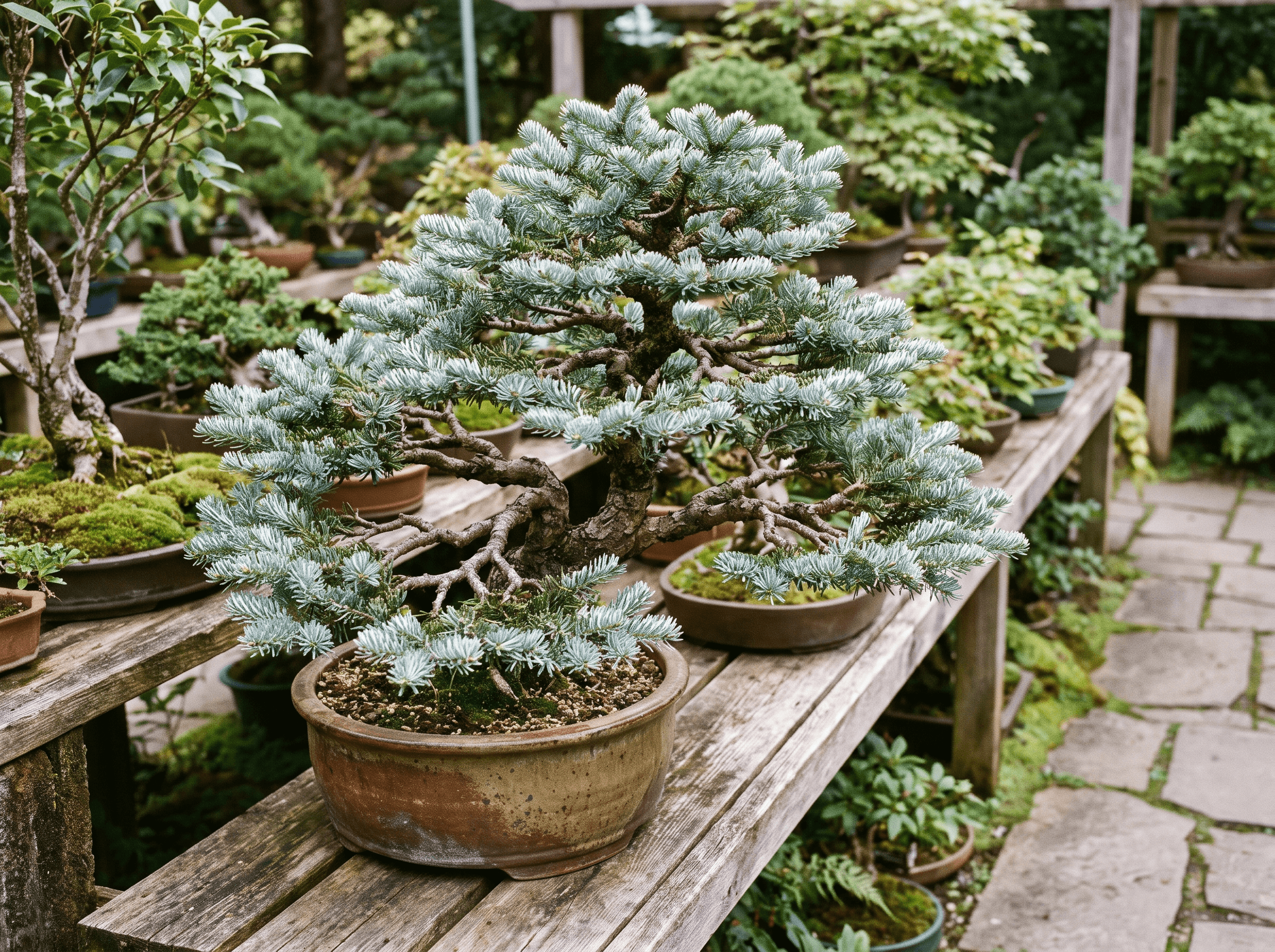
Fir doesn't get anywhere near the attention pine and juniper get in bonsai circles, and there's a reason for that beyond fashion. It's slower growing, less commonly worked, and considerably less tolerant of the kind of root disturbance that a juniper shrugs off during repotting. I keep a few Abies on the nursery grounds mostly because I like the look of the silvery undersides on the needles when the wind catches a branch, and because a well-developed fir has a genuine presence that's different from anything else in the conifer section, more formal, more upright in character even in windswept styling.
The needle arrangement itself is part of the appeal and part of the styling challenge. Fir needles sit flat and radiate outward along the shoot in a way that's visually distinct from pine's bundled needles or juniper's scale foliage, and the silvery-white banding on the undersides becomes a real design feature once you learn to angle branches so it catches the light. It's a slower species to ramify than junipers, so building density takes real seasons of patient grow-and-clip work rather than one aggressive styling session.
What surprises people most is how genuinely cold hardy fir is paired with how much it resents the opposite extreme, hot, dry summer wind. These are mountain trees by nature, comfortable through serious winter cold, but a fir baking on an exposed balcony in a Southern Italian summer with constant dry wind will show stress fast, browning needle tips and dropping older interior needles. It wants good light, but sheltered from the harshest, driest airflow, which is a slightly different balancing act than most other conifers on this site need.
Care
Light
Full sun to light partial shade suits fir well. In a hot climate, some protection during the hottest weeks of summer is worth giving, since fir doesn't care for intense, prolonged heat the way a true Mediterranean species does. Pair whatever light level you choose with some shelter from strong, dry, hot wind, especially in summer, the combination of intense sun and desiccating wind is harder on fir than either factor alone, and I've seen more needle browning from wind stress on an otherwise well-watered tree than from sun exposure by itself. A spot with good light most of the day but some windbreak, even just other benched trees or a fence, works better than a fully exposed position.
Watering
Excellent drainage matters as much as consistent moisture here. Fir roots don't tolerate sitting wet, but the tree also doesn't want to dry out completely, particularly while establishing in a new pot or soil mix. Water thoroughly when the top layer starts to dry and make sure the mix itself is draining fast enough that you're never left guessing whether water is pooling around the roots. I'd rather underwater slightly and correct quickly than risk a soggy mix with this species, root problems on fir are slow to show and slower still to reverse.
Temperature & hardiness
Genuinely cold hardy, comfortable through serious winter freezes without much protection needed beyond the usual pot insulation in extreme conditions, since these are naturally mountain and cold-climate trees. What catches people off guard is the other end of the spectrum: in my experience fir resents hot, dry summer wind at least as much as heat by itself, and in a Mediterranean climate with scorching, dry summer gusts, that combination is a bigger seasonal risk than any winter cold you'll see here. Plan siting around summer wind exposure as much as winter cold.
Soil & potting
A fast-draining, mineral bonsai mix, the standard akadama, pumice, and lava blend or a comparable free-draining local substitute, suits fir well and matters more than usual given how sensitive the roots are to disturbance. Because fir doesn't recover from root damage as readily as junipers or many broadleaf species, getting the drainage right at potting time reduces how often you need to intervene later, and it's worth erring toward a slightly coarser, more open mix than you might use for a more forgiving tree.
Fertilizing
Feed through the growing season, spring into early autumn, with a balanced fertiliser at a moderate rate, tapering off as growth slows toward autumn and stopping through winter dormancy. Fir's slower growth compared to pine or juniper means it doesn't need aggressive feeding, and I'd rather underfeed slightly and watch the tree's response than push heavy fertiliser on a species this sensitive to stress in other areas.
Pruning & wiring
Prune conservatively and expect slower results than you'd get from a faster conifer. Pinch soft new shoots while they're still extending and before they harden off, to help keep growth compact, rather than relying on the candle-pinching technique used on pine, fir's growth habit is different enough that the pine method doesn't map directly onto it. Larger structural branches are best removed in late autumn rather than during the growing season, and because fir is slower to ramify, I space out major structural pruning more than I would on juniper, giving the tree a full season or more to recover strength between significant cuts. Wire in autumn or winter when the tree is dormant, since wiring during active spring and summer growth carries a real risk of dieback on conifers like this. Take care with branch placement given the needle arrangement and how visible each branch's angle is with the silvery undersides on display, poor branch angles are more noticeable on fir than on denser, more forgiving foliage types.
Repotting
Repot younger, more vigorous trees roughly every two to three years, easing off further for older, established specimens as growth slows. Work in early spring, using normal, moderate root-pruning rather than an especially light touch, older or recently collected material is the case where I'd genuinely hold back on root work, not every fir by default. Afterward, give the tree a sheltered spot out of strong sun and wind for a couple of weeks while it recovers, rather than treating reduced light as a blanket rule for an extended period.
Common problems
Needle browning from wind stress is the complaint I see most with fir grown outside its comfort zone, particularly on exposed balconies through hot, dry Southern Italian summers, and it's more a siting problem than a disease. Root rot from poor drainage or overwatering is the other major risk, and because fir's decline from root problems is slow and hard to reverse, catching a soggy mix early matters more here than with most species. Aphids and adelgids occasionally show up on the needles and shoots, sometimes leaving a cottony residue that's easy to mistake for something more serious. If a tree drops a significant number of interior, older needles in late summer, some of that is normal seasonal shedding rather than decline, but widespread browning across newer growth points to a watering or wind exposure problem worth addressing quickly given how slowly this species recovers.
Styling
Fir's upright, formal natural growth habit suits formal and informal upright styles particularly well, letting the tree's genuine mountain-tree character show rather than forcing it into something more dramatic. The needle arrangement and silvery undersides are worth designing around directly, angling branches so the lighter underside catches available light adds real visual depth that a flatter styling approach would waste. It's slower to develop than pine or juniper, so I treat fir as a long-term project tree, patient clip-and-grow ramification over many seasons rather than an aggressive one-session restyling, and the reward is a conifer with a genuinely different silhouette and texture from anything else on the bench.
Common questions
Is fir a good bonsai species for beginners?
Not really the easiest starting point. Fir is slower growing than pine or juniper, sensitive to root disturbance during repotting, and less forgiving of watering mistakes than more commonly recommended beginner conifers. It's a better fit for someone who already has a season or two of conifer care experience.
Why are my fir's needles turning brown?
The two most likely causes are hot, dry summer wind exposure or a drainage problem at the roots. Fir tends to resent desiccating wind more than most conifers in my experience, and it's worth checking your tree's siting for wind exposure before assuming disease.
How often should I repot a fir bonsai?
Roughly every two to three years for younger, actively growing trees, easing off further as the tree matures. Normal, moderate root-pruning at repotting time is fine for most fir; it's older or recently collected material specifically where a lighter touch on the roots makes more sense.
Can fir bonsai handle full sun?
Yes, full sun to light partial shade both work, though some protection during the hottest weeks of summer helps in a warm climate. Pair whatever light level you choose with some shelter from strong, dry summer wind, since the combination of intense sun and desiccating wind is harder on the tree than either factor alone.
How cold hardy is fir bonsai?
Genuinely very cold hardy, being a mountain species by nature, and it handles serious winter freezes with minimal protection needed. It's summer heat combined with dry wind that causes more trouble for fir than winter cold typically does.
Why does my fir bonsai grow so slowly?
That's normal for the species. Fir ramifies more slowly than pine or juniper, so building dense branch structure takes patient seasons of grow-and-clip work rather than quick results. Treat it as a long-term project tree from the start.
What's distinctive about fir needles for bonsai styling?
Fir needles sit flat and radiate along the shoot, with silvery-white banding on the undersides that becomes a real styling feature once branches are angled to display it. It's a different visual texture from pine's bundled needles or juniper's scale foliage.
You might also like
General guidance based on 20+ years of practice. Every tree and every climate is different — when in doubt, ask us.