
Prunus Bonsai Care: Flowering Apricot and Plum Bonsai
Prunus mume and P. cerasifera (flowering apricot and plum)
Prunus bonsai care comes down to one thing above everything else, a canopy of flowers opening in late winter before a single leaf appears, and getting the pruning timing wrong is the fastest way to trade next year's entire flower show for nothing.
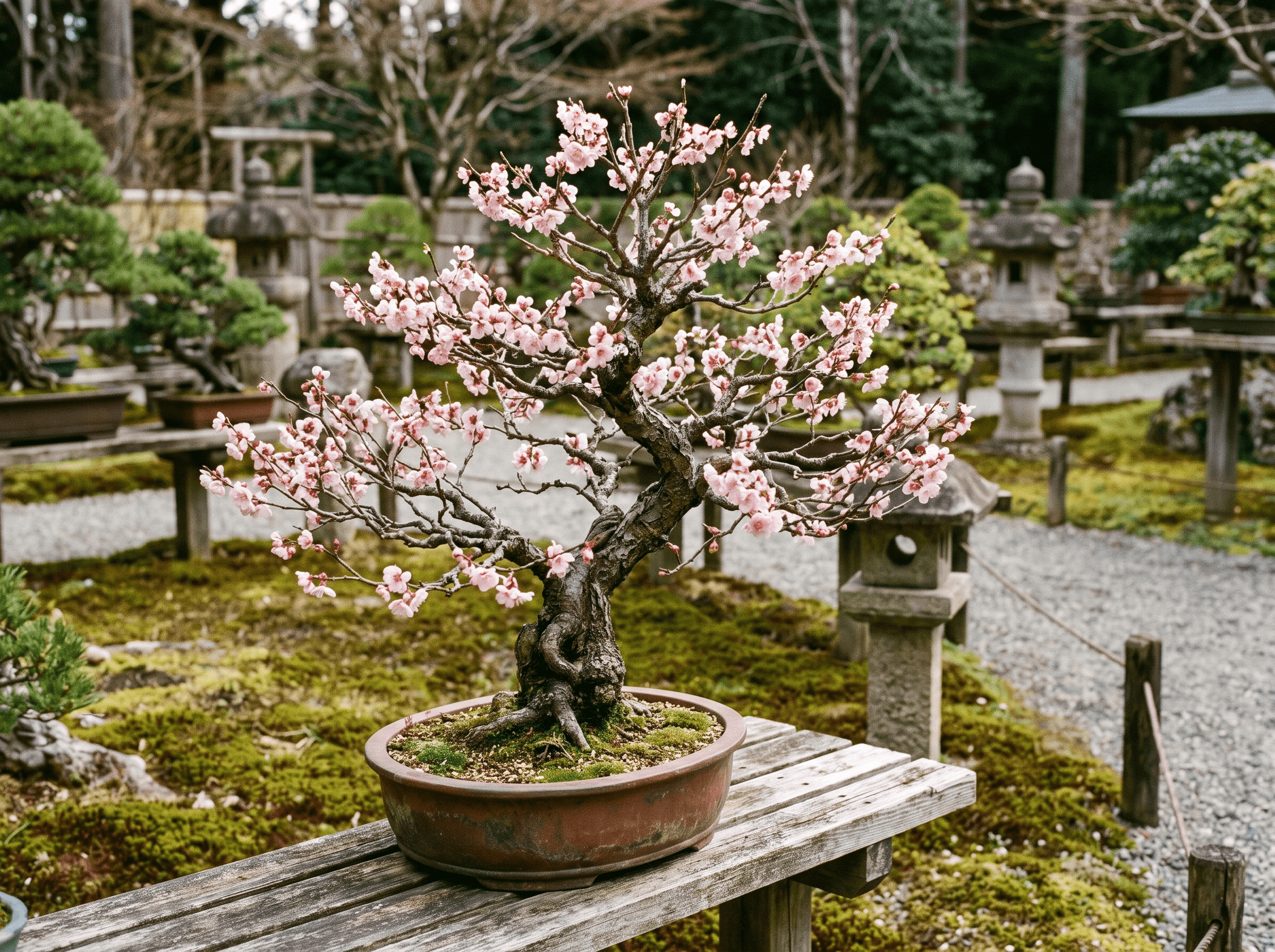
Flowering prunus, whether it's Japanese apricot (Prunus mume) or flowering plum (Prunus cerasifera), earns its place in a collection for a display almost nothing else on this list can match: bare branches suddenly covered in blossom in late winter or very early spring, well before the leaves come out. It's a striking thing to see on a mature bonsai, and it's the reason people grow this species specifically rather than for trunk character or foliage refinement, which are honestly secondary here. Most of the detailed care technique in circulation has been worked out on Prunus mume specifically, so treat guidance for other flowering prunus, including P. cerasifera, as a close approximation rather than an identical rulebook.
That flower show depends on something people underestimate: a real winter chill period. Prunus generally needs a genuine stretch of cold to set flower buds properly and bloom well the following season, so a mild winter, or an attempt to keep the tree somewhere protected and frost-free through the cold months, tends to produce a disappointing, sparse flowering more often than not. This is very much an outdoor, seasonally-driven tree, not a species you can shortcut by controlling its environment too closely.
The single most important thing to get right, and the mistake I see most often even from people who've grown other deciduous species successfully, is pruning timing. Prunus sets next year's flower buds on growth made shortly after this year's flowering, so hard pruning in autumn or winter cuts off the wood that would have flowered. Prune hard right after the blossom drops in spring instead, and you protect the following year's display while still shaping the tree.
Care
Light
Full sun to light partial shade works well, and generous light through the growing season supports strong flower bud formation for the following late-winter bloom. Outdoors with good sun exposure for most of the day is the standard to aim for. Too much shade won't necessarily kill the tree, but it tends to produce a thinner, less impressive flower display, which rather defeats the purpose of growing a flowering species in the first place.
Watering
Keep the soil evenly moist through the growing season, watering thoroughly once the surface starts to dry, and be particularly attentive during flowering and immediately after, when the tree is investing a lot of energy into blossom and then new leaf growth. It doesn't want to sit in soggy, waterlogged soil, prunus roots are genuinely vulnerable to rot in poorly drained conditions, so the balance to strike is consistent moisture without ever letting the pot go swampy.
Temperature & hardiness
Flowering prunus is a hardy, deciduous species that benefits from a real winter chill period to flower well, and this matters more here than almost any other single care factor. Left outdoors through a normal cold winter suits the tree, and keeping it somewhere too sheltered or frost-free through the cold months tends to weaken the following spring's bloom. That said, cold tolerance varies by species and even by variety, some prunus are reliably hardy only to around minus 10 Celsius, so it pays to check what you're actually growing rather than assuming every prunus takes the same winter unprotected. A potted tree is also more exposed than one in open ground, so protect the pot itself during unusually severe freezes or prolonged cold, wet spells, both of which are harder on a container-grown root system than on the top growth.
Soil & potting
A free-draining bonsai mix is important given how susceptible prunus roots are to rot, akadama, pumice, and lava in proportions leaning a little more toward drainage than you might use for a sturdier species works well. Avoid a heavy, water-retentive substrate, since the combination of a moisture-loving top growth habit and a rot-prone root system means the margin for soil mistakes is narrower here than with a genuinely drought-tolerant species.
Fertilizing
Feed through the growing season with a balanced fertilizer, and consider easing toward a lower-nitrogen feed as the season progresses toward the period when next year's flower buds are forming, following the general flowering-tree principle of favoring phosphorus and potassium over nitrogen at that stage. This is more a widely used approach for flowering trees generally than a rule documented specifically for prunus, so treat it as a reasonable default rather than a strict formula. Stop feeding as the tree heads into autumn dormancy and resume once new growth begins after flowering in spring.
Pruning & wiring
Timing is everything with prunus. Prune hard immediately after flowering finishes in spring, not in autumn or winter, since the tree sets its flower buds for next year on the growth that follows this pruning, and cutting during the dormant season removes exactly the wood that would have bloomed. When you cut back, leave at least a couple of viable leaf buds on any shoot or branch you intend to keep, since prunus wood cut back too short with no leaf buds left can die back instead of sprouting new growth. Once you're past the post-flowering window, light pinching and shaping through the rest of the growing season is fine and won't threaten next year's display the way a hard structural cut later in the year would. Prunus is also somewhat prone to fungal issues, so make clean cuts and consider a wound sealant on larger pruning wounds to reduce entry points for infection. Wiring works on younger, flexible growth, but prunus bark and wood can be more brittle than that of many other deciduous bonsai species, so go gently and check regularly.
Repotting
Repot every two years for younger trees, extending as the tree matures. Right after flowering, alongside the main spring pruning session, is the safest general window, since it avoids disturbing the roots while the tree is still investing energy into bud swell and bloom. For Prunus mume specifically, early spring just before new growth begins is also a commonly used window. Whichever timing you choose, avoid repotting while flower buds are actively swelling toward bloom, since that's the point at which root disturbance is most likely to disrupt the display. Given the susceptibility to root and fungal issues, use clean tools and avoid leaving damaged or torn root ends, and get the tree into a fresh, well-draining mix promptly. A freshly repotted prunus benefits from a sheltered spot and close attention to moisture for a couple of weeks while new roots establish, watering carefully rather than simply watering less, since a disturbed root system can still dry out quickly even though it takes up water less efficiently right after repotting.
Common problems
A disappointing, sparse flower display is the most common frustration with prunus, and it usually traces back to one of two causes: pruning at the wrong time of year and removing next season's flower buds, or an insufficiently cold winter that didn't give the tree the chill period it needed to set buds properly in the first place. Fungal issues, including leaf spot and various blights, are a genuine risk for this species, more so than for most others in this guide, and good airflow around the foliage along with clean pruning cuts go a long way toward prevention. Root rot from overly wet, poorly draining soil is another real risk given how sensitive prunus roots are, showing up as wilting or yellowing foliage despite what looks like adequate watering. Aphids and other sap-feeding pests can cluster on tender new spring growth right around flowering time, worth checking for since an infestation then can affect both the bloom and the following leaf flush.
Styling
Prunus is generally styled to showcase the flowering display itself, so informal upright and slanting forms with a reasonably open branch structure, letting light and air reach the blossom and keeping individual flowers visible rather than buried in dense foliage, tend to work better than an aggressively refined, tight canopy. Because the flowering happens on bare branches before leaves emerge, trunk and branch silhouette matter more here in winter than they do on species where the canopy is the main event year-round, which makes prunus a good candidate for styles that emphasize elegant, flowing branch lines. Older, gnarled material with some real trunk character photographs particularly well in bloom, since the contrast between rough, aged bark and delicate blossom is a big part of the visual appeal specific to this species.
Common questions
When should I prune my flowering prunus bonsai?
Right after it finishes flowering in spring, not in autumn or winter. Prunus sets next year's flower buds on the growth that follows this pruning, so cutting during the dormant season removes the wood that would have bloomed, which is the single most common mistake people make with this species. When you do cut back, leave a couple of leaf buds on any shoot you want to keep, since a cut with no viable buds left can die back.
Why didn't my prunus bonsai flower this year?
Usually one of two things: pruning at the wrong time and removing the previous season's flower buds, or an insufficiently cold winter that didn't provide the chill period the tree needs to set buds well. Both are more common causes than any pest or disease.
Does prunus bonsai need a cold winter to flower?
Yes, generally, and this matters more for prunus than for almost any other species in this guide. A real winter chill period supports good flower bud formation, so keeping the tree somewhere too sheltered from cold tends to work against a strong spring bloom. Exact cold tolerance varies by species and variety, so it's worth checking what you're growing rather than assuming a blanket rule.
Is flowering prunus prone to disease?
More so than many bonsai species, yes. Fungal issues like leaf spot and various blights are a genuine risk, so good airflow around the foliage, clean pruning cuts, and sometimes a wound sealant on larger cuts all help reduce the chances of infection taking hold.
What's the difference between Prunus mume and Prunus cerasifera for bonsai?
Prunus mume, Japanese flowering apricot, is the classic choice most associated with the late-winter blossom display and traditional bonsai styling, and it's also the species most bonsai literature is written around. Prunus cerasifera, flowering plum, offers a similar early bloom with its own flower and bark character. Both are grown and pruned in broadly the same way, including the critical post-flowering pruning timing, but treat P. cerasifera's finer care points as a close approximation rather than an identical rule.
How much water does a flowering prunus bonsai need?
Consistent, even moisture through the growing season, especially during and right after flowering when the tree is putting a lot of energy into blossom and then new leaves. Avoid letting the soil go soggy, though, since prunus roots are genuinely vulnerable to rot in poorly drained, waterlogged conditions.
Can I keep a flowering prunus bonsai indoors?
No, not long-term. It's a hardy, deciduous, outdoor tree that generally needs real winter cold to flower well the following spring. Keeping it indoors disrupts that chill requirement and tends to produce a weak or absent bloom, defeating the whole reason to grow the species.
You might also like
General guidance based on 20+ years of practice. Every tree and every climate is different — when in doubt, ask us.