
Bougainvillea Bonsai Care
Bougainvillea glabra / Bougainvillea spectabilis
Bougainvillea bonsai is grown for pure colour, vivid papery bracts wrapped around tiny true flowers, on a thorny, sprawling vine that needs constant management but rewards it with one of the most eye-catching displays in warm-climate bonsai.
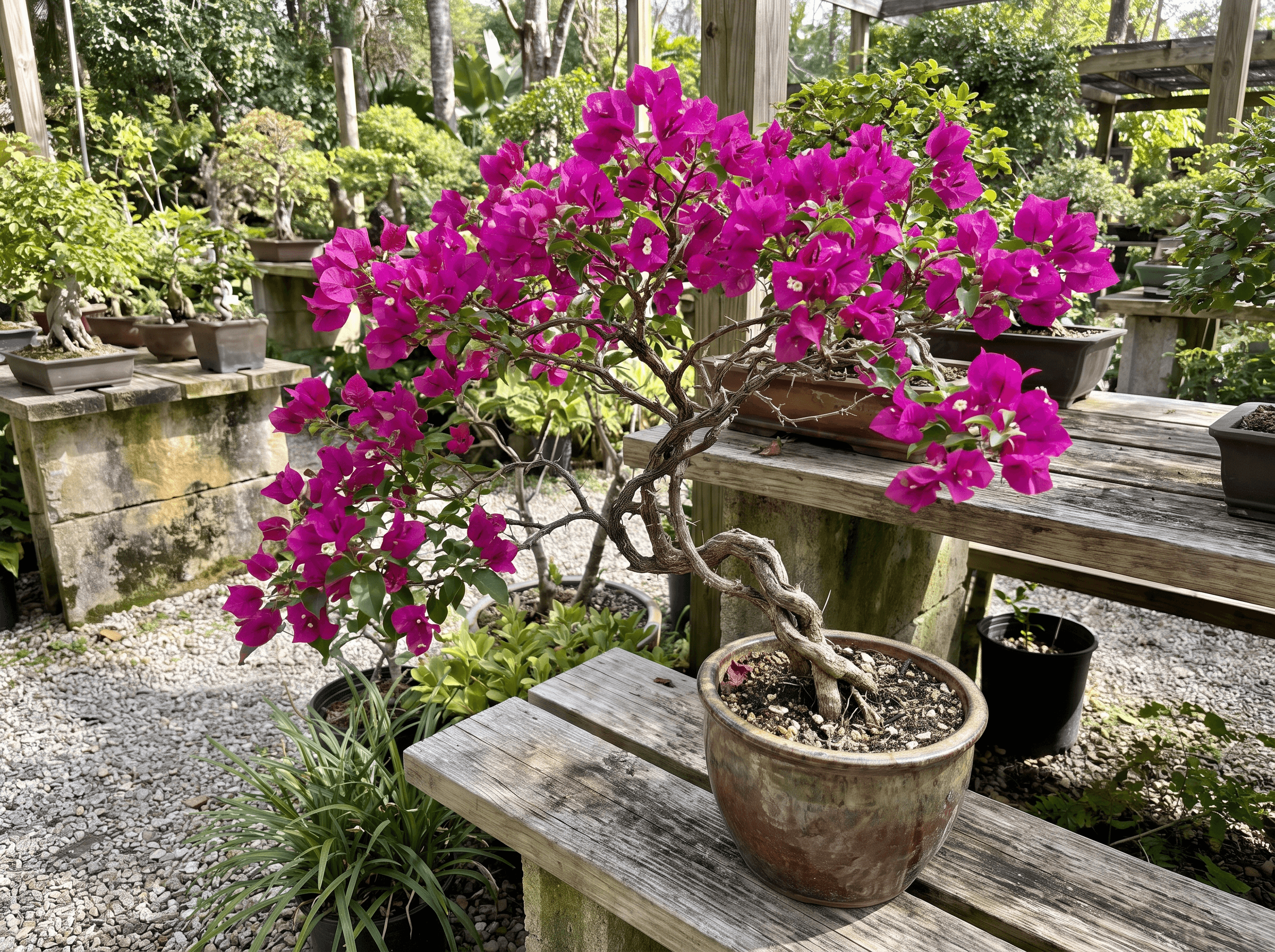
Bougainvillea is a tree I recommend cautiously, because it genuinely needs heat and sun to perform, and a lot of people underestimate just how much. What you're actually seeing when a bougainvillea flowers isn't the flower itself, the true flowers are small and unremarkable, it's the papery, brightly coloured bracts surrounding them, in shades running from magenta and purple through orange and white depending on variety. Get the light right and a mature bougainvillea in full bloom is genuinely one of the most striking sights you can put on a bench.
This is a vigorous, thorny, sprawling vine in its natural growth habit, not a naturally compact tree, and left unmanaged it throws long whippy shoots covered in sharp thorns with real enthusiasm. Keeping that habit under control through regular wiring and pruning is most of the ongoing work of growing one as bonsai, similar in spirit to wisteria though the technique and timing differ. It flowers on new growth, so this management work is directly tied to how well and how often the tree blooms, though it's worth doing thoughtfully rather than constantly, since cutting the plant back too hard or too often through summer can set flowering back rather than help it.
It genuinely needs warmth. Bougainvillea is not reliably cold-hardy and struggles once temperatures approach freezing, so anywhere outside genuinely mild, frost-free climates it needs winter protection, a greenhouse, a bright unheated room, or at minimum a sheltered spot away from frost, rather than being left outdoors year-round like a juniper or pine. That single requirement is the main reason it stays a warm-climate or greenhouse specialty rather than a mainstream outdoor bonsai species in most temperate regions, but for anyone who can provide that protection, it's a genuinely rewarding tree to grow.
Care
Light
Maximum sun, full and direct, for as many hours a day as you can provide. Bougainvillea simply will not flower well without intense light, and this matters more here than for almost any other species on this site. A tree kept in partial shade will survive and grow green foliage indefinitely without ever producing a serious bract display. If you're growing it in a greenhouse over winter, position it at the brightest possible point and consider supplemental light if natural light is limited.
Watering
Let the soil dry out somewhat between waterings rather than keeping it constantly moist. Bougainvillea genuinely dislikes being kept too wet, and I've found that a slightly drier watering regime, allowing the top portion of the mix to dry before the next thorough watering, actually encourages better flowering than keeping the pot evenly damp. This is a real departure from how most bonsai species want to be watered, so it's worth unlearning the instinct to keep every tree consistently moist when you're working with this one specifically.
Temperature & hardiness
This is not a cold-hardy species and struggles once temperatures drop much below about five to ten degrees Celsius, so it needs genuine winter protection anywhere outside consistently mild, frost-free climates, rather than being left outside through a cold season. A greenhouse, conservatory, or bright frost-free room works, kept on the cooler and drier side through winter since the tree naturally slows down and semi-rests during this period. It should go back outside into full sun as soon as the weather reliably warms in spring.
Soil & potting
A free-draining bonsai mix is important given how much this species dislikes staying wet, a mineral mix with good drainage similar to what you'd use for other sun-loving, drought-tolerant subjects works well. Avoid anything overly water-retentive. Given its vigorous root growth, bougainvillea also appreciates a reasonably generous pot relative to some slower conifers, though it still tolerates being kept fairly restricted once established, which helps control its naturally sprawling habit.
Fertilizing
Feed regularly through the warm growing season with a balanced fertiliser to support strong growth and bract production, tapering off as temperatures drop in autumn and stopping almost entirely during the cooler winter rest period. This is a vigorous plant that responds well to consistent feeding while it's actively growing and flowering, but it doesn't need or want heavy feeding through its winter slowdown.
Pruning & wiring
Since bougainvillea flowers on new growth, some regular pruning through the growing season helps keep fresh growth coming, and cutting back spent or leggy shoots can push out new growth that later produces bracts. That said, pruning too heavily or too often through summer can set flowering back rather than help it, so I concentrate the harder shaping cuts in late winter or early spring and keep in-season trimming lighter, mostly tidying rather than repeatedly cutting the whole plant back. Be careful of the thorns, they're genuinely sharp and plentiful on vigorous growth, thick gloves are worth having on hand. Wiring is essential to manage the naturally sprawling, climbing habit into a bonsai silhouette, and younger, more flexible shoots take wire well, though I work carefully around the thorns and remove wire before it bites into the bark, since this species can thicken quickly in a warm growing season.
Repotting
Repot roughly every two to three years, done in spring as the tree is coming out of its winter rest and warming back into active growth; young trees still being developed may need it a little more often. The roots can be thin and don't always form the same dense, cohesive mass you'd see on a woodier species, so I go gently and remove as little root as I can get away with rather than root-pruning hard. I also keep newly repotted trees a little more sheltered and go easier on watering for a couple of weeks afterward, since the combination of root disturbance and this species' dislike of excess moisture makes overwatering right after repotting a real risk.
Common problems
The complaint I hear most is a bougainvillea that grows plenty of green foliage and never flowers, which almost always comes down to insufficient light, this species needs genuinely intense, direct sun to bloom and simply won't perform in a shaded or even lightly shaded spot. Overwatering is the other major issue, root rot develops readily if the pot is kept consistently wet, showing up as yellowing leaves, weak growth, or leaf drop that can look confusingly similar to underwatering at first glance. Cold damage is a real risk anywhere temperatures approach freezing, presenting as blackened, mushy foliage or dieback, which is exactly why winter protection matters so much for this species outside genuinely warm climates. Watch for aphids and scale on new growth in a greenhouse environment, where still, warm air can let populations build up quickly without natural predators to keep them in check.
Styling
Bougainvillea's naturally sprawling, climbing habit lends itself well to cascade and semi-cascade styles, echoing how the plant grows over walls and structures in warm climates, and informal upright forms work too when the vine is trained more compactly. Because it's grown primarily for its bract display, many growers treat the flowering season as the tree's showpiece moment and style around maximising visible bloom coverage across the silhouette rather than chasing the kind of fine year-round ramification you'd want on an evergreen conifer. It's a popular choice specifically for warm-climate outdoor collections and greenhouse growers, where its colour and vigour can really be appreciated without constantly fighting the plant's dislike of cold.
Common questions
Why won't my bougainvillea bonsai flower?
Almost always insufficient light. Bougainvillea needs maximum direct sun to produce its bracts and will grow healthy green foliage indefinitely in partial shade without ever flowering seriously. Move it to the brightest, sunniest spot available before troubleshooting anything else.
Can bougainvillea bonsai survive outdoors year-round in Italy?
Only in genuinely mild, frost-free areas. Bougainvillea struggles once temperatures approach freezing, so anywhere that sees real winter cold, greenhouse or bright frost-free room protection is generally necessary rather than leaving it outdoors year-round.
How often should I water bougainvillea bonsai?
Less often than you'd expect for most bonsai. Let the top of the soil dry out between waterings rather than keeping it consistently moist, since this species genuinely dislikes being kept too wet and tends to flower better with a slightly drier regime.
Is bougainvillea bonsai difficult to care for?
It's not difficult so much as demanding in specific ways: it needs intense sun to flower, protection from cold, careful handling around its sharp thorns, and pruning that's regular but not excessive, since cutting it back too hard or too often through summer can reduce flowering rather than encourage it. Given those conditions it's a rewarding and fairly forgiving plant.
When does bougainvillea bonsai flower?
Mainly through the warm growing season, since it flowers on new growth and light, well-timed pruning through spring and summer encourages repeated flushes. It generally rests through the cooler winter months, especially if kept somewhat cool and dry during that period.
Why does my bougainvillea bonsai have so many thorns?
Thorns are a natural feature of the species' vigorous, climbing growth habit, particularly noticeable on strong new shoots. There's no way to eliminate them entirely, so thick gloves are worth keeping on hand for pruning and wiring sessions.
What soil is best for bougainvillea bonsai?
A free-draining, mineral bonsai mix that doesn't hold excess water, since this species dislikes staying wet more than most flowering bonsai. Avoid overly organic or water-retentive mixes that keep the roots damp for extended periods.
You might also like
General guidance based on 20+ years of practice. Every tree and every climate is different — when in doubt, ask us.