
Trident Maple Bonsai Care
Acer buergerianum
Trident maple is the tree I hand to someone who's outgrown juniper and wants to see what deciduous bonsai can really do, since it forgives almost every mistake a Japanese maple would punish severely.
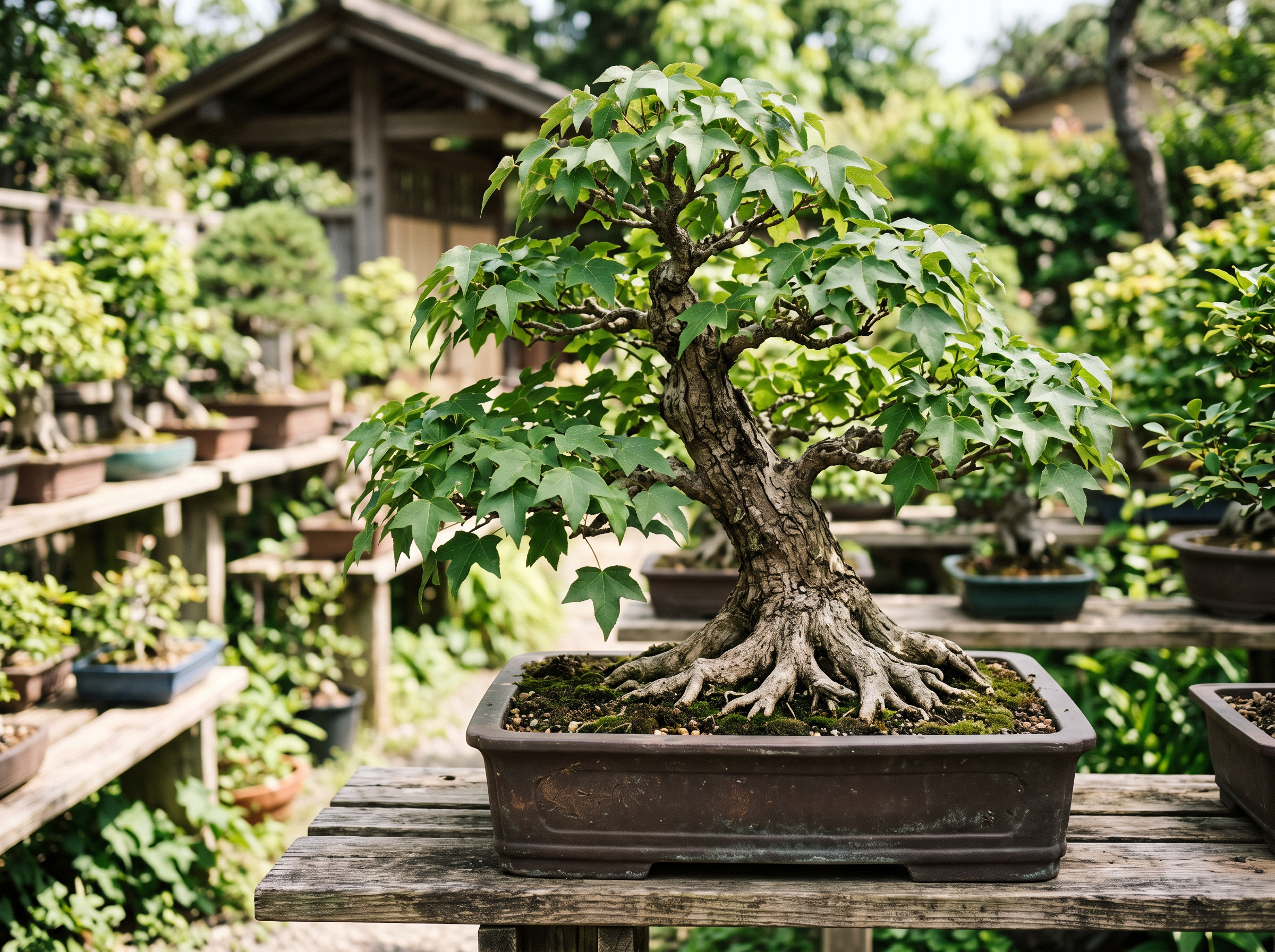
If Japanese maple is the temperamental cousin, trident maple is the tough, easygoing sibling that actually wants to be worked hard. Acer buergerianum tolerates more sun, more aggressive pruning, and rougher handling generally than Japanese maple, which makes it genuinely excellent material for someone moving past their first few juniper or lonicera and wanting to try deciduous technique without the higher failure rate. I recommend it constantly for exactly this reason.
The three-lobed leaf is smaller and tougher than a Japanese maple leaf and reduces well with the same kind of partial defoliation approach, giving a dense, fine canopy over a few seasons of consistent work. But leaf size isn't really trident maple's headline feature. Nebari, the visible spread of surface roots at the base of the trunk, is where this species genuinely excels, in my experience better than almost any other common bonsai species, and a lot of serious trident maple development is really nebari development in disguise, encouraging that flat, radial root spread through deliberate technique over years.
It's an outdoor deciduous tree, full stop, needing a real seasonal cycle including winter dormancy to stay healthy, and it isn't especially difficult as long as you accept that some root and canopy work is a multi-year project rather than a weekend fix. The classic beginner mistake with trident maple isn't neglect, it's actually understyling it, treating it too gently the way you might a Japanese maple, when the tree would honestly prefer a firmer hand.
Care
Light
Full sun to fairly strong light generally suits trident maple well, and it tolerates considerably more direct sun than Japanese maple without the same risk of leaf scorch. Some relief from the very harshest midday sun in extreme summer heat is sensible, particularly for younger trees or ones recovering from a hard prune, but as a general rule this is a species you can be less cautious about siting compared to its more delicate relative.
Watering
Water thoroughly when the topsoil starts to dry, and expect a vigorously growing trident maple in an active development pot to need frequent attention through summer, sometimes daily in serious heat. It doesn't want to sit permanently soggy, but it's also a genuinely thirsty tree during active growth, and letting it dry out completely can cause leaf scorch or premature leaf drop faster than you'd see on a tougher conifer.
Temperature & hardiness
A properly deciduous, cold-hardy species that needs a real winter dormancy period outdoors to stay healthy long-term, similar in principle to most temperate deciduous bonsai. It handles a wide range of temperate climates well, tolerating both a reasonably cold inland winter and a milder coastal one, as long as it gets some genuine seasonal cold rather than being kept artificially warm year-round. Cold tolerance has limits though, especially at the roots: many guides cite a risk of damage to unprotected roots in a shallow pot below around minus 5 Celsius, so protect the pot itself, mulching it in or moving it somewhere sheltered, during genuinely hard freezes rather than assuming the tree's overall hardiness extends fully to a container-grown root system.
Soil & potting
A free-draining mix, akadama, pumice, and lava or a similar coarse local blend, suits trident maple's active root growth well. Because so much of trident maple development revolves around nebari, deliberately encouraging a flat, radial spread of surface roots, the potting and root work over successive repottings matters more here than with most species. Growers sometimes use more advanced techniques, tourniquet cuts among them, best learned from an experienced grower or a detailed technique guide before attempting, alongside more routine methods like flat, shallow training pots, specifically to push that root spread outward rather than down.
Fertilizing
Feed generously through the growing season, spring into early autumn, with a balanced fertiliser, since trident maple is a genuinely vigorous grower that responds well to consistent feeding, especially while you're building trunk thickness or encouraging strong nebari development in younger material. Reduce or stop feeding as autumn growth slows and through winter dormancy.
Pruning & wiring
This is where trident maple's toughness really shows. It tolerates hard pruning and generally back-buds well on healthy, vigorously growing trees, so cutting back significantly to refine structure is usually well received rather than risky. Partial defoliation during the growing season helps reduce leaf size and encourages finer ramification, similar in principle to oak but with faster, more forgiving recovery. Wire young, flexible shoots for structural work, and because the tree grows vigorously, check wire regularly since it can bite into bark faster than on a slower species. I genuinely prune trident maple harder than I would most other deciduous material, within reason, because it responds so well to it.
Repotting
Repot young, vigorously growing trees every one to two years, easing to every two to three years as the tree matures. Early spring is the standard window, though exact timing varies a bit by source and climate, some growers repot just before buds break, others wait until the first leaves are opening, so treat it as a range rather than one fixed date and adjust to your local spring. Because nebari development is such a central part of working with this species, repotting is also when you do most of the deliberate root work, encouraging surface roots to spread outward and cutting back any that plunge straight down, over several repottings rather than solving it in one aggressive session.
Common problems
Leaf scorch from underwatering during peak summer heat is probably the most common issue, showing as crisped, browned edges on leaves, and it's usually a watering frequency problem rather than anything more serious given how thirsty this species is during active growth. Aphids, scale, and spider mites can all turn up on new shoots and the undersides of leaves, particularly in still, crowded conditions, and are worth checking for periodically rather than waiting for visible damage. Powdery mildew and leaf spot can appear in humid, poorly ventilated spots, usually more of a cosmetic issue than a serious threat once airflow improves. Verticillium wilt is a more serious concern with maples generally, showing as sudden branch dieback or wilting on one side of the tree, and while trident maple is tougher than Japanese maple it isn't fully immune, so soil hygiene and avoiding wounds during humid periods are worth taking seriously. Root rot from a compacted or overly wet mix is another real risk given how much this species relies on healthy, actively growing roots for both top growth and nebari development. A tree that seems to stall on nebari development despite otherwise healthy growth usually just needs more deliberate root work at repotting rather than a change in general care.
Styling
Trident maple's vigorous growth and tolerance for hard pruning make it excellent for clip-and-grow development of both canopy and, especially, nebari, and a mature specimen with a well-spread radial root base and a dense, fine canopy is genuinely one of the most impressive things a deciduous bonsai can achieve. Informal upright and informal, broom-like forms both suit its natural growth habit well, showing off that root spread at the base while the canopy fills in above it, though some growers consider a strict formal broom style better suited to other species. It's also solid material for group or forest plantings given how reliably it develops trunk taper and surface roots across multiple young trees planted together.
Common questions
Is trident maple easier than Japanese maple for bonsai?
Yes, noticeably. Trident maple tolerates more sun, harder pruning, and rougher general handling than Japanese maple, with a lower failure rate for the same techniques. It's a common recommendation for someone moving past their first conifer and wanting to try deciduous bonsai.
How do I develop good nebari on trident maple?
Through deliberate root work across several repottings, encouraging surface roots to spread outward radially and cutting back any that grow straight down. Trident maple has exceptional nebari potential compared to most species, and it's really a multi-year project done gradually rather than fixed in one repotting.
Can trident maple bonsai handle full sun?
Yes, considerably more than Japanese maple. Some relief from the harshest midday summer sun is sensible for young or recently pruned trees, but as a general rule trident maple tolerates strong direct light well.
How hard can I prune a trident maple bonsai?
Quite hard. It generally back-buds well on a healthy, vigorously growing tree and usually responds well to significant structural cuts, which is part of why it's such forgiving material. That said, spreading a major reduction across more than one season is still sensible on an older, established tree.
Does trident maple need winter cold?
Yes, it's a properly deciduous species that needs a real winter dormancy period outdoors to stay healthy long-term. It handles a range of temperate climates well as long as it experiences genuine seasonal cold rather than being kept artificially warm, though roots in a shallow pot need some protection during genuinely hard freezes.
Why are my trident maple's leaves scorching in summer?
Almost always a watering frequency issue. Trident maple is genuinely thirsty during active summer growth, and a pot that dries out completely in hot weather will show crisped, browned leaf edges quickly. Check more often during peak heat.
What's the best style for a trident maple bonsai?
Informal upright and informal, broom-like forms both suit its natural growth habit and let a well-developed nebari show at the base, though some growers reserve a strict formal broom style for other species. It's also excellent for group or forest plantings given how reliably it builds trunk taper and surface root spread.
You might also like
General guidance based on 20+ years of practice. Every tree and every climate is different — when in doubt, ask us.