
Cedar Bonsai Care
Cedrus atlantica / Cedrus libani
True cedar makes a bonsai unlike anything else in a conifer collection, with distinctive layered, drooping branch pads that read as instantly recognisable even to people who know nothing else about the species.
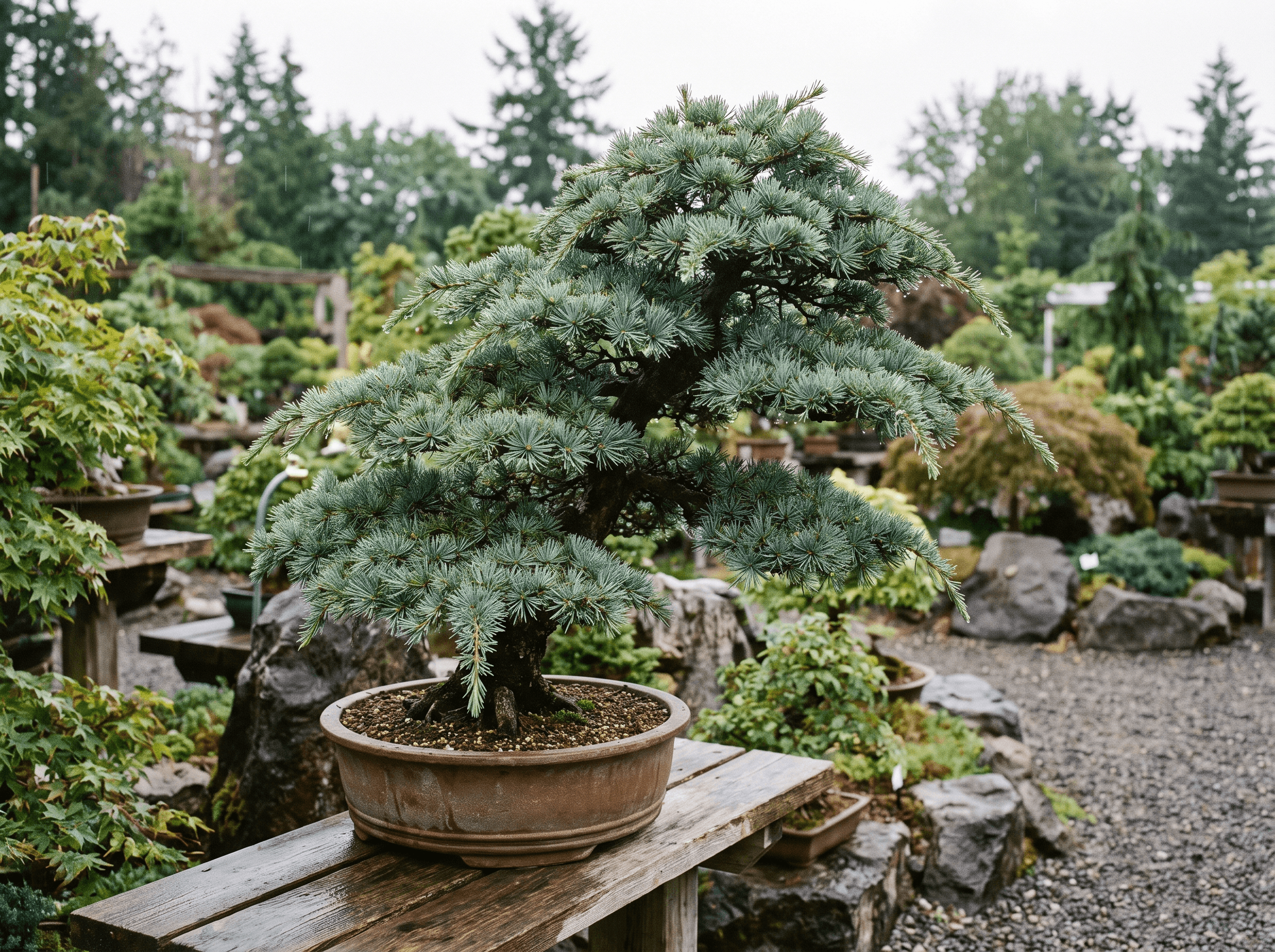
Cedar doesn't get worked as bonsai nearly as often as pine or juniper, and I've never fully understood why, because the mature branch structure is genuinely one of the more striking silhouettes available in conifer bonsai. Once a cedar develops some age, the branches settle into flat, horizontal, slightly drooping layers, almost shelf-like, stacked up the trunk, which is exactly the look Lebanon cedars and Atlas cedars have in the landscape at full size. Getting that pad structure to show on a bonsai-sized tree takes years of patient work, but there's nothing quite like it once it develops.
Part of the reason cedar stays a minority species in bonsai circles is that it grows more slowly than pine, so building trunk thickness and a fully developed pad structure from young material is a longer project than most growers are willing to commit to. That's honestly its main drawback rather than any real fragility. It's a genuinely useful, resilient species to have in a collection precisely because so few growers work with it seriously, which means well-developed cedar material tends to stand out.
It's an outdoor conifer, generally cold hardy once established, and needs full sun and genuinely sharp drainage to do well. The two most commonly available species for bonsai, Atlas cedar and Lebanon cedar, are similar enough in care that I treat them the same in practice. Where growers run into trouble is most often drainage; cedar resents sitting wet a great deal, though young trees especially still benefit from protection from hard freezes and cold wind.
Care
Light
Full sun, as much as you can give it. Cedar is a sun-loving conifer that thins out and loses density in shade, similar to pine and juniper in that respect. Outdoors in an open, unshaded spot is the right placement for the whole growing season, and I wouldn't compromise on this even in a hot climate, since strong light is part of what keeps the foliage tight and the characteristic pad layers dense rather than sparse and leggy.
Watering
Water thoroughly when the soil starts to dry, then let it approach dryness again before the next watering rather than keeping it constantly damp. Cedar's biggest vulnerability by far is a waterlogged root zone, and it's genuinely intolerant of soggy conditions. In a hot summer that still means fairly frequent watering, since a small pot in full sun dries quickly, but the drainage of the mix matters just as much as the watering schedule itself here.
Temperature & hardiness
Cedar is a reasonably cold-hardy conifer once mature and needs a real winter outdoors, the same dormancy period as pine and juniper. In my experience waterlogging causes more problems than cold does, but that doesn't mean winter care can be skipped, especially with younger trees, which are more vulnerable to hard freezes and cold wind than established specimens. Protect the pot itself during extended hard freezes since roots in a shallow container are more exposed than roots in open ground.
Soil & potting
Sharp, fast drainage matters a great deal for cedar. A mineral, inorganic-heavy mix, akadama, pumice, and a generous proportion of lava rock or grit, suits it well, and I'd rather err toward more drainage than less. A mix that holds water even slightly too long around the roots is a common way cedar declines, so this is not a species to pot in anything close to standard potting soil or an overly organic mix.
Fertilizing
Feed through the growing season with a balanced fertiliser at a moderate rate, easing off as growth slows into autumn and stopping through winter dormancy. Cedar grows more slowly than pine, so it doesn't need or particularly benefit from heavy feeding to push growth, steady, moderate feeding through spring and summer supports healthy development without forcing overly long internodes that would need correcting later.
Pruning & wiring
Pruning cedar is largely about building and maintaining those distinctive flat, layered pads rather than chasing dense overall foliage the way you might on juniper. Shorten new shoots in early spring, then pinch back further growth through the rest of the growing season to encourage horizontal branching and keep the pads from becoming congested or losing their flat profile. Wiring is essential for arranging branches into that characteristic drooping, layered look, since it doesn't happen entirely on its own, and cedar wood takes wire reasonably well on younger growth. Save harder structural cuts for autumn, since cedar can bleed sap if cut hard while actively growing, and because it's a slower grower, I plan structural changes over a longer timeline than I would with pine.
Repotting
Repot every three to five years, less frequently than faster-growing species, since cedar's slower growth means the roots take longer to fill the pot. Growers split on timing here: some repot in early spring before growth starts, while others, following cedar-specific practice, prefer late summer after that season's growth has hardened off. Either window can work well; what matters more is disturbing the roots gently and not doing it during the coldest or hottest stretch of the year. Given how sensitive this species is to waterlogging, repotting is also your chance to refresh the mix and make sure drainage hasn't degraded over the previous seasons, which matters as much as the root pruning itself.
Common problems
The problem I see most with cedar, by a wide margin, is root rot from a mix that doesn't drain sharply enough or a pot that's kept too wet for too long, showing up as browning, thinning foliage, weak new growth, or in serious cases a soft, dying root system when you check at repotting time. Because cedar tolerates waterlogging so poorly, this is worth ruling out first whenever a tree looks unwell. Aphids can appear on soft new growth in spring, and fungal shoot blights can cause browning and dieback in consistently damp, poorly ventilated conditions, so good airflow around the foliage matters. Spider mites can also show up in hot, dry, stagnant conditions with poor airflow, presenting as fine stippling or webbing on the foliage. Slow, sparse growth on a young tree is often simply the species' naturally slower pace rather than a health problem, so it's worth comparing against realistic cedar timelines before assuming something is wrong.
Styling
The defining cedar style is built entirely around developing those flat, horizontal, slightly drooping branch pads stacked in layers up an upright or slightly leaning trunk, echoing how mature Atlas and Lebanon cedars grow in the wild. This takes real patience since the layered structure only becomes convincing after years of selective pruning and wiring, but it's a genuinely distinctive silhouette that sets a cedar apart from every pine or juniper on the bench. Informal upright is the most natural fit for the trunk line, sometimes with a gentle lean that echoes old cedars weathered by wind at altitude. Because the species is comparatively rare in bonsai collections, a well-developed cedar with mature pad structure tends to draw attention precisely for being something growers don't see very often.
Common questions
Why is my cedar bonsai growing so slowly?
Cedar naturally grows more slowly than pine or juniper, so a certain amount of patience is simply part of working with this species. As long as the foliage looks healthy and dense rather than thin or discoloured, slow growth on its own isn't a cause for concern.
Why is my cedar bonsai's foliage browning?
The most common cause by far is a waterlogged root zone from poor drainage or overly frequent watering. Cedar tolerates soggy soil poorly, so check the mix and drainage before assuming a pest or cold-related cause.
How do I get the layered, drooping branch look on a cedar bonsai?
That characteristic pad structure develops through years of selective pruning to encourage horizontal branching, combined with wiring to arrange branches into flat, layered tiers. It's a long-term project rather than something achievable in a season or two, especially given cedar's naturally slower growth rate.
Does cedar bonsai need full sun?
Yes, as much direct sun as you can provide. Like pine and juniper, cedar thins out and loses foliage density in shade, and strong light helps keep the branch pads tight rather than sparse.
Is cedar bonsai cold hardy?
Generally yes, once established. Both Atlas and Lebanon cedar handle real winter cold reasonably well and need that outdoor dormancy period, though younger trees benefit from protection from hard freezes and cold wind. Waterlogging causes more problems for this species overall than cold does, but that's not a reason to skip winter protection entirely.
What soil should I use for cedar bonsai?
A sharply draining, mineral-heavy mix, akadama with a generous proportion of pumice and lava rock or grit, works best. Cedar is particularly intolerant of a mix that holds water too long, so err toward extra drainage.
Is cedar a good species for an experienced grower looking for something different?
Yes. It's less commonly worked as bonsai than pine or juniper, which makes well-developed material genuinely distinctive, but its slower growth rate and strict drainage requirements make it a better fit for a grower with some existing conifer experience than a first bonsai.
You might also like
General guidance based on 20+ years of practice. Every tree and every climate is different — when in doubt, ask us.