
Boxwood Bonsai Care
Buxus sempervirens / B. harlandii
Boxwood tests patience in a different way than oak does, growing so slowly that a season's progress can be hard to see, but rewarding that patience with some of the densest, most refined foliage in bonsai.
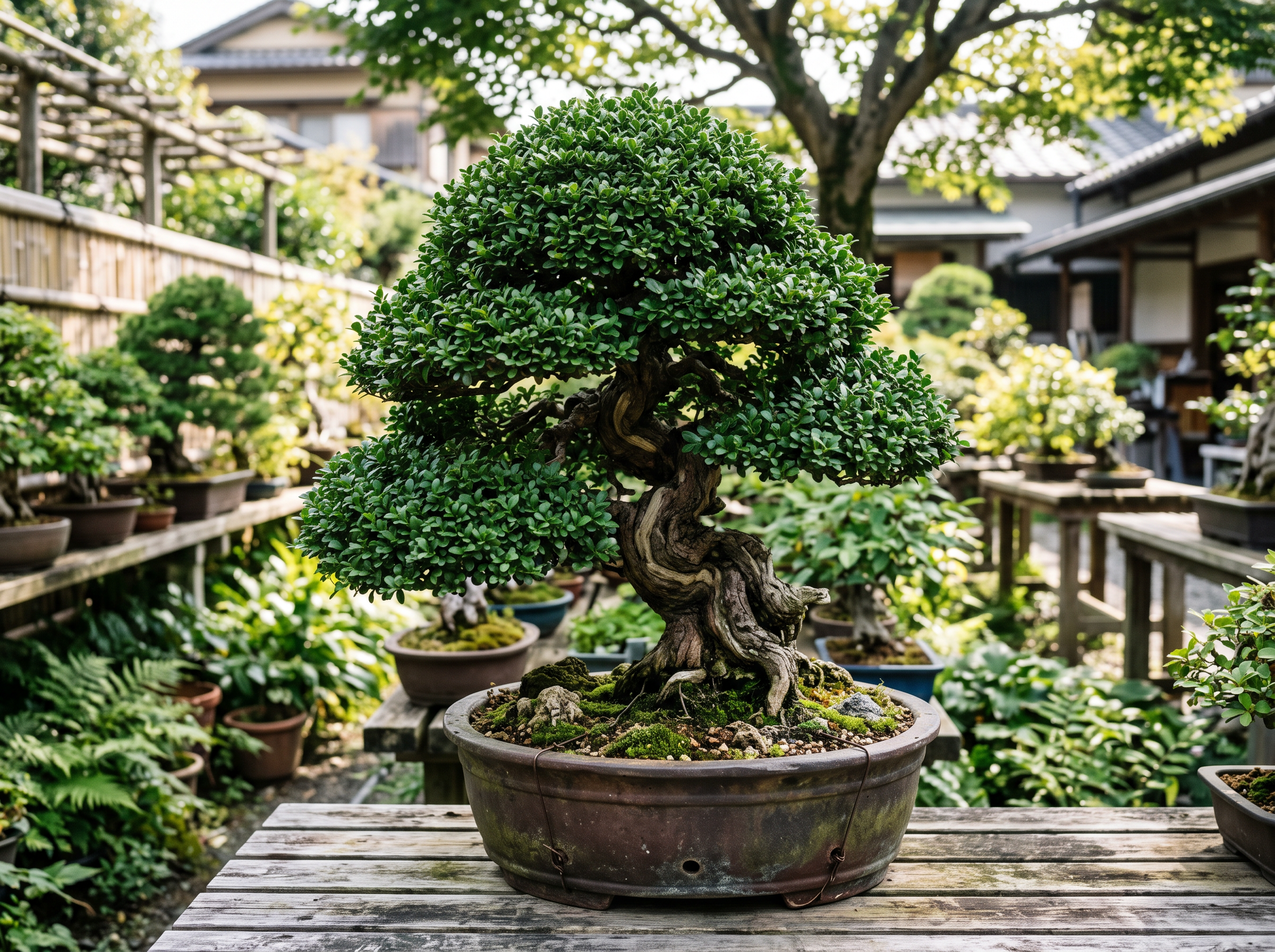
Boxwood is a species I associate with old, slow-handed growers who don't mind waiting years between meaningful decisions, and honestly that's the right mindset to bring to it. Buxus sempervirens and Buxus harlandii are both very slow growing compared to almost anything else on this site, and the payoff for that patience is dense, small foliage that packs in tightly with fairly modest upkeep once established, unlike species that need constant defoliation work to stay in scale.
It tolerates shade better than most bonsai species, which is genuinely useful if you've got a spot on the property that doesn't get strong direct sun for most of the day. That said, tolerating shade isn't the same as thriving in deep shade, growth simply slows even further and foliage can thin, so I'd still give boxwood the best light available even though it won't punish you as harshly as a juniper would for a compromised spot.
Old, collected boxwood, yamadori taken from hedgerows or abandoned gardens, is genuinely prized in bonsai for aged, characterful trunk and bark, and sometimes real deadwood, that takes decades to develop naturally and can't really be faked convincingly on younger material. If you ever get the chance to work on an old collected boxwood stump, take it seriously, that kind of trunk character is close to impossible to replicate from nursery stock no matter how skilled the styling.
Care
Light
Full sun to partial, dappled shade suits boxwood well, and it's genuinely more shade-tolerant than most bonsai species, which makes it a practical choice for a spot that doesn't get all-day direct sun. In a hot climate, some afternoon shade helps prevent foliage scorch, and growth in deeper shade is slower with foliage that can thin somewhat compared to a sunnier position, so I'd still aim for the best bright light realistically available rather than treating deep shade as a comfortable long-term spot.
Watering
Water when the topsoil starts to dry and water thoroughly, avoiding both prolonged drought and constantly soggy soil. Boxwood's slow growth means it doesn't dry out a pot as fast as a vigorous species like lonicera or trident maple, so the watering rhythm tends to be a bit more forgiving and less urgent day to day, though it still needs proper attention through hot summer stretches.
Temperature & hardiness
Common boxwood, Buxus sempervirens, is genuinely hardy outdoors through most temperate climates and tolerates real winter cold well. Buxus harlandii is less cold-hardy and appreciates more consistent protection through a genuinely cold winter, so treat the two differently rather than assuming identical hardiness. Either way, a tree in a shallow bonsai pot is more exposed to cold and to winter sun scald than the same species growing in open ground, so typical pot insulation and some shelter during extreme hard freezes matters more for container-grown boxwood than the in-ground hardiness ratings alone would suggest. Its evergreen foliage means it holds visual interest through winter unlike deciduous species that go bare.
Soil & potting
A free-draining bonsai mix suits boxwood well, though given how slowly it grows, root development between repottings is also correspondingly slow, so there's less urgency about aggressive drainage correction than with a fast, thirsty species. Akadama, pumice, and lava in a standard blend, or a comparable local mix, works fine. Old collected material in particular often does best potted more conservatively, giving the root system time to stabilize before any aggressive substrate changes.
Fertilizing
Feed lightly through the growing season, spring into early autumn, with a balanced fertiliser at a modest rate, since boxwood's naturally slow growth doesn't call for the generous feeding schedule that a vigorous species like privet or lonicera needs. Overfeeding a slow grower like this doesn't meaningfully speed it up and just adds unnecessary fertiliser to the soil, so I keep boxwood on the lighter end of typical feeding schedules.
Pruning & wiring
Because boxwood grows so slowly, pruning is a more measured, deliberate process than the frequent hard trims a lonicera or privet needs. Light, regular trimming to maintain the dense foliage pad shape works better than infrequent hard cuts, since a slow grower takes correspondingly longer to recover and refill after a major reduction. Wiring works well on the flexible younger shoots, and boxwood holds a set shape reliably once wire comes off, useful for the gnarled, characterful branch movement that suits old collected material particularly well. Structural work on old, thick wood should be approached carefully and gradually given how slowly the tree replaces lost growth.
Repotting
Repot infrequently compared to faster species, generally somewhere in a two to five year range depending on age, vigor, and how full the pot has actually gotten, healthy young material toward the more frequent end, older established or collected trees toward the less frequent end. A boxwood can typically be left a little rootbound without harm if you're not sure it's due yet, so check the roots before assuming a fixed calendar applies. Early spring is the standard window. Go conservative with root reduction each time, since boxwood's slow growth rate means a heavily root-pruned tree takes a long time to rebuild the root mass it lost, longer than you'd wait with almost any other species covered here.
Common problems
Boxwood blight is a genuine concern in some regions, a fungal disease causing dark leaf spots, defoliation, and blackened stems, spreading readily in humid, still, crowded conditions, and it's worth knowing your local disease pressure before committing to boxwood as a primary species. Leafminer is another regionally common issue, small larvae tunneling inside the leaves and leaving visible blistered patches. Because boxwood grows so slowly, general decline can be hard to read early, a stressed tree doesn't necessarily show it quickly the way a fast grower would, so I check the interior foliage and stems periodically for early signs of either blight or leafminer rather than waiting for obvious visible damage.
Styling
Boxwood's naturally dense, compact foliage pads suit formal and informal upright styles that lean into a tight, refined, almost sculpted silhouette, and its slow growth means a well-developed shape holds its form for a long time between major interventions. Old collected material with a genuinely aged trunk and bark, and sometimes real deadwood, is where boxwood gets genuinely special though, character developed over decades in the ground that no amount of styling on young nursery stock can convincingly replicate. If you're working with younger material, patience and light, frequent trimming over years will build the dense pad structure boxwood is known for, but don't expect the dramatic trunk character without genuinely old wood.
Common questions
Why does my boxwood bonsai grow so slowly?
That's completely normal for the species. Buxus sempervirens and B. harlandii are among the slowest growing common bonsai species, which is part of why old collected boxwood with real trunk character is so prized, that development simply can't be rushed.
Can boxwood bonsai tolerate shade?
Yes, more than most bonsai species. It's genuinely shade-tolerant and works reasonably well in a spot that doesn't get strong direct sun all day, though growth slows further and foliage can thin somewhat compared to a sunnier position.
How often should I repot a boxwood bonsai?
Infrequently compared to faster species, generally somewhere in a two to five year range depending on the tree's age, vigor, and how full the roots actually are, rather than a fixed interval. Boxwood's slow growth means aggressive root pruning takes a long time to recover from, and a boxwood can typically sit a little rootbound without harm if you're not sure it's due yet, so go conservative each time.
What is boxwood blight and how do I prevent it?
A fungal disease causing dark leaf spots, defoliation, and blackened stems, spreading readily in humid, crowded, poorly ventilated conditions. Good sanitation and airflow are the main preventive steps, removing fallen leaves and debris promptly, spacing plants so foliage isn't constantly damp against its neighbors, and being aware of local disease pressure and checking new stock carefully before adding it to a collection.
Is boxwood a good beginner bonsai?
It can be, if you're genuinely patient. It's forgiving of shade and general care mistakes, but the slow growth rate means progress is hard to see season to season, which frustrates beginners who want quicker visible results.
Why is old collected boxwood so valuable for bonsai?
Old collected boxwood, yamadori, develops an aged, characterful trunk and bark, and sometimes real deadwood, over decades in the ground that's genuinely difficult to replicate on younger nursery stock, no matter how skilled the styling work applied to it.
How much fertiliser does boxwood bonsai need?
Less than a vigorous species like privet or lonicera. Feed lightly through the growing season with a balanced fertiliser at a modest rate, since boxwood's slow growth doesn't benefit much from heavy feeding, and there's little upside to overfeeding a tree that simply can't use the extra nutrients quickly.
You might also like
General guidance based on 20+ years of practice. Every tree and every climate is different — when in doubt, ask us.