
Needle Juniper Bonsai
Juniperus rigida
Needle juniper is one of the classic species in traditional Japanese bonsai, and it earns its name honestly: the foliage is genuinely sharp, arranged in fine pendulous sprays that hang and cascade in a way no scale-foliage juniper really matches, and working close to an untrimmed one without care is a good way to leave a session with scratched hands and forearms.
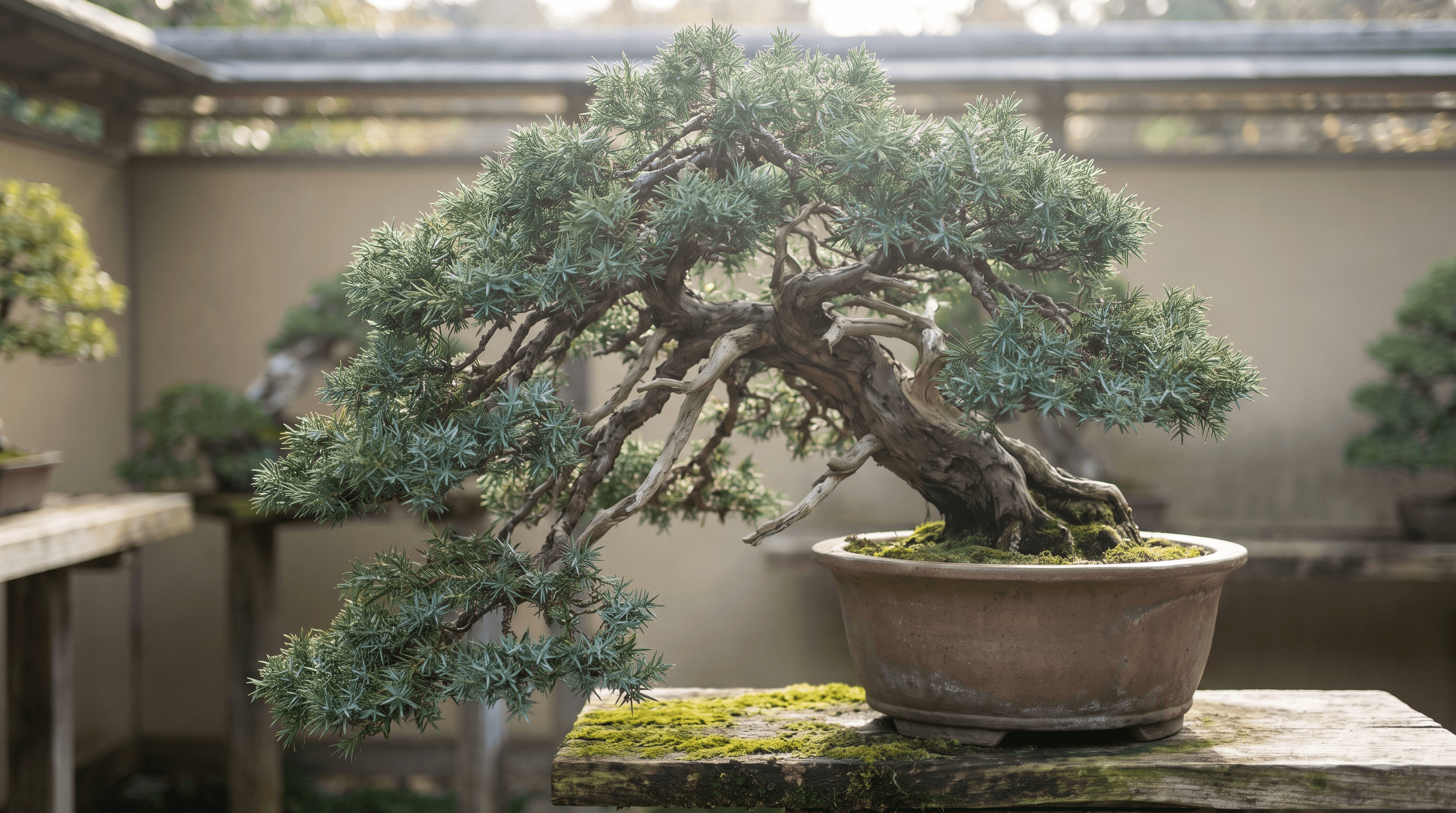
This is a different plant to reach for than the scale-foliage Chinese juniper cultivars most beginners start with. Juniperus rigida keeps true needle foliage its whole life rather than transitioning to soft adult scale growth, and those needles are stiff, pointed, arranged in whorls of three, and genuinely will draw blood if you handle the tree carelessly. Look closely and each needle also shows a narrow white stomatal band along its upper surface, a detail worth knowing since it's genuinely useful for confirming the species. I mention the sharpness early because it matters practically, not just as trivia: wear a long sleeve when you're working a mature needle juniper closely, keep your face further back than you would with a softer species when wiring near the crown, and expect the foliage to feel noticeably different in the hand from anything scale-leaved. None of that makes the tree difficult to grow, it just changes how you physically work with it.
What needle juniper is genuinely known for, beyond the sharp foliage, is habit: older trees characteristically develop graceful, pendulous branchlets, with foliage sprays that hang downward off the branch line rather than sitting upright, giving the tree a lighter, hanging texture than most scale-foliaged junipers and contrasting nicely against a rugged trunk. It's a traditional species in Japanese bonsai for exactly this reason, the combination of tough, wind-scoured character in the trunk and deadwood with a delicate, almost willowy foliage presentation is distinctive and hard to get from other junipers. Because the foliage is made of long individual needles rather than overlapping scales, even a well-ramified needle juniper naturally presents a more open visual texture than Itoigawa or Kishu, that's a difference in foliage structure, not a sign of slower development, and it's worth keeping in mind before judging the tree's progress against a scale-foliage cultivar.
Care
Light
Full sun outdoors, as with any juniper. Needle juniper tolerates strong light well and needs it to keep foliage dense rather than sparse and stretched, though because the needle foliage is already naturally more open than tight scale foliage, don't mistake that natural looseness for a sun problem. If the tree is thinning out beyond its normal habit or dropping needles excessively, look at light levels and watering before assuming it's just the species' natural form.
Watering
Water thoroughly when the soil surface starts to dry, same general principle as other junipers. Browning and abnormal needle drop are worth investigating promptly, but don't assume the more open foliage habit means you'll always catch root or watering problems earlier than on a denser cultivar; junipers generally can look deceptively green even after root damage has already set in. Avoid letting the pot sit fully dry for extended periods, and equally avoid a mix that stays soggy, since root rot is just as much a risk here as with any other juniper.
Temperature & hardiness
Needle juniper is cold-hardy and needs a genuine outdoor winter with real dormancy to stay healthy long-term, but a bonsai pot exposes its roots far more than the ground does, so container protection matters more than the foliage does. It's a traditional mountain and hillside species in its native range, but it's not quite in the same extreme-hardiness league as Common Juniper. Protect the container and root mass during severe freezes, mulching or grouping pots together works well, rather than moving the tree indoors or into a heated room to skip winter, that disruption to dormancy causes the same long-term decline you'd see in any juniper species.
Soil & potting
Standard fast-draining, mineral juniper mix, akadama, pumice, and lava rock in roughly even parts or a comparable free-draining local mix. Nothing unusual here compared to other junipers; the priority is the same, a substrate that lets you water thoroughly without the roots sitting wet, since waterlogged soil causing root decline is one of the more common ways any juniper, needle juniper included, gets into trouble.
Fertilizing
Feed through the growing season with a balanced or slightly nitrogen-forward fertiliser, tapering off in autumn and stopping through winter dormancy, following the same rhythm as other junipers. Feeding intensity here tracks development stage more than the species itself: stronger spring nitrogen can support a tree that's still being developed, while a refined, finished tree should be fed more moderately to keep extension under control.
Pruning & wiring
This is where the sharp foliage matters most practically. Prune and trim with care, ideally with light gloves or at least deliberate, slow hand positioning, since the needle tips are genuinely capable of puncturing skin, especially on denser interior growth. Beyond that physical consideration, technique follows standard juniper logic: let healthy shoots extend, then selectively prune overly long runners back with sharp scissors to a lateral shoot or deeper into the foliage, rather than pinching every tip or shearing like a hedge, both weaken the tree and brown the foliage. Always leave live foliage on any branch you're reducing since needle juniper, like other junipers, won't reliably push new growth from bare old wood. Wiring is where the species' natural pendulous habit really comes through, you can accentuate the weeping branch lines that make mature needle junipers so recognisable, but again, work carefully and keep your face and forearms clear of unpruned foliage while doing it. Wire in cooler months when branches are more pliable.
Repotting
Repot slightly later in spring than you would a scale-foliaged Chinese juniper cultivar, timed to when needle juniper is just beginning active growth, roughly every two years for younger trees in active training, less often as the tree matures and slows down. Work gently around the root mass rather than aggressively root-pruning it, avoid taking too much at once, and get the tree back into a well-draining mix promptly. Give it a sheltered, lightly shaded spot with reduced watering stress for a couple of weeks afterward before returning it to full sun, same recovery approach as other junipers.
Common problems
Excessive needle browning or drop, beyond what you'd expect from normal shedding of old interior foliage, usually points to watering inconsistency or a period of insufficient light, the same two culprits behind most juniper trouble. Spider mites remain a risk in hot, still, dry conditions, look for fine webbing or stippling on the needles, the same as with any juniper. Persistent browning combined with a constantly wet substrate, poor drainage, and declining root health can indicate root problems or rot, though bark appearance alone at the trunk base isn't a reliable diagnosis on its own. One thing worth flagging that's specific to this species: its needle foliage and pendulous branchlets create a naturally more open-textured silhouette than dense scale junipers, don't mistake that for stress or thinning. Genuine weak or thinning growth shouldn't be dismissed as normal, and trying to force the tree into a dense, tightly packed silhouette the way you would with a Chinese juniper cultivar usually just fights its natural character.
Styling
Needle juniper's real strength is the contrast between a rugged, weathered trunk and deadwood on one side and soft, pendulous, almost willow-like foliage sprays on the other, and good styling leans into that contrast rather than trying to flatten the foliage into tight uniform pads the way you would on a Chinese juniper cultivar. Informal upright and semi-cascade forms suit the species particularly well, letting the natural downward-hanging branch habit read clearly against a strong trunk line. It's a traditional choice in Japanese bonsai for literati-influenced styling too, where a slender, characterful trunk carries sparse, elegant foliage rather than a dense canopy. Deadwood techniques apply as with other junipers, but I'd keep the foliage presentation looser and more natural here than on a tightly refined shohin cultivar, since that looseness is the species' defining visual trait, not a flaw to correct.
Common questions
Is needle juniper foliage actually sharp?
Yes, genuinely so, and this isn't exaggerated for effect. Juniperus rigida keeps stiff, pointed true needle foliage throughout its life rather than transitioning to soft scale foliage, and it will scratch or puncture skin if you handle a dense, untrimmed specimen carelessly. Work with deliberate hand positioning, consider light gloves for detailed work, and keep your face further back than you would with a softer juniper species.
How is needle juniper different from Chinese juniper cultivars?
Needle juniper keeps true, sharp needle foliage its whole life and naturally develops a soft, pendulous, weeping branch habit, whereas Chinese juniper cultivars like Kishu, Itoigawa, and Shimpaku are grown mainly in their softer scale foliage form with denser, more compact growth. The two also read very differently stylistically, needle juniper suits looser, more naturalistic silhouettes rather than tightly clipped pads.
Why does my needle juniper look sparse compared to other junipers?
That's likely just its natural habit rather than a health problem. Needle juniper foliage is genuinely more open-textured and pendulous than dense scale foliage, since it's made of long individual needles rather than overlapping scales, and mature trees develop a graceful, hanging branch structure that looks sparse by comparison to a tightly packed Chinese juniper cultivar. If you're seeing actual browning or needle drop beyond normal shedding, that's a different story and worth checking watering and light.
Does needle juniper need the same care as other junipers?
Broadly yes, full sun, fast-draining mineral soil, thorough watering when the surface dries, real outdoor winter dormancy, and standard juniper fertilising. The main practical difference is handling care around the sharp foliage during pruning and wiring, and accepting a naturally looser, more open growth habit rather than trying to force dense pads.
Can I train needle juniper into tight, dense foliage pads?
You can encourage more density by letting shoots extend and then selectively pruning overly long runners back to a lateral shoot with sharp scissors, rather than pinching every tip, but I wouldn't fight the species' natural pendulous, open character too hard. Needle juniper's appeal comes largely from that soft, weeping foliage contrasted against a rugged trunk, and forcing it into the tight, flat pad style suited to Chinese juniper cultivars tends to work against what makes the species distinctive in the first place, and repeated pinching or shearing like a hedge will just weaken the tree and brown the foliage.
Is needle juniper a good beginner bonsai species?
It's a reasonable choice for someone comfortable with general juniper care, but the sharp foliage makes it a slightly more deliberate choice than a forgiving cultivar like Japanese garden juniper, handling it carelessly is genuinely uncomfortable. If you're drawn to the traditional weeping, needle-foliage look and don't mind handling it carefully, it's a rewarding species to learn on.
General guidance based on 20+ years of practice. Every tree and every climate is different — when in doubt, ask us.