
Spruce Bonsai Care
Picea abies / P. glauca (dwarf Alberta spruce)
Spruce rewards patience with detail few other conifers can match, its fine, short needles reduce beautifully, and while it can sometimes push a little new growth from older wood when it's healthy and well managed, that backbudding is limited and shouldn't be relied on the way it can be with true old-wood budders like juniper.
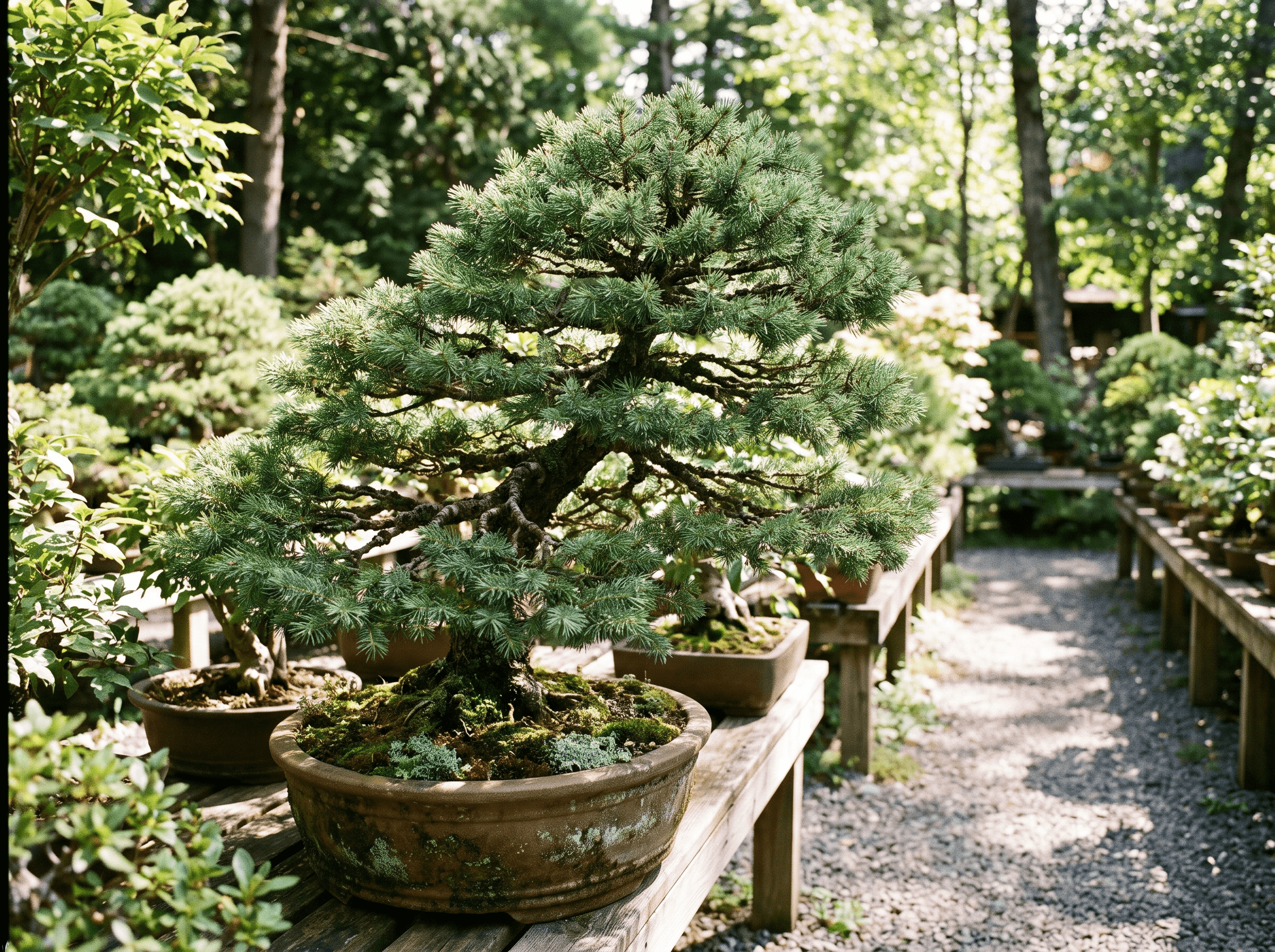
Norway spruce, Picea abies, and the various dwarf Alberta spruce cultivars derived from Picea glauca are the two forms most commonly worked as bonsai, and while they differ somewhat in habit, both share the qualities that make spruce genuinely appealing for detailed work. Worth knowing before you commit to one: dwarf Alberta spruce, particularly the popular 'Conica' cultivar, is widely available and often tried by hobbyists, but several experienced bonsai sources note it doesn't reliably make the strongest bonsai material compared with Norway spruce or true species-type Picea glauca, so treat it as a reasonable tree to learn on rather than the best long-term choice. The needles are short and fine compared to a pine, and they reduce further with good bonsai culture, letting you build the kind of dense, layered ramification that takes a pine considerably longer to approach. It's a conifer that rewards someone who wants to work slowly toward real refinement rather than a fast, dramatic transformation.
One thing people sometimes claim about spruce, junipers being the genuine old-wood budders, is that it buds just as reliably from old wood. That's worth correcting early: spruce can sometimes backbud, especially on a healthy tree with good light and management, but that backbudding is limited and shouldn't be relied on the way the reputation suggests, particularly not as the basis for a hard structural cut into bare old wood. Pines are notoriously stingy about this too, cut back hard into bare old branches on most pine species and you simply don't get new growth back. Spruce sits somewhere in between, more capable of occasional old-wood recovery than a pine, but far less dependable at it than a juniper, so structural corrections into old wood should be approached cautiously and tested on a less critical branch rather than assumed to work.
The tradeoff is that spruce is noticeably less tolerant of hot, dry conditions than its tough alpine reputation might suggest. It's a cold-climate tree at heart, native to northern and mountain forests, and it can struggle through hot, dry summers, particularly in low humidity, where spider mites become a real and recurring pressure. Growers in genuinely hot southern climates need to think more carefully about summer placement for spruce than they would for a tougher, more heat-tolerant species.
Care
Light
Full sun to bright light suits spruce well through most of the year, it's a vigorous grower that keeps its foliage dense and healthy with strong light exposure. In particularly hot summer climates, though, a little relief from the most intense midday sun helps, since this species is more prone to heat and drought stress than true alpine or Mediterranean conifers. Outside of extreme heat, aim for as much sun as the tree comfortably tolerates.
Watering
Keep the soil consistently moist through the growing season without letting it become waterlogged, spruce doesn't want to dry out completely the way a rosemary or pine tolerates, but it also needs good drainage to avoid root problems. In hot weather check it daily, a small pot can dry faster than you'd expect, and this species shows drought stress, particularly needle browning and premature drop, more readily than tougher conifers. Reduce watering through winter dormancy as growth slows, but don't let the root ball dry out completely even then.
Temperature & hardiness
Spruce needs a genuine, cold winter dormancy to grow and stay healthy, it's a northern and mountain forest species built for real seasonal cold, and skipping that dormancy by overwintering it somewhere too warm weakens the tree over successive years. Protect the pot from extreme prolonged freezes as you would with other hardy conifers, but otherwise it should spend winter outdoors in a temperate climate. The bigger challenge for many growers, especially in southern regions, is actually summer heat rather than winter cold, hot, dry stretches stress this species more than you'd expect from how cold-hardy it is.
Soil & potting
A well-draining bonsai substrate works well, akadama with pumice and a smaller portion of lava rock or a similar coarse blend, giving good drainage while still holding enough moisture to suit this species' preference for consistent dampness over the extremes some conifers tolerate. Avoid a mix so aggressively fast-draining that the pot dries out within hours in summer heat, since that combination of heat stress and drought is exactly what spruce handles worst.
Fertilizing
Feed through the growing season with a fertiliser suited to conifers, easing off as growth slows in autumn and stopping through winter dormancy. Spruce responds well to consistent, moderate feeding that supports both the fine ramification this species is known for and general vigour, which in turn helps it cope better with summer heat stress. A tree kept slightly underfed going into a hot summer is more vulnerable to both drought stress and pest pressure than a well-fed one.
Pruning & wiring
Spruce has its own pruning rhythm rather than following juniper or pine technique directly. Let the new spring shoots extend an inch or two, then cut the new green growth back with scissors rather than pinching by hand, this is more precise for controlling needle size and encouraging denser branching than the hand-pinching method used on juniper. Later buds can form after that first cut, and needle plucking to thin overly dense growth is generally done later in the season, roughly August through October. Structural correction into older, bare wood is possible on spruce more often than on most pines, but the backbudding that makes it possible is limited and shouldn't be assumed, test any hard cut into old wood on a less critical branch first rather than relying on it for an important structural decision. Wiring works well on the fine branching typical of spruce, but avoid wiring or major styling work in the height of summer, since spruce is more prone to dieback from stress at that time. Expect branches to take a genuinely long time to set in their new position, often years rather than months, and don't be surprised if a branch needs rewiring more than once before it holds on its own.
Repotting
Repot every two to four years for younger trees, extending the interval further as the tree matures, in early spring just before new growth begins. Favour a light or slight root trim over an aggressive one, comb out and reduce the outer root mass gently rather than disturbing the entire root ball, and be especially conservative on an older, more established tree, which recovers from root loss more slowly than a young, vigorous one. Return it to a fresh, well-draining mix. Keep the tree in a sheltered, slightly shaded spot with reduced watering stress for a couple of weeks afterward, and be particularly careful about heat exposure if repotting happens close to the start of a hot season, since a freshly repotted tree has less root capacity to cope with drought stress.
Common problems
Spider mites are the most persistent problem with spruce bonsai, and they thrive in exactly the hot, dry, low-humidity conditions this species already finds stressful, so heat stress and mite pressure tend to arrive together, fine webbing and a dull, stippled, dusty look to the needles are the telltale signs, worth checking for regularly through summer rather than waiting for obvious damage. Needle browning and premature drop, especially on inner or lower branches, often points to drought stress or a mix that's drying out too fast in summer heat. Yellowing needles with no obvious pest presence can indicate a mix that's staying too wet, since good drainage still matters even though this species prefers more consistent moisture than a pine. A tree that looks generally weak and sparse through a hot summer is worth moving to a spot with some midday shade relief rather than assuming the underlying issue is disease.
Styling
Spruce's fine, reducible needles make it particularly well suited to formal and informal upright styles built around detailed, layered branch pads, the kind of refined structure that takes considerably longer to develop on a coarser-needled pine. It can also be a reasonable candidate for restyling or improving an older tree's branch placement, since it backbuds a little more readily than most pines, but that capacity is limited, so treat major old-wood correction as something to test cautiously rather than assume will work, and plan branch placement carefully the first time rather than counting on a do-over. Group and forest plantings work nicely too, spruce's naturally conical, upright habit and fine texture reading well at smaller scale when several trees are placed together.
Common questions
Does spruce bonsai bud from old wood like juniper?
Not reliably, no, and that's an important distinction. Spruce can sometimes backbud from older wood, especially on a healthy tree with good light and management, but it isn't close to juniper's reliability, and pines are even more limited still. Because that backbudding is genuinely inconsistent, don't plan a hard structural cut into old, bare wood assuming it will recover, test cautiously on a less critical branch first.
Why does my spruce bonsai have webbing on the needles?
That's almost certainly spider mites, which spruce is genuinely prone to, especially in hot, dry, low-humidity summer conditions. Check regularly through the warm months rather than waiting for obvious browning, since mite damage is easier to catch and treat early.
Can spruce bonsai handle hot summers?
Not particularly well. Despite being a very cold-hardy species, spruce is a northern and mountain forest tree that struggles in hot, dry heat, and it's more prone to drought stress and spider mites in those conditions than tougher, more heat-adapted conifers. Some midday shade relief in extreme heat helps.
Does spruce bonsai need a cold winter?
Yes, a genuine cold dormancy outdoors is essential for long-term health. Overwintering it somewhere too warm disrupts its natural cycle and weakens the tree over successive years, the same issue that affects junipers and other true cold-climate conifers.
What's the difference between Norway spruce and dwarf Alberta spruce for bonsai?
Norway spruce (Picea abies) tends to have a somewhat more open, vigorous natural habit, while dwarf Alberta spruce (a Picea glauca cultivar, most often the 'Conica' selection) is naturally denser and more compact. Both share fine, short needles, but dwarf Alberta spruce is more of a widely available, beginner-friendly option than material several experienced growers rate as top-tier bonsai stock, so Norway spruce or true species-type Picea glauca tends to be the stronger long-term choice if you're aiming for a more serious specimen.
How do I prune spruce bonsai?
Let the new spring shoots extend an inch or two, then cut the new green growth back with scissors, this is spruce's own technique rather than the hand-pinching used on juniper, and it controls needle size and encourages denser branching well. Later buds can form after that cut, and needle plucking to thin dense growth is usually done later in the season, roughly August through October. Structural pruning into older wood is sometimes possible on this species, more often than on most pines, but the backbudding behind it is limited, so test any hard cut cautiously rather than relying on it.
Is spruce a good beginner bonsai?
It's a reasonable choice for someone in a genuinely cold-winter climate willing to watch for spider mites through summer. It's somewhat more forgiving of structural pruning mistakes than pine, since it can occasionally backbud from older wood where pine generally can't, but that backbudding is limited enough that it shouldn't be counted on, and it does need more consistent watering attention in heat than tougher species.
You might also like
General guidance based on 20+ years of practice. Every tree and every climate is different — when in doubt, ask us.