
Hornbeam Bonsai Care
Carpinus betulus (European) / Carpinus turczaninowii (Korean)
Hornbeam does everything beech does as bonsai, straight trunks, fine ramification, good winter silhouette, but buds back more reliably after hard pruning and develops a distinctive fluted, muscular trunk that beech never quite matches.
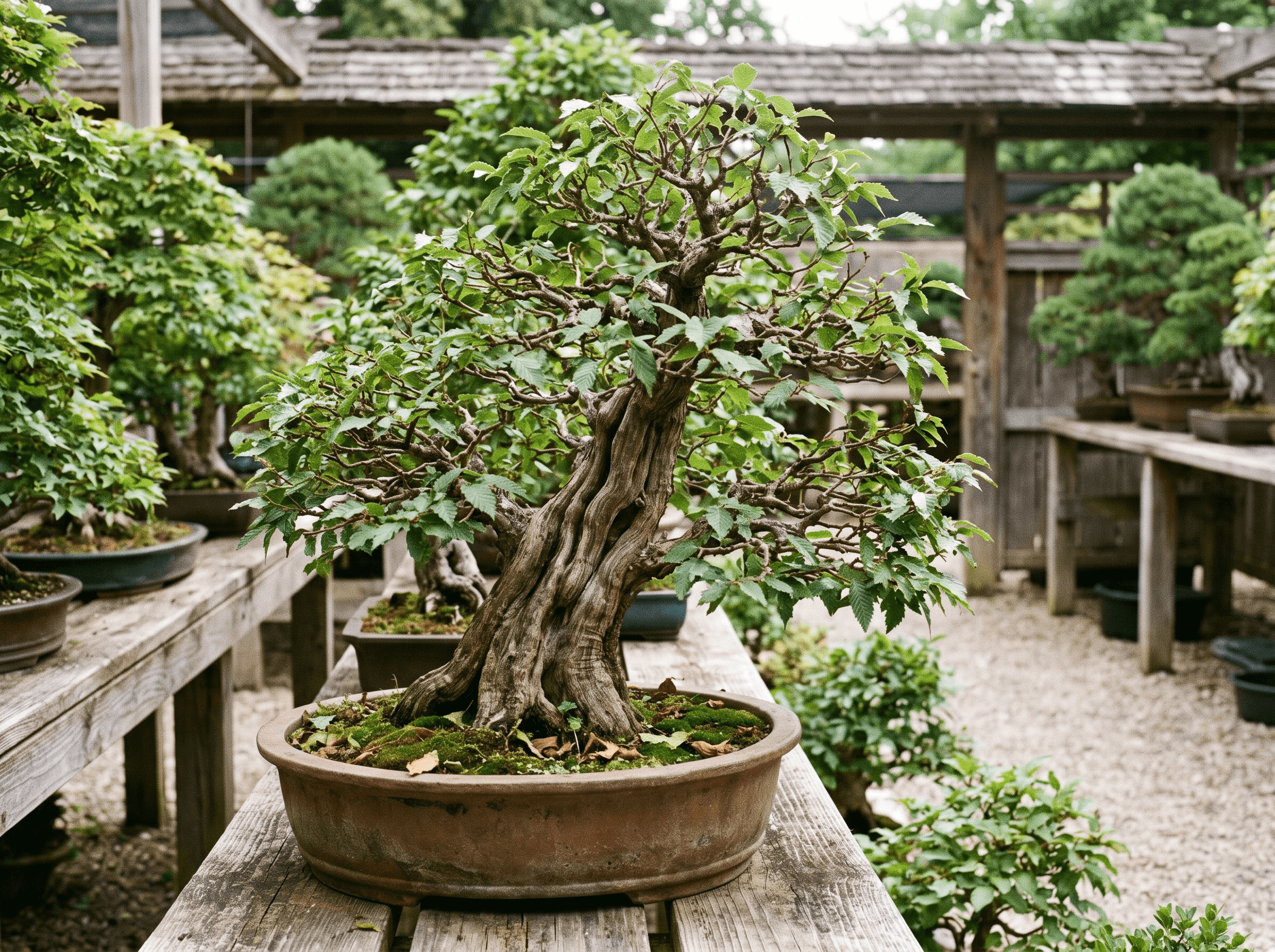
I often get asked whether to choose beech or hornbeam, and honestly the two are close enough in general appearance that beginners struggle to tell finished trees apart at a glance. Both have that pale bark and classic straight-trunk profile, both hold up well as formal and informal upright subjects, both work as group plantings. The real difference shows up in how the tree responds to work, and for anyone doing serious structural pruning, hornbeam is the more forgiving of the two, budding back reliably from old wood in a way beech doesn't always manage.
The trunk is what sets hornbeam apart visually once a tree has some age on it. As it thickens, the bark develops a fluted, sinewy, almost muscular texture along the trunk, especially near the base, that's genuinely distinctive and a big part of why growers seek out older hornbeam material specifically. European and Korean hornbeam are the two most widely worked in the West, though several other hornbeam species show up in bonsai collections too. European hornbeam has somewhat larger leaves and a coarser habit, while Korean hornbeam has smaller leaves and develops finer, denser ramification, making it the preferred choice when leaf size and refinement matter more than raw trunk character.
It's an outdoor deciduous tree, hardy and fairly tough once established, with decent autumn colour running through yellows and oranges before the leaves drop. It isn't a difficult species, but like beech it can scorch in harsh direct sun, and it rewards the kind of patient, repeated pruning that builds real ramification over years rather than a single aggressive season of cutting.
Care
Light
Morning sun with some afternoon shade suits hornbeam well, particularly in hot climates, since the leaves can scorch under intense midday sun much like beech does. It tolerates a bit more sun exposure than beech in my experience, especially Korean hornbeam, but I still avoid placing it in full unbroken sun through a Mediterranean summer. In cooler, cloudier regions full sun is generally fine and even helps keep growth compact.
Watering
Keep the soil consistently moist through the growing season and never let the pot dry out completely, since the fine root system is sensitive to drought stress and will show it quickly through wilting or curling leaves. Water thoroughly and check daily during hot summer stretches, easing back as growth slows into autumn. It's slightly more forgiving of an occasional missed watering than beech, but not by much, so I don't treat that tolerance as an excuse to be careless.
Temperature & hardiness
Hornbeam is a genuinely hardy, tough deciduous tree that handles cold winters well and needs a proper outdoor dormancy period, the same as beech and most other temperate deciduous bonsai. It copes with a wider range of conditions overall than beech does, which is part of why I describe it as the tougher of the two species. Protect the pot from extended hard freezes since container roots are more exposed than roots in the ground, but otherwise this tree doesn't need special winter handling.
Soil & potting
A free-draining bonsai mix with reasonable water retention works well, similar to what suits beech and maple; in my experience a bit more organic content than a strict conifer mix suits it. Good drainage still matters to keep the fine root system healthy, but hornbeam isn't especially fussy about exact soil composition as long as it drains freely and doesn't dry out completely between waterings.
Fertilizing
Feed with a balanced fertiliser through the growing season, spring through early autumn, stopping through winter dormancy. Hornbeam responds well and fairly quickly to steady feeding, which supports the frequent, ongoing pruning this species does best with. I feed a little more generously in spring to support strong initial extension growth that then gets cut back to build structure through the rest of the season.
Pruning & wiring
This is where hornbeam earns its reputation. It buds back reliably from old wood, more so than beech, which makes it well suited to hard structural pruning and multi-year trunk-thickening or reduction work with less risk of dead sections than you'd risk on a less forgiving species. Once new shoots have hardened off, cut them back to one or two leaf pairs, repeating through the growing season to build fine ramification; exactly how hard to cut depends on the shoot's vigor, so a strong shoot can take a harder cut than a weak one. Don't be shy about harder structural cuts when reshaping the tree, since this species tends to respond with new growth rather than dieback. Wiring works well on young, flexible shoots, and I do most structural wiring in late winter while the tree is bare and the branch framework is easy to see.
Repotting
Repot every two to three years for younger trees, stretching the interval as the tree matures, in early spring before the buds break. The fine, fibrous roots handle root work reasonably well, and I keep root reduction conservative each session rather than doing an aggressive full bare-root every time. Give a newly repotted tree some shelter from strong sun and wind for a couple of weeks while it re-establishes.
Common problems
Leaf scorch under harsh direct sun is the most common issue, showing up as browned, crisp margins that don't recover once damaged, generally worse in hot climates and improved by moving the tree into some afternoon shade. Aphids occasionally cluster on the soft new spring growth, and I've seen the odd case of powdery mildew in stagnant, humid conditions with poor air circulation around the foliage. Weak or sparse growth usually traces back to a root problem, either drought stress from a pot going completely dry at some point or poor drainage keeping the fine roots too wet for too long. Because hornbeam responds so well to hard pruning, the more unusual mistake I see is growers being too cautious with structural cuts on this species specifically, when in fact it tolerates and recovers from aggressive work better than beech and many other deciduous species.
Styling
Hornbeam suits the same formal and informal upright styles as beech, and the two are often grown side by side for exactly that reason, but the fluted, sinewy trunk texture that develops with age gives hornbeam a rougher, more muscular character that some growers prefer over beech's smoother bark. Group plantings work particularly well with hornbeam, several trunks of varying heights arranged to suggest a small stand of woodland trees, since the fine branching and good winter silhouette read clearly at that scale. Korean hornbeam, with its smaller leaves and denser natural ramification, is often chosen specifically for smaller-scale or shohin-sized trees where leaf proportion to overall size matters more, while European hornbeam tends to be favoured for larger specimens where a bolder trunk is the main attraction.
Common questions
What's the difference between hornbeam and beech bonsai?
They look similar and are used in similar styles, but hornbeam buds back more reliably after hard pruning, tolerates a wider range of conditions, and develops a distinctive fluted, muscular trunk texture as it ages that beech doesn't produce in the same way.
What's the difference between European and Korean hornbeam?
European hornbeam has larger leaves and a somewhat coarser growth habit, generally favoured for bigger specimens with bold trunks. Korean hornbeam has notably smaller leaves and develops finer, denser ramification, making it a common choice for smaller or more refined trees.
Can hornbeam bonsai take hard pruning?
Yes, generally better than beech and many other deciduous bonsai species, when the tree is healthy. It buds back reliably from old wood, which makes it well suited to significant structural pruning and multi-year reshaping without the dieback risk you'd worry about with a less forgiving tree.
Does hornbeam bonsai need shade in summer?
Some afternoon shade helps in hot climates, since the leaves can scorch under intense midday sun similarly to beech, though hornbeam tolerates somewhat more sun exposure overall, particularly the Korean variety.
Why is my hornbeam bonsai's trunk not developing the fluted texture I see on older trees?
That fluted, sinewy bark character takes real age and trunk thickness to develop and isn't something you can force on young material. It's one of the rewards of growing hornbeam from thicker, more mature stock or simply giving a tree many years to develop.
Is hornbeam a good beginner bonsai species?
Yes, it's one of the more forgiving deciduous species for a beginner, tougher than beech and quite tolerant of pruning mistakes, though it still needs outdoor placement, consistent watering, and some protection from harsh midday sun in hot climates.
Does hornbeam bonsai have good autumn colour?
Yes, the leaves typically turn through yellows and oranges before dropping in autumn, a decent seasonal display though generally less dramatic and less uniform than species like ginkgo or maple.
You might also like
General guidance based on 20+ years of practice. Every tree and every climate is different — when in doubt, ask us.