
Jasmine Orange Bonsai Care
Murraya paniculata
Jasmine Orange is the one bonsai in my collection people notice with their nose before their eyes, and once it flowers you'll understand why it's such a fixture of Southeast Asian bonsai traditions.
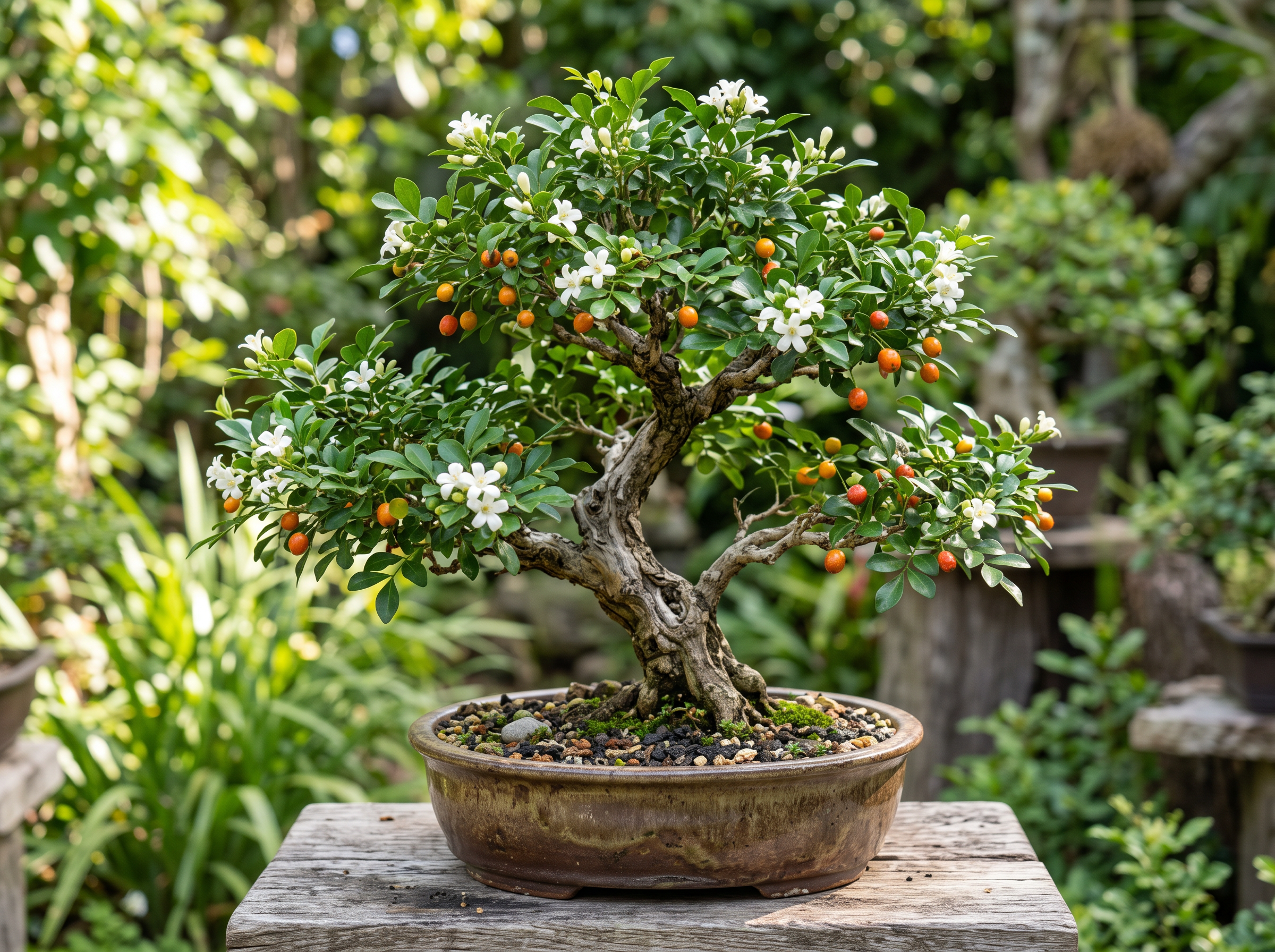
Murraya paniculata isn't related to true jasmine at all, it's actually in the citrus family, a cousin of the orange and lemon trees you'd recognise, which explains the small orange-red berries that follow its flowers. The name comes entirely from the scent. When this tree blooms, usually in flushes through the warmer months, the white star-shaped flowers put out a fragrance strong enough to fill a room, and it's a fragrance that has made the species a popular choice for bonsai across parts of Southeast Asia, where it's known under names like orange jasmine or kamuning.
It's a warmth-loving, humidity-loving evergreen, and that combination is really what defines how you need to grow it. The glossy compound leaves, made up of several small oval leaflets on each stem, give it a naturally dense, refined look even before any training, but that same tropical origin means it has very little patience for cold drafts, dry heated air, or sudden temperature swings. A tree that's thriving on a warm, humid balcony can start dropping leaves within days of being moved next to a draughty window or an air conditioning vent.
People sometimes assume that because it flowers so readily and looks so tidy naturally, it must be a fairly hands-off species. In terms of pruning and general resilience it's actually quite cooperative, more forgiving than some of the fussier subtropical species commonly grown as bonsai, but the environmental requirements are non-negotiable. Give it consistent warmth and humidity and it's a genuinely rewarding, fast-growing tree. Get the environment wrong and it sulks in ways that are hard to reverse quickly.
Care
Light
Bright light is essential for good flowering and dense growth, ideally several hours of direct or strong filtered sun a day. A south or east-facing window works indoors, and outdoors in a warm climate this tree does very well in a sunny, sheltered spot once temperatures are reliably mild. Too little light won't necessarily kill it quickly, but you'll see leggy stems, sparse foliage, and far fewer flowers, which for a species people mostly grow for its fragrance rather defeats the point.
Watering
Water thoroughly, then let the top of the mix begin to dry before watering again, rather than keeping the pot constantly saturated. Jasmine Orange doesn't like prolonged drought, it responds with leaf drop fairly quickly if the root ball goes fully dry for too long, but it also doesn't want to sit in standing water. In a well-draining mix this balance is easier to hit than it sounds, the main mistake I see is people underwatering a fast-growing tree in a small pot during a hot spell, since a vigorously growing Murraya in full sun can use up water surprisingly quickly.
Temperature & hardiness
This is a genuinely tropical to subtropical species with very little cold tolerance. It can sometimes shrug off an occasional light, brief frost, but that's not something to rely on, and as a cautious bonsai-growing rule it's best protected well before temperatures approach freezing and kept above roughly 12 to 15°C rather than tested near its limits. Cold drafts are a specific problem beyond just general low temperature, a sudden gust of cold air from an opened door or a spot too close to an air conditioner or a winter windowsill can cause rapid, dramatic leaf drop even when the room's average temperature seems fine. In Southern Italy it can spend the warm months outdoors on a sheltered terrace, but it needs to come inside well before autumn nights turn cool, and it should stay away from draughty spots year-round.
Soil & potting
A well-draining, moisture-retentive mix suits this species, similar in principle to what you'd use for citrus, a good bonsai substrate like akadama blended with pumice or a similar coarse component works well. It needs to hold enough moisture to support fairly vigorous growth without ever staying waterlogged, since like most tropical species it's vulnerable to root rot in a mix that drains poorly.
Fertilizing
Feed regularly during the growing season with a balanced fertiliser to support this tree's frequent flowering flushes and steady growth. Given warm enough conditions Murraya can keep growing through much of the year rather than shutting down hard for winter, so light, reduced feeding through cooler months is reasonable if the tree is still pushing new growth, just scale back rather than stopping outright unless growth has genuinely stalled.
Pruning & wiring
Jasmine Orange grows fairly fast and backbuds well, which makes it forgiving to prune and quick to refine once you've got a basic structure established. Trim new shoots back regularly through the growing season to keep the canopy dense and encourage ramification, and don't be shy about it, this tree responds to pruning with vigour rather than sulking. Wiring works fine on younger, more flexible growth, but branches thicken and stiffen fairly quickly on this species, so it's worth wiring while shoots are still young and pliable rather than waiting until they've hardened off.
Repotting
Repot roughly every one to two years while the tree is young and growing vigorously, extending the interval somewhat as it matures, generally in spring as new growth begins. This species pushes new roots readily in warm conditions, which suggests it should tolerate a moderate root trim reasonably well, though treat that as a sensible starting point rather than a guarantee, and go easy rather than aggressive until you've seen how a particular tree responds. As always, hold off on hard pruning above and below ground in the same session. Keep the tree warm, humid, and out of direct hot sun for a couple of weeks after repotting while the roots settle back in.
Common problems
Leaf drop is the most common complaint, and cold drafts are usually to blame, this is a tree that reacts fast and visibly to a sudden chill, far more dramatically than to a slow seasonal temperature change. Low humidity, particularly indoors with heating running, causes similar thinning and leaf loss over a longer timeframe. Aphids and mealybugs both turn up on this species from time to time, often clustering on new soft growth and flower buds, and are worth checking for whenever flowering seems weaker than expected. Yellowing leaves that aren't dropping can point to overwatering and early root stress in a mix that isn't draining well enough, while a generally sparse, leggy canopy almost always traces back to insufficient light rather than anything more complicated.
Styling
Jasmine Orange lends itself naturally to informal upright and clump-style forms that let its dense, glossy compound foliage read as soft, rounded canopy mass, which is how it's traditionally styled across much of Southeast Asia. Because it backbuds and ramifies readily, it also takes well to more refined, detailed branch structure over time, closer to what you'd aim for with a broadleaf evergreen than a conifer. Some growers lean into its citrus-family roots and let the small berries develop for seasonal display alongside the flowers, giving the tree two distinct ornamental phases through the year rather than relying on foliage and form alone.
Common questions
Why is my Jasmine Orange bonsai dropping leaves suddenly?
A cold draft is the most likely cause, this species reacts fast to sudden chilly air from an opened door, a window, or an air conditioning vent, even when the room's overall temperature seems fine. Low humidity and drought stress are the other common triggers, so check placement and watering before assuming anything more serious.
Does Jasmine Orange bonsai need direct sun to flower?
It flowers far more reliably with several hours of strong, direct or bright filtered light a day. In low light it can survive and even grow, but flowering drops off noticeably, which is a shame given fragrance is a big part of why people grow this species.
Can Jasmine Orange bonsai survive outdoors in winter?
Only in genuinely warm, frost-free climates. It has very little cold hardiness, and while it may shrug off an occasional light frost, that's not something to rely on, so as a cautious rule keep it protected well before temperatures approach freezing and above roughly 12 to 15°C. In most temperate climates that means bringing it indoors or into a heated greenhouse well before autumn nights turn cool.
Why does my Jasmine Orange bonsai smell so strong?
That fragrance is the whole point of the species and comes from the small white star-shaped flowers, which bloom in repeated flushes through the warmer months given enough light and warmth. It's one of the most intensely scented flowers you'll find on a common bonsai species.
Is Jasmine Orange related to citrus?
Yes, despite the common name it isn't related to true jasmine at all, it's a member of the citrus family (Rutaceae), which is why it produces small orange-red berries after flowering rather than the seed pods you'd expect from actual jasmine species.
How often should I feed a Jasmine Orange bonsai?
Feed regularly through the growing season with a balanced fertiliser to support this tree's frequent flowering flushes and steady growth. In warm conditions this tree can keep growing through much of the year, so light feeding through mild winters is fine as long as it's still actively pushing new growth.
Is Jasmine Orange a good indoor bonsai?
It can be, provided you can offer consistent warmth, high humidity, bright light, and no cold drafts, which is a demanding combination for most homes. It's a better fit for a warm, bright room or a heated greenhouse than a typical windowsill, especially through winter.
You might also like
General guidance based on 20+ years of practice. Every tree and every climate is different — when in doubt, ask us.