
Juniper Bonsai
Juniperus spp. (most commonly J. chinensis and J. procumbens)
Juniper bonsai care is where most people start, and for good reason: it's the tree everyone pictures when they hear the word bonsai, tough, endlessly shapeable, and one of the few conifers that genuinely forgives a beginner's mistakes.
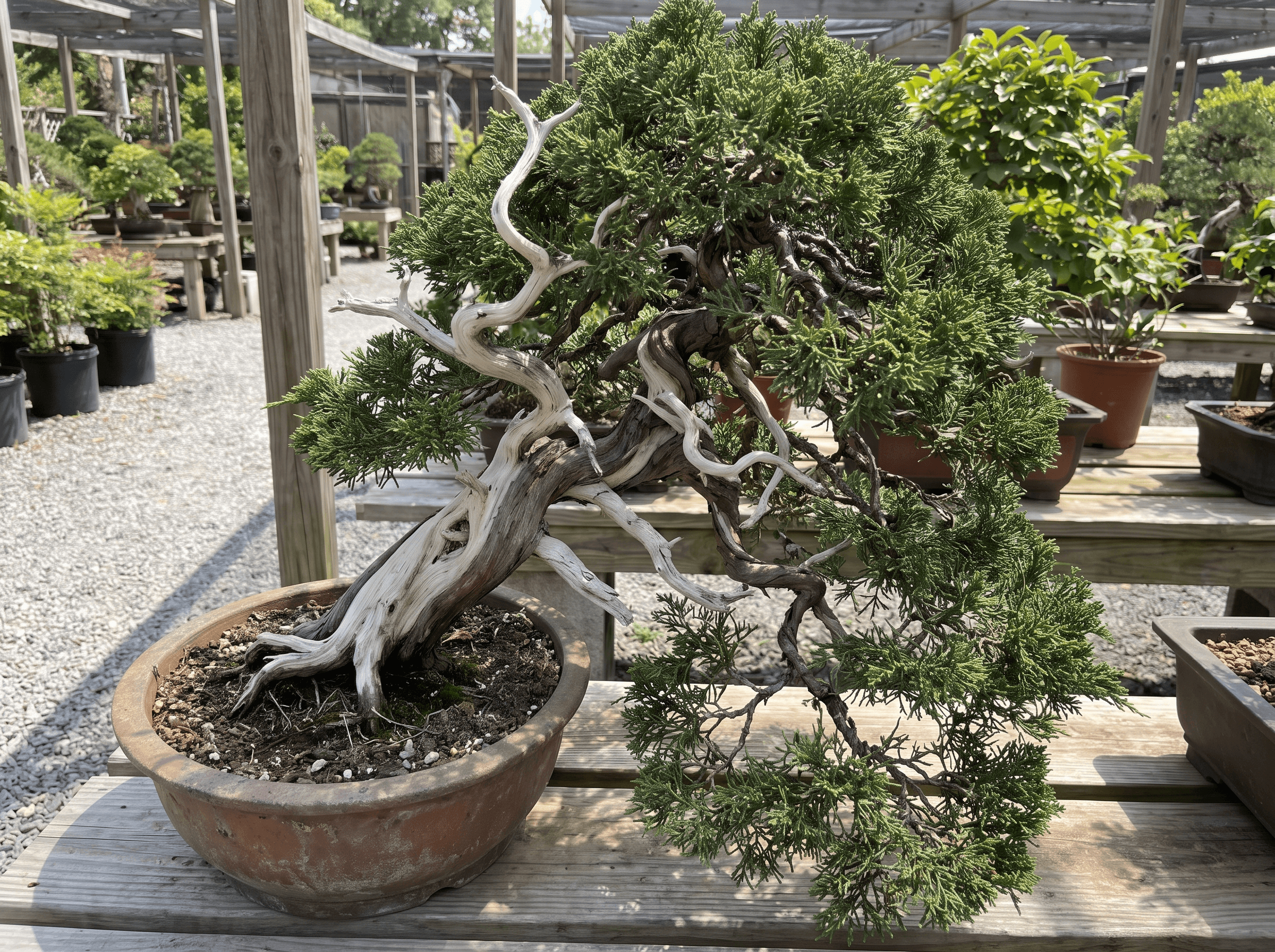
I get more questions about junipers than any other species, usually from someone who picked one up at a garden centre because it looked like the classic bonsai shape already. That instinct is fine. Junipers really are a good starting point, but almost everyone makes the same mistake in the first month: they bring it indoors. A juniper is an outdoor tree, full stop, and no amount of bright windowsill light replaces real sun, real temperature swings, and real dormancy in winter. Trees kept indoors for months tend to decline slowly, and by the time the needles start browning it's often too late to fully reverse.
Junipers tolerate hard structural pruning better than pines or many broadleaf species, but that tolerance has a real limit: strip a branch completely bare and it usually won't push new growth back from old wood the way people assume. The safe rule is to always leave some live foliage on a branch you're reducing, since junipers regenerate from growth near existing foliage, not from bare wood. The foliage itself comes in two forms on the same tree, sometimes: sharp juvenile needle foliage and softer scale-like adult foliage, and which one dominates depends on species, age, and how the tree has been grown. Neither is a problem to fix. It's just how the plant works.
The other reason junipers dominate bonsai collections is deadwood. Jin (bare branches) and shari (bare trunk strips) are a huge part of what makes an aged juniper look ancient, and the wood itself is naturally resistant to rot, so you can carve and bleach it and it holds up for decades. That's a technique I'll cover properly in a separate styling guide, but it's worth knowing early because it shapes how you should think about pruning: a juniper's dead branches aren't automatically a problem to cut flush and hide, they're often the most valuable part of the tree.
Care
Light
Full sun, as much as you can give it. Junipers are among the most sun-tolerant bonsai species and genuinely struggle in shade, producing thin, leggy growth and losing the tight, dense foliage that makes them look good. Outdoors on a bench or balcony in direct sun all day is ideal. If you're in a climate with brutal midsummer heat, some light afternoon relief helps, but the default should always be as much sun as the tree can get. This is also why indoor placement fails so often: even the brightest indoor spot is a fraction of outdoor light intensity, and a juniper kept that way thins out and eventually dies, usually slowly enough that the cause isn't obvious until months later.
Watering
Water when the top layer of soil starts to dry, then water thoroughly until it runs from the drainage holes. Junipers don't want to sit permanently soggy, but they also don't want to fully dry out for extended periods, particularly in summer heat when a small pot can dry out in a single hot afternoon. I check mine daily in summer and adjust by feel rather than a fixed schedule, since a windy balcony dries a pot far faster than a sheltered one. The classic failure mode isn't underwatering, though, it's overwatering in a pot with poor drainage, which suffocates the roots and shows up weeks later as browning foliage that looks a lot like drought stress.
Temperature & hardiness
Junipers are genuinely cold-hardy conifers and need to experience a real winter outdoors, including a genuine period of seasonal cold and dormancy, to stay healthy long-term. In most temperate climates that means leaving the tree outside year-round, with protection only for the pot itself in prolonged hard freezes, since roots in a shallow bonsai container are far more exposed to cold than roots in open ground. A cold frame, an unheated garage with light, or simply grouping pots together and mulching around them works for most winters. What you should never do is bring a juniper indoors to "protect" it from winter. Without that dormancy period the tree's growth cycle gets disrupted, and this is the single most common way beginners kill an otherwise healthy tree.
Soil & potting
Junipers want a fast-draining, mineral-heavy substrate, not standard potting soil, which holds too much water around the roots for too long. A typical bonsai mix of akadama, pumice, and lava rock in roughly even parts works well, or a locally available equivalent of coarse, inorganic, free-draining particles. The goal is a mix that lets you water thoroughly without the roots ever sitting wet for days. Good drainage matters more for junipers than almost any other factor in this list, since root rot from a waterlogged mix is one of the most common ways these trees decline.
Fertilizing
Feed regularly through the growing season, roughly spring through early autumn, using a balanced or slightly nitrogen-forward fertiliser at the rate recommended on the product, then stop as growth slows in autumn and skip feeding entirely through winter dormancy. Junipers respond well to consistent light feeding rather than occasional heavy doses. I use a diluted liquid feed roughly every one to two weeks during active growth, though solid organic fertiliser pellets applied monthly work just as well if you prefer less frequent handling.
Pruning & wiring
This is where junipers really shine. Pinch soft new growth by hand through the growing season to control shape without browning cut needle tips, and use sharp scissors for cutting whole shoots or stems back to a junction, which many experienced growers prefer for structural control; the point is to avoid snipping straight through individual needle tips, since that browns and looks ragged, not to avoid scissors altogether. For structural work, junipers tolerate wiring extremely well and hold a bent shape reliably once the wire comes off, which is part of why they're such common material for dramatic, twisting trunk lines. Wire in the cooler months when the branches are more flexible and less likely to snap, and check regularly so the wire doesn't cut into the bark as the branch thickens. Structural pruning is generally well tolerated, but always leave some live foliage on any branch you're reducing rather than cutting it back to bare wood, since junipers don't reliably push new growth from foliage-free old wood the way some growers assume. I'd still spread major reductions across more than one season on an older, established tree rather than doing it all at once.
Repotting
Repot when the tree is rootbound or the soil has visibly broken down, often every two years or so for a younger, vigorously growing tree, less frequently as the tree matures and growth slows. Do this in early spring, just before the new growing season starts, and avoid the depths of summer or winter. When you repot, work gently around the outer part of the root mass rather than raking out or bare-rooting the whole ball, since junipers don't like having their roots disturbed too aggressively, and get the tree back into a well-draining mix immediately. Junipers recover from repotting reasonably well compared to more sensitive species, but they still benefit from a sheltered, slightly shaded spot with reduced watering stress for the first couple of weeks afterward, not full blasting sun on day one.
Common problems
Junipers are tough, but they're not immune to trouble. Browning, papery foliage that doesn't green back up is one of the most common concerns I hear about, and it's usually either a watering problem or, less obviously, the tree quietly dying from being kept indoors for too long. If you're seeing fine webbing or stippled discolouration on the foliage, that points to spider mites, which junipers are genuinely prone to, especially in hot, dry, low-airflow conditions. A soft or blackening trunk base near the soil line is a different and more serious sign, usually pointing to root rot from a waterlogged pot rather than anything foliage-related. If your tree's growth has stalled with no new shoots at all through a full growing season, it's worth checking the roots directly rather than assuming it's just resting.
Styling
Juniper's flexibility is what makes it the go-to species for dramatic bonsai styles. Literati (bunjin), windswept, and semi-cascade forms all rely on the trunk being wireable into strong, sweeping lines, something junipers handle better than almost any other common species. Deadwood work is the other defining feature: jin on bare branch tips and shari running along sections of the trunk create the aged, weathered look associated with old junipers, using techniques like carving and lime sulphur bleaching to both shape and preserve the dead wood. Formal and informal upright styles work too, particularly on younger nursery stock, but if you want to see what a juniper can really do stylistically, it's usually the twisted, weathered, half-dead-looking trunks that people remember.
Common questions
Can I keep a juniper bonsai indoors?
No, not long-term. Junipers are outdoor trees that need real sun intensity and a genuine winter dormancy period to stay healthy. Indoor conditions, even a bright windowsill, are far dimmer than outdoor light and don't provide the cold period the tree needs, and trees kept indoors for extended periods decline slowly and usually die within a year or two.
Why is my juniper turning brown?
The two most common causes are watering problems (either drought stress or root rot from overly wet, poorly draining soil) and prolonged indoor placement. Spider mites are another possibility if you also see fine webbing. Check the roots and your watering routine before assuming the tree is beyond saving; junipers can look quite far gone and still recover if the underlying cause is fixed.
How often should I water a juniper bonsai?
There's no fixed schedule that works everywhere. Check the top of the soil daily, especially in summer, and water thoroughly when it starts to dry rather than on a calendar. A small pot in full sun and wind can dry out in a single hot day, while the same pot in cooler, sheltered conditions might go two or three days between waterings.
Is juniper a good species for a beginner?
Yes, with one important caveat: you need to be able to keep it outdoors year-round in a climate with a real winter. If you can provide that, junipers are genuinely forgiving of pruning and watering mistakes and tolerate structural work well. If you only have indoor space, a ficus or Chinese elm is a better starting point.
Can I cut back hard into old juniper wood?
Junipers tolerate hard pruning well, but only if you leave some live foliage on the branch; they don't reliably regrow from wood that's been stripped completely bare the way people sometimes assume. Reduce a branch back to a point with existing green growth, and spread a major reduction across two or more seasons on an older, established tree rather than removing a large portion of the foliage mass all at once.
Why does my juniper have two different types of foliage?
Many junipers naturally produce both sharp, needle-like juvenile foliage and softer, scale-like adult foliage on the same tree, sometimes even on the same branch. This is normal and not a sign of stress or disease. Which type dominates depends on the species, the age of the growth, and how the tree has been pruned.
Does a juniper bonsai need to go through winter cold?
Yes, this matters more than almost anything else on this page. Junipers need a genuine dormancy period with real seasonal cold to stay healthy long-term. Protect the pot itself from extreme hard freezes if needed, but don't bring the tree indoors to escape winter altogether; disrupting dormancy is one of the most common ways beginners unintentionally kill an otherwise healthy juniper.
You might also like
General guidance based on 20+ years of practice. Every tree and every climate is different — when in doubt, ask us.