
Bald Cypress Bonsai Care
Taxodium distichum
Bald cypress is the conifer on this list that tolerates sitting in a puddle better than any other, and it's also one of the very few deciduous conifers you'll find in bonsai, dropping its needles every autumn like a broadleaf tree.
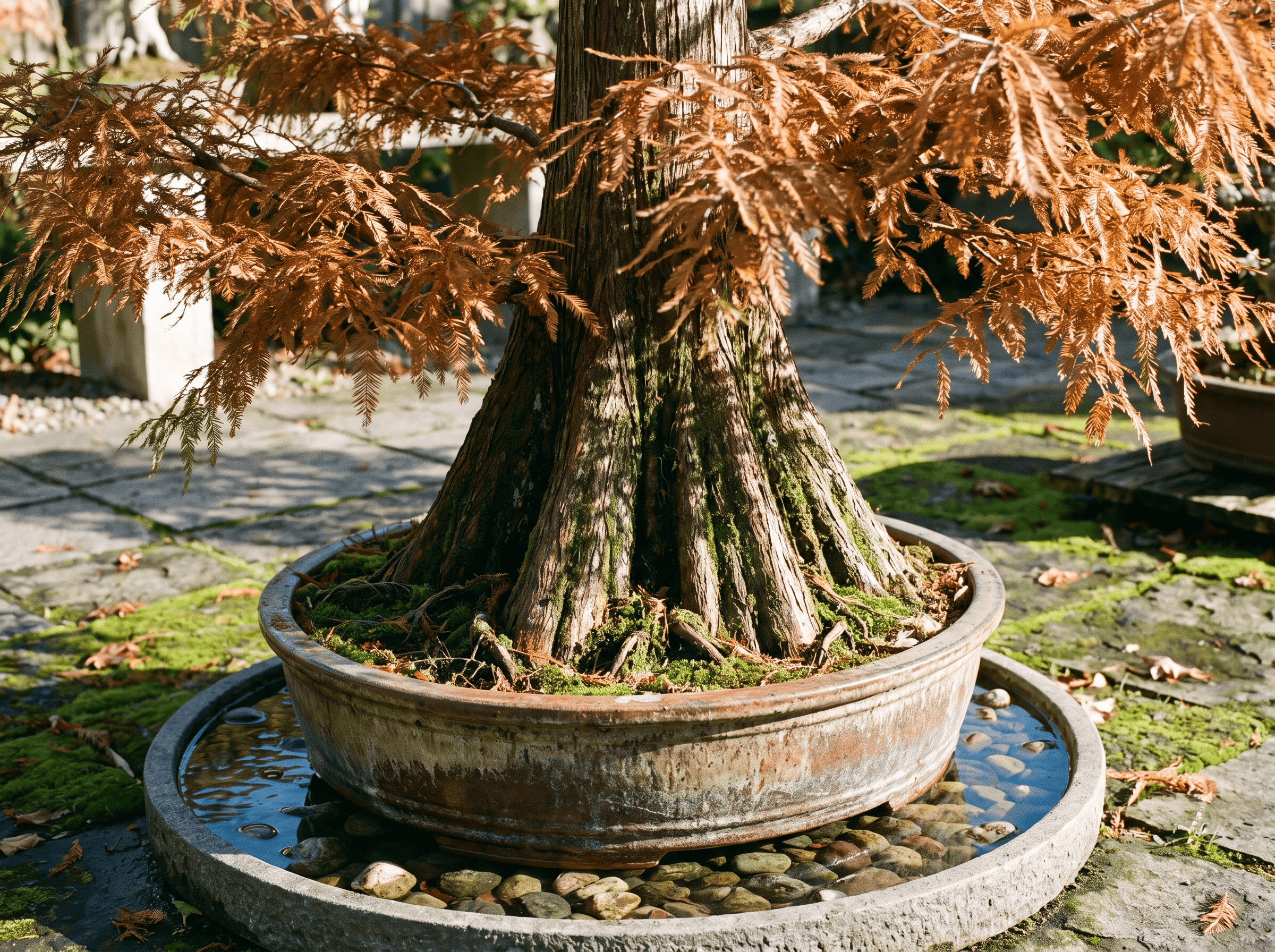
Every rule I give people about bonsai watering has an exception, and bald cypress is it. This is a swamp tree, native to the flooded river deltas and wetlands of the southeastern United States, and it's genuinely, unusually tolerant of waterlogged soil in a way that would kill most other bonsai stone dead within weeks. Some growers keep theirs standing in a shallow tray of water through the hottest stretches of summer as a practical way to keep a thirsty tree consistently watered, and the tree handles it without issue, though it doesn't strictly need standing water to thrive, more conventional watering works just as well. If you've ever struggled to keep a pot consistently wet enough for a thirsty tree, this is refreshingly hard to overwater.
It's also a deciduous conifer, which confuses people the first autumn they own one. The soft, feathery needles turn a warm bronze-orange before dropping entirely for winter, leaving bare branches on what still looks and behaves like a conifer the rest of the year. That's not a sign of trouble, it's exactly what a healthy bald cypress does every year, and it needs that bare winter period, a genuine dormancy with real cold, just as much as it needs summer heat and moisture.
The trunk is the other thing that sets this species apart over time. Given years of growth, particularly with wet feet, bald cypress develops a distinctive flared, buttressed base, wide and fluted where it meets the soil, tapering more conventionally above. It's one of the more recognisable trunk silhouettes in bonsai once you know what to look for, and it's a big part of why growers put up with the extra winter care this species needs in colder climates.
Care
Light
Full sun to fairly bright light suits bald cypress well through the growing season, it's a vigorous grower in the wild and responds to strong light with dense, healthy foliage. Some light afternoon shade in extreme summer heat is fine but not necessary in most climates. Avoid deep, permanent shade, which produces thinner growth and weaker autumn colour, one of the nicer seasonal features of this tree worth not squandering.
Watering
Bald cypress genuinely tolerates far more water than typical bonsai advice would suggest. Through the growing season you can water heavily and frequently, and some growers stand the pot in a shallow tray of water during the hottest stretches of summer as a practical convenience without any ill effect, something that would rot the roots of nearly any other conifer. This tree doesn't need standing water to survive, and it can be grown with more conventional watering just as well, but if you're prone to overwatering, this is the one species where that instinct won't punish you. Ease off in winter dormancy when the tree is leafless and growth has stopped, since the water demand drops considerably once it's not actively photosynthesising.
Temperature & hardiness
Bald cypress needs a real winter, a proper cold dormancy period, to grow and colour well the following year, and the species itself is considerably more cold-hardy than its swampy origins might suggest. That hardiness applies to a tree in open, in-ground conditions, though, a bonsai in a shallow pot has far less root insulation and needs real winter protection: shelter the pot from prolonged hard freezes and check what your specific climate zone actually requires rather than assuming outdoor winters are automatically safe everywhere temperate. Skipping winter dormancy altogether by keeping it warm year-round disrupts the tree's cycle and weakens it over time, the same mistake people make with junipers, just less commonly attempted since bald cypress doesn't get marketed as an indoor tree.
Soil & potting
Because this species tolerates such wet conditions, you have more flexibility with substrate than with most bonsai, a standard bonsai mix works fine, but you can lean toward a more moisture-retentive blend than you'd use for, say, a pine or juniper without risking root rot. Good aeration in the mix still matters for healthy root development even in a tree this water-tolerant, so it's not an excuse to use plain garden soil, but you don't need to chase the aggressively fast drainage that species like rosemary or pine demand.
Fertilizing
Feed regularly through the growing season, spring through summer, with a balanced fertiliser, then stop entirely once the needles begin colouring and dropping in autumn and through the leafless winter dormancy. Bald cypress is a fairly vigorous grower when actively in leaf and responds well to consistent feeding during that window, supporting both foliage density and the kind of trunk thickening that eventually produces that distinctive flared base.
Pruning & wiring
Pinch and trim new growth through the growing season to build ramification and control the tree's naturally vigorous, somewhat upright growth habit, this ongoing maintenance work is fine anytime foliage is active. Bald cypress backbuds well and tolerates fairly hard structural pruning, including cutting back into older wood, but save those harder cuts for late winter, autumn, or very early spring rather than the middle of the growing season, when the tree recovers from major cuts more predictably. Wire while branches are pliable, ideally during the growing season or right as new shoots firm up, and check regularly since this species can thicken quickly under good growing conditions. The best time to really assess the tree's structure is winter, once it's bare, when you can see the branch framework and that developing buttressed trunk base clearly without foliage in the way, which also makes it a natural window for structural pruning decisions.
Repotting
Repot every two years for younger, vigorously growing trees, extending the interval as the tree matures, timed for early spring before new growth pushes. Bald cypress has a fairly vigorous root system and handles a reasonably thorough root trim well, especially given how tolerant it is of wet conditions afterward, watering heavily post-repot isn't the risk here it would be for a more drought-adapted species. It's actually one of the more forgiving species to repot for exactly that reason.
Common problems
Bald cypress is genuinely tough, but a handful of issues show up regularly. Needle browning or dieback that doesn't correspond with the normal autumn colour change is worth checking against underwatering as a possible cause rather than assuming overwatering by default, an unusual direction for bonsai troubleshooting but consistent with how water-loving this species is, a bald cypress that's gone too dry for too long can show stress fast. Spider mites can appear in hot, dry, low-humidity conditions, as with many conifers, though anecdotally this seems less common here than on drier-growing species given how much moisture bald cypress is typically kept in. A weak, sparse spring flush after winter often means the tree didn't get a properly cold dormancy period, worth checking if it was overwintered somewhere too warm or sheltered. New owners sometimes panic in autumn when the foliage turns bronze and drops, assuming the tree has died, when that's simply the normal seasonal cycle for this particular conifer.
Styling
Bald cypress is closely associated with formal and informal upright styles that echo how it grows in the wild, tall, fairly straight-trunked, with that flared, buttressed base becoming a real focal point as the tree matures. Some growers develop that base further by planting slightly proud of the soil or working the surface roots to accentuate the flare, since it's one of the species' signature features. Because it tolerates standing water so well, it's also a natural fit for water-tray or pond-edge display, styled to suggest its native swamp habitat, which is a display approach few other bonsai species can pull off convincingly.
Common questions
Can I really keep a bald cypress bonsai standing in water?
Yes, some growers keep the pot in a shallow tray of standing water through the hottest stretches of summer as a practical convenience, and the tree handles it without any harm, reflecting its native swamp habitat. It doesn't need this to survive, more conventional watering works fine too, but it tolerates standing water far better than almost any other bonsai species.
Is it normal for my bald cypress to lose all its needles in autumn?
Yes, bald cypress is a deciduous conifer, so the needles turn bronze-orange and drop completely each autumn, leaving bare branches through winter. It's a normal, healthy annual cycle, not a sign the tree has died, and it regrows fresh foliage in spring.
Does bald cypress bonsai need a cold winter?
Yes, it needs a genuine cold dormancy period outdoors to grow and colour well the following year, despite being a swamp species. The species itself is quite cold-hardy in open ground, but a bonsai in a shallow pot has much less root insulation, so protect the pot itself from extreme hard freezes according to your local climate rather than assuming outdoor winters are automatically safe. Don't bring it indoors to avoid winter altogether, though, since keeping it too warm disrupts its cycle and weakens the tree.
Why does my bald cypress have a wide, flared trunk base?
That flared, buttressed base is a natural and desirable feature of mature bald cypress, particularly common in trees grown with plenty of water. It develops with age and is one of the species' most distinctive and sought-after trunk characteristics in bonsai.
Can bald cypress bonsai be grown indoors?
No, not successfully long-term. It's an outdoor tree that needs real seasonal changes, including a genuine cold winter dormancy and bright natural light, neither of which an indoor environment reliably provides.
Why are my bald cypress needles browning in summer, not autumn?
Out-of-season browning is worth checking against underwatering first rather than assuming overwatering, this species is unusually tolerant of wet soil and can show stress quickly when it's allowed to dry out for too long. Check watering frequency before assuming a pest or disease problem.
How fast does bald cypress bonsai grow?
Fairly vigorously during the growing season when given plenty of water, sun, and regular feeding. That vigour is useful for thickening the trunk and developing the flared base, but it also means the canopy needs fairly regular pruning through spring and summer to keep its shape.
You might also like
General guidance based on 20+ years of practice. Every tree and every climate is different — when in doubt, ask us.