
Willow Bonsai Care
Salix babylonica and Salix caprea
Willow breaks nearly every rule I'd normally give a beginner about bonsai care, it wants constant water instead of a drying cycle, and that's exactly what makes the long, pendulous branching this tree is grown for actually work.
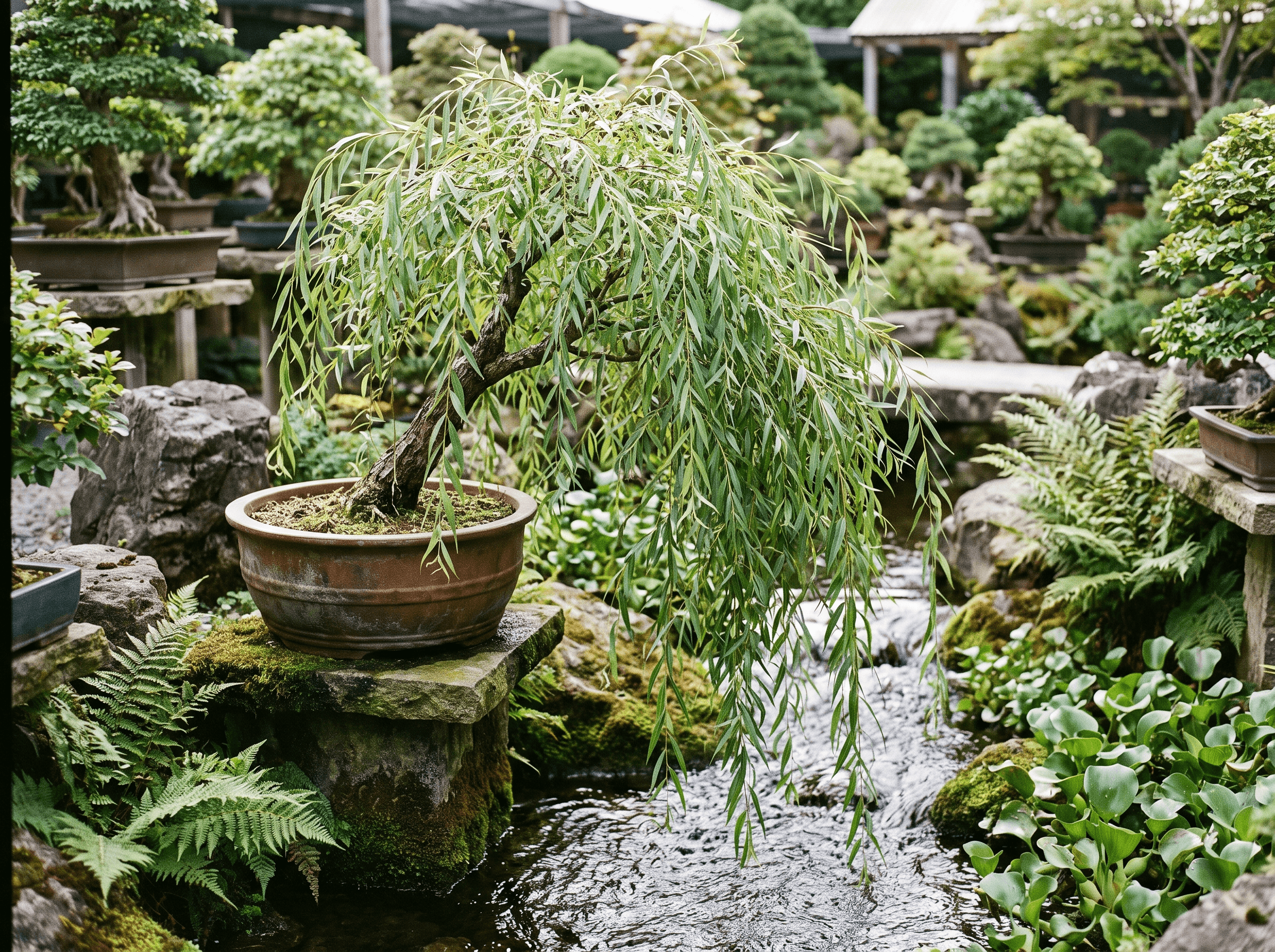
Every other species in this collection wants a drying cycle between waterings to some degree. Willow doesn't. It's naturally a streamside tree, growing with its roots at or near the water table, and a bonsai grown from it wants far more consistent moisture than almost anything else you'll keep. On genuinely hot days I'll stand the pot in a shallow saucer of water for a few hours, something that would risk root problems on most other bonsai stock, though I treat it as an occasional hot-weather measure rather than a permanent setup.
The other defining trait is speed. Willow is one of the fastest-growing trees commonly used in bonsai, throwing out long shoots within weeks of a hard prune, which is both the appeal and the maintenance burden. That vigorous growth is what produces the long, weeping, pendulous branches the tree is grown for in the first place, weak, flexible wood that hangs and sways rather than holding a rigid shape. You can't have the aesthetic without accepting the constant pruning it takes to keep that growth in check.
It's also an easy tree to propagate and an easy tree to over-pot by accident, since the roots grow just as aggressively as the top growth and will fill a container fast. If you want a low-maintenance bonsai, willow isn't it. If you want a tree that rewards frequent, hands-on attention with a genuinely graceful, distinctive silhouette that few other species can match, it's one of the most satisfying trees I grow.
Care
Light
Full sun produces the best growth and the strongest, most vigorous branch extension needed to develop that long, weeping form. Willow tolerates some partial shade without dying, but growth slackens and the tree loses some of the density that makes a well-developed weeping canopy look full rather than sparse. Outdoors in an open, sunny spot is the right call whenever it's available.
Watering
Keep willow consistently, generously moist, this is one of the few bonsai species where the usual worry about overwatering mostly doesn't apply, though soil that never drains at all can still cause problems over time. Standing the pot in a shallow tray of water on genuinely hot days works well and mimics the streamside conditions this tree evolved in, but treat it as a hot-weather measure rather than a permanent setup. Letting the soil dry out, even briefly, stresses the tree far more than it would stress a juniper or pine, and repeated drying cycles will visibly weaken growth and can cause dieback in the finer branches.
Temperature & hardiness
Willow is a hardy deciduous tree in the ground, but a bonsai in a shallow pot is more exposed than a tree growing in open soil, and fine branches can die back in a hard freeze if the roots aren't given enough protection. Give the pot solid insulation against hard freezes, and in a genuinely cold winter a cold frame, unheated garage, or similar frost-free shelter is worth having on hand even though the tree itself doesn't need warmth. It drops its leaves in autumn and goes fully dormant through winter, which is normal and expected, not a sign of a problem. It doesn't need or want to be brought into a warm indoor space at any point in the year, dormancy outdoors or in cool, sheltered conditions is what it wants.
Soil & potting
Because this species wants so much more water than typical bonsai stock, a mix with more moisture retention than you'd use for a juniper or pine works better, something with a higher proportion of akadama relative to fast-draining pumice or lava rock, with a little extra pumice or limestone gravel worked in, since willow tends to prefer conditions on the slightly alkaline side rather than the acidic mixes some other species want. The pot itself matters too, given how aggressively willow roots grow; expect to be doing more frequent root work than with a slower species just to keep the root mass from overwhelming the container between repots.
Fertilizing
Feed through the growing season with a balanced fertiliser every couple of weeks, tapering off in autumn as the tree prepares to drop its leaves, and skip feeding entirely through winter dormancy. Willow's vigour means it can handle regular feeding without becoming unbalanced, since the constant pruning keeps growth in check regardless, but avoid leaning too heavily on high-nitrogen feed specifically, it tends to push larger leaves and longer internodes on this species and can make it more attractive to aphids.
Pruning & wiring
Plan on pruning far more often than you would with almost any other species, willow can put out significant new growth within a couple of weeks during the height of the growing season, and controlling that vigour is most of the ongoing work this tree demands. Cut back new shoots regularly to encourage the fine, dense, pendulous branching that defines the weeping form. Wood is genuinely weak and brittle at the branch level, which is part of the aesthetic but also means wiring needs a light touch; young, still-soft shoots can be wired once they've hardened slightly, generally from early summer onward, while older, more established branches respond better to guy-wires pulling them down gradually than to direct wire bending, which risks snapping them.
Repotting
Repot more frequently than most species, often annually for a young, vigorously growing tree, given how fast the roots fill a container. Do this in early spring, as buds begin to swell and before leaves fully emerge. Trim the root mass back hard, willow tolerates aggressive root pruning better than most species precisely because it grows back so quickly, and get it back into fresh, moisture-retentive soil promptly.
Common problems
Willow scab and canker are the diseases I watch for most, both capable of causing shoot dieback and blackened, sunken patches on younger stems; good airflow and prompt removal of affected wood, disposed of rather than composted locally, help keep them from spreading. Aphids are drawn to the soft, fast-growing new shoots this species constantly produces and can build up quickly if not checked regularly, a strong spray of water or insecticidal soap usually keeps them under control. Weak, brittle branches are more of an inherent trait than a problem exactly, but breakage from wind, careless handling, or overly forceful wiring is common enough to mention, since this species doesn't have the tough, flexible wood of a juniper. And root-bound stress from letting a fast-growing willow go too long between repots is probably the most common care mistake, showing up as stunted new growth and an overall decline despite otherwise correct watering.
Styling
Willow is grown almost exclusively for its weeping or semi-cascade form, the whole point of the tree is the long, pendulous branches hanging down from a relatively simple trunk and canopy structure, so styling energy goes into developing fine, drooping branch ramification rather than dramatic trunk movement or deadwood. Broom style also works reasonably well on younger material before the weeping habit is fully developed. Because growth is so vigorous, this is a species where you can develop believable age and branch density in a much shorter time than with a slow conifer, which makes it a satisfying tree for growers who want to see real structural progress within just a couple of seasons rather than over a decade.
Common questions
How often should I water a willow bonsai?
Very often, more than nearly any other bonsai species. Willow is naturally a streamside tree and wants consistently, generously moist soil. Standing the pot in a shallow tray of water on genuinely hot days is a reasonable, occasional approach, and letting the soil dry out even briefly stresses the tree more than it would most other species.
Why does my willow bonsai need so much pruning?
Because it's one of the fastest-growing trees used in bonsai, capable of putting out significant new growth within a couple of weeks during the growing season. Regular, frequent pruning is what keeps that vigour in check and encourages the fine, dense, pendulous branching that gives the weeping form its character.
Can willow bonsai wood support wiring?
Yes, but gently, and mostly on young growth. The wood is weak and somewhat brittle compared to tougher species like juniper, so branches can snap if you force a sharp bend. Wire young, flexible shoots with a light touch once they've hardened slightly, and use guy-wires to gradually pull down older, more established branches rather than direct wire bending.
How often do I need to repot a willow bonsai?
More often than most species, often annually for a young, vigorously growing tree, since the roots fill a container quickly. Willow tolerates hard root pruning well because it regrows so fast, so don't be shy about trimming the root mass back significantly at each repot.
Is willow bonsai hardy outdoors in winter?
Yes, it's a hardy deciduous tree in the ground, but a potted bonsai is more exposed than one growing in open soil, and fine branches can die back in a hard freeze without enough root protection. Give the pot solid insulation, and in a genuinely cold winter a frost-free shelter such as a cold frame or unheated garage is worth having. It drops its leaves and goes fully dormant outdoors, which is normal and not a sign of trouble.
Why are my willow bonsai's branches dying back?
Willow scab or canker are worth checking for, both capable of causing blackened, sunken dieback on younger stems; remove affected wood promptly and keep an eye on airflow around the tree. Letting the soil dry out repeatedly can also weaken and kill fine branches, since this species is far less drought-tolerant than typical bonsai material.
Is willow a good beginner bonsai species?
It depends what kind of beginner you are. The watering and pruning demands are higher than average, since it wants constant moisture and frequent trimming to control its vigour. But it's forgiving of hard pruning and root work, and the fast growth means visible progress happens quickly, which some new growers find motivating.
You might also like
General guidance based on 20+ years of practice. Every tree and every climate is different — when in doubt, ask us.