
Scots Pine Bonsai
Pinus sylvestris
Scots pine is the pine most northern and central European collectors reach for when they want a properly old, weathered trunk, and it's managed through candle selection and thinning in spring rather than the decandling technique people associate with Japanese black pine. Mixing those two up is the single most common mistake I see with this species.
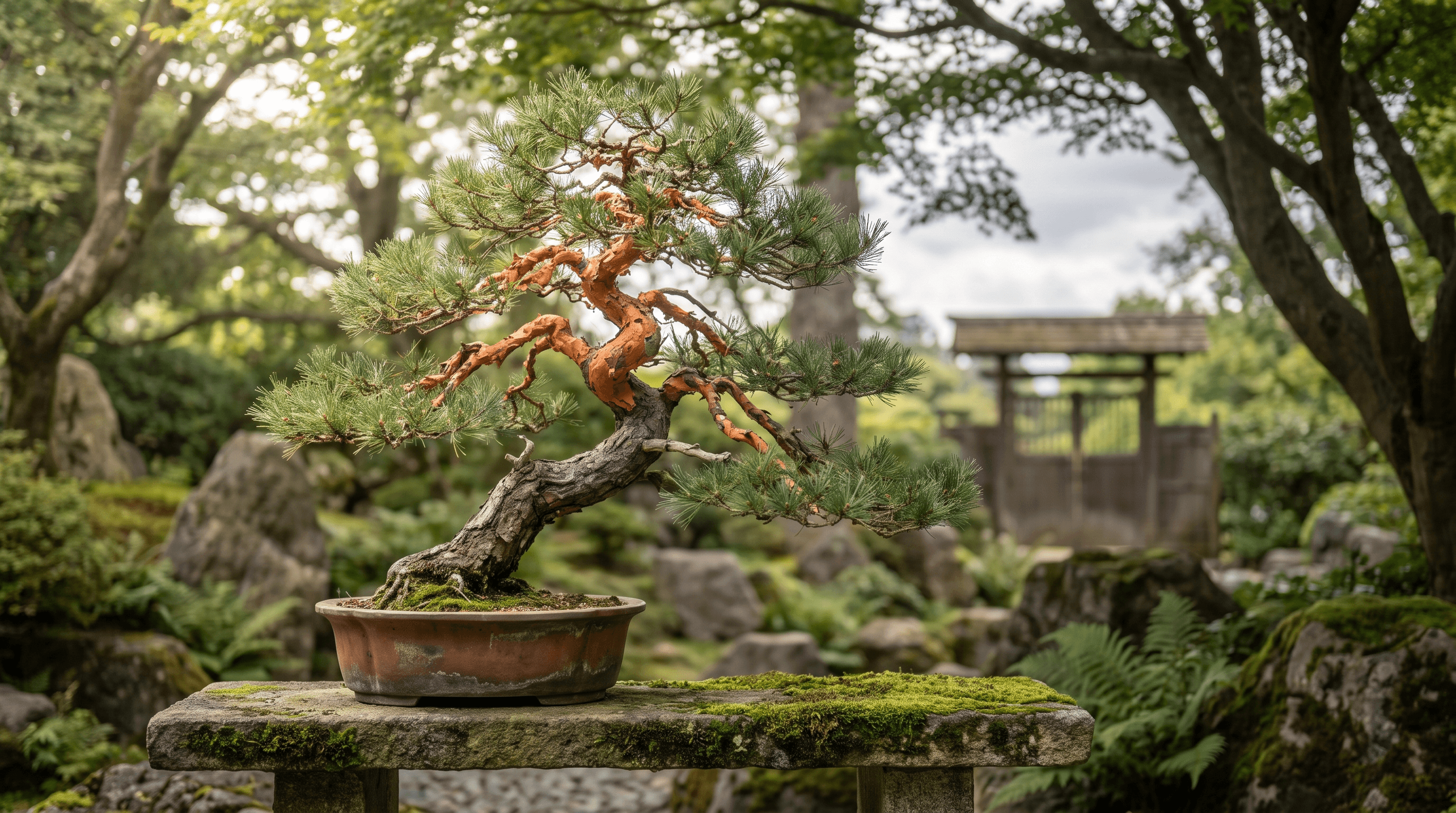
I've worked with a fair number of collected Scots pines over the years, and they tend to arrive with more natural character already built in than most nursery pine stock does. In the wild this tree grows in poor, rocky, often exposed ground across huge parts of Europe and into Asia, and that hard upbringing shows in the trunks: real movement, genuine taper, and bark that starts flaking into plates early compared to some other pines. As the tree ages, and especially on the upper trunk and branches, that bark takes on a warm orange-red color that's one of the most attractive things about mature Scots pine, sitting against darker, more fissured grey-brown bark lower down. It's a look you can't fake with technique alone; it comes mostly with age.
Where I see people go wrong is treating Scots pine like a smaller, colder version of black pine and reaching for the decandling scissors in early summer expecting the same result. Scots pine is generally treated as a single-flush species, and you shouldn't routinely decandle it expecting the predictable, same-season summer flush that Japanese black pine gives. That's not quite the same as saying decandling can never do anything here; there's evidence it can sometimes produce a useful response on Scots pine depending on the individual tree's age, vigor, and climate, but it isn't the reliable annual technique it is on black pine, so I don't treat it as a default. What actually carries most of the refinement work on Scots pine is candle work timed to the tree's stage of development rather than the calendar. On a tree still building trunk and branch structure, I'd rather let spring growth run and harden fully to encourage back-budding, and save any cutting back for later once that structure is established. Once a tree is further along in refinement, spring candle selection and thinning while the new shoots are still soft, reducing the number of candles in a whorl and shortening the strongest ones, becomes the useful tool for balancing vigor and keeping the tree from getting leggy. It's a different job from decandling aimed at a related goal, and it's worth learning it as its own technique, tied to where the tree actually is in its development, rather than a watered-down black pine method.
Care
Light
Full sun, without much room for compromise. Scots pine comes from open, exposed ground in its native range and it wants the same outdoors, on a bench that gets sun for most of the day. Shade it and the response is predictable: needles thin out, go a paler green, and the internodes stretch, which undoes a lot of the compact character you're trying to build through spring candle work. Full sun is what this species wants under normal conditions, and I don't reach for shade as a default the way I sometimes do for more delicate broadleaf species. That said, giving a tree temporary relief during an exceptional heat spike in a hot southern summer, especially protecting the pot and root zone, is reasonable and not bad horticulture; it's the root zone overheating or drying out that does the real damage, not a bit of shade cloth on the worst afternoons.
Watering
Let the surface of the soil dry before watering again, then water properly rather than just dampening the top. Scots pine's native soils are often thin, sandy, and rocky, and the roots are not built for sitting in moisture, so a slow-draining mix is a real risk for this species. That doesn't mean drying out is the safer failure mode, though; a small, shallow bonsai pot can dry out lethally fast in hot weather, sometimes within a day, so check it regularly rather than watering on autopilot just because that's what a neighboring tree needs. Consistently soggy soil shows up weeks later as dull, yellowing needles rather than anything immediate, which is exactly what makes it easy to miss.
Temperature & hardiness
This is where Scots pine and black pine really part ways. Scots pine is an exceptionally cold-hardy tree by nature, native to some harsh northern climates, and at the warm, southern end of its range it's mostly found at higher elevations rather than at sea level, which is a useful clue to what actually limits it. The issue in a low-elevation Mediterranean climate isn't primarily a lack of winter cold; it's prolonged summer heat and drought stress, which is closer to what real Mediterranean Scots pine populations contend with in the mountains. In a hot, mild coastal southern Italian summer, I've generally found Scots pine grows on but with noticeably less vigor than it would show at altitude or somewhere with cooler summers, and I'd treat that as a fair general tendency rather than something absolute. If your garden sits at some altitude or has cooler, less punishing summers, Scots pine should do well there. In a hot, low-elevation coastal spot, black pine is usually the more rewarding pine to grow.
Soil & potting
A lean, fast-draining, mineral mix suits Scots pine well, and if anything I lean the ratio a touch more toward pumice and lava than I would for a broadleaf tree, reflecting the poor, well-drained ground this species naturally roots into. Akadama blended with pumice and lava rock is a solid starting point. Like other pines, Scots pine benefits from mycorrhizal fungi living in the root zone, so carrying a portion of the old soil forward at each repot rather than starting from a completely sterile mix helps keep that relationship going, and I think it matters more for a species this used to nutrient-poor ground.
Fertilizing
Scots pine feeds steadily through spring and into early autumn and then tapers off as growth slows for the year, much like other pines. Because most refinement work on this species happens through spring candle thinning rather than a summer decandling cycle, the feeding calendar is a little more straightforward than it is for black pine; there's no need to plan a feeding pause around a decandling date. A balanced feed through the growing season works well, and I like organic pellets left on the soil surface for a slow, steady release rather than pushing hard bursts of fast-release fertilizer that can outpace what the roots want to take up.
Pruning & wiring
Scots pine is generally treated as a single-flush pine for refinement purposes, and that should drive most of how you prune it, though it's worth knowing it's not an absolute rule; decandling or hard cutback can sometimes produce a useful response depending on the individual tree's age, vigor, and climate, it just isn't something to plan on every year the way you would with black pine. Where the pruning advice really needs to split is by developmental stage rather than giving one recipe for every tree. On a tree still developing trunk or branch structure, the better move is usually to let spring growth extend and harden fully rather than cutting into it, since that builds strength and encourages back-budding you'll want later. Spring candle selection and shortening is mainly a refinement-stage technique, used once the basic structure is in place and you're managing an already-developed tree: while the new candles are still soft and before the needles have fully extended, thin out the weaker candles in a crowded whorl and shorten the strongest ones to even out vigor across the tree and keep growth from running away at the branch tips while the interior stays bare. Wiring is where Scots pine is a real pleasure to work with; younger and mid-aged growth is noticeably more flexible than black pine, which is part of why the species produces such convincing literati and windswept forms from collected material. Older, thicker wood can still snap if you rush it, so build bends gradually and check the wire regularly as the branch thickens.
Repotting
Established Scots pine bonsai generally go three to five years between repots, though I let the individual tree's vigor and root density guide that more than a fixed number. Early spring, as the buds start to swell, is the right window. Freshly collected yamadori material is a different story: I take a much more conservative approach in the first couple of repots after collection, working only the outer portion of the root mass and leaving the core largely undisturbed, since a wild-collected pine's root system needs time to rebuild before it can handle aggressive work. Keep any freshly repotted tree out of harsh sun and wind for a couple of weeks afterward while the roots settle back in.
Common problems
Yellowing needles are the complaint I hear most, and the usual causes are soil that's staying wet, roots disturbed too heavily at the last repot, or not enough direct sun, in roughly that order of likelihood. Aphids and scale turn up on Scots pine from time to time, generally on the new spring candles or tucked among needle clusters, and are worth checking for if growth looks stunted or you notice a sticky residue on the foliage or bench below. In consistently humid conditions I'd also keep an eye out for needle blight or similar fungal issues, which show as discolored or dying needle tips rather than the gradual, whole-tree yellowing that points to root or watering trouble. A tree that's pushing short, weak candles across the board, rather than in one isolated branch, is usually telling you something is wrong at the roots, not the foliage.
Styling
Scots pine is arguably the best European pine for dramatic, weathered styles, and a lot of that comes down to what the tree naturally does growing in exposed, rocky terrain. Literati, windswept, and semi-cascade forms all suit collected Scots pine especially well, since wild trees often arrive with genuine trunk movement and asymmetric branch placement that would take decades to develop from nursery stock. The bark itself becomes part of the design as the tree matures, with that orange-red color on the upper trunk and branches worth exposing rather than hiding under foliage, which is one reason growers often keep the lower trunk relatively clean on an older specimen. Deadwood techniques suit the species too, particularly on collected material that already carries natural jin and shari from years of wind and weather before you ever got your hands on it, though as with any pine the deadwood needs upkeep to resist rot over time.
Common questions
Do I decandle Scots pine the way I decandle black pine?
Not as a routine technique, no, and treating it that way is the single most common mistake with this species. Scots pine is generally single-flush and doesn't give you the predictable, same-season summer flush that decandling produces on black pine, so I wouldn't decandle it every year expecting that result. It can occasionally respond to decandling or hard cutback depending on the individual tree's age, vigor, and climate, but that's an occasional, situational tool rather than the standard annual refinement method. For most trees in refinement, thinning and shortening candles in spring while they're still soft does the actual work of balancing vigor.
What is candle selection and how is it different from decandling?
Candle selection is spring work done while the new candles are still soft: you remove the weaker candles from a crowded whorl and shorten the strongest ones by around half to even out vigor across the tree. It's mainly a refinement-stage technique for a tree whose structure is already established; on a tree still developing trunk or branches, it's often better to let growth run and harden to build back-budding first. Decandling, by contrast, is a summer technique on two-flush pines like black pine where the fully elongated candles are cut back to force a second flush. They're aimed at a similar outcome but they're genuinely different techniques for different pines and different stages.
Why does the bark on my Scots pine turn orange-red?
That warm orange-red color is a natural age and species feature of Scots pine, developing on the upper trunk and branches as the tree matures, and it's one of the species' most attractive traits. It's generally described as an age-related characteristic rather than something sunlight specifically causes, though growers often keep the lower canopy open enough to let that upper bark stay visible rather than hiding it under foliage.
Is Scots pine a good choice for a mild, warm climate like southern Italy?
It can be grown there, but I'll say plainly that it's not where the species is happiest. Scots pine is very cold-hardy, but at the warm end of its range it's typically a mountain tree, and what actually limits it in a low-elevation Mediterranean climate is prolonged summer heat and drought stress rather than a shortage of winter cold. If your site is hot and dry at low elevation and you want a strong-growing pine, black pine is usually the more rewarding choice; Scots pine tends to do better with some altitude or cooler summers.
Is Scots pine good for beginners?
I'd put it in the same category as black pine: hardy enough to survive early mistakes, but the fine work of building a refined silhouette through spring candle thinning takes some pruning experience to get a feel for. Where Scots pine is more forgiving is wiring, since younger growth is noticeably more flexible than black pine's, which makes it a nice second species once you've had some general pruning practice.
How often should I repot a Scots pine bonsai?
Established trees typically go three to five years between repots, done in early spring as the buds begin to swell, though I'd let the individual tree's root growth guide the exact timing rather than a fixed number. Freshly collected yamadori is different and needs a more conservative approach in its first repots after collection, since the root system needs time to recover before it can take heavier work.
General guidance based on 20+ years of practice. Every tree and every climate is different — when in doubt, ask us.