
Japanese Garden Juniper Bonsai
Juniperus procumbens 'Nana'
If you've ever bought a juniper bonsai from a garden centre or a shopping mall kiosk, there's a decent chance it was this one: procumbens Nana is the workhorse of commercial bonsai, and it earns that reputation honestly.
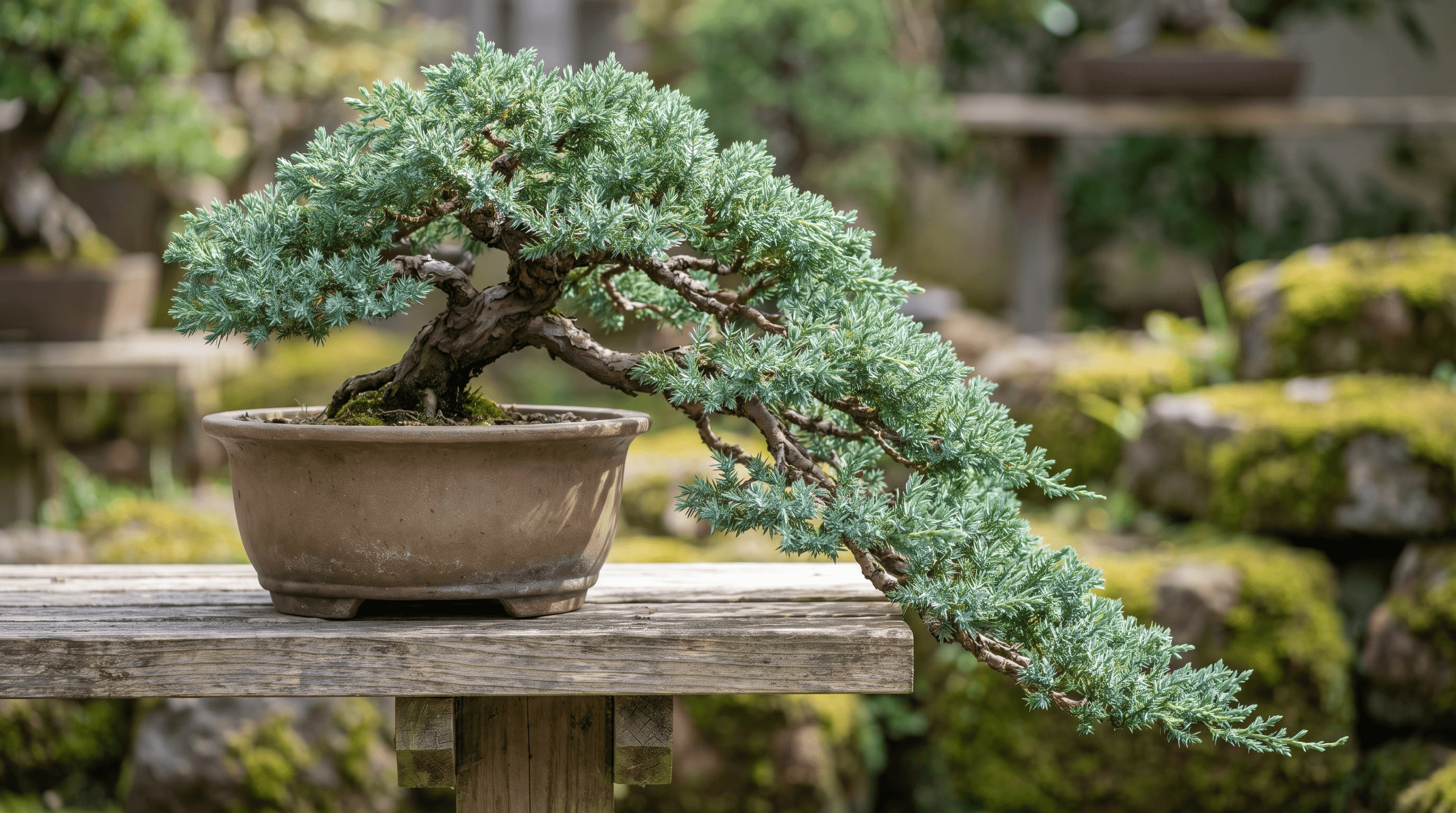
Procumbens Nana is a dwarf cultivar of the Japanese garden juniper, and the name procumbens tells you most of what you need to know about how it grows in nature: low, spreading, hugging the ground rather than reaching upward. That habit is the single biggest thing that separates it from the upright chinensis cultivars like Shimpaku or Itoigawa. Left untrained, a Nana wants to sprawl sideways, not build a tall trunk, and that changes how you approach styling it from day one.
It's also, without much argument, the most widely produced juniper for beginner and mass-market bonsai. Nurseries grow it by the thousands because it strikes roots easily from cuttings, tolerates a wide range of conditions, and forgives clumsy early pruning better than most other juniper material. The foliage is dense, blue- to grey-green, awl-shaped needle foliage, distinctly prickly to the touch rather than the soft scale foliage of a mature chinensis cultivar, and because 'Nana' already carries this needle foliage naturally, the juvenile-to-scale reversion issue discussed with scale-foliaged cultivars like Shimpaku isn't really something you deal with here, it's just how this cultivar looks.
None of that makes it a lesser bonsai species, and I want to push back a little on the idea that because it's common, it's not worth doing well. A properly aged, well-ramified Nana with real deadwood and a convincing cascading or semi-cascade line can hold its own next to far more expensive material. What it lacks in rarity it makes up for in resilience and in how forgiving it is while you're still learning to read a tree.
Care
Light
Full sun, as with any juniper, though Nana tolerates some partial shade without immediately thinning out. That tolerance is useful for beginners working with less-than-ideal balcony or patio setups, but it shouldn't be treated as permission to skip good light altogether. Given real sun the foliage stays denser and the low, spreading pads that suit this cultivar's natural habit develop far better than they do in a shadier spot.
Watering
Water when the surface starts to dry, then soak thoroughly until water runs from the drainage holes. Check it daily in hot summer weather, especially on small or shallow pots, which dry out faster regardless of cultivar. As with all junipers, root rot from a soggy, poorly draining mix is a bigger risk long-term than the occasional missed watering.
Temperature & hardiness
Nana is a genuinely tough, cold-hardy juniper and needs the same real outdoor winter dormancy as any other juniper cultivar, this doesn't change just because it's often sold as starter material. A lot of these trees get bought at a garden centre by someone who assumes because it looks tidy and compact it must be an indoor houseplant, and that assumption kills more Nana bonsai than any pest or disease. It's an outdoor tree, full stop, and it needs the cold season to stay healthy.
Soil & potting
A fast-draining mineral mix, akadama, pumice, and lava rock in roughly equal parts or a similar coarse, inorganic local equivalent, suits Nana just as it suits other junipers. A broader, shallower pot is a common styling choice for this cultivar since it complements the low, spreading silhouette once the tree is trained, but it's an aesthetic preference rather than something the roots themselves require, drainage and mix quality matter more for root health than pot shape does.
Fertilizing
Feed through the growing season, spring into early autumn, with a balanced or slightly nitrogen-forward fertiliser, then stop through winter dormancy. Because Nana already carries needle foliage rather than the refined scale foliage that can revert to a juvenile look under heavy feeding, fertilising mistakes tend to show up as general vigor issues rather than a change in foliage character, which makes it fairly approachable material for someone still learning to read a tree's response to fertiliser.
Pruning & wiring
Let healthy shoots extend through the growing season, then selectively prune overly long runners back with sharp scissors to a suitable lateral shoot or deeper within the foliage, rather than repeatedly pinching every tip or shearing the pads like a hedge, both of which can weaken the tree and brown the foliage. Because Nana's natural habit is low and spreading rather than upright, a lot of the early shaping work is about deciding how much of that sprawl to keep versus how much to lift into a more classic bonsai silhouette. This is genuinely different work than training an upright chinensis cultivar, where you're usually fighting to add movement to a trunk that wants to grow straight. With Nana you're often doing the opposite, selecting and elevating branches out of a naturally cascading tangle. Wiring is well tolerated and the branches hold a set shape reliably, which makes this cultivar a common choice for cascade and semi-cascade styles that lean into its natural downward or spreading habit rather than fighting it. Structural cuts should still leave live foliage on the branch, the same rule applies as with any juniper.
Repotting
Repot in early spring roughly every two years on younger material, less often as the tree slows down. Nana's fibrous, spreading root system tends to fill a pot fairly quickly compared to some coarser-rooted junipers, so check younger trees a little more often for rootbound signs rather than assuming the standard two-year interval always applies. Work the outer roots gently, avoid a full bare-root, and return the tree to a fast-draining mix, giving it a sheltered spot with reduced watering stress for the first couple of weeks.
Common problems
The biggest problem I see with Nana specifically isn't a disease, it's long, sparse growth from a tree that's been left unchecked for a season or two, usually a combination of insufficient light, unchecked extension growth, and self-shading as the outer foliage thickens and blocks light from the interior. Its spreading habit means it can put on a lot of loose extension quickly if you're not keeping up with selective scissor pruning, and that growth doesn't self-correct the way a slower cultivar's might. Beyond that, the usual juniper issues apply: browning foliage from either drought stress or overwatering, spider mites in hot, dry, still conditions, and a soft or discoloured trunk base pointing to root rot. Because so much commercial Nana stock is grown fast in nursery conditions before being sold, it's also worth checking a new purchase's roots and trunk base carefully, since mass-produced stock isn't always given the same individual attention as material grown specifically for bonsai development.
Styling
Nana's naturally low, spreading, ground-hugging habit makes it a strong match for cascade and semi-cascade styles, where the trunk line drops below or trails alongside the pot rim rather than reaching upward, a habit that suits this cultivar more naturally than it suits an upright chinensis. It also takes well to informal upright and windswept forms if you deliberately lift and train branches out of its sprawling tendency, and group or forest plantings sometimes use several Nana specimens together to good effect given how readily the cultivar produces low, bushy growth. It's less commonly the first choice for the tall, dramatic literati lines that Shimpaku or Itoigawa handle so well, simply because fighting the plant's natural downward habit into a strongly upright shape takes more work than leaning into what it already wants to do.
Common questions
Is Japanese garden juniper a good species for a beginner?
Yes, probably the best juniper starting point available. It's widely grown, forgiving of early pruning mistakes, and tolerant of a range of conditions. The one requirement that doesn't change is a real outdoor position with a genuine winter, it's still not an indoor plant.
Why does my Japanese garden juniper grow sideways instead of upright?
That's normal and expected. Procumbens Nana naturally has a low, spreading, ground-hugging growth habit rather than an upright one, which is exactly what makes it well suited to cascade and semi-cascade bonsai styles. If you want a more upright shape you'll need to actively select and train branches upward rather than expect the tree to do it on its own.
Can I keep a Japanese garden juniper indoors?
No. Despite being sold widely as starter or gift bonsai, often in settings that make it look like a houseplant, it's a fully outdoor, cold-hardy conifer that needs real winter dormancy. Indoor placement leads to slow decline the same as with any other juniper.
How is procumbens Nana different from Shimpaku or Itoigawa juniper?
Different species entirely. Nana is Juniperus procumbens, while Shimpaku and Itoigawa are forms of Juniperus chinensis. Nana has dense, prickly, awl-shaped needle foliage and a naturally spreading, low growth habit, while chinensis cultivars have finer scale foliage and a more upright growth tendency. Nana is also generally more forgiving and more widely available as inexpensive nursery stock.
Why is my Japanese garden juniper looking leggy and thin?
This usually comes down to insufficient light, unchecked extension growth, or the outer foliage self-shading and thinning out the interior. Because Nana grows fairly readily and has a spreading habit, shoots left to run extend quickly and produce a loose, open look rather than tight pads. Selectively pruning overly long runners back with scissors through the growing season, rather than letting growth run unchecked, keeps the foliage dense; a season of neglect can undo a lot of that density and take a while to rebuild.
Is Japanese garden juniper good for deadwood styling like Shimpaku?
It can be done, but it's less of a hallmark for this cultivar compared to chinensis cultivars like Shimpaku or Itoigawa, which are specifically favored for how their wood carves and bleaches. Nana is more commonly styled around its foliage habit and cascading lines than around extensive jin and shari work, though older, thicker specimens can still take some deadwood detailing.
General guidance based on 20+ years of practice. Every tree and every climate is different — when in doubt, ask us.