
Mugo Pine Bonsai Care
Pinus mugo
Mugo pine is naturally a dwarf, so where a black pine has to be trained into looking compact, a mugo often starts that way, dense and shrubby right off the garden centre shelf.
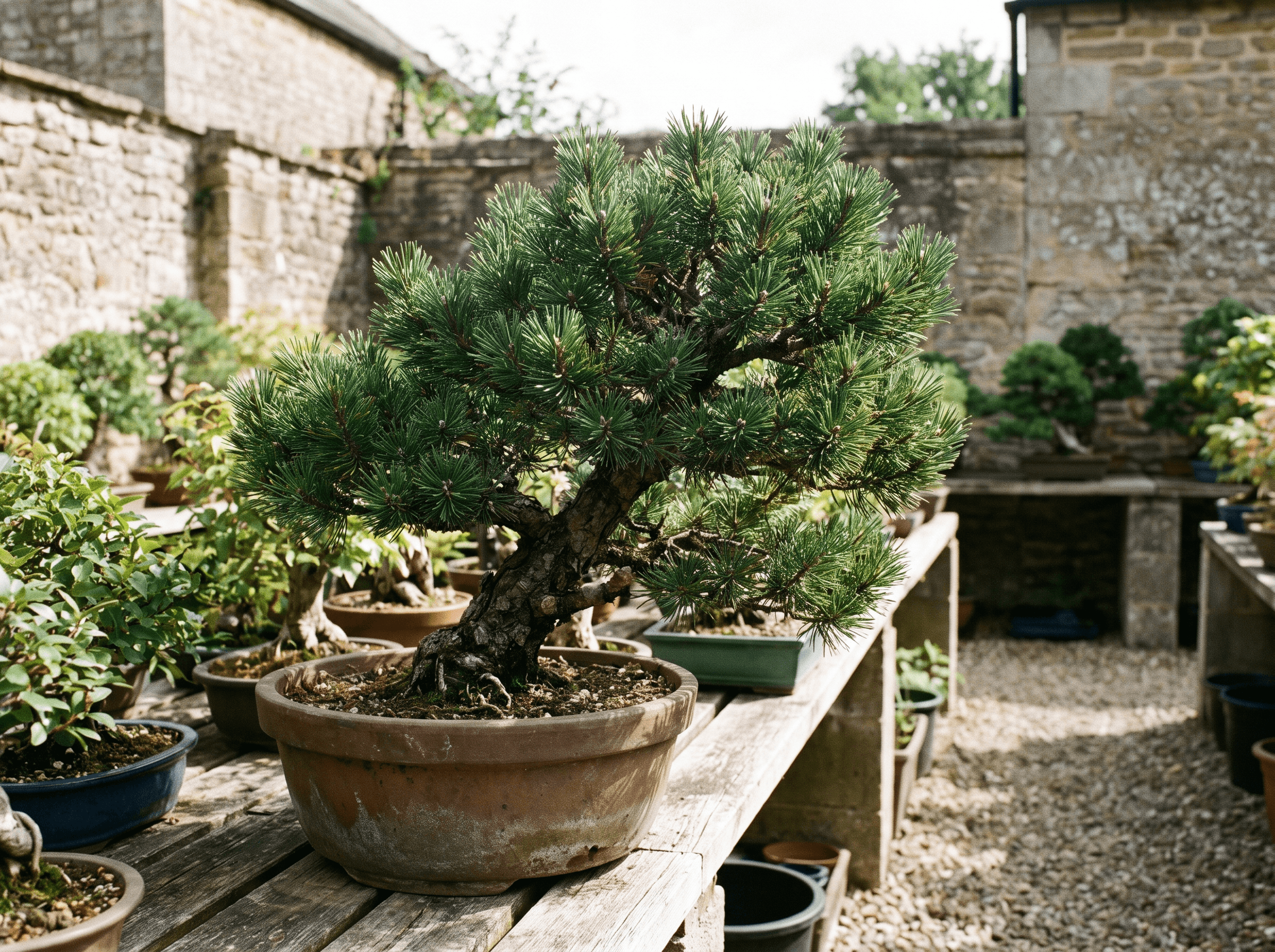
Pinus mugo grows wild across the mountains of central and southern Europe, low and shrubby on exposed alpine slopes where a taller tree simply couldn't survive the wind and cold, and that natural dwarfism carries straight through into bonsai. Compared to Japanese black pine, which needs years of decandling and selective pruning to fight its instinct to grow long and open, mugo pine already wants to be dense and compact, and it's a single-flush pine rather than a multi-flush one, so it isn't decandled the way black pine is. That doesn't mean it needs less technique, it still needs candle work, shortening rather than fully removing the new candles, to develop fine ramification and control vigour, but you're working with the tree's natural habit rather than against it.
It's also one of the most forgiving and inexpensive ways into pine bonsai. Garden centres across Europe sell mugo pine constantly as a landscaping shrub, usually cheap, usually thick and bushy, and a fair amount of very good bonsai material has come from exactly that kind of nursery stock rather than anything collected or specially grown. I've built several trees from garden centre mugos over the years, and while they take patience to develop real trunk movement and taper, since nursery stock is rarely planted with bonsai in mind, the foliage and growth habit cooperate readily once you start training it.
The other thing worth knowing early is just how cold-hardy this species is. It's built for genuine alpine winters, and it needs that cold exposure to stay healthy, the same way junipers and other true cold-climate conifers do. People occasionally try to baby a mugo pine indoors or in overly sheltered conditions assuming it needs protection, when really the opposite is closer to the truth, it's one of the toughest, most cold-tolerant species you're likely to grow.
Care
Light
Full sun for most of the day is ideal. Mugo pine grows in exposed, high-light alpine conditions in the wild and needs strong sun to keep its needles short and its growth dense and compact, exactly the qualities that make it good bonsai material in the first place. In shade it stretches, needles lengthen, and the tight, shrubby habit that makes this species attractive starts to loosen up and look leggy. In particularly hot climates, a little relief from the most intense afternoon sun is reasonable, since even a high-elevation pine like this one can benefit from some protection against scorching heat. Keep it outdoors year-round in as much direct sun as your space allows.
Watering
Water thoroughly when the surface of the mix starts to approach dryness, rather than on a fixed schedule, mugo pine wants a fast-draining mix and doesn't tolerate sitting wet for extended periods. It's fairly drought-tolerant once established, reflecting its origins on thin, rocky mountain soil, but that's not a reason to lean toward underwatering, aim for that thorough-water-then-approach-dry rhythm rather than favouring either chronic sogginess or a bone-dry cycle. The main risk with this species is less drought than it is root rot from a mix that holds too much moisture around the roots for too long, particularly in a young tree still establishing itself in a bonsai pot.
Temperature & hardiness
Extremely cold hardy, this is a genuine alpine species built to handle harsh mountain winters, and it needs a real, cold dormancy outdoors to grow and develop properly. Protect the pot from prolonged extreme freezes the way you would for other hardy conifers, since container roots are more exposed than roots in open ground, but there's no need to baby this tree through a normal winter. If anything, mugo pine is one of the more bulletproof species on this list when it comes to cold, and keeping it too warm or too sheltered does it no favours.
Soil & potting
A fast-draining, mineral-heavy mix suits mugo pine well, similar to what you'd use for black or Scots pine, akadama, pumice, and lava rock in roughly even parts, or a comparable free-draining local blend. This species comes from thin, rocky alpine soil and doesn't want to sit in anything resembling rich, water-retentive ground. Good drainage also supports the kind of tight, healthy root system that in turn keeps needles short and growth compact.
Fertilizing
Feed through the growing season with a fertiliser formulated for pines or conifers, tapering as growth slows into autumn and stopping through winter dormancy. Because mugo pine is naturally compact, some growers deliberately go a little lighter on nitrogen than they would for a more open-growing pine, to avoid encouraging overly long candles that then need more aggressive control. Consistent, moderate feeding through spring and summer works better here than heavy, infrequent doses.
Pruning & wiring
Mugo pine is a single-flush pine, unlike Japanese black pine, so it isn't decandled the way JBP is. The core technique instead is candle shortening, cutting the new candles back partially rather than removing them entirely, timed for early to mid-summer once the new needles are emerging rather than in spring while candles are still extending, adjusting a little earlier or later depending on your local climate. Removing an entire candle can cause dieback on this species, so shortening is the safer default. With good light, consistent care, and this kind of candle work, mugo pine can be encouraged to back-bud reasonably well over time, though it's worth thinking of that as something you build toward through pruning and needle management rather than something that simply happens on its own. Where back-budding does respond well, thin out the excess new shoots, selecting the strongest and best-placed buds and removing the rest to avoid overcrowding. Wiring works well on the flexible young growth typical of nursery stock, though older, thicker branches stiffen up considerably, so structural wiring is best done earlier in the tree's development rather than left for later.
Repotting
Repot every two to three years for younger trees, extending to four or five years as the tree matures and root growth slows. Timing is one area where expert practice genuinely differs for this species: early spring as the buds swell is a commonly used window, but mugo is also frequently repotted in mid to late summer, after the spring growth flush has extended, and some growers prefer that window specifically for this pine. Either can work, so pick one consistent approach rather than assuming spring is the only correct time. Mugo pine handles a moderate root trim reasonably well once established, comb out and reduce the outer root mass rather than disturbing the whole root ball, and return it to a fresh, free-draining mix. Give the tree a sheltered, slightly protected spot for a few weeks afterward rather than full exposure immediately, though it recovers from repotting reliably compared to more sensitive species.
Common problems
Mugo pine is a genuinely tough species, but a few issues come up regularly. Needle browning that isn't tied to the tree's normal older-needle shedding usually traces back to root problems, either drought stress from a mix that's been allowed to dry out too aggressively or, more commonly, root rot from a mix that's holding water too long. Overcrowded, weak, spindly candles are a sign the tree wasn't thinned enough during candle work, too many competing shoots left to develop at once weakens all of them rather than producing the short, strong growth you actually want. Pine-specific pests and diseases like aphids on new candles or needle cast fungal issues in overly humid, poor-airflow conditions can appear, though they're less frequent on mugo than on some other pines given how well this species tolerates cold, open, airy conditions. A tree that isn't backbudding at all despite otherwise looking healthy is worth checking for overly dense old foliage blocking light from reaching the interior branches.
Styling
Mugo pine's naturally dense, low, shrubby habit suits informal upright and semi-cascade styles particularly well, and its compact growth makes it a good candidate for smaller and medium-sized bonsai where a black pine's more open, sweeping habit would be harder to keep in proportion. Because so much mugo pine material starts life as nursery landscaping stock, a lot of the early styling work involves finding and exposing a convincing trunk line and taper within what's often a fairly straight, thick, unremarkable nursery trunk, sometimes through selective branch removal, sometimes through trunk-chop and regrowth over several years. Once a strong structure is established, this species' capacity to back-bud with consistent candle work and good light makes it well suited to developing the kind of dense, layered pad structure associated with more traditionally refined pine bonsai.
Common questions
How is mugo pine different from Japanese black pine for bonsai?
Mugo pine is naturally dwarf and shrubby, so it's already compact rather than needing years of training to control an open, vigorous growth habit the way black pine does. It's also a single-flush pine, so it's worked with candle shortening rather than the decandling technique used on black pine, and it's considerably more cold-hardy and, thanks to inexpensive garden centre availability, often a cheaper way into pine bonsai.
Can I use garden centre mugo pine for bonsai?
Yes, a lot of good mugo pine bonsai material starts exactly this way. It takes patience to develop convincing trunk movement and taper from typical nursery stock, which usually isn't grown with bonsai shaping in mind, but the foliage and back-budding habit cooperate readily once training begins.
How cold hardy is mugo pine bonsai?
Extremely hardy, it's a true alpine species built for harsh mountain winters and needs a genuine cold dormancy outdoors to stay healthy. Protect the pot itself during extreme prolonged freezes, but otherwise this is one of the toughest, most cold-tolerant species commonly grown as bonsai.
Why does my mugo pine have so many candles?
With good light and consistent candle work, mugo pine can back-bud well, sometimes producing more new candles than the tree can support. Thin out excess shoots, keeping the strongest and best-placed ones, rather than letting all of them develop, which tends to produce weak, spindly growth overall.
Does mugo pine bonsai need full sun?
Yes, it comes from exposed, high-light alpine terrain and needs strong sun to keep needles short and growth dense. In shade it stretches out and loses the tight, compact habit that makes it good bonsai material in the first place.
When should I candle-prune mugo pine?
Mugo is a single-flush pine, so it's treated differently from black or red pine. The usual window is early to mid-summer, once the new needles are emerging, rather than in spring while candles are still extending. Shorten the candles rather than removing them entirely, since removing a whole candle can cause dieback on this species. This candle-shortening work, done consistently over years, is the core technique for developing ramification on mugo.
Is mugo pine a good beginner bonsai?
It's a reasonable choice for someone specifically wanting to learn pine technique, since it's forgiving, cold-hardy, and inexpensive to source. It still requires learning candle-pruning properly rather than treating it as a low-maintenance species, pine technique is a genuine skill regardless of which pine you're practicing on.
You might also like
General guidance based on 20+ years of practice. Every tree and every climate is different — when in doubt, ask us.