
Portulacaria Bonsai Care
Portulacaria afra (Elephant Bush, dwarf jade)
Portulacaria gets mistaken for jade constantly, and while the confusion is understandable, this is a tougher, faster-growing, more forgiving plant that happens to be one of the best entry points into bonsai I know of.
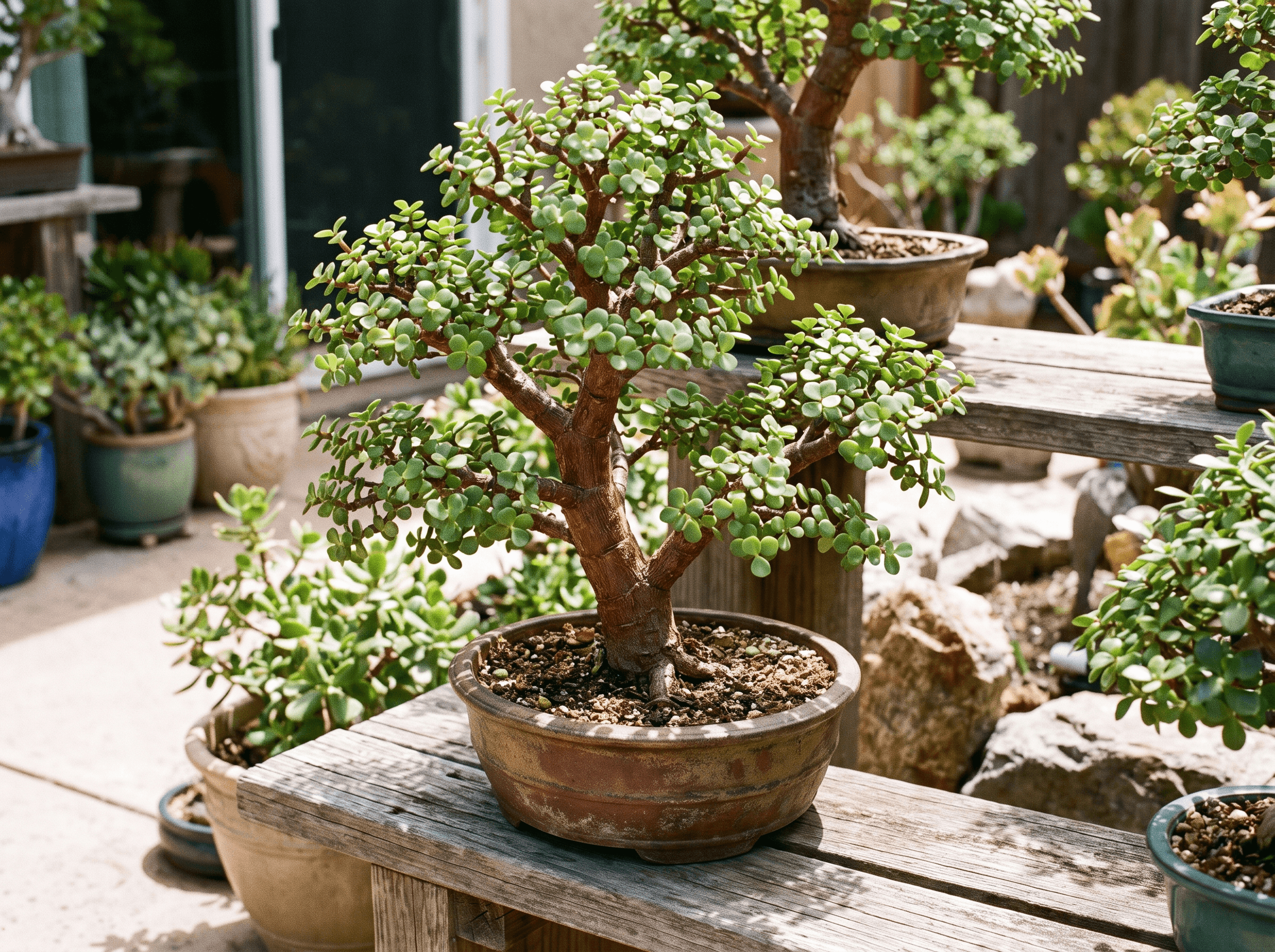
I lose count of how many people bring me a portulacaria and call it a jade plant. It's an easy mix-up, both are thick-stemmed succulents with small round leaves and a similar growth habit, but they're not even in the same family. True jade is Crassula ovata, native to South Africa like portulacaria, and the two get sold side by side often enough that the names have blurred together in a lot of people's minds. Portulacaria is the tougher of the two in almost every respect, and honestly the better choice for someone just starting out.
What sets it apart as bonsai material is the combination of vigour and scale. It grows faster than most succulent bonsai candidates, putting out new shoots readily through the warm months, and the small, round leaves reduce well with regular pruning, giving you a believably tree-like silhouette in a shorter time than many woody species allow. The wood itself is brittle once it hardens, and that's the one real caution with this plant: older branches tend to snap rather than bend, so wiring is best kept to young, still-soft growth, worked gently and checked often.
As a budget beginner bonsai it's hard to beat. Cuttings root readily, even a broken-off piece stuck in soil will usually take, so mistakes are rarely fatal to your investment the way they might be with a slower, more expensive species. It's genuinely drought-tolerant, more so than jade, and forgives an owner who forgets to water for a stretch far more readily than one who overwaters out of anxiety.
Care
Light
Portulacaria does well with bright light to full sun outdoors, provided it's given time to acclimate gradually rather than moved straight from a shaded or indoor spot into harsh midday sun. Some afternoon shade during the hottest part of the year helps prevent leaf scorch on a tree that hasn't fully adjusted yet. Indoors, or for plants that have spent most of their life in lower light, err toward bright but slightly less intense light and introduce stronger sun gradually; a south-facing windowsill works for indoor culture, though growth will be slower and leggier than what you'd get outdoors in full light.
Watering
Let the soil dry out fully between waterings, then water thoroughly. This is a true succulent and stores water in its stems and leaves, so it tolerates drought far better than it tolerates consistently wet roots. Overwatering, not underwatering, is the main way people kill this plant, soft, mushy stems and leaf drop are usually a sign of rot from soil that never gets the chance to dry out. In summer I water mine roughly once a week; in winter, especially if kept cooler, that can stretch to once every few weeks.
Temperature & hardiness
Portulacaria isn't frost-hardy and needs protection before temperatures reach freezing. It's happy outdoors through a Southern Italian spring, summer, and autumn, but bring it under cover, a bright, cool room or greenhouse, once nights start getting cold in late autumn and well before any frost risk. Unlike hardy conifers, this species doesn't need or benefit from a cold dormancy period, it's simply a warm-climate succulent that should be kept well clear of frost.
Soil & potting
Use a fast-draining, mineral-heavy mix, the same general approach you'd take for other succulents, with a higher proportion of pumice or coarse grit than you might use for a broadleaf tree. The priority is a substrate that never holds water for long, since root rot from wet soil is the single biggest threat to this plant's health. A standard bonsai soil blend with extra pumice worked in does the job well.
Fertilizing
Feed sparingly. Portulacaria doesn't need heavy fertilising to grow well, and overfeeding tends to produce soft, leggy growth with poor leaf reduction rather than the tight, compact habit you want for bonsai. A diluted balanced feed once a month during the growing season is plenty. Skip feeding through winter or whenever the plant is resting with reduced watering.
Pruning & wiring
Pinch and prune regularly through the growing season to keep the small round leaves tight and encourage the dense, twiggy branching that makes portulacaria look convincingly tree-like at a small scale. It backbuds readily after pruning, so don't be shy about cutting back. Wiring works better on this species than on true jade, Crassula ovata, but it's still worth going carefully: the wood stiffens and grows more prone to snapping once it's past the youngest, softest growth stage. I wire mostly new, pliable shoots, working the wire in stages and checking it regularly, rather than forcing a bend in one go or leaving wire on too long.
Repotting
Repot when the plant is visibly filling its container or the soil has broken down, roughly every two years for a younger, actively growing plant as a rough guide, less often as it matures, ideally in spring or early summer when temperatures are reliably warm. The roots are fairly forgiving of disturbance compared to more sensitive species, and because cuttings root so easily, any broken pieces from the process can simply be potted up as new material rather than thrown away. Water a little more cautiously than usual for the first several days after repotting while any damaged roots heal, rather than resuming a full watering routine immediately, though there's no need to hold off for weeks.
Common problems
Root rot from overwatering is by far the most common issue, showing up as soft, translucent, or blackened stems near the soil line and leaves that drop while still looking plump rather than shrivelled. The fix starts with checking the roots and cutting away anything mushy, then repotting into fresh, dry, fast-draining soil and watering far more conservatively going forward. Mealybugs occasionally settle into the leaf joints and stem crevices, showing up as small cottony white clusters, and are usually manageable with rubbing alcohol on a cotton swab for light infestations. Sunscorch can happen if a plant that's been kept indoors or in shade gets moved abruptly into full outdoor sun, showing up as pale or bleached patches on leaves that had no time to acclimate. And because the wood is brittle once it hardens, snapped branches from careless handling or wiring are a common, if minor, complaint, the good news being that broken pieces almost always root readily if you just pot them up.
Styling
Portulacaria's good vigour and good leaf reduction make it well suited to informal upright and multi-trunk styles, and it's also a popular choice for group plantings, where several cuttings of different thicknesses are grown together to mimic a small grove. Because the trunk and branches thicken readily with age, it can develop a convincingly gnarled, mature look faster than most woody species. Deadwood work isn't really practical here given how brittle and soft the wood is compared to a conifer, so styling energy is better spent on ramification and canopy shape than on jin or shari. It's also one of the easiest species to practice basic pruning and shaping technique on, since mistakes are cheap to recover from and cuttings are always available to start again.
Common questions
Is portulacaria the same as jade bonsai?
No, though they're commonly confused. True jade is Crassula ovata, while portulacaria is Portulacaria afra, a different genus entirely, even though both are South African succulents with similar thick stems and round leaves. Portulacaria is generally the faster grower and the more drought-tolerant of the two.
Why are my portulacaria's stems going soft and mushy?
That's almost always root rot from overwatering. This is a true succulent that wants to dry out fully between waterings, and soil that stays consistently wet suffocates and rots the roots. Check the roots, remove anything mushy, and repot into fresh, fast-draining soil while cutting back on watering frequency.
How often should I water a portulacaria bonsai?
Let the soil dry out completely, then water thoroughly. In summer that's often around once a week, stretching to once every few weeks in cooler months or lower light. When unsure, wait longer rather than watering again too soon, this plant tolerates drought far better than wet roots.
Can I wire a portulacaria bonsai?
Yes, more readily than true jade, Crassula ovata, which is one advantage portulacaria has as bonsai material. It's still best done mainly on young, still-soft growth, since the wood stiffens and becomes more prone to snapping as it matures. Work shoots gently and in stages rather than forcing a bend all at once, and check the wire regularly.
Is portulacaria a good bonsai for beginners?
Yes, genuinely one of the best. It's tough, grows readily, tolerates drought and beginner mistakes well, and propagates so easily from cuttings that even broken branches usually root if you pot them up. It's also inexpensive compared to most other bonsai material, which makes it a low-risk way to learn technique.
Can portulacaria bonsai survive outdoors in winter?
Not through frost. It isn't frost-hardy and needs to come under cover before temperatures approach freezing. Through a Southern Italian spring, summer, and autumn it's happy outdoors in bright light to full sun, but treat it as a warm-climate plant that needs winter protection.
Why is my portulacaria growing leggy with widely spaced leaves?
That's usually insufficient light. In low light the plant stretches out looking for more sun, producing longer internodes and sparser foliage instead of the tight, compact growth you get outdoors in full sun. Move it to a brighter spot gradually and prune back the leggy growth to encourage denser branching.
You might also like
General guidance based on 20+ years of practice. Every tree and every climate is different — when in doubt, ask us.