
Camellia Bonsai Care
Camellia japonica and Camellia sinensis
A camellia in full flower during the dead of winter is one of the few genuine surprises a bonsai collection can offer, but getting there means treating the soil chemistry and the flowering tree with real care through the months leading up to bloom.
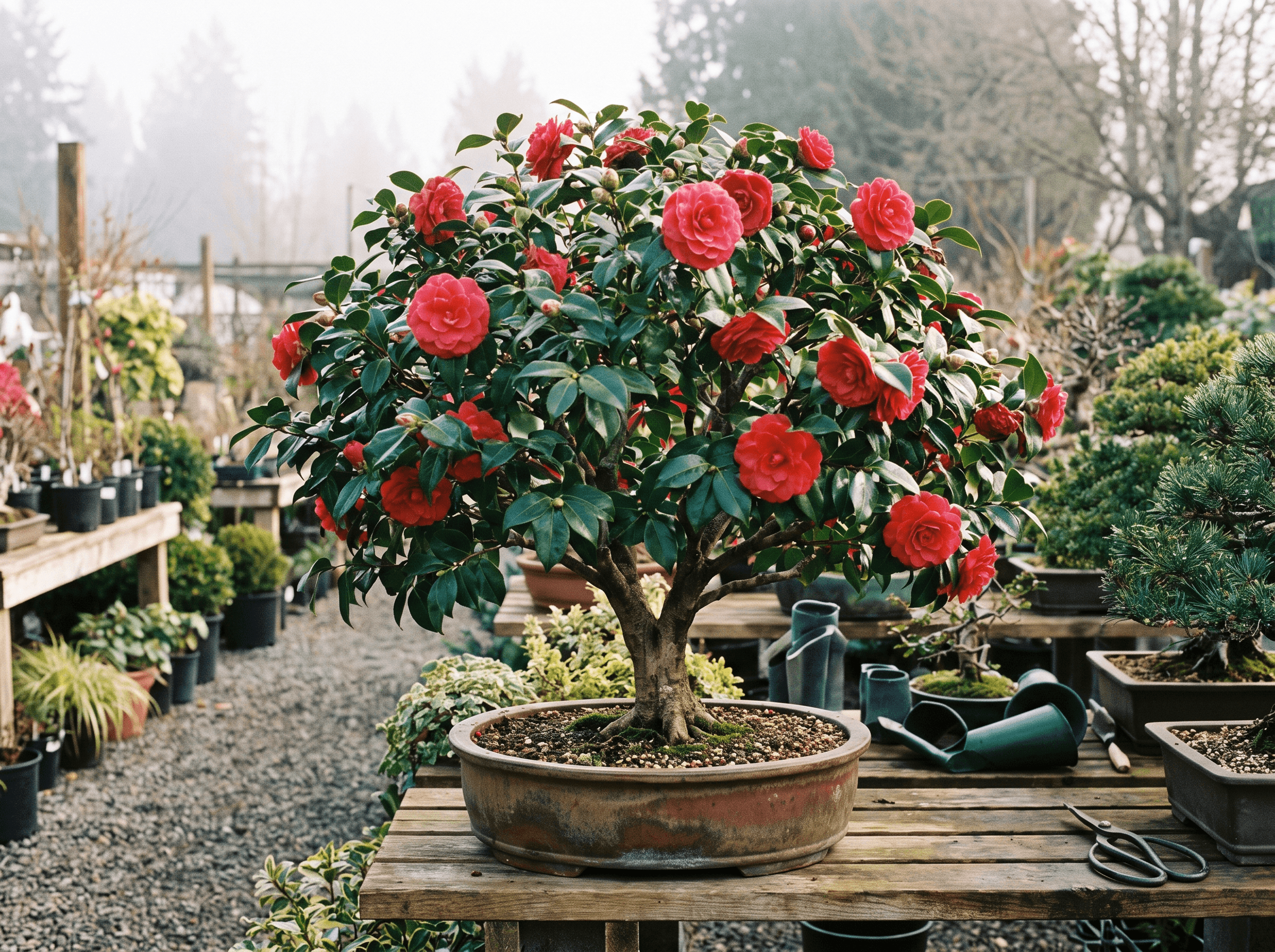
Camellia earns its place in a collection for one reason above all others: it flowers when almost nothing else does, through winter and into early spring, with glossy, dark evergreen foliage that looks good the rest of the year too. That combination, flowers in the cold months and attractive foliage year-round, is genuinely rare among bonsai species, and it's why growers put up with camellia's particular demands rather than dismissing it as too fussy.
The demand people underestimate most is soil chemistry. Camellia wants acidic conditions similar to azalea, and it reacts badly to alkaline or lime-heavy water, developing yellowing between the leaf veins, a condition called chlorosis, that doesn't respond to more water or more fertiliser because the underlying problem is pH, not nutrition. If your tap water is hard or alkaline, which is common across a lot of Southern Italy, this is the single detail that will make or break long-term success with camellia far more than anything else on this page.
The other thing to know going in is how sensitive the flower buds are to stress. Camellia sets its buds well ahead of the actual bloom, often months in advance, and the clearest triggers for bud drop are letting the soil dry out at the wrong time, feeding too late or too heavily as buds are forming, and exposing the tree to hard frost or very low winter temperatures. Moving the tree or exposing it to harsh wind while it's carrying buds can add to that stress too, even if they're secondary factors rather than the main cause. It's not a fragile tree in general, established camellias are reasonably tough, but the flowering window specifically calls for a lighter touch and more stability than most other times of year.
Care
Light
Bright light with some direct morning sun suits camellia well, but it dislikes hot, direct afternoon sun, which can scorch the glossy leaves and dry the tree out faster than it wants, particularly in a hot Southern Italian summer. A spot with morning sun and afternoon shade, or dappled light through the hottest part of the day, tends to produce better foliage colour and fewer stress-related problems than full, unbroken sun exposure.
Watering
Keep the soil evenly moist, camellia doesn't want to dry out fully, especially while it's setting or carrying flower buds, but it also doesn't want waterlogged roots. Use rainwater or another lime-free source whenever you can manage it, since hard tap water gradually pushes the soil pH away from the acidic range this tree needs, contributing to the yellowing chlorosis that's such a common complaint with this species. Where rainwater isn't practical, occasional watering with a diluted acidifying feed helps offset the effect of hard water over time.
Temperature & hardiness
Camellia japonica is only moderately frost-hardy as a potted bonsai, even where the same species would tolerate more planted in open ground, since roots and flower buds in a shallow container are more exposed than roots in the soil. Many growers overwinter camellia bonsai in a cold frame, unheated greenhouse, or other sheltered, frost-free spot rather than leaving it fully exposed, particularly while it's in bud or flower over winter, since cold wind on top of freezing temperatures is more damaging than the cold alone. Camellia sinensis, the tea plant, is worth giving that same level of winter protection rather than assuming it needs less. Either way, avoid placing the tree somewhere it gets blasted by dry winter wind, which stresses both the buds and the evergreen foliage.
Soil & potting
Use an acidic, ericaceous mix, similar to what you'd use for azalea, kanuma soil is a common and reliable choice, sometimes blended with a smaller proportion of akadama for structure. Avoid any soil component with lime or alkaline mineral content, and avoid top-dressing with anything that might raise pH over time. This detail matters more for camellia than for almost any other species covered here; get the soil chemistry wrong and no amount of otherwise good care will prevent chlorosis and gradual decline.
Fertilizing
Feed with an acidifying fertiliser formulated for ericaceous plants through the growing season, tapering off as flower buds begin forming so you don't push a flush of soft new growth right when the tree should be directing energy into those buds. A standard balanced fertiliser, especially one on the alkaline side, works against you here by nudging the soil pH in the wrong direction over repeated applications, so an azalea or camellia specific feed is worth seeking out rather than substituting something generic.
Pruning & wiring
Prune for structure right after flowering finishes in spring, giving the tree the rest of the growing season to recover and set the next round of buds without disruption. Avoid major pruning or wiring work in autumn and winter while buds are forming and maturing, since that's exactly the stress window where bud drop happens most easily. Camellia's wood is reasonably workable for wiring on younger growth, though I'd still time any significant structural work around the flowering cycle rather than doing it whenever happens to be convenient.
Repotting
Repot every two to three years for an established tree, in early spring right after flowering has finished, which gives camellia the longest possible stretch of the growing season to recover before it starts setting next winter's buds again. Use fresh ericaceous mix at every repot rather than reusing old soil; refreshing the substrate is good general practice, and it's an extra precaution worth taking for a species this sensitive to soil chemistry. Keep the tree sheltered and consistently watered for several weeks afterward; some leaf or bud drop can happen as a stress response even with careful handling, so don't panic over a little of it as long as the tree otherwise looks healthy.
Common problems
Chlorosis, yellowing between the leaf veins while the veins themselves stay green, is the single most common complaint with camellia, and it's most often a pH problem, caused by alkaline tap water or the wrong soil gradually pushing conditions away from the acidic range this tree needs, though root problems can occasionally produce similar-looking yellowing, so check the roots if a pH fix doesn't help. Switching to rainwater and refreshing the soil with a proper ericaceous mix usually resolves the pH-driven version over a season or two. Bud drop before flowering is the other frequent frustration, most often linked to letting the soil dry out at the wrong time, feeding too late or too heavily as buds are forming, or exposure to hard frost and very low winter temperatures, with moving the tree or harsh wind adding further stress on top of those. Scale insects and sooty mould sometimes appear together, the scale insects excreting a sticky residue that sooty mould then grows on, both usually manageable by treating the scale directly and improving airflow around the foliage. Sunscorch from hot afternoon sun is also common enough to watch for, showing up as dry, brown patches on otherwise healthy-looking leaves.
Styling
Camellia's naturally elegant branch structure and glossy foliage suit informal upright and slanting styles well, and because the flowers are the centrepiece of this tree's appeal, styling decisions are usually made with an eye toward showing off the winter bloom rather than emphasising trunk drama or deadwood, which this species doesn't really lend itself to. Careful attention to branch placement pays off specifically because bare structure is visible and important through the flowering season before the tree pushes its spring flush of new leaves. Many growers keep camellia styling relatively restrained and classical, letting the seasonal contrast between winter flowers and glossy summer foliage carry the tree's visual interest rather than an aggressive or unusual silhouette.
Common questions
Why are my camellia bonsai's leaves turning yellow?
This is most often chlorosis caused by alkaline water or soil that isn't acidic enough. Camellia needs ericaceous, acidic conditions similar to azalea, and hard tap water gradually pushes the soil pH in the wrong direction. Switch to rainwater where possible and refresh the soil with a proper acidic mix like kanuma. If that doesn't resolve it, check the roots, since root problems can occasionally cause similar-looking yellowing.
Why did my camellia bonsai drop its flower buds before opening?
Bud drop is usually a stress response, most often linked to letting the soil dry out at the wrong time, feeding too late or too heavily as buds are forming, or exposure to hard frost and very low winter temperatures. Moving the tree or exposing it to harsh wind while buds are developing can add to that stress too. Camellia sets buds well ahead of flowering, so stability during that window matters more than almost any other single factor.
What kind of soil does camellia bonsai need?
An acidic, ericaceous mix, similar to what azaleas need. Kanuma soil is a common, reliable choice. Avoid any soil component with lime or alkaline mineral content, since getting this wrong leads to chlorosis and gradual decline regardless of how well you manage watering and light.
When should I prune a camellia bonsai?
Right after flowering finishes in spring, which gives the tree the rest of the growing season to recover and set next winter's buds without disruption. Avoid major pruning in autumn and winter while buds are forming, since that's the stress window most likely to cause bud drop.
Can camellia bonsai survive outdoors in winter?
As a potted bonsai, camellia japonica is only moderately frost-hardy, even though the same species is tougher planted in open ground, so many growers overwinter it in a cold frame, unheated greenhouse, or other sheltered, frost-free spot rather than leaving it fully exposed, especially while it's carrying flower buds. Camellia sinensis, the tea plant, is worth giving the same level of protection rather than assuming it needs less.
Why is my camellia bonsai not flowering?
Stress during bud formation is the usual cause, whether from dry soil at the wrong time, low winter temperatures and frost, or moving the tree and harsh wind exposure. Overfeeding with a high-nitrogen fertiliser right as buds should be forming can also push leafy growth at the expense of flowers.
Can I use regular tap water on a camellia bonsai?
It depends on your water. Hard or alkaline tap water, common across a lot of Southern Italy, gradually raises soil pH away from the acidic range camellia needs, leading to chlorosis over time. Rainwater is the safest option, and an occasional acidifying feed helps offset hard water where rainwater isn't practical.
You might also like
General guidance based on 20+ years of practice. Every tree and every climate is different — when in doubt, ask us.