
Hinoki Cypress Bonsai Care
Chamaecyparis obtusa
Hinoki cypress is the conifer I reach for when someone wants that classic, refined Japanese-garden look, but it asks for more even moisture and patience than the junipers most people start with.
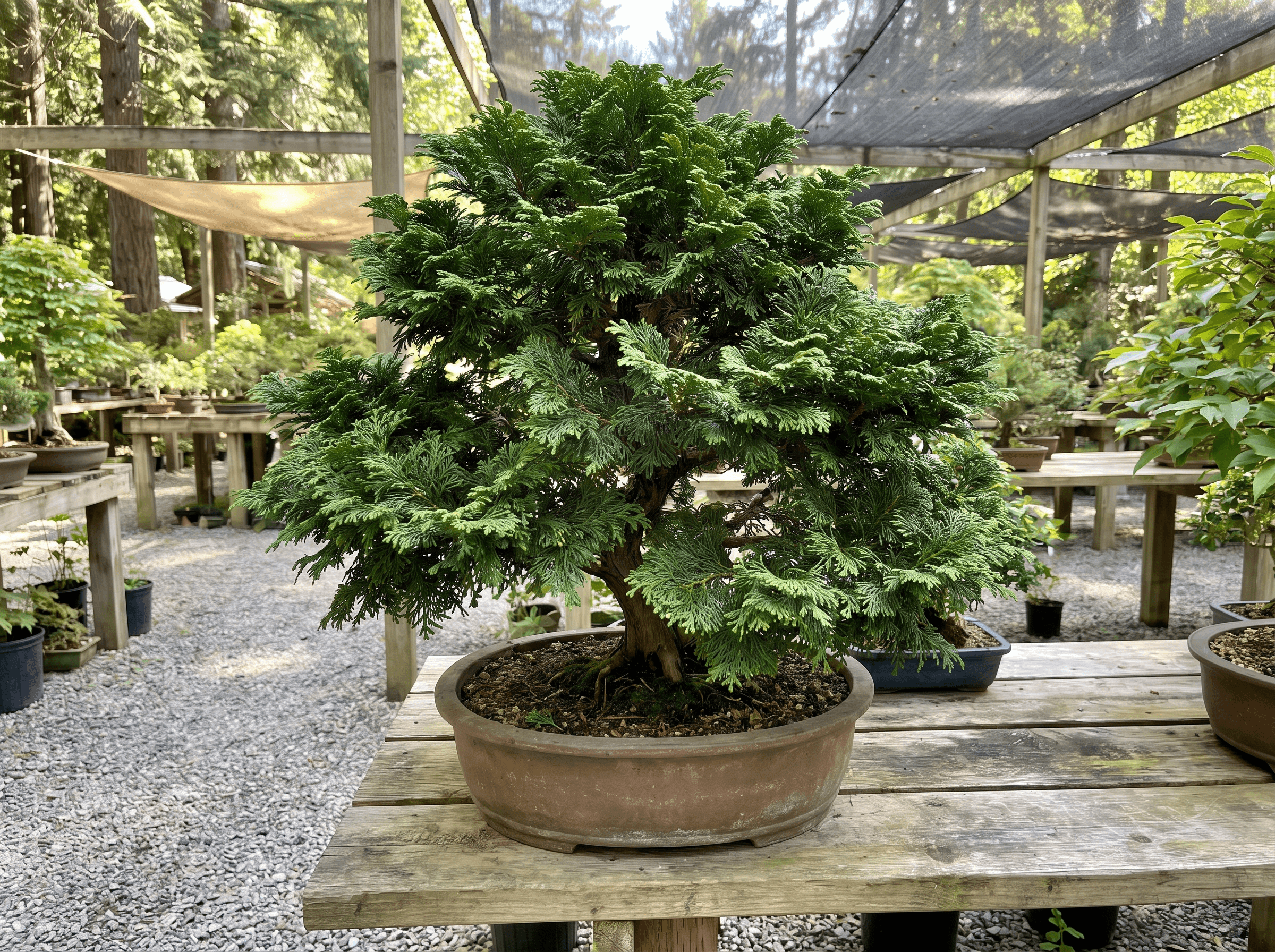
If you've ever looked at photographs of old Japanese temple gardens, you've seen hinoki cypress, its flat, glossy sprays of scale foliage arranged in distinctive fan shapes are one of the most recognisable conifer silhouettes there is. It's a genuinely classic bonsai species, used for centuries in Japan, and it brings a softer, more layered texture to a collection than the sharper look of most junipers or pines. What it doesn't bring is speed. Hinoki grows noticeably slower than juniper, and anyone expecting quick results from aggressive pruning or wiring is going to be disappointed.
The bigger misconception, though, is treating it like other conifers when it comes to watering. Many conifers used in bonsai lean toward drought tolerance and punish overwatering more than underwatering. Hinoki cypress is more moisture-sensitive than most of them, juniper especially. It prefers even, consistent moisture and genuinely dislikes drying out, and it also dislikes hot, dry wind, which browns the fine foliage tips faster than almost anything else affects this tree. I've seen more hinoki damaged by a single dry, windy afternoon than by months of routine care mistakes.
It's an outdoor tree, hardy and capable of handling real cold, but it wants a spot with some shelter from harsh drying wind and, ideally, a bit of relief from the most brutal midday sun in peak summer. Give it that kind of protected position and consistent moisture, and it's a genuinely long-lived, rewarding tree that develops real depth and character over the years, just on its own slower timeline.
Care
Light
Full sun is the standard recommendation for hinoki cypress through the growing season, and that's the right default for most climates. In a genuinely hot Southern climate, some protection from the harshest midday sun during peak summer heat can help prevent the fine foliage from stressing, a position with morning sun and afternoon relief is a reasonable adjustment there, but don't read that as hinoki wanting less light than juniper across the board; it's a climate-dependent tweak rather than a general rule.
Watering
Keep the soil evenly moist and avoid letting it dry out fully between waterings, this is the detail that trips people up most, since general conifer care advice often leans toward drought tolerance and hinoki is more moisture-sensitive than that pattern suggests. Water thoroughly and check more often than you would a juniper or pine in the same conditions. That said, the soil still needs to drain well; consistent moisture doesn't mean waterlogged, it means never going bone dry for extended periods, especially in hot or windy weather.
Temperature & hardiness
Hinoki cypress is a genuinely hardy conifer and handles ordinary winter cold well when grown outdoors year-round, similar to juniper in that respect, but it does appreciate shelter from hard, strong frost and icy winter winds rather than being left fully exposed to the worst of the season. It's also sensitive to hot, dry wind in summer, which browns foliage tips faster than cold ever does. A position with some shelter from strong prevailing wind, both summer and winter, protects the tree well. Protect the pot itself during unusually hard freezes, since shallow bonsai containers expose roots more than open ground.
Soil & potting
Use a well-draining bonsai substrate, akadama with pumice and lava rock in roughly even proportions works well, but lean slightly toward the moisture-retentive side compared to what you'd use for juniper, since this species doesn't want to dry out between waterings the way more drought-tolerant conifers do. Good drainage is still important to avoid root rot, the goal is a mix that holds moisture evenly without ever staying saturated.
Fertilizing
Feed through the growing season, spring into early autumn, with a balanced fertiliser at a moderate rate, tapering off as autumn growth slows and stopping through winter dormancy. Hinoki is a slower grower than juniper, so it doesn't need or particularly benefit from heavy feeding, consistent light applications every few weeks through the growing season suit it better than infrequent heavy doses.
Pruning & wiring
Work with the fan-shaped sprays rather than against them: trim and pinch the growing tips selectively within each foliage pad to maintain the layered, cloud-like structure this species is known for, rather than shearing broadly across the surface, which tends to brown cut edges, block interior light, and disrupt the fan shape. Wiring works well on hinoki and it holds a set position reliably once shaped, similar to juniper in that regard, though because growth is slower, structural changes take longer to settle in and lignify. Check wire regularly since a branch left wired too long can scar, and the fine foliage makes it harder to spot early signs of wire cutting into bark than it is on a bare-branched deciduous tree.
Repotting
Repot every two to three years for a younger tree, extending to four or five years as it matures and growth slows further, in early spring before the new growing season gets underway. Hinoki tolerates reasonably thorough root pruning at repotting, similar to juniper, though I still work it a touch more carefully given its fine root structure, and keep the newly repotted tree in a sheltered, slightly shaded spot with even moisture for the first few weeks rather than exposing it immediately to full sun and wind.
Common problems
Browning foliage tips are the complaint I hear most often with hinoki cypress, and hot, dry wind is usually the culprit rather than disease, especially after a stretch of hot weather without adequate shelter or consistent watering. Because this species wants more even moisture than most conifers, letting it dry out fully even once or twice can trigger the same kind of tip browning, which makes diagnosis tricky since both wind damage and drought stress look similar at first. Root rot from consistently waterlogged, poorly draining soil is the other major risk, showing up as dieback in whole foliage sprays rather than just tip browning. Scale insects occasionally settle into the dense foliage pads and can be hard to spot early given how tightly packed the growth is, so it's worth parting the foliage occasionally to check the inner branches on a tree that seems to be declining without an obvious cause.
Styling
Hinoki cypress is a classic choice for formal and informal upright styles, and its naturally layered, fan-shaped foliage pads lend themselves to the kind of clearly defined, cloud-like canopy structure associated with traditional Japanese bonsai. Group and forest plantings work particularly well with this species too, since multiple hinoki of varying heights recreate the layered look of a natural cypress stand convincingly. It tolerates wiring well enough for more dramatic trunk movement if you want it, but I find most growers lean toward calmer, more restrained silhouettes with this tree, letting the texture and structure of the foliage pads do the visual work rather than an aggressive or twisted trunk line. Deadwood techniques are used occasionally but far less than with juniper, this species reads as more refined than rugged.
Common questions
Why are the tips of my hinoki cypress turning brown?
Hot, dry wind is the most common cause, this species is far more sensitive to it than juniper or pine. Letting the soil dry out fully can produce similar tip browning, since hinoki wants consistently even moisture rather than drought tolerance. Check both wind exposure and your watering routine before assuming disease.
Does hinoki cypress need more water than juniper bonsai?
Yes, meaningfully more. Many conifers used in bonsai lean drought-tolerant, but hinoki cypress prefers even, consistent soil moisture and dislikes drying out between waterings. It still needs good drainage to avoid root rot, but the soil should rarely be allowed to go fully dry the way you might let a juniper's soil dry.
How fast does hinoki cypress grow as bonsai?
Slower than juniper, noticeably so. That makes it a more patient project: structural changes from wiring or pruning take longer to settle and lignify, and overall development happens on a longer timeline. It's not a species to choose if you want quick visible results from aggressive work.
Can hinoki cypress bonsai stay outdoors in winter?
Yes, it's a genuinely hardy conifer and handles ordinary cold well when grown outdoors year-round. It does appreciate shelter from hard, strong frost and icy winter wind rather than being left fully exposed, and the pot needs protection during unusually severe freezes since bonsai containers expose roots more than open ground. No special indoor overwintering is needed for normal winter conditions, just a sheltered outdoor spot.
Why does my hinoki cypress look thin and sparse?
Check wind exposure and sun intensity first, both hot dry wind and very harsh full-day summer sun can stress the foliage and thin it out over time in a hot climate. A position with some shelter and light afternoon relief in peak summer usually produces denser, healthier foliage there, though full sun is the right default in most other climates.
How do I prune hinoki cypress correctly?
Trim and pinch new growth selectively within the fan-shaped foliage pads rather than shearing broadly across the surface, which browns cut edges, blocks interior light, and disrupts the natural layered structure this species is known for. Work with the fan shapes the tree naturally produces rather than forcing a different silhouette onto them.
Is hinoki cypress a good beginner bonsai?
It's manageable but not the easiest starting point, mainly because its watering needs run opposite to what beginners usually learn from juniper or pine care advice. If you can commit to checking soil moisture consistently and sheltering it from harsh wind, it's a rewarding, long-lived species to grow.
You might also like
General guidance based on 20+ years of practice. Every tree and every climate is different — when in doubt, ask us.