
Star Jasmine Bonsai Care
Trachelospermum jasminoides
Star jasmine as bonsai is really an exercise in constant redirection: the plant wants to climb and twine, not sit still in a tree shape, and the whole craft here is convincing it otherwise, season after season.
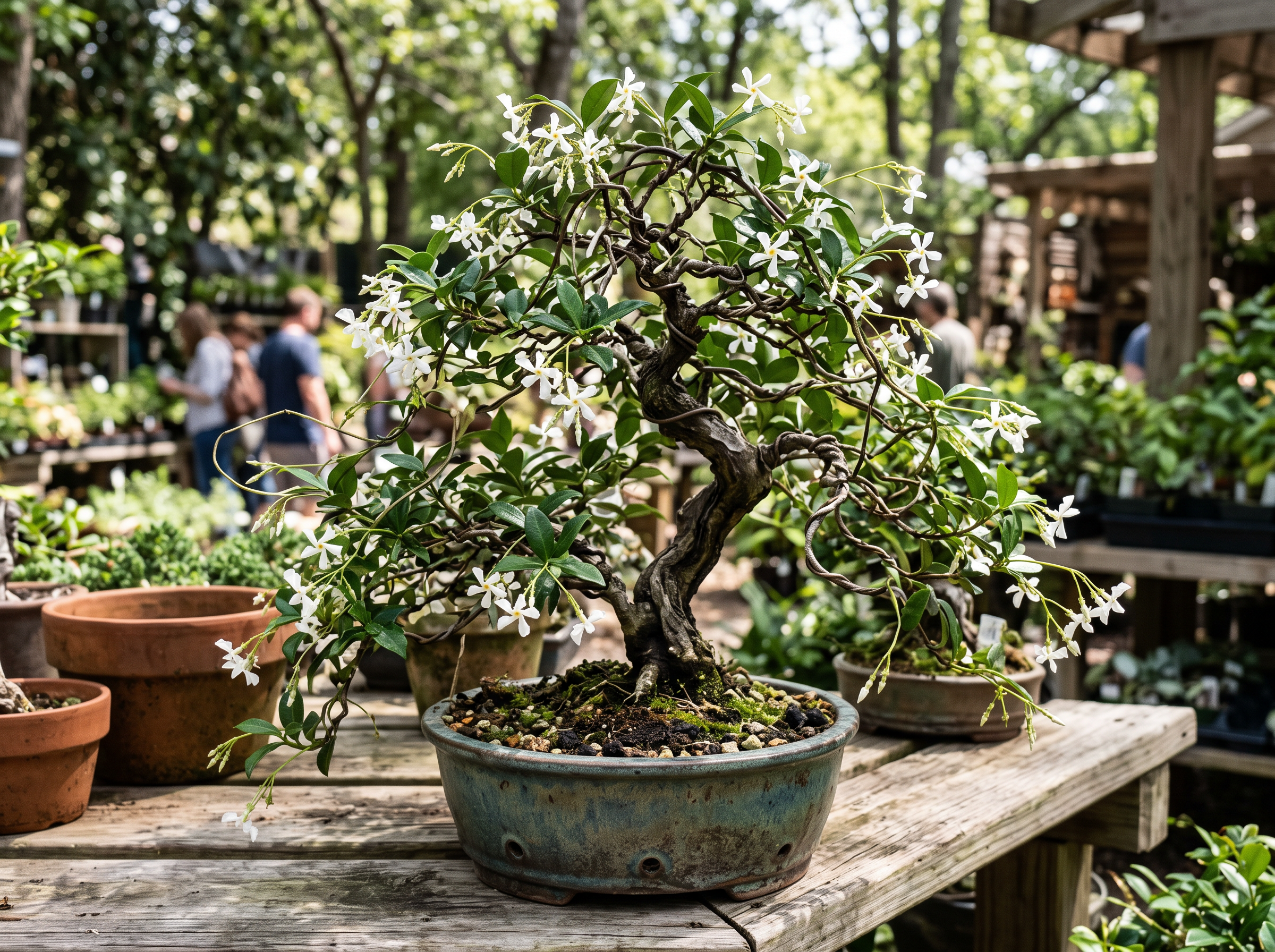
In gardens across the Mediterranean, star jasmine grows as a vigorous twining climber, scrambling over walls and pergolas and filling the air with a genuinely strong, sweet fragrance from its small white star-shaped flowers each early summer. None of that climbing instinct disappears when you put a cutting or a piece of nursery stock into a bonsai pot. The plant still wants to twine and reach, and left unpruned for even a few weeks it will throw out long, wandering shoots that undo whatever shape you'd built.
That's not a reason to avoid the species, it's just the defining fact you need to plan around, at least in a bonsai pot. In garden cultivation star jasmine is actually considered a fairly modest grower that usually needs only light, occasional pruning, but a shallow container concentrates that twining habit into a much smaller space, so growers here tend to find it wants more frequent shaping than the plant's reputation in open ground would suggest. It rewards the effort with genuinely fragrant flowers and glossy foliage that takes on a reddish tinge in cool weather, a nice seasonal detail that adds interest even outside the bloom period. It's also relatively easy to propagate from cuttings, so building up a stock of material to work with isn't difficult.
The other thing to know is that in the ground this is a fairly hardy plant, rated hardy through most of the UK and similar mild-temperate climates, roughly down to -10°C to -5°C, provided it has shelter from cold wind. A bonsai kept in a shallow pot is a different matter, since the roots have far less insulation than a vine planted in open ground, so container-grown star jasmine should be treated as more cold-sensitive than the same species growing against a wall. In much of Southern Italy it can often stay outdoors year-round in a sheltered spot, but in colder regions or during a harder winter, it's common practice to bring the pot under cover for protection until the risk of hard frost passes.
Care
Light
Full sun to bright light produces the best flowering and the densest growth. Star jasmine tolerates partial shade without dying, but flower production drops off noticeably and the twining growth tends to stretch out looking for more light rather than staying compact. Outdoors in a sunny, sheltered spot through the growing season is ideal, and it benefits from good airflow around the foliage as well, given its dense, vining habit.
Watering
Water when the top of the soil starts to dry, then water thoroughly, keeping the soil evenly moist through the growing season without letting it stay waterlogged. Star jasmine isn't as drought-tolerant as a succulent or a hardy conifer, but it's not particularly fussy either, consistent moisture during active growth and a slightly drier regime through the cooler months when growth slows suits it well.
Temperature & hardiness
In the ground, star jasmine is rated fairly hardy in mild-temperate climates, roughly down to -10°C to -5°C, provided it has shelter from cold wind. A bonsai kept in a shallow pot doesn't get that same insulation from the ground, so treat a container-grown tree as noticeably more cold-sensitive than an in-ground vine and protect it earlier in the season. In much of Southern Italy it can remain outdoors year-round in a sheltered position, but in regions with harder winters, or during an unusually cold snap, it's common to move it under cover, an unheated greenhouse or bright cool room, until the risk of hard frost passes. Cold, especially combined with wind, will damage foliage and can kill back branches on a tree left fully exposed through a severe winter.
Soil & potting
A standard well-draining bonsai mix works well, akadama with pumice and a smaller portion of lava rock, or a similar coarse, mineral-heavy local equivalent. Star jasmine isn't especially demanding about soil composition, but drainage matters given how vigorously and continuously it grows through the warm season, roots sitting in slow-draining, saturated soil are more prone to rot than roots in a well-aerated mix.
Fertilizing
Feed regularly through the growing season with a balanced fertiliser to support steady growth and flowering, tapering off through autumn and stopping through winter, particularly if the tree is being kept cooler and more dormant over that period. Growers sometimes switch to a feed with a little less nitrogen as flowering approaches in late spring on the theory that it favours buds over vine growth, but treat that as a common practice rather than a rule, a balanced feed applied consistently is the more solidly supported approach.
Pruning & wiring
In open ground star jasmine isn't rated a particularly vigorous grower and often needs only light, occasional trimming. In a bonsai pot, though, growers here generally find its twining habit still wants more frequent attention than a naturally tree-shaped species, since even modest new growth can undo a carefully built silhouette if it's left to wander for a few weeks. Pinch and trim new shoots through the growing season to keep the canopy dense and in proportion. Many growers report the tree responding well to a fairly hard cutback, with fresh growth returning from older wood, but that's grower experience rather than a documented guarantee, so it's worth testing cautiously on a less critical branch before committing on a prized specimen. Wiring works on younger, more pliable growth to help direct branches into a tree-like structure rather than letting them twine and wander, though because the plant wants to climb, you'll likely be doing more redirection-style pruning here than on a species with a naturally tree-like growth habit.
Repotting
Repot when the roots have filled the pot rather than on a fixed schedule, generally around every two years for a younger plant and less often as it matures and root growth slows, ideally in spring as new growth begins. Star jasmine handles root work reasonably well, and because it propagates so easily from cuttings, any trimmed root or branch material can often be used to start new plants rather than discarded. Keep the tree sheltered and slightly shaded with even watering for a couple of weeks after repotting.
Common problems
The most common frustration with star jasmine in a bonsai pot is the plant reaching beyond its intended shape between pruning sessions, long wandering shoots reaching out from an otherwise tidy canopy are a sign it's been a while since the last trim rather than a health problem. Cold or wind damage is a real risk for a container-grown tree, showing up as blackened, dead foliage or dieback on exposed branches after a hard winter, particularly on a tree that wasn't given any shelter. Cushion scale, mealybugs, and red spider mite are the pests most often documented on this species, particularly under glass or in a warm, still spot, so it's worth checking the undersides of leaves and along stems periodically. Aphids and root rot from a consistently wet, poorly draining mix can also turn up from time to time, though these are worth watching for as occasional possibilities rather than treating them as this species' defining weakness.
Styling
Because star jasmine's natural habit is to climb and twine rather than grow as a self-supporting tree, informal upright and cascade styles tend to work with the plant's tendencies rather than against them, letting some of that natural trailing, reaching character show through in the branch lines. It's also a strong candidate for training over rock or around a support structure in the early stages of development, using the plant's climbing instinct deliberately before gradually converting it toward a more conventional tree silhouette as the trunk and branches thicken and stiffen with age. The fragrant flowers and the reddish winter foliage tinge both add seasonal interest, so many growers style with an eye toward showing off blossom coverage in early summer rather than pursuing a dramatic or heavily aged trunk line, which isn't really this species' strength.
Common questions
Why does my star jasmine bonsai keep sending out long shoots?
That's just its natural twining, climbing habit reasserting itself, not a sign of a problem. Star jasmine wants to climb and reach, and it needs regular, frequent pruning throughout the growing season to hold a compact tree-like shape. Left even a few weeks, it will send out long wandering growth.
Is star jasmine bonsai frost hardy?
In the ground it's rated fairly hardy in mild-temperate climates, roughly down to -10°C to -5°C with shelter from wind. A bonsai in a shallow pot has far less root insulation than an in-ground vine, though, so treat a container-grown tree as more cold-sensitive. In much of Southern Italy it can stay outdoors year-round in a sheltered spot, but in colder regions or during a hard winter it benefits from protection under cover until the risk of frost passes.
When does star jasmine bonsai flower?
Early summer, producing small, fragrant, white star-shaped flowers that are genuinely strongly scented for the flower size. Full sun and a bloom-supporting feed as flowering season approaches both help maximise the display.
Why are my star jasmine's leaves turning red?
That's a normal seasonal response to cool weather, not a sign of stress or disease. The glossy leaves often take on a reddish tinge through autumn and winter, adding an extra bit of seasonal interest to the tree outside its early summer flowering period.
How often should I prune a star jasmine bonsai?
Regularly through the growing season. In open ground this species isn't considered especially vigorous, but in a shallow bonsai pot its twining habit tends to need more frequent attention than a naturally tree-shaped species. Pinch and trim new shoots often rather than waiting for occasional larger sessions, and many growers find it responds well to a fairly hard cutback, though treat that as grower experience rather than a guarantee and test it cautiously on a less critical branch first.
Can star jasmine bonsai be kept indoors?
It's better suited to being an outdoor tree brought under cover for winter protection in colder climates rather than a full-time indoor plant. It wants strong light and good airflow to flower and grow well, conditions that are hard to replicate consistently indoors long-term.
You might also like
General guidance based on 20+ years of practice. Every tree and every climate is different — when in doubt, ask us.