
Lonicera Bonsai Care
Lonicera nitida (boxleaf honeysuckle)
Lonicera is the bonsai equivalent of a hedge that never stops trying to become a hedge again, which sounds like a complaint but is actually what makes it such forgiving material for anyone still learning to prune with confidence.
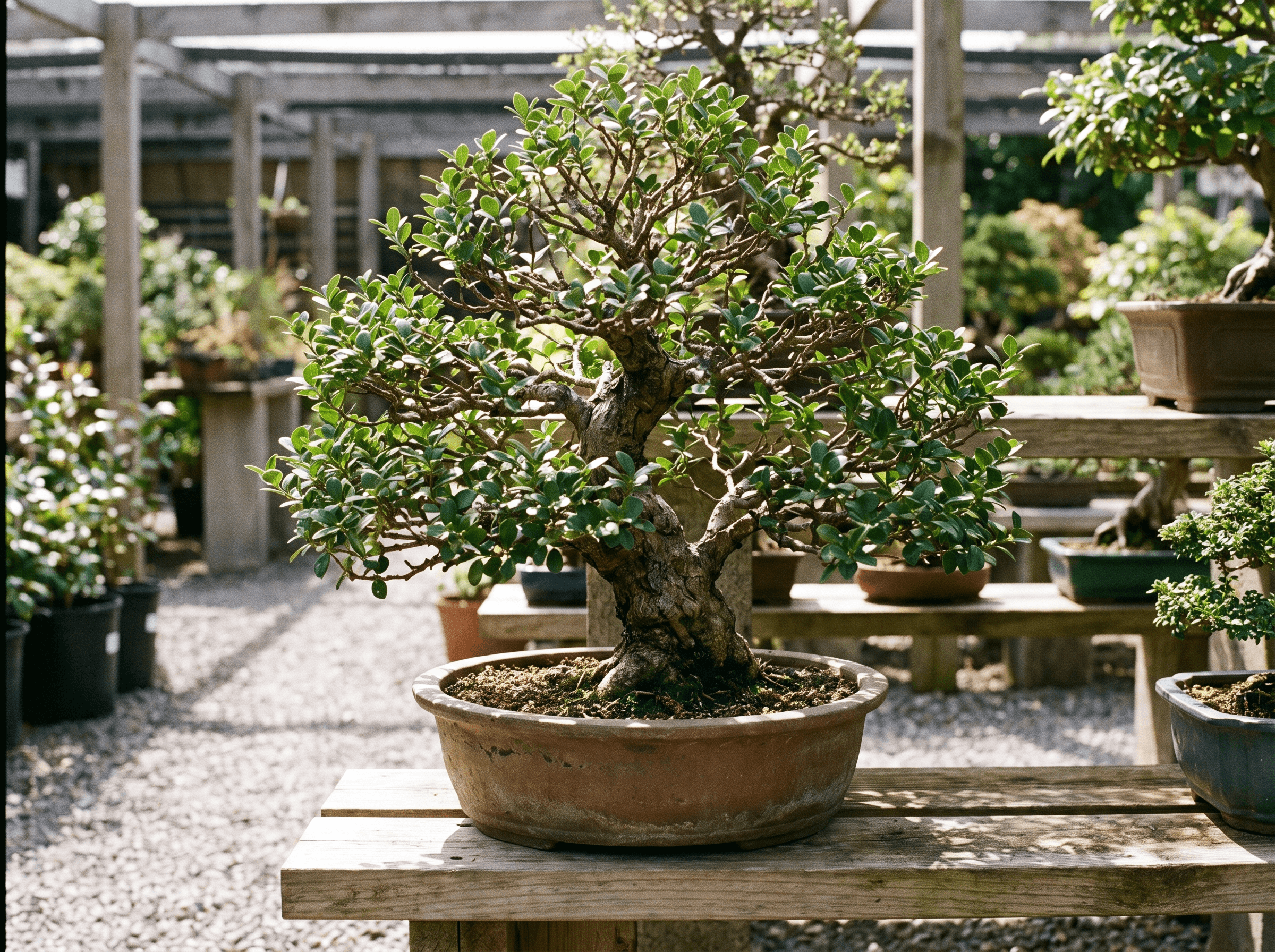
I keep a couple of lonicera around the nursery mostly as teaching trees, the ones I hand to someone nervous about cutting into a trunk for the first time. Lonicera nitida, boxleaf honeysuckle, grows so fast and responds so well to hard pruning that it's genuinely difficult to kill through overzealous cutting, which is exactly the confidence a beginner needs. Its small, glossy, dark green leaves reduce well and give a dense, fine-twigged look with relatively little specialized technique, unlike species where leaf reduction takes years of careful defoliation work.
The tradeoff for that vigour is maintenance frequency. A lonicera left untrimmed for a few weeks in late spring or summer will throw long, whippy new shoots that undo whatever silhouette you'd built, and the tree can look shaggy again within a month of a nice clean trim. This isn't a flaw exactly, it's just what fast growth means in practice, and it's worth knowing before you bring one home expecting the low-maintenance experience some people assume from a small-leaved shrub.
It's outdoor hardy in most temperate climates and doesn't ask for anything unusual in terms of siting, which is part of why it turns up so often as cheap, forgiving material at garden centres and in beginner bonsai kits. The honest way to think about lonicera is as a species that teaches technique quickly because you get to practice it constantly, not as a rare or precious specimen tree, though a well-developed older one with a thick trunk and dense ramification can absolutely hold its own next to more traditional species.
Care
Light
Full sun to light partial shade. Lonicera tolerates a fairly wide range of light conditions and will grow in less-than-ideal spots, but full sun keeps the internodes shorter and the foliage denser, which matters a lot for a species you're relying on fine ramification from. In deep shade it stretches, with longer gaps between leaves and a leggier overall look that takes more pruning to correct than it would have taken to just give the tree better light in the first place.
Watering
Water when the topsoil starts to dry and then water thoroughly. Lonicera isn't especially fussy about watering compared to fussier broadleaf species, but its fast growth rate means it also uses water quickly during the growing season, so don't let a vigorously growing tree in a small pot dry out completely in summer heat. I check mine more often than the slower conifers on the same bench purely because the fast top growth demands more from the roots to sustain it.
Temperature & hardiness
Hardy outdoors through most temperate climates, tolerating a real frost without much trouble in general. That said, a bonsai in a shallow pot is more exposed to cold than the same plant growing in open ground, and harder frosts, roughly below minus 5 Celsius, can cause foliage loss on a potted lonicera, so some shelter or frost protection during the coldest snaps is a sensible precaution rather than unnecessary fuss. It isn't particularly fussy about heat either, which is part of what makes it such an easygoing outdoor tree across a wide range of Italian climates, from cooler inland areas to milder coastal ones.
Soil & potting
A standard free-draining bonsai mix, akadama, pumice, and lava or a comparable local equivalent, suits lonicera fine. It isn't particularly sensitive about soil composition the way a pine or a satsuki is, and its vigorous root growth means it fills a pot relatively quickly, which is worth keeping in mind since a tree that outgrows its root space faster than expected also dries out faster between waterings.
Fertilizing
Feed through the growing season, spring into early autumn, with a balanced fertiliser at a normal rate. Given how much top growth this species produces, it genuinely uses the nutrients, and a lonicera on a light feeding schedule will visibly slow its recovery after the frequent hard trims it needs. I feed mine on the more generous end of typical schedules precisely because I'm cutting it back so often.
Pruning & wiring
This is really the whole point of growing lonicera. It tolerates hard pruning extremely well and generally responds with vigorous new growth even from a significant cutback, so you can cut into a trunk or thick branch with far less anxiety than you'd have with a more precious species. During the growing season expect to trim new shoots every couple of weeks to maintain a silhouette, since it genuinely grows that fast. Wiring works fine on younger, flexible shoots, though because the tree grows so quickly the wire needs checking often, fast growth can let it bite into bark sooner than it would on a slower-growing species. I mostly use lonicera to practice clip-and-grow ramification rather than heavy wiring, letting frequent pruning do most of the shaping work.
Repotting
Repot about every two years while the tree is young and vigorously filling its pot, easing off further as it matures, and check the root mass each spring rather than repotting on a fixed schedule alone. Early spring is the standard window. Lonicera's fast root growth means it can get pot-bound quicker than slower species, so a tree that's clearly packed solid with roots may need attention a year earlier than planned.
Common problems
Aphids are the most common pest issue on lonicera, clustering on the soft new growth tips that the tree produces so readily, and they're usually easy to deal with since there's so much foliage to spare while you treat an outbreak. Powdery mildew can show up in humid, still conditions on the dense foliage mass, similar to what you'd see on other tightly twigged shrubs. The main non-pest complaint I hear is a tree that's gone leggy and sparse in the interior, which is almost always a light or pruning-frequency problem rather than disease, lonicera thins out in the middle if it isn't trimmed often enough to keep interior buds active, so a shaggy, hollow-looking tree usually just needs a more disciplined cutting schedule rather than any treatment.
Styling
Lonicera's small leaves and rapid back-budding make it well suited to clip-and-grow development, building ramification through repeated cutting rather than heavy wiring, and informal upright and other twiggy, densely branched forms let its naturally twiggy growth habit do a lot of the visual work. Some growers steer away from formal broom style specifically for this species, so treat the final shape as a matter of the individual tree's material rather than a fixed rule. It's also forgiving enough to practice more ambitious trunk movement on, since a mistake or an overly aggressive cut is unlikely to set the tree back seriously given how readily it recovers. I wouldn't reach for lonicera if I wanted a dramatic, aged deadwood specimen, that's not really its strength, but for a dense, twiggy upright with fine ramification built up over a couple of seasons, it's hard to beat for how quickly you see results.
Common questions
How often do I need to prune a lonicera bonsai?
During the growing season, expect to trim every two to three weeks to hold a shape. It's a genuinely fast grower, and new shoots left unchecked for a month can undo a clean silhouette. This frequency is normal, not a sign anything's wrong.
Is lonicera a good beginner bonsai?
Yes, it's one of the most forgiving species for practicing pruning technique. It tolerates hard cuts well and generally responds with strong new growth, so mistakes rarely set the tree back seriously, which makes it a low-risk way to build confidence before working on a more precious species.
Why does my lonicera look sparse in the middle?
Almost always a pruning frequency issue rather than disease. Fast growth pushes energy to the outer shoots, and if the tree isn't trimmed often enough, interior buds go dormant and the middle thins out. More consistent trimming and good light usually bring it back.
Can lonicera survive outdoor winters in Italy?
Yes, it's hardy through most temperate climates including cooler inland regions. Because a bonsai pot exposes roots and foliage to more cold than the same plant in open ground, some shelter during the harder frosts, roughly below minus 5 Celsius, is still a sensible precaution rather than an unnecessary fuss.
How do I stop my lonicera bonsai from getting leggy?
Give it full sun rather than shade, since low light stretches the internodes, and keep up with frequent trimming through the growing season. Both light and cutting frequency matter more for lonicera's compactness than soil or feeding.
Does lonicera bonsai flower or produce berries?
Lonicera nitida, the species most commonly used for bonsai, can produce tiny cream flowers in spring and occasional sparse blue-purple berries, but it's grown mainly for its small glossy foliage. Because bonsai material is trimmed hard through the growing season, flowering and fruiting are usually minimal and easy to miss rather than a real feature of the tree.
What's the best style for a lonicera bonsai?
Informal upright and other twiggy, densely branched styles suit its naturally fast-branching habit well, developed through clip-and-grow pruning rather than heavy wiring. Some growers consider formal broom style less suited to the species, so it's worth judging by the individual tree's structure. It's less suited to dramatic deadwood or literati styles, where a slower, more weathered character matters more than dense ramification.
You might also like
General guidance based on 20+ years of practice. Every tree and every climate is different — when in doubt, ask us.