
Japanese Maple Bonsai
Acer palmatum
Japanese maple bonsai care rewards patience with the finest ramification and the best autumn colour of any species I grow, but that thin, delicate bark is genuinely unforgiving of strong afternoon sun, and getting placement wrong is the single most common way people ruin one.
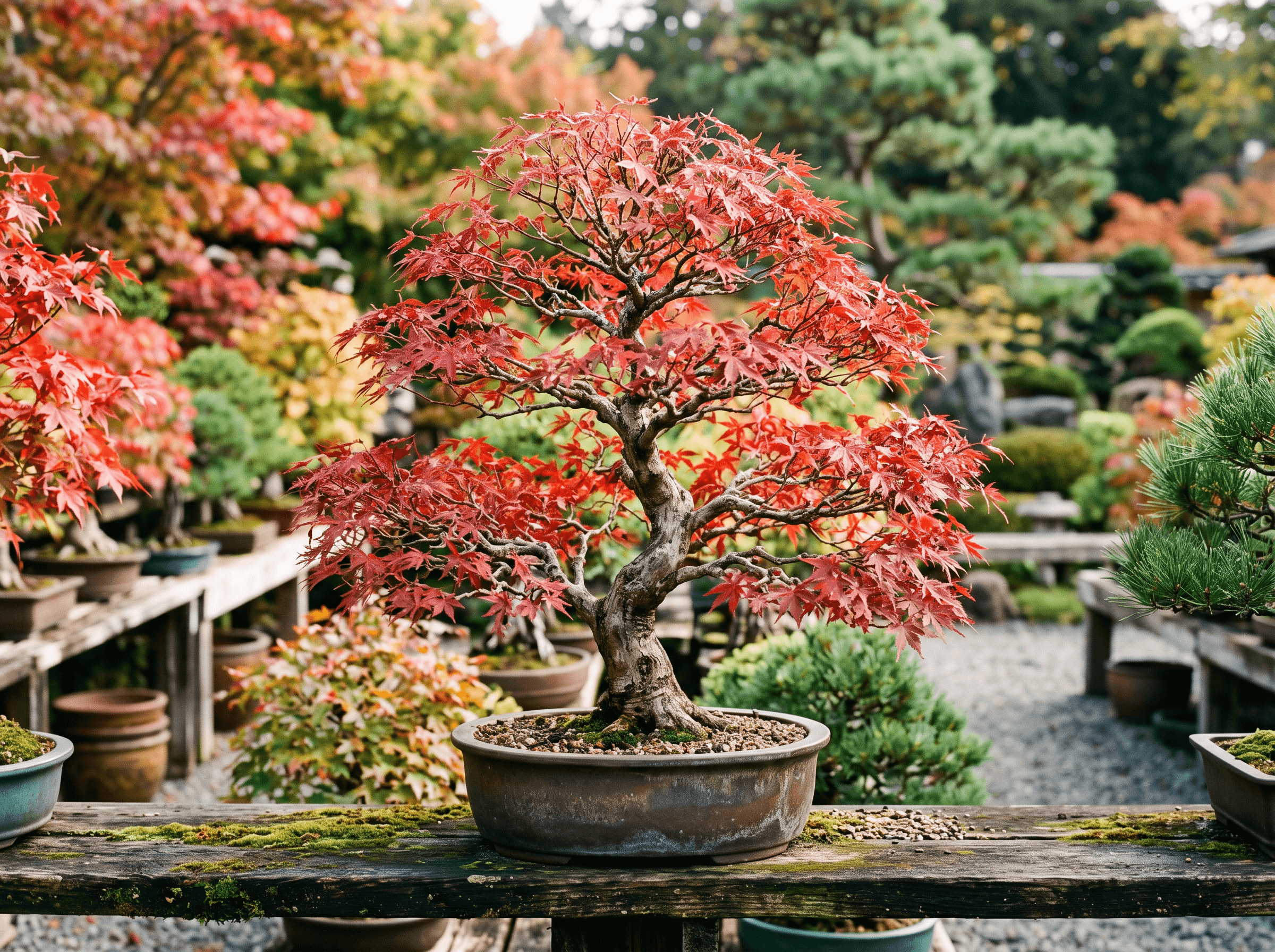
Acer palmatum is grown for two things above all: the fine, twiggy branch structure it develops with patient pruning, and the colour show in autumn, when leaves shift through yellow, orange, and deep red before dropping. It's a genuinely beautiful species and one of the most rewarding once you understand its quirks, but I'd stop short of calling it a beginner tree. The bark and new growth are thinner and more sensitive than on pines or junipers, and small mistakes with sun exposure or late frost show up fast and visibly.
This is an outdoor, deciduous tree that needs a real winter dormancy to grow properly, and it needs to lose its leaves and go through a cold rest period the same as a maple growing in open ground would. People occasionally try to keep one indoors through winter thinking they're protecting it, and that's backwards; without dormancy the tree weakens over successive years rather than benefiting from the shelter. The bigger day-to-day issue, though, is sun. Japanese maple wants strong light in spring but real protection from harsh afternoon sun once summer heat sets in, particularly in a hot climate, because the thin leaves and thin bark scorch under direct, intense afternoon sun in a way that pines and olives simply don't.
The other thing worth knowing early is how sensitive new spring growth is to late frost. Maples push their new leaves quite early once temperatures start warming, and a cold snap after that flush has emerged can blacken and kill the new growth even though the tree itself survives. It's not usually fatal to the tree as a whole, but it's disheartening, and it's worth watching the forecast in early spring rather than assuming winter is fully over just because buds have opened.
Care
Light
Morning sun with protection from harsh afternoon sun is the ideal placement in most climates, and this matters more for Japanese maple than for almost anything else in this guide. Many growers give maple fuller sun in spring while the leaves are still hardening off, then move it to a spot with afternoon shade once summer heat sets in, since strong, direct afternoon sun in hot weather will scorch the thin leaves and can damage the bark on younger branches, showing up as crispy, browned leaf edges or patches that don't recover until the next year's growth. Dappled light or a filtered position under taller cover works well too. Too much shade all day, on the other hand, leads to weak, leggy growth and poorer autumn colour, so the goal is bright light with protection specifically from the harshest summer midday and afternoon sun, not a shaded corner.
Watering
Keep the soil consistently and evenly moist through the growing season; Japanese maple doesn't tolerate the soil drying out fully anywhere near as well as a pine or olive does, and thin roots can be damaged by repeated drought stress. At the same time it doesn't want to sit waterlogged, so good drainage still matters. In hot weather I check maples more often than most other trees in the collection, sometimes twice a day in a small pot during a heatwave, since a maple that dries out too far can lose leaves rapidly and take weeks to recover, even if the tree ultimately survives.
Temperature & hardiness
Japanese maple needs real winter dormancy outdoors to stay healthy long-term, including a genuine cold period, and shouldn't be brought indoors to escape winter the way people sometimes mistakenly do with junipers. Protect the pot itself from severe, prolonged hard freezes since roots in a shallow bonsai container are more exposed than roots in open ground, but the tree overall is reasonably cold-hardy. The bigger seasonal risk isn't deep winter cold, it's a late frost after the spring growth flush has already emerged; that tender new growth is far more frost-sensitive than the dormant buds were, so keep an eye on the forecast through early spring rather than treating budbreak as the all-clear.
Soil & potting
A free-draining but moisture-retentive mix works best, since maple wants consistent moisture without waterlogging, which is a slightly different balance than the more strictly fast-draining mix junipers or pines prefer. Akadama-based mixes are popular for maple specifically because akadama holds a useful amount of water while still breaking down to improve aeration over time, often blended with some pumice for extra drainage. Whatever mix you use, avoid anything that either dries out within hours in summer heat or stays soggy for days, since both extremes stress the fine root system faster than on hardier species.
Fertilizing
Feed through the growing season from after leaves fully harden off in spring through late summer, then taper off as the tree prepares for autumn colour and leaf drop; many growers ease off nitrogen late in the season on the theory that it supports a cleaner colour change, though the exact effect on colour intensity is more a matter of grower experience than settled science. A balanced feed is fine for general growth, though some growers switch to a lower-nitrogen feed later in summer specifically to encourage better autumn colour rather than pushing more soft green growth. Light, regular feeding suits maple better than infrequent heavy doses, given how sensitive the roots are to stress in general.
Pruning & wiring
Maple is prized for fine ramification, and building it means pinching and trimming new shoots repeatedly through the growing season rather than doing one big structural cut and leaving it. Cut back to a pair of leaves as new shoots extend, and the tree responds by branching again from that point, gradually building the dense, twiggy structure that makes a mature maple canopy look full even in winter without leaves. Heavier branch work and hard reduction cuts are often better done in summer or early autumn rather than late winter, since cutting strong branches while the tree is fully dormant is exactly when maple bleeds sap most heavily; pruning once the season's leaves have hardened off, when sap is flowing less aggressively, tends to cause less bleeding and stress. If you're unsure on timing for a specific hard cut, err toward summer or early autumn over late winter. Wiring works well on younger, flexible branches, but maple bark marks and scars more easily than juniper's, so check wire frequently and remove it before it bites in.
Repotting
Repot every one to two years while young and vigorously growing, extending to two or three years as the tree matures, always in early spring just before buds break. Maple has a fine, fibrous root system, and while established, healthy trees can tolerate fairly significant root work at repotting, gentler handling is the safer default if you're not yet confident reading the tree's vigor; comb it out rather than aggressively raking, and build up to more assertive root pruning as you get to know how a particular tree responds. After repotting, keep the tree in a sheltered spot out of strong wind and direct afternoon sun for a couple of weeks while new roots establish, since a freshly repotted maple is noticeably more vulnerable to leaf scorch and drying out than an established one.
Common problems
Scorched, crispy brown patches on leaf edges are the classic sign of too much direct afternoon sun, and it's the single most common issue I get asked about with maple. Leaf drop or wilting in summer heat usually points to the roots drying out faster than expected, particularly in a small pot, though it can also mean the opposite: waterlogged soil suffocating the roots, so it's worth checking soil moisture directly rather than guessing from the symptom alone. Aphids cluster on new spring shoots fairly often and are usually easy to deal with if caught early, before they've distorted much new growth. Blackened, dead new growth in early spring after otherwise healthy budbreak is almost always late frost damage rather than disease, and the tree typically recovers with a second flush later in the season. Fungal leaf spot can show up in consistently damp, poorly ventilated conditions, so good airflow around the foliage helps prevent it as much as any treatment does. Sudden wilting or dieback on one side of an otherwise healthy tree, rather than a general decline, can be a sign of verticillium wilt, a soil-borne fungal disease that affects maples specifically; it's less common than the issues above but worth knowing about if symptoms don't match sun, water, or frost damage.
Styling
Japanese maple is the species most associated with refined, elegant deciduous styling, where the goal is a dense, balanced network of fine branches visible even in winter once the leaves have dropped. Informal upright and broom styles both suit maple well, since the natural branching habit lends itself to that kind of even, twiggy canopy, and group or forest plantings using several maples together are a classic way to show off autumn colour at scale. Because the trunk and nebari, the visible surface roots at the base, are so exposed once leaves fall, maple is also a species where root and trunk base development matter more to the finished look than they would on a densely foliaged conifer.
Common questions
Why are my Japanese maple's leaves scorching?
Almost always too much direct afternoon sun, especially in hot weather. Japanese maple wants morning light with afternoon shade or dappled cover once summer heat sets in; if the tree is getting full, unfiltered sun through the hottest part of the day, moving it to a more protected spot usually resolves it for future growth, though scorched leaves themselves won't heal.
Can Japanese maple bonsai live indoors?
No, not long-term. It's a deciduous tree that needs a genuine outdoor winter dormancy to stay healthy, and keeping it indoors disrupts that cycle. It belongs outside year-round, with only pot protection during unusually severe freezes.
Why did my maple's new spring growth turn black?
That's typically late frost damage. Maple pushes new leaves early in spring, and a cold snap after that growth has emerged can kill the tender new shoots even though the rest of the tree is fine. It's disheartening but rarely serious; the tree usually pushes a second flush later in the season.
Is Japanese maple a good beginner bonsai?
I'd call it moderate difficulty rather than beginner-friendly. It's not as forgiving as ficus or elm when it comes to sun placement and consistent watering, since the thin bark and fine roots are more sensitive to mistakes. It's a great second tree once you've got the basics of watering and placement down.
When should I prune my maple for ramification?
Pinch and trim new shoots repeatedly through the growing season, cutting back to a leaf pair as growth extends, which is what builds the fine, dense branching maple is known for. Save any hard structural cuts for summer or early autumn rather than late winter, since cutting large branches while the tree is dormant tends to cause the heaviest sap bleeding.
How often should I water a Japanese maple bonsai?
More consistently than most bonsai species. Maple doesn't tolerate the soil drying out fully anywhere near as well as pine or olive, so check it daily through the growing season and expect to water more than once a day in small pots during summer heat.
Why isn't my maple's autumn colour very good?
Colour intensity depends on light exposure, feeding timing, and gradually cooling autumn temperatures. Many growers find that feeding too late into autumn or keeping the tree in overly shaded conditions tends to mute the colour change, so easing off nitrogen and making sure the tree gets good light through late summer generally helps.
You might also like
General guidance based on 20+ years of practice. Every tree and every climate is different — when in doubt, ask us.