
Ginkgo Bonsai Care
Ginkgo biloba
Ginkgo is one of the oldest tree species alive, part of an ancient lineage stretching back hundreds of millions of years, and as bonsai it rewards patience with a fan-leafed canopy that turns a single, uniform gold almost overnight in autumn.
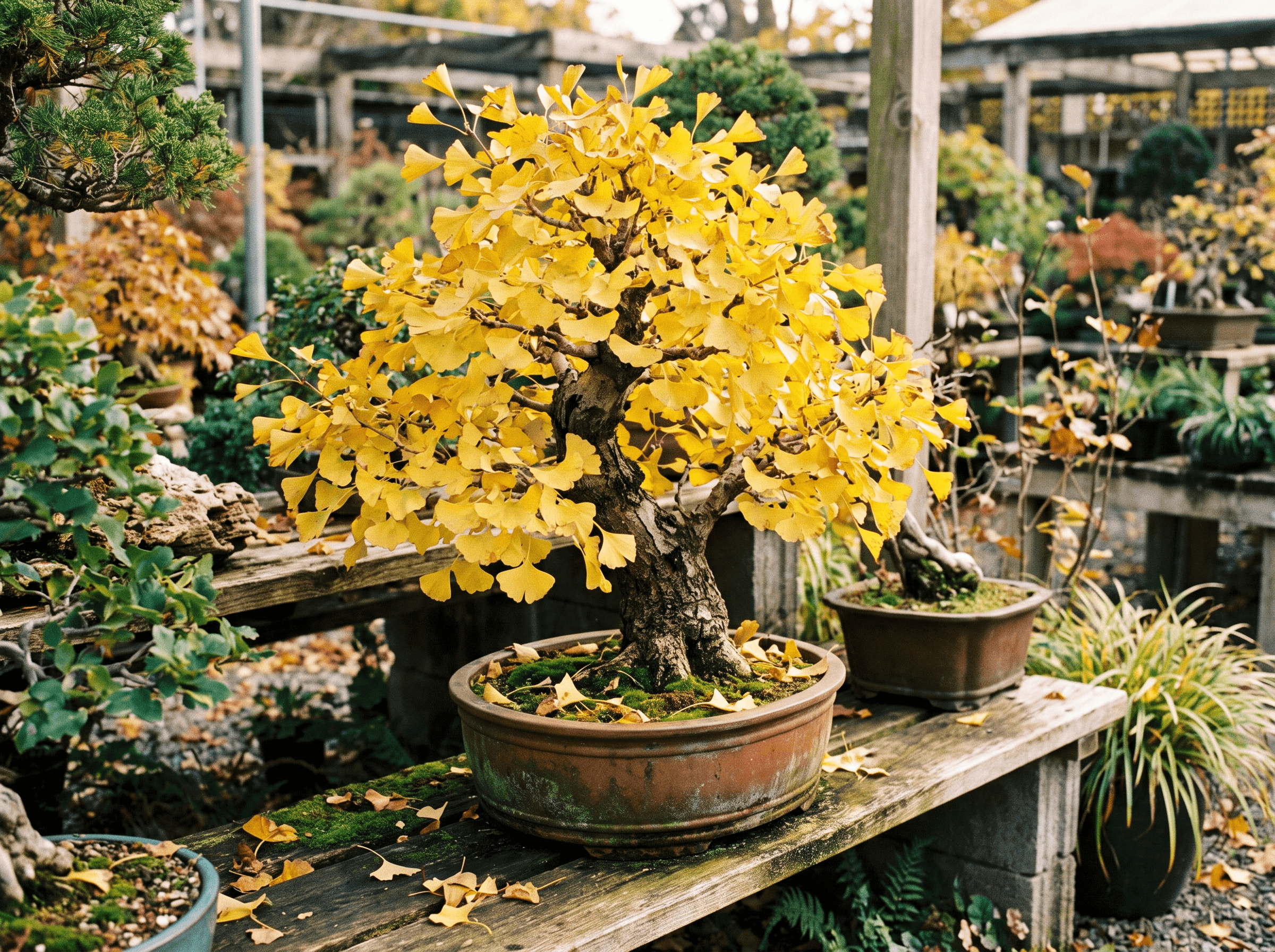
There's something genuinely different about working with ginkgo compared to the rest of my collection. It isn't related to any other tree you'll grow as bonsai, it belongs to its own ancient lineage, and you can feel that in how it behaves: the fan-shaped leaves, the way it colours up, even the smell of the wood when you cut it. People are drawn to it for the autumn show more than anything else, and fair enough, a mature ginkgo in full gold is one of the more striking sights in a collection, but it's worth knowing what you're signing up for the rest of the year too.
The main misconception is that ginkgo is difficult or delicate. It's the opposite. This tree is remarkably resistant to the pests and diseases that plague most other bonsai species, tolerant of a wide range of conditions, and generally forgiving of a missed watering or two. What it's not forgiving of is impatience with ramification. Ginkgo branches extend readily but back-bud slowly and unevenly, so building the fine, twiggy structure that makes a refined deciduous bonsai takes real years, more than beech or maple worked from similar material. I tell people going in: buy this tree for the trunk and the autumn colour, not because you're expecting a densely ramified canopy in five years.
It's an outdoor deciduous tree, hardy and undemanding once established, and one detail surprises almost everyone the first time they hear it: male cultivars are commonly sold as nursery and bonsai stock specifically to avoid the fruit. Female ginkgos produce a fleshy seed coat that smells genuinely unpleasant, something like rancid butter, when it drops and breaks down, and no serious grower wants that on the bench. If your tree is unusually old seed-grown stock of unknown sex, it's worth knowing this could eventually become relevant.
Care
Light
Full sun to light partial shade works well, and ginkgo is genuinely adaptable here compared to fussier species. More sun generally means a better, more even autumn colour and stronger overall growth, so I keep mine in full sun through the growing season. In climates with intense summer heat, a little relief during the hottest part of the afternoon won't hurt, but this isn't a tree that needs shading the way some finer-leafed species do.
Watering
Ginkgo likes consistent moisture without sitting waterlogged, which is fairly standard bonsai practice, and in my experience it tends to handle the occasional missed watering a little better than some of the more delicate deciduous species I grow. That's not something to rely on, though. Water thoroughly when the surface starts to dry, and expect to water more frequently in the height of summer growth than in cooler shoulder seasons. It does not like sitting permanently wet any more than other trees do, so drainage still matters.
Temperature & hardiness
This is a genuinely hardy deciduous tree that handles cold winters well and, again unusually for bonsai material, tolerates heat and urban pollution better than most species too, which is part of why it's such a common street tree in cities worldwide. It needs a proper winter dormancy outdoors like any other temperate deciduous bonsai. Protect the pot from extended hard freezes since container roots are more exposed than roots in open ground, but there's no need to baby this tree through a normal winter.
Soil & potting
A standard free-draining bonsai mix, akadama-based or a local equivalent with pumice and lava rock for structure, suits ginkgo well. It isn't especially fussy about soil composition compared to some conifers, but good drainage still matters to keep the roots healthy, and I've found it does best with a mix that holds a bit more organic content than a strict conifer mix would, closer to what you'd use for a maple.
Fertilizing
Feed through the growing season with a balanced fertiliser, tapering off as autumn approaches and stopping through winter dormancy. Ginkgo responds well to steady feeding and, because ramification is already slow to develop on this species, I lean slightly more generous with nitrogen through spring and early summer to encourage extension growth that can later be worked into structure, rather than holding back the way you might on a tree that's already growing too vigorously.
Pruning & wiring
This is the honest challenge with ginkgo. New shoots extend but back-budding is slow and unpredictable compared to beech, hornbeam, or maple, so building fine ramification takes patience and repeated seasons of careful pruning rather than one or two aggressive cutback cycles. Once a new shoot has hardened off with five or six leaves, cut it back to one or two leaves to encourage branching where you can get it, but accept that this tree develops its twiggy structure on its own timeline. Wiring works reasonably well on younger, flexible branches, though I'm still cautious bending anything thick, since older wood is harder to move without gradual, careful work.
Repotting
Younger, vigorously growing trees can often be repotted every year or two, extending to every two to three years or more as the tree matures and root growth slows, doing this in early spring just before the buds break. Ginkgo roots are fairly tough and the tree generally handles root work without excessive fuss, though I still keep newly repotted trees somewhat sheltered from full sun and wind for a while afterward to reduce stress while new fine roots establish.
Common problems
Ginkgo is genuinely one of the lower-maintenance species in terms of pests and disease, which is a large part of its appeal. It's naturally resistant to most of the insects and fungal issues that trouble other bonsai, so if you're seeing serious pest damage on a ginkgo it's worth double checking the diagnosis, since it's uncommon on this species. The more realistic issues are cultural: yellowing or scorched leaf margins can follow underwatering in a hot spell, weak or uneven growth often comes from too much shade, and slow, patchy back-budding frustrates growers expecting the same ramification speed they'd get from a maple. If you have older seed-grown stock and notice a strong unpleasant smell around the base of the tree in autumn, that's very likely fruit from a female tree breaking down on the soil surface, not a disease symptom, and it's worth cleaning up promptly since the fallen fruit and its smell only get worse left in place.
Styling
Ginkgo is most often styled as an informal upright or a straightforward broom form, since its natural branching habit tends toward upward, somewhat sparse growth rather than the low, spreading structure that suits cascade or windswept styles. Given how slowly it ramifies, many growers lean into a bolder, more architectural silhouette that shows off trunk character and bark texture rather than chasing dense twiggy refinement, and let the tree's real strength, that uniform, glowing gold autumn colour against the fan-shaped leaves, do most of the visual work. It also makes a striking specimen displayed alone through autumn specifically for that colour change, even if the rest of the year it plays a quieter, more structural role in the collection.
Common questions
Why does my ginkgo bonsai have so few branches?
Ginkgo back-buds slowly and unevenly compared to species like maple or hornbeam, so building a dense, ramified canopy takes considerably longer and more seasons of patient pruning. This is normal for the species rather than a sign of poor health.
Is ginkgo bonsai easy to care for?
Yes, relative to most bonsai species. It's naturally resistant to common pests and diseases, tolerant of a wide temperature range, and reasonably tolerant of the occasional missed watering compared with some more delicate deciduous trees. The main challenge is patience with how slowly the fine branch structure develops.
Why does my ginkgo tree smell bad in autumn?
If your tree is older, seed-grown stock rather than a known male cultivar, that smell is very likely fruit from a female tree breaking down. Male cultivars are commonly sold as nursery and bonsai stock specifically to avoid this, but seed-grown or unknown-origin trees can occasionally turn out female.
When does ginkgo change colour in autumn?
Timing varies by climate, but it's typically among the later trees to turn, producing a strikingly uniform, bright gold across the whole canopy before dropping its leaves quite rapidly, often within days rather than gradually over weeks like many other deciduous species.
Can ginkgo bonsai be kept indoors?
No. It's a hardy deciduous tree that needs to be outdoors year-round, including a genuine winter dormancy period. Indoor conditions don't provide the light or the cold period it needs to stay healthy long-term.
How do I speed up ramification on a ginkgo bonsai?
There's no real shortcut. Regularly cutting new shoots back to one or two leaves once they've hardened off with five or six leaves helps over time, along with generous feeding to encourage strong extension growth that can be worked with, but ginkgo simply ramifies on a slower timeline than most other deciduous bonsai species.
Does ginkgo bonsai need winter protection?
It's a genuinely cold-hardy species and doesn't need much beyond what any outdoor deciduous bonsai needs, protection for the pot itself during extended hard freezes since container roots are more exposed than roots in open ground. It handles a normal temperate winter without trouble.
You might also like
General guidance based on 20+ years of practice. Every tree and every climate is different — when in doubt, ask us.