
Rocky Mountain Juniper Bonsai
Juniperus scopulorum
Rocky Mountain juniper is the species behind most of the great American juniper bonsai you've seen in magazines, and the reason is simple: the trunk usually wasn't grown in a training pot, it was pulled out of a rock crevice at altitude after surviving on its own for a very long time.
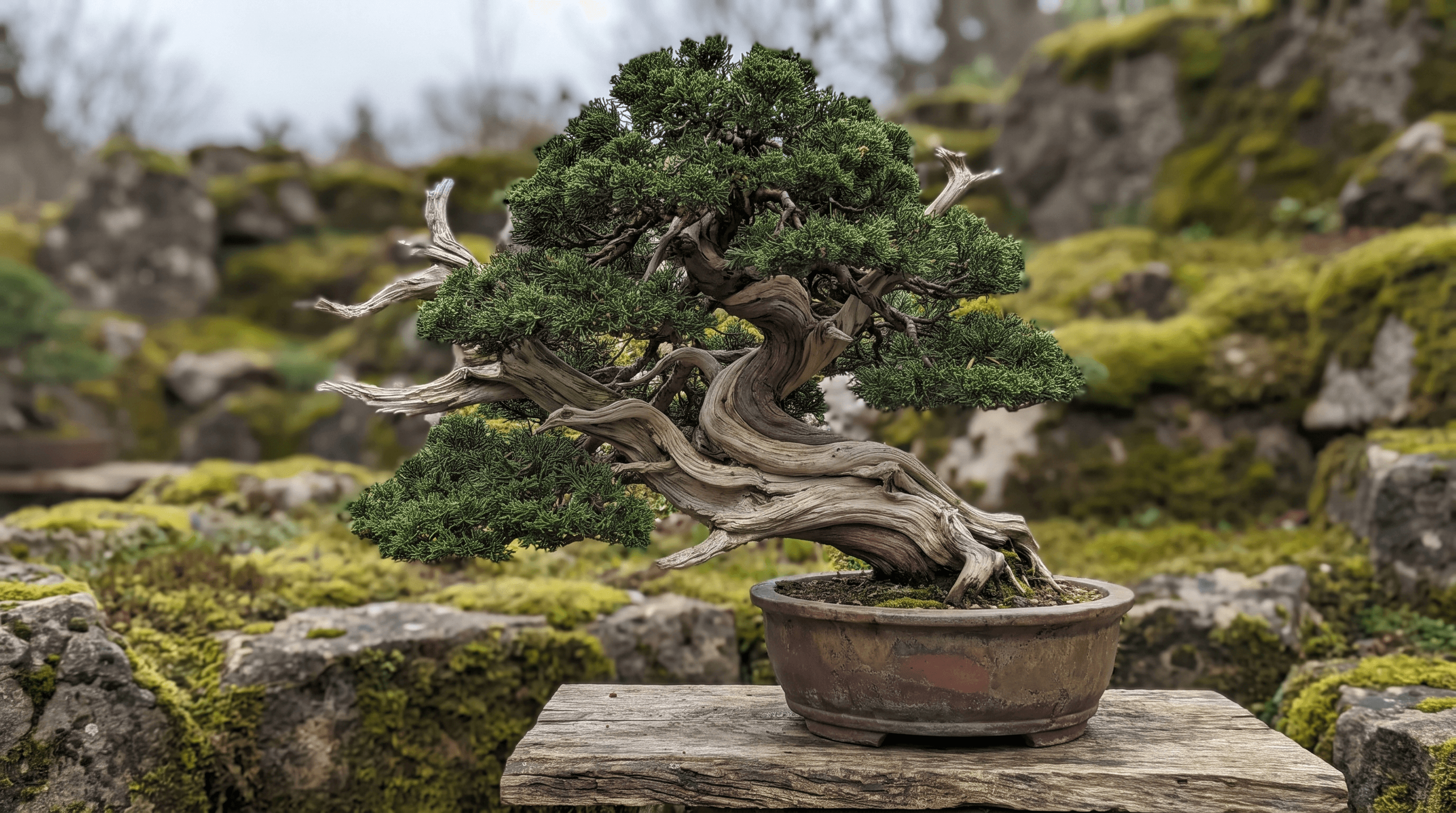
Most of what I say about junipers on this site assumes you're starting with nursery stock or a cutting-grown cultivar. Rocky Mountain juniper is different. Many of the most celebrated Rocky Mountain juniper bonsai are collected yamadori, dug from cliff faces, ridgelines, and exposed rock in the mountain west. The species as a whole actually has a much wider range than that image suggests, growing from near sea level up to roughly 9,000 feet across bluffs and rocky slopes but also fields, pastures, ravines, canyon bottoms, and sheltered, relatively moist slopes. The dramatic bonsai material tends to come from the harsh end of that range, where the growing season is short, the wind never really stops, and the soil is barely soil at all. A tree that's only as thick as your wrist might be genuinely old, because growth at altitude in that kind of exposure is slow and grudging. That's exactly what gives collected Rocky Mountain junipers their character: thick, weathered trunks with deadwood that nature carved over decades, not a tenth of the girth-to-age ratio you'd get from a garden centre juniper grown in good soil with regular water.
Because of that origin, a lot of what makes this species distinct isn't about the living tree at all, it's about what to do with a plant that just came out of the ground. The foliage itself is fairly ordinary as junipers go, mostly tight, scale-like adult growth in a blue-green to grey-green tone, with some sharper juvenile foliage showing up on vigorous new shoots. What isn't ordinary is that a freshly collected Rocky Mountain juniper often already has jin and shari on it before you've made a single cut, shaped by wind, ice, and lightning rather than a carving tool. The best move with a tree like that is usually to leave the deadwood alone and simply preserve it, not redesign it.
Care
Light
Established trees want full sun, same as any juniper, and material collected from exposed rock and ridgelines is used to strong, direct sun in the wild. The exception is a freshly collected tree in its first season or two of recovery. I keep newly collected material in bright light but out of the most intense midday sun until the root system has rebuilt enough to support full transpiration, then move it into full exposure gradually rather than all at once. Once a tree is established in a pot and growing normally, treat it like any other juniper and give it as much sun as you can.
Watering
The general juniper rule applies, water thoroughly when the surface starts to dry and never let the mix stay soggy, but the practical reality shifts a lot depending on how long the tree has been in cultivation. A recently collected specimen has a small, damaged root system relative to the mass of trunk and foliage it's supporting, so I check those pots daily and aim to keep the root zone evenly moist without ever letting it go saturated, watering according to how the actual rootball and substrate are drying rather than leaning deliberately dry, since starving newly forming fine roots of moisture can kill them just as surely as overwatering can.
Temperature & hardiness
This is one of the hardiest junipers commonly used for bonsai, coming from a native range with recorded winter extremes down around -37°C/-35°F, and it needs the same outdoor, full-dormancy treatment as any other juniper on this site, arguably with even less patience for being coddled. Keep it outside year-round, protect the pot itself in extended hard freezes if your winters demand it, and don't bring it in. Roots in a shallow bonsai pot need that protection sooner than a landscape tree would, and I'd still avoid quoting a specific hardiness zone with confidence, since collected trees vary somewhat depending on the elevation and microclimate they originally grew in.
Soil & potting
A fast-draining, mostly mineral mix matters for every juniper, but it matters even more here in the first years after collection, when the root system is small, fragile, and easily rotted by a mix that holds water too long. I lean toward a slightly coarser, more open substrate than I'd use for an established nursery-grown juniper until the tree has clearly settled in and is pushing consistent new growth, at which point a standard akadama, pumice, and lava mix works well.
Fertilizing
Regular light feeding through the growing season is right once a tree is established, following the same balanced, spring-through-early-autumn approach as any other juniper. Where this species differs is in the first season or two after collection: many collectors delay regular fertilization until active growth confirms recovery, holding off on feeding a freshly collected tree until it's clearly growing again rather than trying to push a stressed, root-damaged tree along. Once new growth is clearly extending, ease into a normal feeding schedule.
Pruning & wiring
The biggest mindset shift with this species is that a lot of the deadwood you're working with wasn't created by you, and it doesn't need to be. Wind, ice, and sun have usually already done decades of carving before the tree ever reached a bonsai bench, and the honest job is often preservation rather than design, cleaning and treating existing jin and shari rather than adding to them. The live vein on an old collected trunk can be surprisingly narrow and sinuous, so wiring it takes real care, and I'd avoid any aggressive structural pruning until the tree shows clear signs of recovery, strong extension growth, stable foliage colour, and firm anchorage, rather than working to a fixed timeline, since recovery speed varies a lot between individual trees.
Repotting
For a collected tree, the real first repotting is the collection itself, and everything after that is about patience. I move newly collected material into a grow box or training container with an open, mineral substrate and disturb the roots as little as possible, sometimes leaving a large amount of the original native soil intact around the core of the root ball for the first year or more. That native core can hold and lose moisture very differently from the coarse pumice packed around it, so it's worth checking the centre of the rootball directly rather than assuming the whole container dries at the same rate. Once the tree is clearly stable and growing well, it moves onto a more typical juniper repotting cycle, though growth tends to be slower than a nursery cultivar, so I don't repot on as tight a schedule.
Common problems
The single biggest risk with this species is a slow decline after collection that isn't obvious until it's too late. Foliage can remain deceptively green despite poor root recovery, so sustained extension growth is a better recovery indicator than colour alone. Watch for a lack of new extension growth through a full growing season rather than waiting for obvious browning. Beyond that, the usual juniper problems apply: overwatering in a mix that's too organic or too fine is probably the most common way people lose a recovering tree, and spider mites can still show up in hot, still conditions. A soft, discoloured area at the base of the trunk near the soil line is worth investigating immediately rather than waiting to see if it resolves on its own.
Styling
Because the trunk usually arrives with most of its character already built by nature, styling a Rocky Mountain juniper is often more about editing than inventing. Literati, windswept, and driftwood-style compositions are common simply because that's how a lot of these trees actually grew, clinging to an exposed ledge and leaning hard into the prevailing wind. The foliage mass is usually kept relatively sparse and refined so the trunk and deadwood stay the visual focus rather than getting buried under greenery. Formal or informal upright work is possible on younger material, but it's the twisted, weathered trunks with long runs of natural shari that this species is really known for.
Common questions
Is Rocky Mountain juniper bonsai material collected from the wild or grown in nurseries?
Most of the serious specimens you'll see are collected, dug from rocky, high-altitude terrain in the western United States. Nursery-propagated material exists too and behaves more like a typical juniper, but the trees prized for dramatic, ancient-looking trunks are almost always yamadori.
How do I care for a freshly collected Rocky Mountain juniper?
Go slow. Keep it in bright but not blasting light for the first season, water carefully rather than heavily since the root system is small and damaged, hold off on fertiliser until you see real new growth, and avoid any major pruning or wiring until the tree is clearly stable and growing well again.
Why does my Rocky Mountain juniper already have deadwood on it?
If it's collected material, that deadwood is usually natural, shaped by wind, ice, and sun over many years in exposed mountain terrain rather than carved by a bonsai artist. In most cases the right move is to preserve it as it is rather than significantly reshape it.
Is Rocky Mountain juniper hardy enough to leave outside all winter?
Yes, this is one of the more cold-tolerant junipers used in bonsai given its native range in harsh mountain climates. It still needs the same outdoor dormancy every juniper requires, and you should protect the pot in extended hard freezes rather than bringing the tree indoors.
Can I buy Rocky Mountain juniper as ordinary nursery stock instead of collected material?
It's less common than with a cultivar like Chinese juniper, but nursery-propagated Rocky Mountain juniper does exist. It won't come with the dramatic aged trunk that makes the collected trees famous, and trunk development will be something you build over years rather than something you find already there.
General guidance based on 20+ years of practice. Every tree and every climate is different — when in doubt, ask us.