
European Black Pine Bonsai
Pinus nigra
European black pine, sometimes called Austrian black pine, is the tough, thick-barked European cousin to Japanese black pine, capable of impressive, deeply plated bark with age and well suited to much of the Mediterranean, though the exact climate fit and candle behavior depend on which form of the species you're actually growing, and I'd rather explain that honestly than flatten it into a single simple story.
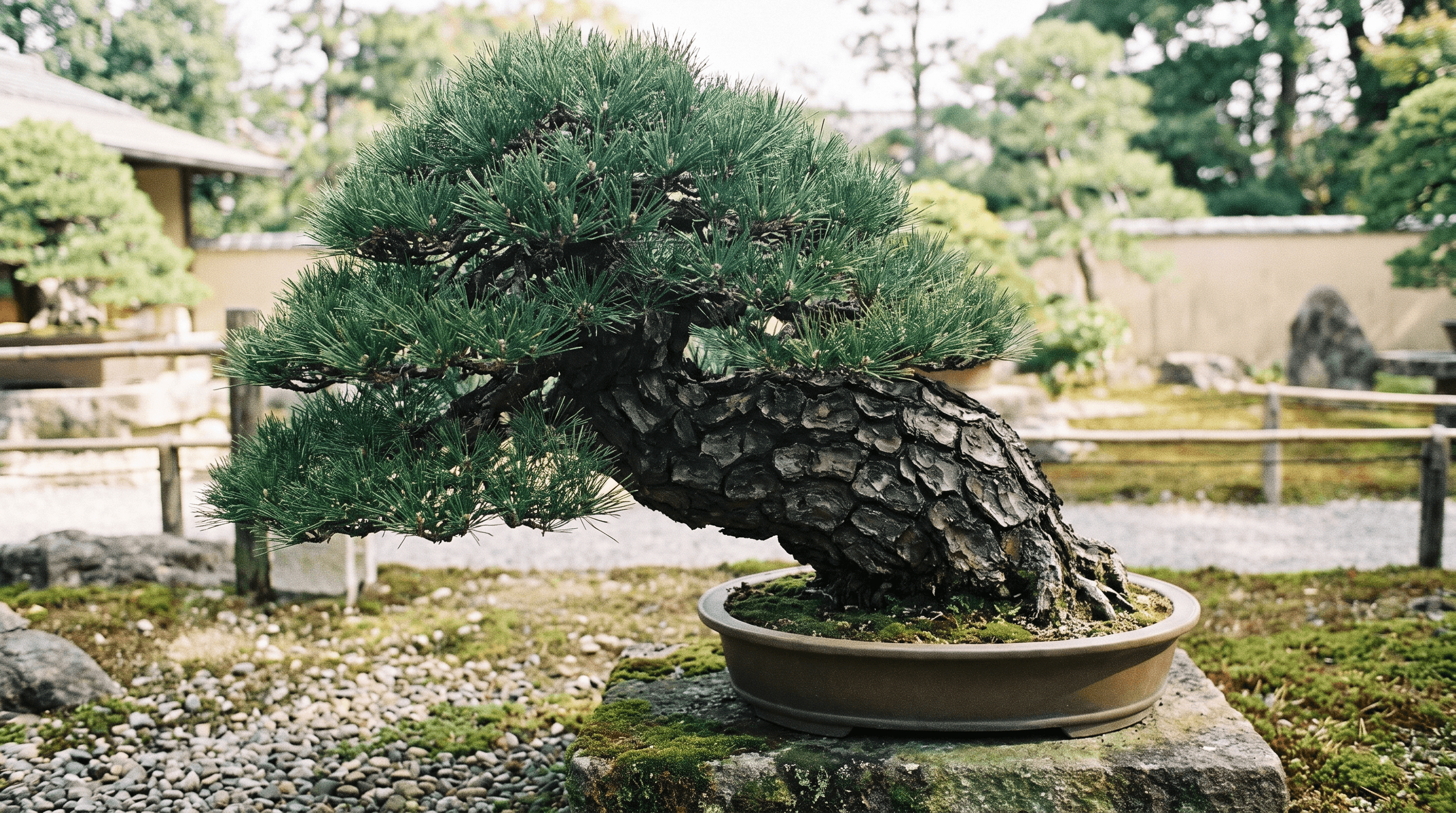
European black pine, Pinus nigra, is a genuinely variable species spread across southern and central Europe, and the name covers more than one regional form. What's often sold and grown as "Austrian black pine" usually points to Pinus nigra subsp. nigra, the more temperate central-European form, while Italy's own native lineage is generally Pinus nigra subsp. laricio, the Calabrian black pine, which is the form actually shaped by Italian conditions. Unless you know your nursery stock is confirmed Austrian-subspecies material, it's more accurate to think of it simply as Pinus nigra. Either way it's a tough tree: it tolerates poor rocky soil, exposed sites, and hot, dry summers about as well as any conifer I work with. What draws people to it for bonsai, beyond the hardiness, is the bark. Give a black pine some age and it develops thick, deeply plated, almost black-grey bark on the lower trunk that looks convincingly ancient even on material that isn't actually all that old, which is part of why it's a popular choice for anyone building a powerful, rugged silhouette.
Where I want to be careful is candle management, because this is the part of European black pine care where I see the most confusion, some of it my own doing in earlier drafts of this page. The honest framing is that this species is best treated as an outlier, essentially a single-flush pine for planning purposes, not a semi-reliable second-flush pine like a weaker version of Japanese black pine. Left alone it pushes one spring flush and that's the growth you work with for the year. Decandling, cutting back that spring flush to try to induce fresh buds, can be used selectively on strong, well-established trees to stimulate back-budding, and some growers do use it for exactly that purpose. But don't go into it expecting the reliable, even, same-season second flush that decandling produces on a healthy Japanese black pine; that simply isn't what this species does as a matter of course. Separately, and worth keeping distinct in your head, selectively pinching or shortening a strong candle while it's still elongating in spring is a normal, valid piece of energy-balancing work and isn't the same move as decandling to induce new buds. Treat the two as different tools for different purposes rather than variations on the same technique.
Care
Light
Full sun, and plenty of it. European black pine grows naturally in open, sun-exposed ground across its native range and it wants the same treatment as bonsai, on a bench with unobstructed light for most of the day. It's about as tolerant of hot, intense midday sun as any pine I grow, which makes it a strong candidate for a hot southern courtyard where more delicate species need shading. Reduced light shows up gradually as thinner foliage and longer, weaker internodes, undoing the compact character you're working to build through candle management.
Watering
Water thoroughly, then let the soil surface dry before watering again. European black pine is quite drought-tolerant once established, a reflection of the poor, dry, rocky ground it's adapted to in the wild, but that tolerance for dryness comes paired with a real dislike of sitting in constantly wet soil, the same as most pines. Problems from overwatering tend to build slowly, as gradual needle yellowing over a season, rather than announcing themselves immediately, which is exactly why it's worth checking drainage before assuming disease or pests when a tree starts looking off.
Temperature & hardiness
This is a hardy, adaptable species overall, and Pinus nigra as a whole has a strong reputation for tolerating hot, dry Mediterranean summers. That said, how well a given tree matches southern Italy's climate depends somewhat on its lineage: true Austrian-form material (subsp. nigra) is a comparatively temperate tree, while the Calabrian laricio form (subsp. laricio) native to southern Italy is the lineage actually shaped by conditions here. If you don't know which form your tree is, generic Pinus nigra of unknown origin has still generally proven tolerant of hot, dry summers and a good range of winter conditions in my experience, without demanding the severe, sustained winter cold that a species like Scots pine is adapted to. Left outdoors year-round with the pot protected from any hard freeze is the right approach; it's not a tree that needs or wants to come indoors at any point in the year.
Soil & potting
A fast-draining, mineral-based mix is essential, in keeping with the poor, well-drained soils this species tolerates in the wild. Akadama, pumice, and lava rock in roughly equal parts is a dependable baseline, and I'll often nudge the ratio toward more pumice and lava for an older, more established black pine specifically to keep airflow generous around the root mass. As with other pines, black pine benefits from mycorrhizal fungi in the root zone, so I carry a portion of the old soil forward at each repot rather than starting from scratch every time.
Fertilizing
European black pine is a fairly heavy feeder through the growing season and responds well to steady fertilizing from spring into early autumn, tapering as growth slows. Because this species is best treated as single-flush rather than planned around a reliable second flush, I'd keep the feeding schedule simple and consistent rather than timing a pause around decandling the way you would with a true two-flush pine like Japanese black pine. If you do selectively decandle a strong, established tree to stimulate back-budding, feed it well beforehand rather than underfed, and let it recover with normal feeding once new buds are established. A balanced feed through the season, with organic pellets for slow release, works well.
Pruning & wiring
This is the section where European black pine asks to be treated as an outlier rather than either a black-pine-style decandler or a plain single-flush pine. For most trees, most years, the reliable, default technique is spring candle work: while the new candles are still soft and before the needles fully extend, thin out weaker candles in crowded whorls and selectively pinch or shorten the strongest ones to balance vigor, broadly the same approach you'd use on Scots pine. That's energy-balancing on the current flush, not an attempt to force new growth. Decandling, cutting the completed spring flush back to try to induce fresh buds, is a separate, more advanced tool. It can be used selectively on a strong, well-established, well-fed tree to stimulate back-budding in an area that needs it, and some growers use it for exactly that reason on their best specimens. What it shouldn't be treated as is a reliable path to a clean, even, same-season second flush the way decandling works on a healthy Japanese black pine; on this species the response, when there is one, tends to be patchy rather than uniform, which is exactly why it's a selective back-budding tool rather than a routine annual technique. My honest advice is to lean on spring candle work as the dependable default, and to reserve decandling for a specific, targeted purpose on a tree that's clearly strong enough to take it. Wiring is done on lignified growth in the cooler months; the wood is sturdy and takes movement reasonably well, though older branches can still be brittle at sharp bends, so build them up gradually.
Repotting
Established European black pine bonsai typically go three to five years between repots, guided more by the individual tree's vigor and root density than by a fixed schedule. Early spring, as the buds begin to swell, is the right window. Root work should be conservative rather than aggressive, in keeping with how much this species relies on its mycorrhizal relationships; work the outer portion of the root mass, avoid heavy bare-rooting, and get the tree back into a fast-draining mix promptly. Keep the tree out of harsh direct sun and wind for a couple of weeks afterward while the roots reestablish.
Common problems
Yellowing needles are the most common issue, and common causes include soil staying too wet, roots disturbed too heavily at the last repot, or insufficient light. Aphids and scale show up on black pine from time to time, generally clustering on new candles or on the undersides of needle clusters, and are worth checking for if growth looks stunted or you spot sticky residue on the foliage. If you've selectively decandled a strong tree and the resulting back-budding is patchy, stronger in some spots and weak or absent in others, that's consistent with how this species tends to respond and isn't necessarily a sign of disease; it's part of why decandling here is a targeted tool rather than a routine annual technique. A tree pushing weak, undersized candles across the board, rather than in an isolated area, can point to a number of things, among them root health, but also light, watering, nutrition, and stress from previous pruning, so it's worth checking the full picture rather than assuming roots are automatically the cause.
Styling
European black pine is a strong match for the classical, powerful pine silhouette: thick tapering trunks, bold deadwood, and dense pads built up through years of candle management and needle thinning. The bark is one of the species' best features for bonsai, developing thick, deeply plated, dark grey-black character on older lower trunks that reads as convincingly aged even on material that hasn't been in training all that long, and I'd generally let that bark do some of the visual work rather than crowding it with excess foliage. Formal and informal upright suit the species well, and older nursery stock or yamadori often arrives with enough natural trunk character to support a bold, masculine design without heavy restructuring. It also takes wind-battered, coastal styling nicely, given how well it tolerates exposed, difficult sites in the wild, and deadwood techniques like jin and shari work well on it too, though the deadwood needs the same ongoing maintenance any pine deadwood does to keep it from rotting.
Common questions
Is European black pine the same as Japanese black pine for bonsai purposes?
No, they're related but distinct species with different candle behavior. Japanese black pine is a reliable two-flush pine that responds predictably to decandling, producing a clean, even second flush most seasons. European black pine is better treated as an outlier, effectively a single-flush pine for planning purposes. Decandling can be used selectively on strong, established trees to stimulate back-budding, but it doesn't give you the reliable same-season second flush Japanese black pine does, and the response tends to be patchy rather than uniform. They shouldn't be assumed to behave the same way.
Can I decandle European black pine like I would Japanese black pine?
Not as a routine annual technique, no. On a strong, well-established, well-fed tree, selective decandling can help stimulate back-budding in an area that needs it, but treat that as an advanced, targeted tool rather than an expectation of a clean second flush. The response tends to come back unevenly, strong on vigorous branches and weak or absent elsewhere, which is different from the reliable, uniform second flush you'd get from a healthy Japanese black pine. For most trees, most years, spring candle selection and thinning, done while the new candles are still soft, is the more reliable default technique.
What makes European black pine's bark distinctive?
With age it develops thick, deeply plated, dark grey to almost black bark, particularly on the lower trunk, which gives even moderately trained material a convincingly ancient look. It's one of the species' strongest visual assets, and I generally style around showing it off rather than hiding it under dense foliage.
How hardy is European black pine compared to other bonsai pines?
Very hardy overall, and Pinus nigra as a species has a strong reputation for tolerating hot, dry Mediterranean summers, though how well an individual tree suits a hot climate depends somewhat on its lineage. True Austrian-form material is a comparatively temperate tree, while the Calabrian laricio form native to southern Italy is the lineage actually adapted to conditions here. Either way, it doesn't need the severe sustained cold that a species like Scots pine is adapted to, and it tolerates summer heat better than Scots pine does. Left outdoors year-round with basic pot protection from hard freezes is the right approach.
Is European black pine good for beginners?
I'd say it's a reasonable second or third pine rather than a first tree. It's hardy and forgiving in terms of survival, similar to Japanese black pine, but understanding it as an outlier species, mostly single-flush with decandling reserved as a selective, advanced technique rather than a routine one, is a level of judgment that's easier to build once you've handled a more straightforward single-flush or two-flush pine first.
Why did only part of my black pine push a second flush after I cut the candles?
That patchy response is consistent with how this species tends to behave when candles are cut, but I wouldn't call it a routine or expected outcome the way a second flush is on Japanese black pine. European black pine is best treated as an outlier, essentially single-flush, and decandling here is a selective, advanced tool for encouraging back-budding on strong trees rather than a technique that reliably produces an even second flush. An uneven result, strong on vigorous branches and weak or absent elsewhere, isn't a sign anything is wrong, it's part of why I lean on spring candle work as the more dependable technique overall and treat decandling as something to use sparingly and deliberately rather than every year.
General guidance based on 20+ years of practice. Every tree and every climate is different — when in doubt, ask us.