
Carmona Bonsai Care
Carmona retusa, syn. Ehretia microphylla (Fukien Tea)
Carmona is one of the most common imported indoor bonsai on the market, and also one of the most likely to sulk the moment it changes hands, which is why so many end up back at the nursery within a month of purchase.
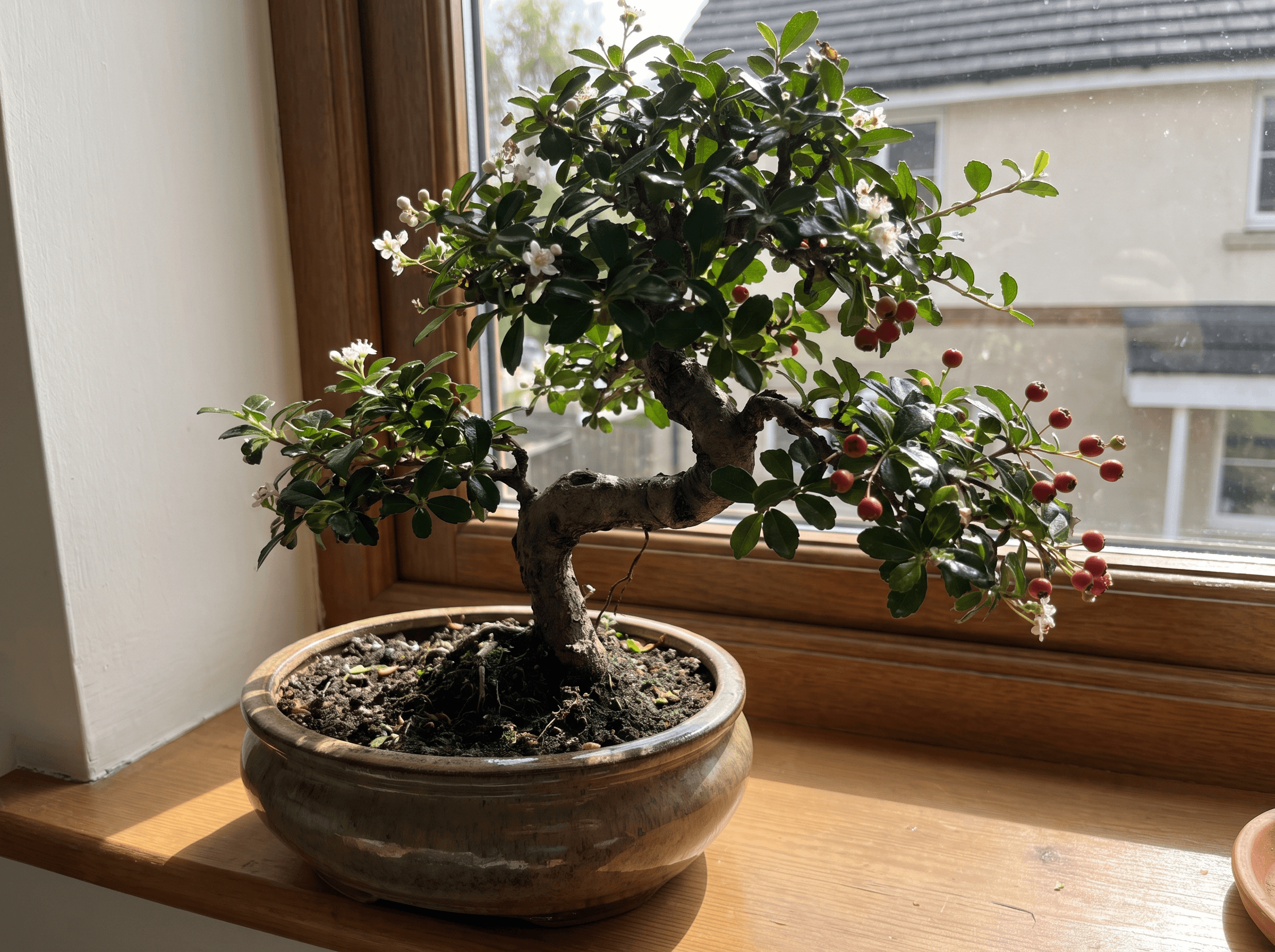
Fukien tea shows up everywhere, garden centres, supermarket plant sections, market stalls, usually shaped into a neat little tree with a mossy base and a price tag that suggests it should be easy. It isn't, not really. The small, dark, rough-textured leaves and tiny white flowers, followed by little berries, usually red, that can appear more or less year-round in the right conditions, make it genuinely attractive as an indoor species. But carmona is notoriously touchy about being moved, and a huge share of the ones that die in someone's living room do so because of the shock of transport and relocation, not because the owner did anything wrong afterward.
This is a tropical broadleaf evergreen, and it wants to be treated like one: warm, bright, and humid, consistently, without big swings. Cold drafts near a door or window are a common culprit when a seemingly healthy tree suddenly drops half its leaves within days. The plant isn't dying in that moment, usually, it's protesting, and if you can identify and remove the source of stress it will typically recover and push new growth again within a few weeks.
The mistake I see most often is treating the post-purchase leaf drop as a sign the tree is failing and responding by moving it again to try a different spot, which just restarts the stress cycle. My advice is almost always the opposite: find one bright, warm, draft-free location, water and feed it properly, and leave it alone. Carmona rewards stability far more than it rewards fussing.
Care
Light
Bright light is essential, and some direct sun, particularly gentle morning sun, helps keep growth dense and flowering reliable. Indoors, a south or east-facing window is usually the best spot, though if the glass gets very hot in summer some light filtering helps avoid leaf scorch. In a Southern Italian climate, carmona can spend the warmer months outdoors in a sheltered, partly shaded spot, which usually produces noticeably better growth than keeping it indoors year-round, provided the move outdoors and back is handled gradually rather than abruptly.
Watering
Water when the top layer of soil starts to dry, then water thoroughly, and avoid letting the pot sit in standing water afterward. Carmona doesn't like extended dry spells any more than it likes waterlogged roots, and consistency matters more than any specific schedule. I check mine every day or two depending on the season and adjust by feel, since a small indoor pot in a heated room dries differently than the same pot outdoors in summer.
Temperature & hardiness
This is a genuinely tropical species with limited cold tolerance. Avoid letting it drop much below about 10 to 15°C, and it's happiest kept consistently above 15°C. Sudden temperature swings, cold drafts from an opened door, or being placed near an air conditioning vent are all common triggers for the stress-related leaf drop this species is known for, often as much of a problem as sustained cold itself. If you move it outdoors for summer, bring it back in well before nights start cooling in autumn, and make any transition gradual over a week or two rather than moving it all at once.
Soil & potting
A well-draining bonsai mix that still retains a fair amount of moisture works best, something similar to what you'd use for serissa or other moisture-loving tropical species rather than the very fast-draining mix suited to a juniper or pine. Carmona's roots don't appreciate extended dryness, but they also don't want to sit wet, so aim for a substrate that drains cleanly while still holding some moisture between waterings.
Fertilizing
Feed regularly through the growing season with a balanced liquid fertiliser at a light to moderate dilution, roughly every two weeks. Because flowering and berry production can continue for much of the year in stable warm conditions, consistent light feeding supports the tree better than an occasional heavy dose. Reduce feeding, but don't necessarily stop entirely, through cooler months if the tree is kept warm and stable indoors.
Pruning & wiring
Pinch and trim new growth regularly to maintain a dense canopy; in my experience carmona tolerates fairly frequent light pruning through the growing season without much trouble. The rough, sandpapery texture of the leaves is normal and not a sign of a problem. Wiring works on younger branches while they're still flexible, though as with many tropical species the wood stiffens with age, so structural work is easier done while the tree is still developing rather than on old, set branches.
Repotting
Repot roughly every two years for a younger tree, less often as it matures, ideally in late spring once temperatures are reliably warm and growth is active. Carmona's roots are sensitive to disturbance in the same way the rest of the plant is sensitive to change, so keep the process gentle and get the tree back into stable warm conditions immediately afterward. As a precaution I try to avoid repotting during a flowering or fruiting flush, and expect some leaf drop regardless as a normal stress response, it usually recovers within a few weeks if conditions stay consistent.
Common problems
Leaf drop after purchase or relocation is the single most common issue with carmona, and it's a stress response to being moved, a temperature swing, or a cold draft rather than a sign of disease in most cases. Give the tree a stable, warm, bright spot and time, and it will usually recover on its own. Scale insects, mealybugs, and spider mites all turn up on this species reasonably often, especially indoors with limited airflow, showing up as small bumps, cottony clusters, or fine webbing along stems and leaf undersides. Root rot from consistently wet, poorly draining soil is another real risk, especially in a species that's already prone to looking stressed for other reasons, which can make it hard to diagnose without checking the roots directly. And low humidity, common in heated homes over winter, tends to show up as browning leaf tips or edges even when watering and light are otherwise fine, improving general room humidity and airflow helps more than misting alone, though a humidity tray nearby doesn't hurt.
Styling
Carmona's small, rough-textured leaves and naturally twiggy growth habit make it well suited to informal upright and clump styles at a relatively compact size, and the dense ramification it develops with regular pinching gives a mature, full canopy in a shorter time than many woody species. Because it flowers and fruits more or less continuously in stable conditions, many growers style it to keep some of the canopy open enough to show off the small white flowers and red berries rather than pruning purely for silhouette. It's not a species I'd choose for dramatic deadwood or aggressive trunk movement, the wood doesn't lend itself to that kind of styling, but for a refined, detailed indoor tree with year-round interest it's genuinely rewarding once it's settled.
Common questions
Why does my carmona keep dropping leaves?
This is almost always a stress response to being moved, a temperature change, or a cold draft rather than disease. Carmona is notoriously sensitive to disruption. Settle it into one stable, warm, bright, draft-free spot and leave it there; it usually recovers and pushes new growth within a few weeks.
Can carmona bonsai live outdoors?
Only during warm months in a mild climate. It's a tropical species with limited cold tolerance, so through a Southern Italian spring and summer it can go outside in a sheltered, partly shaded spot, but it needs to come back indoors well before autumn nights start cooling.
How often should I water a carmona bonsai?
Water thoroughly when the top of the soil starts to dry, checking every day or two depending on conditions. It doesn't tolerate extended dry spells well, but it also doesn't want to sit in soggy soil, so aim for consistent moisture rather than a fixed schedule.
Why did my new carmona bonsai lose most of its leaves after I brought it home?
This is extremely common and usually not fatal. The move from a warm, humid, brightly lit nursery to a different home environment is stressful for this species, and leaf drop is its typical reaction. Give it a stable spot, don't move it again, and be patient; recovery usually takes several weeks.
What temperature does carmona bonsai need?
Avoid letting it drop much below about 10 to 15°C, it's happiest kept consistently above 15°C, and it has no frost tolerance. Sudden swings and cold drafts are as much of a problem as sustained cold, so keep it away from doors, windows that open, and air conditioning vents.
Is carmona a good bonsai for beginners?
Not really, despite how widely it's sold as a starter tree. Its sensitivity to being moved or exposed to drafts trips up a lot of new owners. A ficus is a more forgiving indoor tropical species if you're looking for something similar but easier to keep alive.
You might also like
General guidance based on 20+ years of practice. Every tree and every climate is different — when in doubt, ask us.