
Sageretia Bonsai Care
Sageretia theezans (Chinese Sweet Plum)
Sageretia theezans, sold in most nurseries as Chinese Sweet Plum, has some of the prettiest bark you'll find on any bonsai, and one of the shortest tempers for dry indoor air.
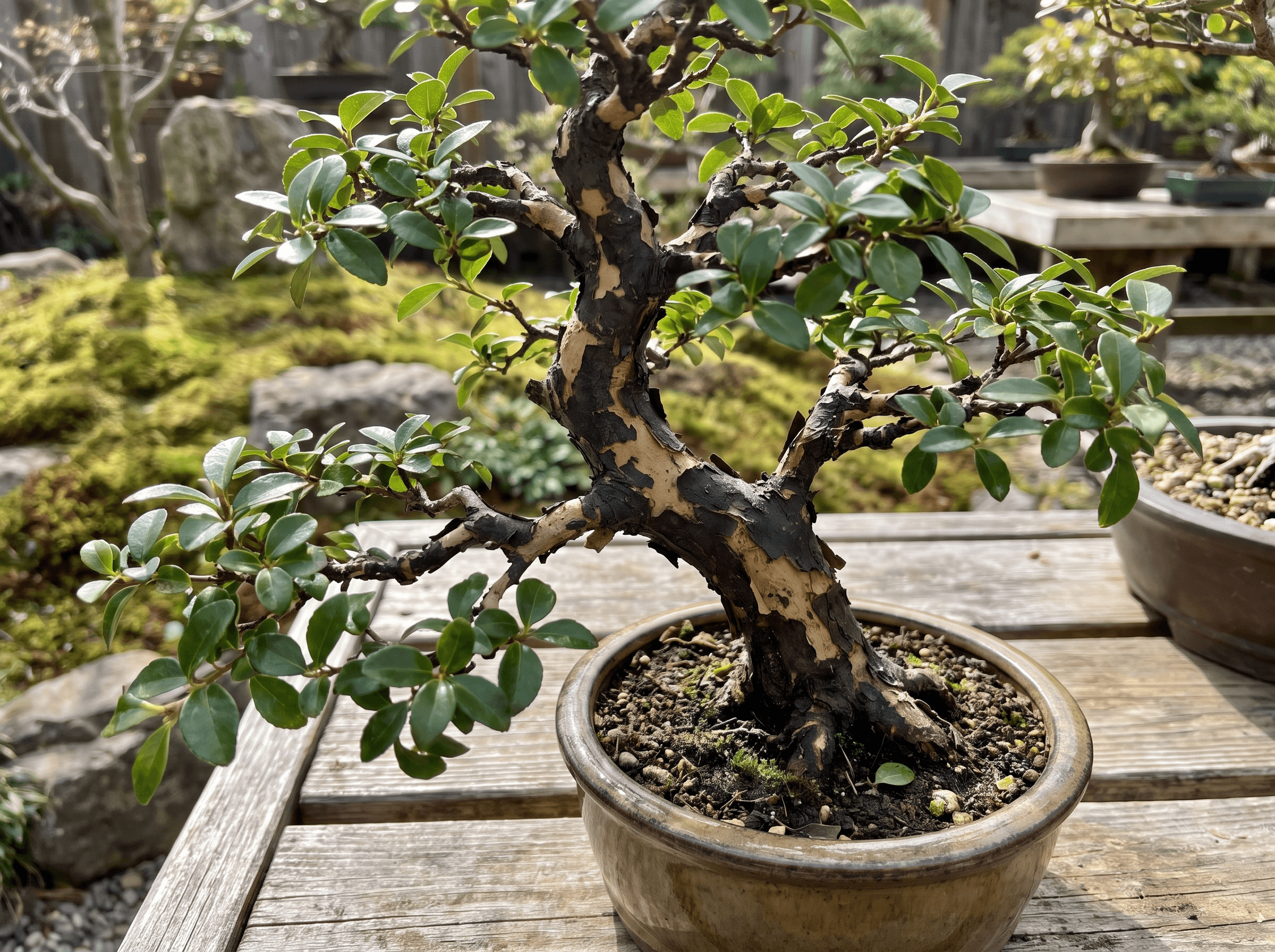
Sageretia is one of those species that gets recommended to beginners far too often, usually because of how it looks in the shop: small glossy leaves, a trunk already flaking into little grey-brown plates with lighter new bark showing through underneath, a mature shape sitting in a tiny pot for not much money. It photographs beautifully and it's genuinely one of the most attractive barks in bonsai, on par with some much older, much more expensive material. What it isn't, and I say this every time someone asks me about it, is an easy first tree.
This is a subtropical evergreen, native to warm parts of China and Southeast Asia, and it wants to live like one: consistently warm, consistently bright, and consistently humid. The trouble is that most homes are warm and bright but not remotely humid, especially with central heating running in winter, and sageretia takes that mismatch personally. I've had customers bring me a tree that looked perfect three weeks earlier and is now dropping leaves by the dozen, and nine times out of ten the answer is dry air rather than anything wrong with their watering or light.
The common misconception is that small-leaved, compact-looking trees are automatically low-maintenance houseplants. Sageretia's leaf size has nothing to do with how forgiving it is. It's actually one of the fussier species commonly sold as indoor bonsai, right up there with ficus in terms of popularity but considerably less tolerant of neglect. If you can give it warmth, strong light, and humidity that doesn't crash the moment the heating switches on, it rewards you with dense, glossy growth and that bark. If you can't, it will tell you quickly.
Care
Light
Give it the brightest spot you have, but that's not quite the same as full, unfiltered sun. A south-facing windowsill works through most of the year, though the midday sun intensified behind glass can scorch leaves, so filter or ease it back during the strongest part of the day. Outdoors through the warm months, a sheltered, semi-shaded spot out of harsh midday sun tends to suit it better than fully open exposure. Indoors year-round, low light causes leggy, sparse growth and thin, pale foliage instead of the tight, dense canopy this tree is meant to have. If your only indoor spot is dim, a grow light running several hours a day makes a real difference, and I'd say it's close to essential for anyone without a bright south-facing window.
Watering
Keep the soil consistently and evenly moist, never bone dry and never waterlogged. This is a narrower target than most bonsai species tolerate. Letting the root ball dry out fully, even once, tends to trigger a wave of leaf drop that can take weeks to grow back from, while sitting permanently wet invites root rot just as fast. I check mine most days rather than working off a schedule, watering thoroughly when the surface starts to feel dry rather than waiting for the whole pot to dry through. Rainwater or filtered water is worth using if your tap water is very hard or heavily mineralised, since sageretia can be a little sensitive to calcareous water.
Temperature & hardiness
This isn't a tree for routine outdoor exposure through a cold winter. Sageretia can tolerate a very brief dip just below freezing, but it isn't reliably frost-hardy, and for good health it's best kept around 10 to 12°C or above through the colder months rather than pushed anywhere near its survival limit. In Southern Italy that usually means it can live outdoors for most of the year and only needs to come in during the coldest stretches, but further north it's realistically an indoor or greenhouse tree with summer holidays outside. What it does need, indoors or out, is warmth paired with humidity, not warmth alone. A hot, dry radiator shelf is worse for this species than a cooler, more humid spot.
Soil & potting
A free-draining but moisture-retentive mix suits sageretia best, something like akadama with a portion of pumice or a similar coarse, inorganic component. You want water to move through the pot without pooling, but you don't want the mix drying out within hours the way a very open, fast-draining conifer mix would. Given how easily this species drops leaves from moisture stress in either direction, getting the substrate right matters more here than it does for tougher species, since it buys you a margin for error on watering days you can't be as attentive as you'd like.
Fertilizing
Feed regularly through spring and summer with a balanced liquid or solid organic fertiliser, tapering off as growth slows into autumn. Because sageretia is often grown with year-round leaf cover rather than a hard dormancy, especially indoors or in mild climates, some light feeding through a mild winter is fine as long as the tree is still actively growing, just reduce the frequency. Weak, frequent feeding tends to work better than occasional strong doses for this species.
Pruning & wiring
Sageretia backbuds readily and tolerates fairly regular pruning, which is one of the genuinely easy things about growing it. Pinch or trim new shoots back to one or two pairs of leaves through the growing season to build density and keep the canopy tight. Wiring works, but be gentle with young branches, they're brittle and snap more easily than you'd expect from how flexible they look, and take real care not to wrap wire tightly over developing bark, since that flaking texture is one of the tree's best features and damaged young bark doesn't recover the same pattern once it's been crushed under wire.
Repotting
Repot roughly every two years for younger trees, extending the interval as the tree matures. Early spring, just as growth is picking up, is the most commonly recommended window, though some growers repot sageretia in mid-summer instead, so treat the exact timing as somewhat flexible rather than fixed. Sageretia has a fairly fine root system that responds well to a moderate root trim, but avoid removing too much at once, this species doesn't have the same aggressive recovery power as a tough deciduous species and prefers a gentler approach. Keep humidity and warmth up for a couple of weeks afterward and hold off on hard pruning until you see clear new growth confirming the roots have settled back in.
Common problems
Leaf drop is the defining complaint with sageretia, and low humidity combined with dry indoor air is behind most of it, particularly in winter when heating runs constantly and ambient humidity in a house can drop to levels this tree simply doesn't tolerate well. A tray of water and pebbles under the pot, grouping plants together, or a small humidifier nearby all help more than people expect. Aphids, whitefly, scale, and mealybugs are the pests most often reported on this species, along with spider mites, which thrive in exactly the hot, dry, still air that stresses this tree in the first place, so a pest problem and a humidity problem often show up together. Check new growth and the undersides of leaves periodically rather than waiting for visible damage before treating. A soft, dark trunk base or a sour smell from the soil points to root rot from a mix that's staying wet too long, which is the other side of the watering balance this species demands.
Styling
Sageretia's bark is really the star of the show, so styles that expose trunk and lower branch structure tend to suit it better than dense, foliage-heavy designs that hide it. Informal upright is the most common approach and shows off the trunk line and flaking bark well as the tree matures. Root-over-rock and exposed-root (neagari) styling both work nicely too, since sageretia produces attractive, gnarled surface roots with a bit of encouragement, adding another textural layer alongside the bark. Because young material is inexpensive and easy to source, group or forest plantings are also a popular and forgiving way to work with this species while individual trunks develop character.
Common questions
Can sageretia bonsai live indoors permanently?
Yes, more reliably than many species, but only with consistently bright light and, critically, humidity that doesn't crash when heating is running. A dim room or a hot, dry radiator shelf will cause steady decline even if the tree technically survives, so indoor placement needs real attention to those two factors rather than just a spot near a window.
Why does my sageretia keep dropping leaves?
Low humidity is the most common cause by far, especially in winter with heating on. Letting the soil dry out fully, sudden temperature swings, and moving the tree to a very different light level can all trigger leaf drop too. Check humidity and watering consistency before assuming anything more serious is wrong.
How can I raise humidity around my sageretia?
A humidity tray of water and pebbles under the pot, grouping several plants close together, or running a small humidifier nearby all help. Misting the foliage gives a brief boost but it's short-lived and not a substitute for genuinely raising ambient humidity in the room.
Is sageretia a good species for a beginner?
Honestly, not really, despite how often it's marketed that way. It demands more consistent attention to humidity and watering than tougher species like ficus or Chinese elm. It can be a rewarding second or third tree once you've got a feel for daily bonsai care.
Can sageretia bonsai tolerate cold or frost?
Not reliably. It can tolerate a very brief dip just below freezing, but it isn't frost-hardy, and for good health it's best kept around 10 to 12°C or above through winter rather than tested near its limit. In mild climates it can spend most of the year outdoors and only needs protection during the coldest weeks, but in colder regions it's realistically an indoor or greenhouse tree year-round, with time outside in summer if you like.
Does sageretia bonsai flower or produce fruit?
Yes, mature trees can produce small white flowers followed by tiny berries that ripen through red to black, though this is more common on trees grown with strong light and stable conditions outdoors or in a bright greenhouse than on trees kept in a dim indoor spot.
Why is the bark on my sageretia flaking?
That's completely normal and one of the species' best features. Mature sageretia bark naturally sheds in small plates, revealing lighter, smoother new bark underneath, and it becomes more pronounced as the trunk ages. It's not a sign of disease, just don't wire tightly over young developing bark, since crushing it under wire can spoil that texture.
You might also like
General guidance based on 20+ years of practice. Every tree and every climate is different — when in doubt, ask us.