
Wisteria Bonsai Care
Wisteria floribunda / Wisteria sinensis
Wisteria bonsai is grown for one thing above everything else: the hanging racemes of flowers that turn a plain woody vine into the most photographed tree in a collection for two or three weeks a year.
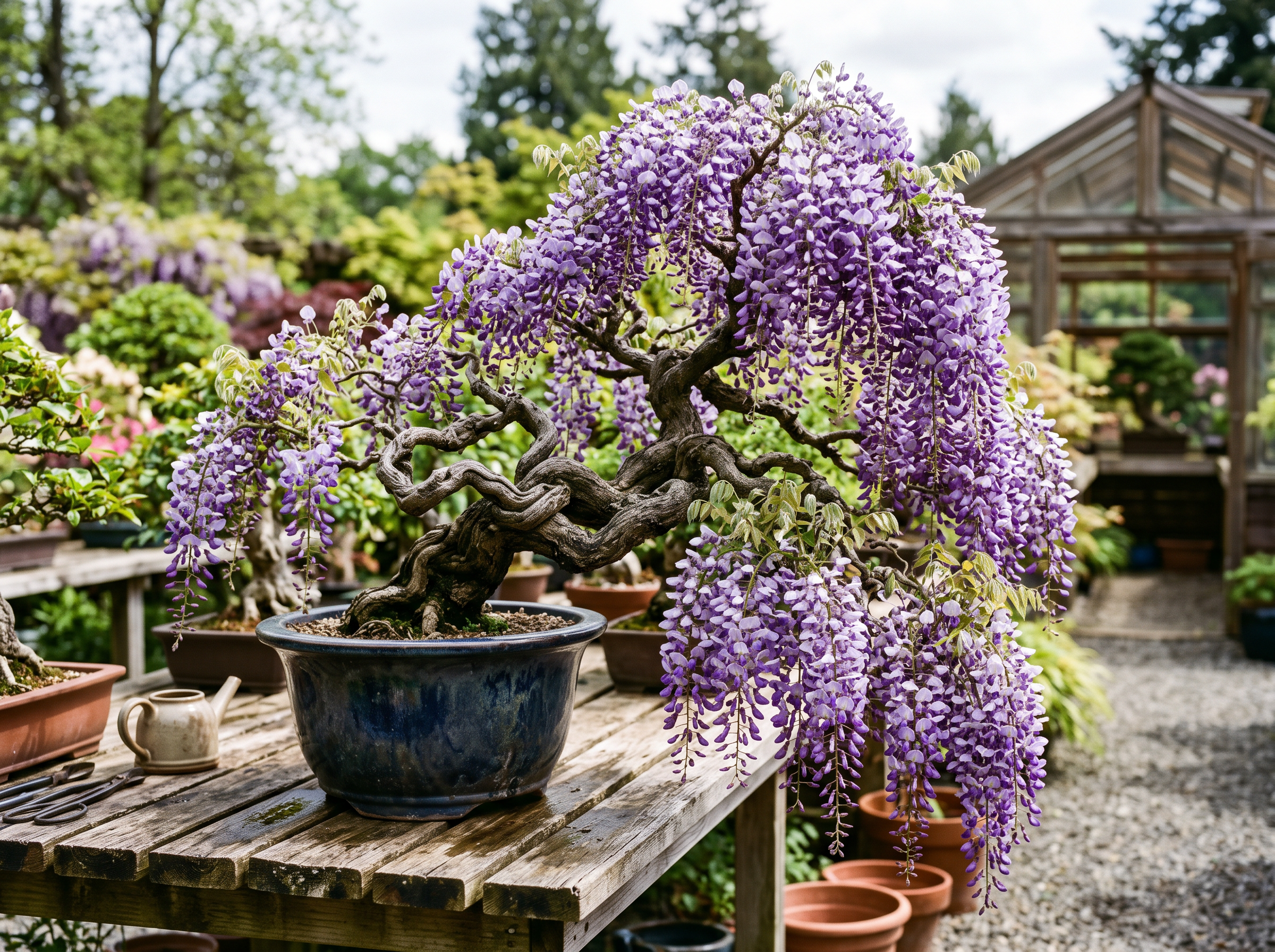
Wisteria isn't really a tree, and I say that to every beginner who brings one to me expecting it to behave like a maple or a pine. It's a vigorous climbing vine that happens to make an extraordinary bonsai subject once you accept its habits instead of fighting them. The whole point of growing one is the flower display, cascades of purple, white, or pink racemes that can run longer than the pot is wide, and everything about the way you care for it should be aimed at getting a strong bloom rather than a tidy silhouette.
Most people who fail with wisteria bonsai fail at flowering, not at keeping the plant alive. It grows readily, throws long whip-like shoots with real enthusiasm, and looks green and healthy for years while stubbornly refusing to produce a single flower bud. That's almost never a disease problem. It's usually too much shade, too much nitrogen, or a plant that simply hasn't been treated the way a flowering-focused vine needs to be treated, which is different enough from ordinary bonsai care that I think of wisteria as its own category.
This is strictly an outdoor tree and needs full sun to have any chance of blooming well. It also needs more root volume and heavier feeding relative to its pot size than almost anything else you'll grow as bonsai, because a vine that size wants to support a huge sprawling structure and you're asking it to do that from a shallow container. Understand that trade-off going in and wisteria is genuinely rewarding. Treat it like a slow woody tree and you'll get years of leaves and no flowers at all.
Care
Light
Give it the sunniest spot you have, full sun for as much of the day as possible. Full sun gives the strongest, most reliable flowering, and this is not a species where partial shade is a comfortable trade-off. Flower bud formation depends directly on how much light the plant receives the previous summer, and a wisteria grown in dappled or morning-only sun will often put out plenty of leaf growth and considerably fewer buds worth mentioning. If your growing space has any choice involved, wisteria gets the best spot before anything else in the collection.
Watering
Wisteria drinks heavily once it's in leaf, more than most people expect from something in a bonsai-sized pot. The huge leaf surface area and the vine's naturally vigorous growth habit pull water fast, especially through late spring and summer, and a pot that dries out even briefly during this period will show it quickly with wilting foliage. I check mine at least once a day in the growing season, sometimes twice during a hot stretch. It's less fussy about brief dryness once dormant in winter, but during active growth this is not a plant to be casual about.
Temperature & hardiness
Both common bonsai species, floribunda and sinensis, are hardy deciduous plants that need a real winter chill to set flower buds properly the following spring, so this isn't a tree to bring indoors for protection. Roots in a shallow pot are more exposed to hard freezes than roots in open ground, so some protection for the container itself, an unheated shed, a cold frame, or mulching pots together, is sensible in a severe winter. What matters most is that the plant genuinely experiences cold dormancy rather than being kept artificially mild.
Soil & potting
Wisteria wants a reasonable amount of root volume while it's young and building trunk and structure, since it's a vine built to spread and support a much larger structure than a typical bonsai tree of the same girth. A free-draining bonsai mix, akadama with pumice and some organic content works well. Once the tree is established, though, the balance shifts: a wisteria that's a little root-bound tends to put more energy into flowering rather than just throwing more vine growth, so there's a real tension between giving a young tree enough room to develop and letting an established one tighten up to encourage bloom.
Fertilizing
This is the species where feeding strategy actually changes what the tree does, not just how fast it grows. Early in the season a balanced feed supports the initial flush, but going into summer I deliberately cut back on nitrogen to push the plant toward setting flower buds rather than just throwing more vine growth. Too much nitrogen late in the season is one of the most common reasons a healthy, vigorous wisteria never flowers. Feed generously overall, this is a hungry plant, but be deliberate about what you're feeding it and when.
Pruning & wiring
Wisteria is relentless. Left alone it throws long whip-like runners several times over a single growing season, and managing that growth is most of the ongoing work of keeping one as bonsai. I trim long new runners back hard through summer, generally after flowering finishes, and then cut back again in winter to two or three buds on each shoot, which encourages the short flowering spurs to form instead of more bare vine. Learn to tell fat, rounded flower buds from slimmer vegetative ones before you cut, since removing the wrong growth costs you next year's display. Wiring is best done on younger wood while it's still flexible, because established wisteria trunks thicken and stiffen fast and older wood can be brittle to bend.
Repotting
Young wisteria generally benefits from repotting every two years, extending to every three to five years as the tree matures, since the root system expands quickly while young. Many growers actually let wisteria become somewhat root-bound on purpose, since a plant that's too comfortable in a large pot tends to put its energy into vegetative growth rather than flowering. Timing involves a real trade-off: early spring before growth starts favours vegetative development and trunk building, while repotting right after flowering better preserves that year's bloom. The roots can be thick and somewhat brittle compared to a fine-rooted species, so work carefully when combing them out, and get the plant back into a free-draining mix with enough volume to support the feeding schedule this species needs.
Common problems
By far the most common complaint I hear is a wisteria that grows beautifully and never flowers, and nine times out of ten that traces back to insufficient sun, too much nitrogen late in the season, or a plant that's simply too young or too vigorous vegetatively to have shifted into flowering mode yet. Aphids love the soft new growth in spring and can cluster thickly on young shoots and developing flower buds, so check those closely as growth starts. Powdery mildew shows up as a pale dusty coating on leaves in humid, still conditions with poor airflow, more of an aesthetic problem than a serious one but worth addressing by improving air circulation around the plant. And because it's such a vigorous climber, an unmanaged wisteria will happily send a runner over a fence, a neighbouring tree, or the edge of the bench if you go more than a couple of weeks without checking on it.
Styling
Wisteria is usually trained as an informal upright or cascade with a sinuous, twisting trunk line that echoes how the plant naturally climbs and wraps around a support in the wild. Many growers train it over a rock, a piece of driftwood, or a purpose-built frame to give the woody trunk structure something to hold onto while the flowering canopy is allowed to spread and hang above it. It doesn't really work as a year-round formal display tree in the way a pine or juniper does, since it's bare and unremarkable for much of the year outside its bloom window, so most collections treat it as a seasonal showpiece brought forward specifically for the two or three weeks it's in flower, often displayed on a raised stand that lets the racemes hang freely below the pot's rim.
Common questions
Why won't my wisteria bonsai flower?
The usual causes are not enough direct sun, too much nitrogen fertiliser late in the growing season, or a plant that's still too young and vegetatively vigorous to have shifted into flowering mode. Full sun and a deliberate low-nitrogen feed from midsummer onward are two of the biggest levers you can pull.
Is wisteria a true bonsai tree or just a vine trained on a frame?
It's genuinely a woody climbing vine, not a tree in the strict sense, but it's been grown as bonsai for centuries and develops real trunk girth and bark character over time. Many specimens are trained with the help of a rock, driftwood, or a frame to give the trunk something to climb, which is a legitimate and traditional approach rather than a shortcut.
How much sun does wisteria bonsai need?
As much full, direct sun as you can give it. This is not a species where partial shade is a comfortable trade-off, since flower bud formation depends heavily on light exposure the previous growing season.
When should I prune wisteria bonsai?
Mainly by trimming long new runners back hard through summer, generally after flowering finishes, then cutting back again in winter to two or three buds on each shoot. This ongoing management, rather than one big prune at a fixed time, is what keeps the vine's vigorous growth in check and encourages flowering spurs instead of bare whip growth.
Does wisteria bonsai need to go outside in winter?
Yes. It needs a genuine cold dormancy period to set flower buds properly for the following spring, so it should stay outdoors through winter with protection limited to the pot itself in severe freezes, not brought inside to a warm room.
Why does my wisteria need such a big pot compared to other bonsai?
Wisteria is a vine built to support a much larger structure than its trunk size suggests, so it needs decent root volume and heavy feeding while it's young and developing. Once established, though, many growers deliberately let the roots fill the pot rather than upsizing further, since a wisteria that's a little root-bound tends to shift its energy toward flowering rather than just producing more vine growth.
Is wisteria bonsai poisonous?
Yes, the seeds and pods in particular contain compounds that are toxic if ingested, and other parts of the plant can cause stomach upset too. Keep it away from small children and pets who might chew on it, and wash your hands after heavy pruning sessions.
You might also like
General guidance based on 20+ years of practice. Every tree and every climate is different — when in doubt, ask us.