
Satsuki Azalea Bonsai Care
Rhododendron indicum (Satsuki)
Satsuki azalea is grown for one thing above all else, an early-summer flower display so spectacular it justifies the acidic soil and careful watering the species demands the rest of the year.
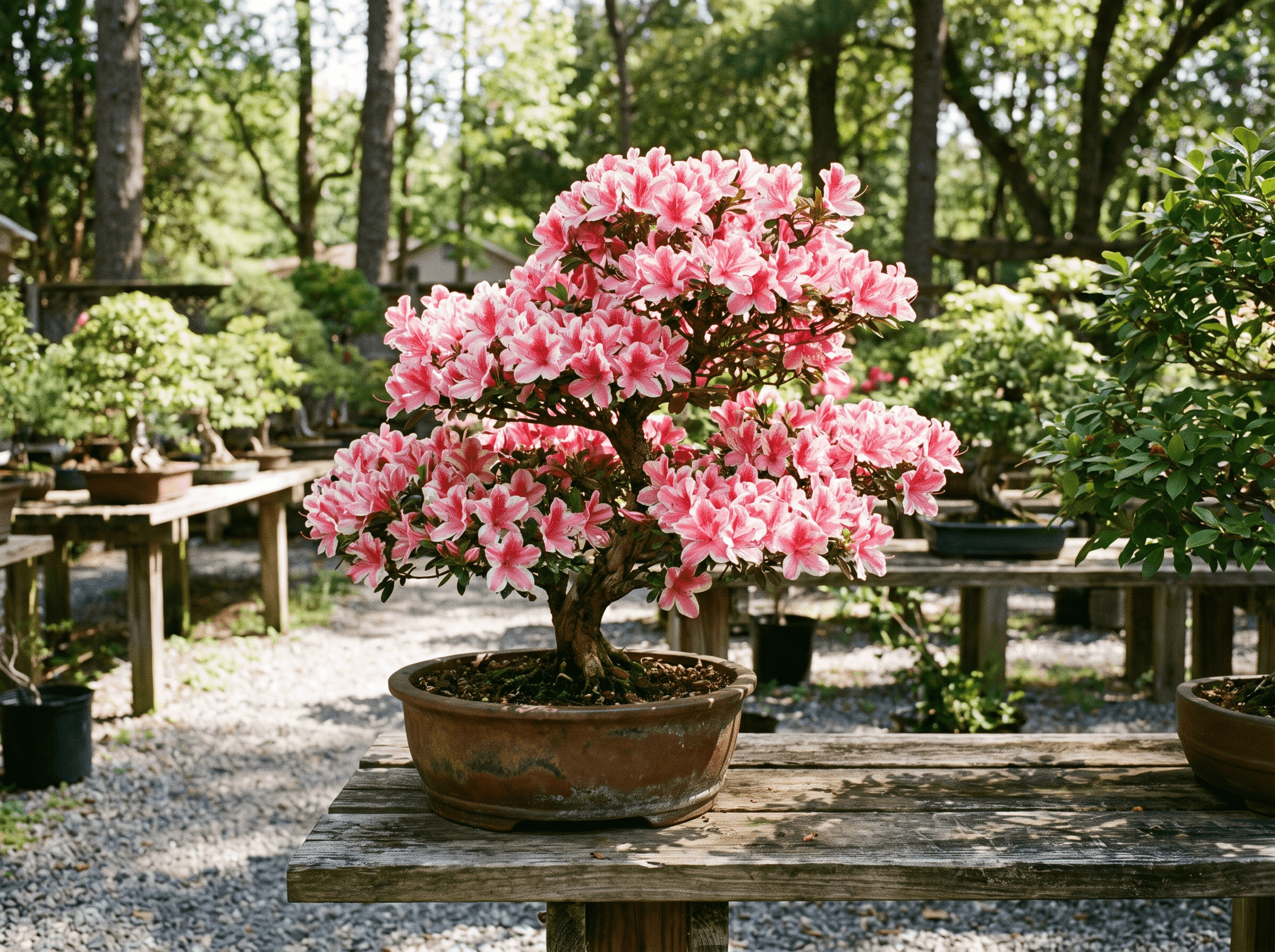
Satsuki holds a genuinely special place in Japanese bonsai tradition, and it's one of the few species where flowering quality is treated as seriously as trunk and branch structure at proper shows. Satsuki azaleas are generally Rhododendron indicum hybrids, blooming in early summer with a range of flower colors and patterns that can vary even on a single well-developed tree, sometimes showing more than one flower shape or color on the same plant, which is part of what makes a mature Satsuki so prized among growers who take flowering bonsai seriously.
The catch, and it's a real one, is soil. Satsuki needs acidic, well-draining substrate, typically kanuma, a soft, porous Japanese pumice specifically suited to acid-loving plants, and it does not do well long-term in regular garden soil or with alkaline water. I've seen otherwise well-cared-for Satsuki decline slowly over a season or two simply from being watered with hard, alkaline tap water, the leaves yellowing and the whole tree losing vigor in a way that's easy to misdiagnose as something else if you don't know to check water and soil pH first.
Root system matters just as much as soil chemistry. Satsuki has a shallow, fibrous root system, and in my experience it does much better in a wide, shallow container that matches how the roots actually want to spread rather than a deep one. And unlike most flowering or fruiting bonsai, the pruning window is strict: prune right after flowering, not before, since flower buds for the following year form later in that same growing season, and pruning too late in the season risks cutting off next year's flowers.
Care
Light
Full sun to bright partial shade, with some protection from the harshest midday summer sun in hotter climates, since Satsuki's leaves can scorch in prolonged intense heat, particularly during and right after flowering when the plant's energy is focused elsewhere. Good light overall supports strong flowering, but this isn't a species you want baking in unrelieved afternoon sun through a Southern Italian August.
Watering
Consistent moisture matters a great deal, more than with most species on this site, since Satsuki's shallow, fibrous roots don't have much soil volume to draw on and dry out faster than a deeper root system would in the same size pot. Water thoroughly and check often, especially through summer, but just as important as frequency is water quality: use rainwater or otherwise soft, low-alkalinity water whenever you can, since hard tap water gradually pushes the soil pH away from the acidic range Satsuki needs and causes slow decline that's easy to misread as a different problem entirely.
Temperature & hardiness
Satsuki is reasonably cold hardy and handles a normal outdoor winter without major issue, though some protection from hard, prolonged freezes is sensible given the shallow root system's limited buffer against cold compared to a deeper-rooted species. As a general threshold, protect the tree once temperatures drop much below about -5°C (23°F). It doesn't need the deep dormancy that a deciduous oak insists on, but it does want a genuine seasonal cycle rather than being kept artificially warm.
Soil & potting
This is the single most important care factor for Satsuki. Use kanuma or a comparable acidic, well-draining substrate; regular garden soil and standard alkaline-leaning bonsai mixes built for junipers or pines are not suitable. Kanuma's soft, porous structure also suits the shallow fibrous root system well, draining fast enough to avoid waterlogging while holding enough moisture between waterings. Pot in a wide, shallow container rather than a deep one, matching how the roots actually spread; in my experience a deep pot on a Satsuki tends to leave lower soil sitting wet and unused by the root mass, which is best avoided.
Fertilizing
Feed through the growing season with a fertiliser formulated for acid-loving plants, a common and reliable choice, avoiding anything that pushes soil pH toward alkaline over time. Time feeding around the flowering cycle: light or no feeding right before and during flowering, then resume more actively once flowering finishes and the tree moves into its main summer growth phase, supporting the new growth that will carry next year's flower buds.
Pruning & wiring
Prune right after flowering finishes, not before and not much later, since flower buds for the following year form later in the same growing season. Pruning outside that window, especially later in the season, risks cutting off next year's flowers entirely. Wiring works on the flexible new growth, but Satsuki branches can be somewhat brittle, so take care with older wood, and always wire with an eye toward the following year's bloom, since aggressive structural work timed poorly can cost you a season's flower display even if the tree itself recovers fine.
Repotting
Repot every two years for younger trees, easing to every two to three years as the tree matures, timed for right after flowering to align with the pruning window rather than disrupting the tree during or right before bloom. Given the shallow, fibrous root system, use a wide, shallow pot and fresh kanuma each time, and take care during root work since Satsuki's fine roots are more delicate than the woody root systems of species like oak or trident maple.
Common problems
Yellowing leaves with green veins, iron chlorosis, is a common issue with Satsuki, and it almost always traces back to alkaline water or the wrong soil, not a nutrient deficiency you can simply fertilise your way out of, switching to rainwater or soft water and confirming the soil is genuinely kanuma-based usually resolves it over a season. Spider mites, greenfly, and vine weevil can affect the foliage and roots, showing as stippled, discolored patches on leaves or general weak growth, particularly in hot, dry, low-airflow conditions. Root problems show up faster on Satsuki than on deeper-rooted species given how shallow the root system is, so a sudden wilt or leaf drop is worth investigating at the roots promptly rather than waiting to see if the tree recovers on its own. Flower bud loss is usually a pruning-timing mistake, cutting too late in the season, rather than a health problem.
Styling
Satsuki is traditionally styled with as much attention to flower display as trunk and branch structure, informal upright and formal upright forms are common, arranged so the bloom reads clearly rather than getting hidden inside a dense canopy. Serious Satsuki growers sometimes maintain a tree through multiple growing seasons focused as much on flower color, form, and consistency as on the woody structure underneath, since a mature Satsuki can show genuinely different flower patterns on different branches, and part of the craft is managing that variation deliberately rather than treating it as background detail. It's a slower, more specialized discipline within bonsai generally, and one worth approaching with real respect for the tradition behind it.
Common questions
What soil does Satsuki azalea bonsai need?
Acidic, well-draining substrate, typically kanuma, a soft Japanese pumice suited to acid-loving plants. Never use regular garden soil or a standard alkaline-leaning bonsai mix built for species like juniper or pine, Satsuki genuinely needs the acidic environment to stay healthy.
When should I prune my Satsuki azalea bonsai?
Right after flowering finishes, not before. Flower buds for the following year form later in the same growing season, so pruning too late in the season risks removing next year's flowers entirely.
Why are my Satsuki azalea's leaves turning yellow?
Most likely iron chlorosis from alkaline water or the wrong soil, showing as yellow leaves with the veins staying green. Switch to rainwater or soft water and confirm the soil is genuinely kanuma-based, this usually resolves over a season.
Can I use tap water on a Satsuki azalea bonsai?
Hard, alkaline tap water gradually pushes soil pH away from the acidic range Satsuki needs, causing slow decline over time. Rainwater or other soft, low-alkalinity water is strongly preferred for consistent, long-term health.
Why does Satsuki azalea need a shallow pot?
Because its root system is naturally shallow and fibrous, and doesn't use the lower soil volume of a deep pot effectively. A deep pot tends to leave that lower soil sitting wet and unused, inviting root problems rather than helping the tree.
Is Satsuki azalea a good beginner bonsai?
Not really the easiest starting point. The strict soil and water requirements, specific pruning timing tied to flowering, and shallow root system that needs careful watering make it a better fit for someone with some bonsai experience already.
How often does Satsuki azalea bonsai flower?
It blooms once a year in early summer, but a mature, well-developed tree can show a genuinely impressive range of flower colors and patterns, sometimes even different forms on different branches of the same tree.
You might also like
General guidance based on 20+ years of practice. Every tree and every climate is different — when in doubt, ask us.