
Deshojo Maple Bonsai
Acer palmatum 'Deshojo'
Deshojo is grown for one thing above everything else: the new spring growth comes out a bright, almost lacquered red, and for the first few weeks of the season the whole canopy looks like it's on fire before it settles down toward green for summer. It's one of the more popular Japanese maple cultivars I sell for exactly that reason, but the spring colour is also the part people misjudge, either by keeping it too shaded overall or by leaving the tender new growth in sun harsh enough to scorch the very leaves they're trying to show off.
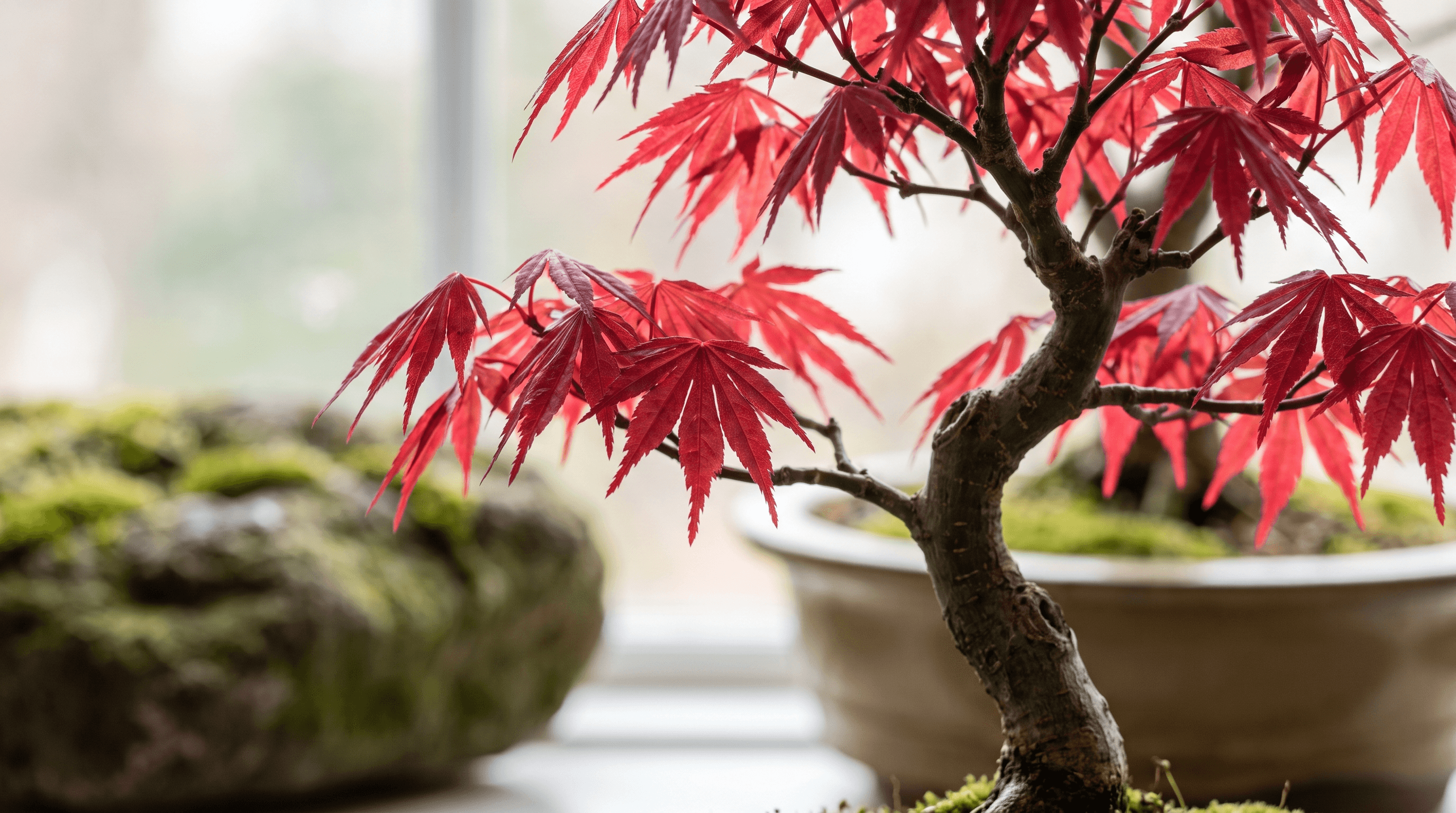
Acer palmatum 'Deshojo' is a selected cultivar of the ordinary Japanese maple, and underneath the spring colour it's still the same species with the same basic needs: it wants a real outdoor dormancy, consistently moist but well-drained soil, and it builds fine ramification the same way any Japanese maple does, through repeated pinching of new shoots across the growing season. If you've grown a standard Japanese maple before, most of what you know carries over directly. What's different is the reason people plant Deshojo in the first place, and that reason changes how you think about light and, to a lesser extent, feeding.
The red spring flush is the whole point of the cultivar, and it doesn't last. New leaves emerge a saturated red to reddish-orange, hold that colour for a few weeks while they're young and soft, then gradually green down as they mature through late spring and summer, sometimes leaving a faint reddish tint at the edges through the season depending on the individual tree and how much sun it gets. Many growers get a second, milder colour lift as the tree produces small flushes of new growth after summer pruning, and then proper autumn colour on top of that in October or November. It's worth knowing this cycle going in, because a Deshojo in high summer looks like an ordinary green maple, and that's normal, not a sign the tree has lost its character or reverted.
Care
Light
Give Deshojo bright outdoor light, ideally with morning sun and some protection from intense afternoon heat in warm climates. Deep, prolonged shade can reduce overall vigor and dull the spring colour, but don't chase a stronger red by exposing the tender new spring foliage to harsh, unfiltered sun; those young leaves are soft and scorch-prone, and pushing them into intense light for the sake of colour is more likely to crisp or bleach them than to deepen the red. The practical balance most growers land on is decent morning and early sun through the spring flush with protection from the harshest part of the day, then the same afternoon-shade routine as any other Japanese maple once summer heat sets in properly.
Watering
Water needs track ordinary Japanese maple closely: keep the soil evenly moist through the growing season and don't let it dry out fully, since the fine root system doesn't tolerate drought stress well and thin new leaves wilt quickly once the pot dries out. Good drainage still matters alongside that consistent moisture, and in a small pot during hot weather I'd expect to check a Deshojo at least once a day, sometimes twice during a real heatwave, the same as I would with the species generally.
Temperature & hardiness
Deshojo needs a genuine outdoor winter dormancy the same as any Japanese maple, and shouldn't be moved indoors to escape cold weather. It's reasonably cold-hardy overall, though the pot itself deserves protection from severe, extended hard freezes since a shallow bonsai container exposes roots more than open ground would. The seasonal risk that matters more day to day is late frost hitting the tree right after the spring flush has emerged, since that new red growth is soft and frost-tender in the same way any fresh maple growth is, so it's worth watching the forecast through early spring rather than assuming a warm early week means winter is over.
Soil & potting
A free-draining but moisture-retentive mix suits Deshojo just as it does any Japanese maple, since the tree wants consistent moisture without sitting wet. Akadama-based mixes, often with some pumice added for drainage, are a popular choice because akadama provides a useful combination of moisture retention and drainage while its structure remains suitable, though like any akadama mix it should be refreshed on a normal repotting schedule rather than left to break down indefinitely. Nothing about the red-flush habit changes the soil requirement; this is standard Japanese maple territory.
Fertilizing
Feed through the growing season once spring leaves have hardened off, tapering as autumn approaches, the same schedule as any Japanese maple. High nitrogen, especially pushed hard early in spring, tends to encourage coarse growth and longer internodes on maple bonsai generally, which works against the fine, compact look you want from a refined tree, so I favour moderate, steady feeding over heavy early doses. General plant vigor matters more than any fine-tuning around colour, since a weak or stressed tree won't colour well regardless of feeding schedule.
Pruning & wiring
Ramification building follows the standard Japanese maple approach. On refined trees, pinch selected strong shoots as they extend; on trees still building branches or trunk thickness, allow extension before cutting back, since repeated pinching on an undeveloped tree weakens it over time rather than helping. One thing worth knowing with Deshojo specifically is that legitimate structural or refinement pruning triggers a fresh flush of new shoots, and that new growth often comes in with a milder version of the red colour again as a welcome side effect, though it isn't a good reason to prune a tree that doesn't otherwise need it. Heavier structural cuts are best done in summer or early autumn rather than late winter, since maple bleeds sap heavily when cut while fully dormant. Wire on young, flexible growth as usual, and check it often since maple bark scars easily and Deshojo's isn't any tougher than the species norm.
Repotting
Repot on the same cycle as Japanese maple generally: every one to two years while young, extending out as the tree matures, done in early spring just before buds break. Nothing about the colour trait changes root behaviour, so treat the fine, fibrous root system with the same care you would on any maple, combing rather than raking hard unless you already know the tree responds well to more aggressive root work. Keep a freshly repotted tree sheltered from strong sun and wind for a couple of weeks afterward, since it's more vulnerable to leaf scorch right when you'd otherwise want it in good light for colour.
Common problems
The most common disappointment I hear about with Deshojo isn't disease, it's colour that comes in duller than expected, and while insufficient light is one possible cause, colour also varies with the tree's individual genetics, the stage of the seasonal cycle, weather, heat, and overall vigor, so it's worth looking at the whole picture rather than assuming one cause. Scorching on the new red leaves is a separate, related issue, showing up as crisped or bleached patches when a tender spring flush gets hit with harsh, unfiltered sun, moisture deficit, or drying wind before it's had a chance to harden, and late spring frost can also blacken this soft new growth. Beyond that, Deshojo is subject to the same issues as Japanese maple generally: aphids on new shoots in spring, leaf drop or wilting from either underwatering or waterlogged roots in summer heat, and fungal leaf spot in damp, poorly ventilated conditions. None of these are specific to the cultivar; they're standard maple troubleshooting, and the colour trait itself doesn't make the tree more disease-prone.
Styling
Deshojo suits the same refined deciduous styles that Japanese maple is known for generally, informal upright and broom form especially, where a dense, even network of fine branching is the goal once the leaves drop for winter. The extra consideration with a colour cultivar is timing the display: growers who want to show a Deshojo at its most striking plan around the spring flush specifically, and a summer prune done for legitimate structural reasons often brings a smaller second wave of red growth as a bonus rather than treating spring as the only colourful window. Other red-spring cultivars such as Seigen and Beni Chidori have their own tone and timing, and if you're choosing between them for a specific display or pot size, it's worth seeing more than one in person before deciding, since the differences can be subtle and vary tree to tree.
Common questions
Why did my Deshojo maple's spring colour come in weak or dull?
Light is one factor, but not the only one. Deep, prolonged shade can dull the colour and reduce overall vigor, but colour intensity also depends on the tree's individual genetics, the stage of the seasonal cycle, weather, and general growing conditions, so it's worth looking at the whole picture rather than assuming light is always the cause. Give the tree bright outdoor light with some morning sun as a starting point, without pushing tender spring growth into harsh, unfiltered sun to try to force a stronger red.
Why has my Deshojo turned green in summer? Is that normal?
Yes, completely normal. The red is a trait of new, young growth specifically, and it matures toward green as the leaves harden off through late spring and summer. Most Deshojo trees look like an ordinary green Japanese maple by mid-summer, with the colour returning to some degree in autumn.
How is Deshojo different from other red Japanese maple cultivars like Seigen?
They're closely related in effect, both prized for vivid spring colour, but each cultivar has its own particular tone, timing, and leaf character. The differences can be subtle and vary tree to tree, so seeing them side by side is worth more than reading a description if you're choosing between them.
Can I get a second flush of red colour on Deshojo later in the season?
Often, yes, at least to some degree. Legitimate structural or refinement pruning triggers a new flush of shoots, and that regrowth frequently carries a milder version of the spring red as a welcome side effect. It's worth pruning for the structural benefit first rather than cutting a tree that doesn't need it just to chase more colour.
Does Deshojo need different watering or soil than a regular Japanese maple?
No. The colour trait doesn't change root behaviour or moisture needs. Keep the soil evenly moist through the growing season in a free-draining but water-retentive mix, the same as you would for Japanese maple generally.
Is Deshojo maple harder to care for than a regular Japanese maple?
Not fundamentally, but it rewards more attention to light placement specifically. You're balancing enough sun to colour the spring flush well against protecting those same soft new leaves from scorch, which is a slightly finer line to walk than with a plain green Japanese maple.
General guidance based on 20+ years of practice. Every tree and every climate is different — when in doubt, ask us.