
Serissa Bonsai Care
Serissa japonica (also sold as Serissa foetida)
Serissa flowers almost the whole year round and looks effortless in a nursery display, which is exactly why so many people buy one and lose it within a season.
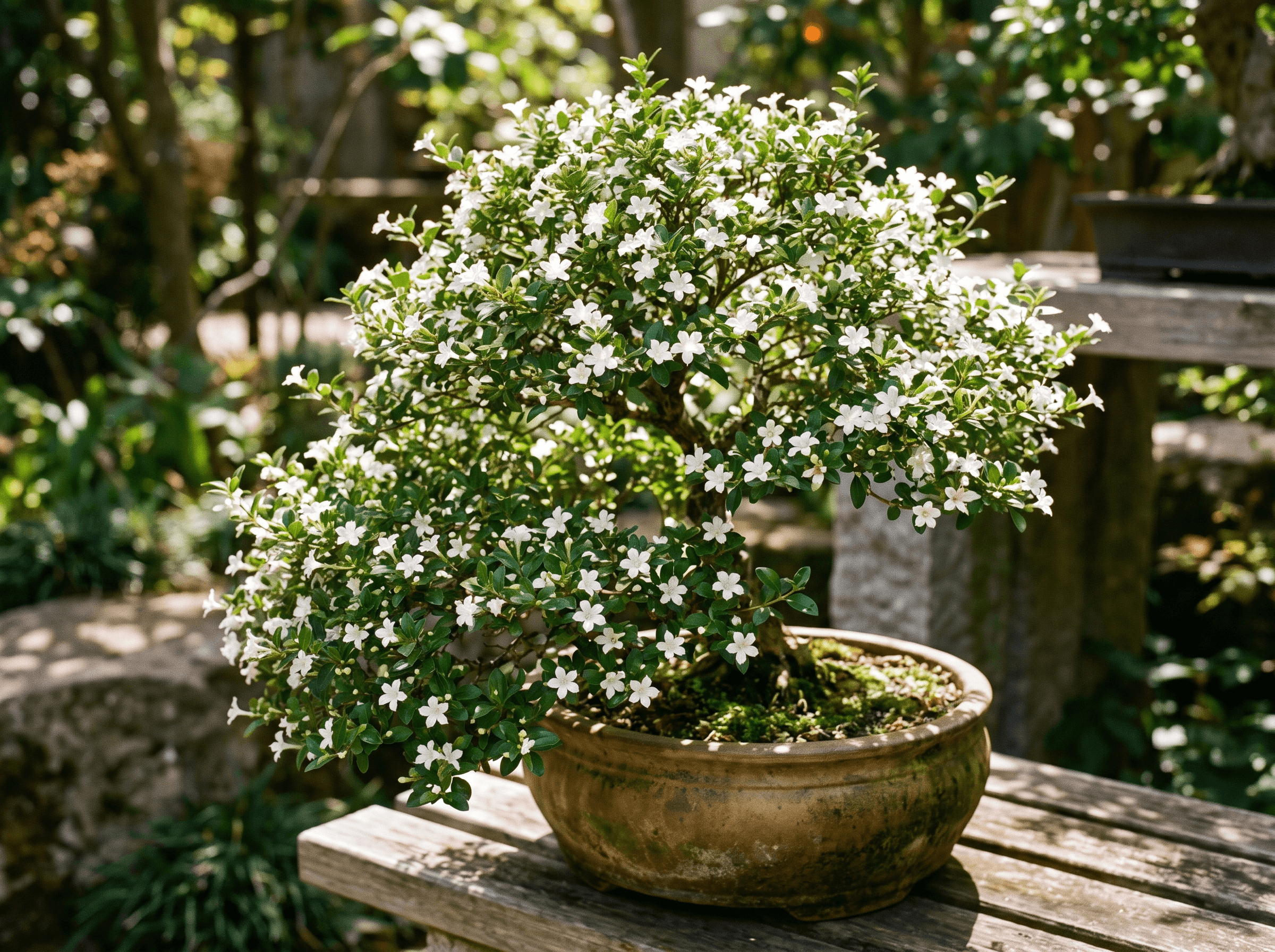
Serissa gets sold as an easy starter tree more often than any species I can think of, and it's the one I'd least recommend to someone who hasn't kept a bonsai before. The flowers are the draw: tiny white stars, sometimes pink or double on certain cultivars, appearing in flushes almost year-round rather than in one seasonal burst. That's genuinely unusual and genuinely beautiful. But the plant earns its old species name honestly. Foetida means foul-smelling, and if you cut into the wood or crush a leaf you'll notice it, a faint but real unpleasant smell that has nothing to do with disease or rot, it's just how the tree is built. You'll see it sold under both Serissa japonica and Serissa foetida; japonica is the more current name, foetida the older synonym, and either way you're looking at the same plant.
This is a subtropical shrub, not a hardy one, and that confuses people because it's marketed alongside junipers and other outdoor stock. In a Southern Italian climate it can live outside from late spring through autumn without any fuss, but it wants shelter once temperatures drop toward single digits, and abrupt moves between environments are exactly what it hates most. I've had customers bring one home from the shop, put it by a different window than the one it sat near in the nursery, and watch half the leaves fall off within a week. That's not damage, that's just serissa reacting to change.
The reputation for being fussy is deserved but overstated in one sense: once a serissa is settled into a stable spot with consistent light, warmth, and moisture, it's not actually demanding day to day. The problem is almost always the transition period, or an owner who keeps moving the pot around trying to find the 'right' spot. Pick a location, commit to it, and leave the tree alone to adjust. That's ninety percent of keeping this species alive long term.
Care
Light
Bright light to direct sun for most of the day suits serissa well, with the main caution being protection from intense summer afternoon heat, especially if the tree is kept near glass indoors where heat builds up fast. Outdoors in a sheltered, sunny spot works well through most of the year; it's really only the harshest midday summer sun behind glass, or in a still, hot corner with no airflow, that calls for a bit of filtering. Too little light and flowering drops off noticeably; you'll get healthy green leaves but far fewer of the tiny white blooms that are the whole reason to grow this tree in the first place.
Watering
Keep the soil consistently and evenly moist, never bone dry and never waterlogged. This is one of the least drought-tolerant common bonsai species I work with, and letting it dry out fully even once is a common trigger for sudden, alarming leaf drop. At the same time, sitting in soggy soil invites root problems just as fast. I check mine most days and water as soon as the surface starts to feel dry rather than waiting for visible wilting, because by the time a serissa looks thirsty it's often already dropping leaves in response.
Temperature & hardiness
Serissa is subtropical and has no real cold hardiness to speak of. It's genuinely happy outdoors through a Southern Italian spring, summer, and much of autumn, but once night temperatures start dropping toward 10°C consistently, bring it under cover, a bright, cool room or a lightly heated greenhouse suits it well. This isn't a species that goes through the kind of hard winter dormancy a juniper does, but that doesn't mean any warm room will do, it still does best somewhere cool and bright over winter rather than hot and dim, since warmth without matching light tends to produce weak, stretched growth. What it wants above all is stability: avoid cold drafts near doors and windows, and avoid moving it repeatedly between warm and cool spots, since that kind of fluctuation is what causes the sudden leaf drop this species is known for.
Soil & potting
Use a standard bonsai mix that drains well but still holds a reasonable amount of moisture; an akadama-based blend with pumice and a smaller proportion of lava rock is one approach that works well here, leaning slightly more moisture-retentive than the very fast-draining mixes I'd use for a juniper or pine. Serissa's fine root system doesn't appreciate long dry stretches between waterings, so a substrate that dries too aggressively works against you. Good drainage still matters, this isn't a bog plant, but the balance should lean slightly wetter than most conifer mixes.
Fertilizing
Feed lightly and regularly through the growing season, roughly spring into early autumn, using a balanced liquid fertiliser diluted to a gentle strength every couple of weeks. That's one workable regimen rather than the only correct one; some growers feed weekly at a lower dilution or use a monthly solid organic feed instead with similar results. Because serissa flowers in flushes rather than once a season, consistent light feeding supports both foliage and bloom production better than occasional heavy doses. Ease off through the cooler months when growth slows, and only continue a light feed through winter if the tree is genuinely still growing in stable warmth and good light, rather than as a routine habit.
Pruning & wiring
Serissa flowers on new growth, so light trimming through the growing season helps maintain a tight shape without shutting down bloom production. Trim young shoots back once they've hardened to around four or five leaves, and save any heavier structural pruning for early spring or for right after a flowering flush finishes, rather than cutting hard in the middle of a bloom cycle. Wiring works on young, still-flexible growth, but the wood turns brittle fairly quickly as it matures, so don't expect to bend older branches the way you might on a juniper. It doesn't bother me after twenty years, but if you're not used to it, know that fresh cuts and pruned wood carry that faint unpleasant smell the species is named for. It fades once the cut dries.
Repotting
Repot every one to two years for younger trees, moving to two to three years as the tree matures, timing it anywhere from early to late spring depending on your local conditions, once frost risk has passed and the tree is actively growing again. Serissa's roots are fine and don't love heavy disturbance, so work them gently, with only moderate root pruning, rather than aggressively combing out the root ball. Keep the tree warm, stable, and slightly shaded for a couple of weeks after repotting, and avoid repotting right before or during a flowering flush if you can help it, since the added stress tends to abort the buds.
Common problems
Sudden leaf drop is the single most common complaint I hear about serissa, and it's almost always a stress response rather than disease: a change of location, a cold draft, a shift in watering routine, or simply bringing the tree home from a warm nursery into a different environment. The tree usually recovers if conditions stabilise, though it can take weeks. Scale, aphids, and spider mites all show up occasionally on this species, scale and aphids more often on stems and new shoots, spider mites more often in hot, dry indoor air, and any of them are worth checking for if growth looks weak despite otherwise good care. Root rot from a cold, slow-draining, overly wet mix is the other major risk, showing up as blackened stems near the soil line and continued leaf loss even when the tree is technically getting enough water. And if a serissa that was flowering well suddenly stops, it's usually either insufficient light or the same stress response that causes leaf drop, just showing up in the flowers instead.
Styling
Serissa's fine branching and small leaves make it well suited to smaller sizes; in my experience shohin and mame forms show off the flowers nicely without the tree needing decades of development, though that's a matter of stylistic preference rather than a hard rule. Informal upright and clump or multi-trunk styles both work well, since the natural growth habit branches freely and responds to regular pinching with dense, twiggy ramification. Some growers also develop exposed-root styles, since the root system on an established plant can grow fibrous and visually interesting over time. This isn't a species I'd personally reach for if I wanted dramatic deadwood or aggressive trunk movement, the appeal here leans more toward fine detail and near-constant flowering than a bold silhouette, though that reflects my own preference more than a fixed rule of the species.
Common questions
Why is my serissa dropping leaves?
Almost always stress from a change in environment: a new location, a cold draft, a shift in watering, or simply being moved from the shop to your home. It's rarely disease. Settle the tree into one stable spot with consistent light and moisture and resist the urge to move it around while it recovers.
Can I keep serissa as an indoor bonsai?
Yes, more so than most bonsai species, since it's subtropical and doesn't go through a hard winter dormancy. It still wants bright light and steady humidity indoors, and it will struggle in a dim corner or near a drafty window. In a Southern Italian climate it can also spend spring through autumn outdoors in a sheltered spot.
Why does my serissa smell bad when I prune it?
That's normal. The older species name foetida literally means foul-smelling, and cut wood and crushed leaves release a faint unpleasant odor. It has nothing to do with rot or disease, it's simply a characteristic of the plant, and the smell fades as the cut dries.
How often should I water a serissa bonsai?
Check it daily. Serissa wants consistently moist soil and doesn't tolerate drying out fully, unlike more drought-tolerant bonsai species. Water as soon as the surface starts to feel dry rather than waiting for the tree to show signs of thirst, since visible wilting usually means leaf drop is already underway.
Is serissa a good bonsai for beginners?
I'd say no, despite how often it's sold that way. It flowers beautifully and looks approachable in a shop, but it's genuinely fussy about consistent conditions and prone to dramatic leaf drop if moved or stressed. A ficus or Chinese elm is a more forgiving choice if you're just starting out.
Why has my serissa stopped flowering?
Usually either insufficient light or the same stress response that causes leaf drop. Serissa flowers in flushes on new growth throughout much of the year, so a healthy, stable, well-lit tree should rarely go long without blooms. Check light levels first, then review whether anything in its environment has recently changed.
What temperature does serissa need in winter?
It has no real cold hardiness, so protect it once night temperatures drop toward 10°C. A bright, cool room or a lightly heated greenhouse works well, cool and bright suits it better than hot and dim. It doesn't need a hard winter dormancy the way outdoor conifers do, but it does need stable conditions and protection from drafts.
You might also like
General guidance based on 20+ years of practice. Every tree and every climate is different — when in doubt, ask us.