
Japanese Holly Bonsai Care
Ilex crenata
Japanese holly is holly with the sharp edges filed off, small rounded leaves instead of spiny ones, and while it still wants real light to do its best work, it tolerates a shadier courtyard spot better than most outdoor bonsai species would.
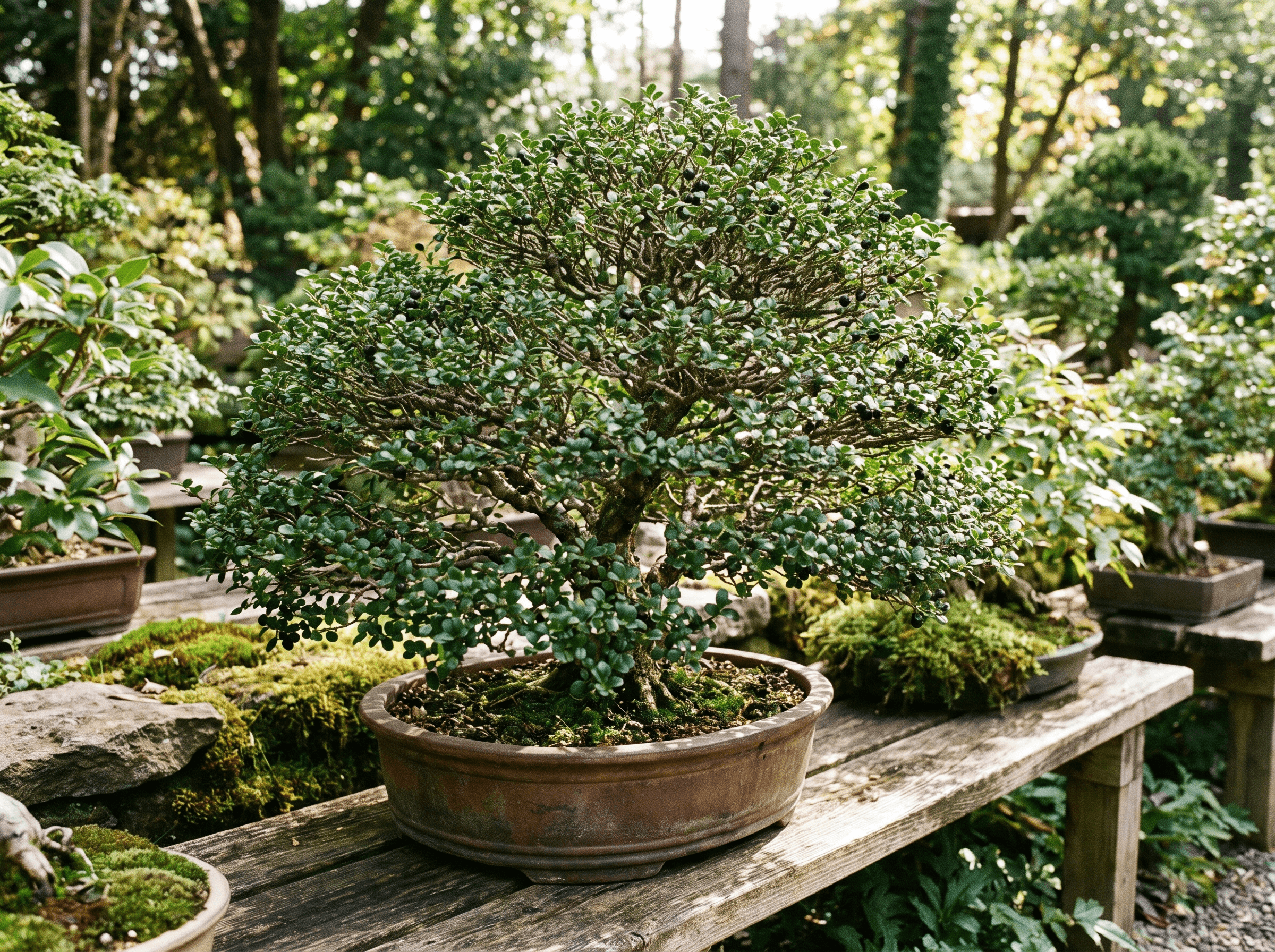
Ilex crenata gets confused with European holly constantly, and the mix-up matters because the two behave quite differently as bonsai material. European holly has those classic spiky, glossy, dark green leaves people associate with Christmas. Japanese holly doesn't, its leaves are small, rounded, almost boxwood-like, without a spine in sight, and considerably better suited to the fine, detailed twiggy structure bonsai growers actually want to develop. If you've handled a European holly and found it stiff and awkward to work with at small scale, Ilex crenata is a genuinely easier, more cooperative relative.
It's a slow, steady grower rather than a fast one, which suits people who enjoy the long game of bonsai development more than those chasing quick results. That slowness comes with an upside: dense, twiggy growth that responds well to patient pruning, building the kind of fine ramification that takes years to properly develop but holds its shape well once it's there. It still wants plenty of light to grow and ramify at its best, but it tolerates shade somewhat better than most outdoor bonsai species, which makes it a useful secondary option for a courtyard or balcony spot that only gets partial sun, somewhere a pine or juniper would decline outright.
One detail that trips people up: holly is dioecious, meaning individual plants are either male or female, and only female plants produce the small black berries associated with the species. If your holly has never berried, it may simply be a male plant, or a female one that hasn't been pollinated, rather than anything you're doing wrong in terms of care. It's a detail worth knowing before you go troubleshooting a non-existent watering problem.
Care
Light
Japanese holly wants a good amount of light to grow and ramify well, full sun to partial shade suits it, with a little relief from the most intense midday sun in the hottest part of summer being reasonable rather than routine. It is more shade-tolerant than most outdoor bonsai species, which gives it some flexibility for a spot that only gets a few hours of direct sun a day, but treat that as a fallback rather than the ideal, dense foliage and tight growth still depend on reasonably strong light. Outdoors year-round, adjusting position seasonally as needed, suits it well.
Watering
Keep the soil evenly moist, watering thoroughly when the top starts to dry and avoiding both prolonged drought and waterlogged conditions. Japanese holly isn't as fussy as some species about hitting a narrow moisture window, but consistency matters more than precision, avoid letting it swing between bone dry and soaked. In hot weather check more frequently, as with most bonsai in a shallow pot, but this is a fairly forgiving species on the watering front compared to something like rosemary or pine.
Temperature & hardiness
Japanese holly is reasonably cold hardy in the landscape, generally rated hardy through USDA zones 5a to 8b, needing the kind of seasonal dormancy that supports healthy long-term growth, though it's somewhat less extreme in its cold tolerance than a true alpine species like mugo pine or juniper. That in-ground rating doesn't fully carry over to a bonsai pot, though, a container gives the roots far less insulation than open ground, so protect the pot itself from strong or prolonged frost even within that hardiness range, and check what your own climate zone actually calls for rather than assuming a normal outdoor winter is automatically safe.
Soil & potting
A standard well-draining bonsai mix suits Japanese holly well, akadama blended with pumice or a similar coarse component works fine, giving good drainage while retaining enough moisture for this species' preference for consistent dampness. It's not a particularly demanding species in terms of substrate compared to some of the more specialised trees on this list, a solid general-purpose bonsai mix does the job without much need for fine-tuning.
Fertilizing
Feed through the growing season with a balanced liquid fertiliser roughly weekly, or a solid organic feed monthly, tapering off in autumn and stopping through winter dormancy. Given how slow and steady this species naturally grows, don't expect feeding to dramatically speed things up, Japanese holly develops at its own unhurried pace regardless of how well it's fed, though consistent feeding does support the dense, healthy foliage that makes the fine ramification this species is known for possible in the first place.
Pruning & wiring
Regular pruning through the growing season is the main tool for developing Japanese holly's characteristic dense, twiggy structure. A useful working rule is to let a new shoot develop about four leaves, then trim it back to two, repeating through the growing season to build density. If you want the small flowers and, on a female plant, the berries that follow, stop pruning by early summer rather than trimming right through the flowering window. Because growth is slow, changes take longer to show than on a more vigorous species, so patience matters more here than aggressive intervention. Wiring works on younger, flexible growth, but branches are genuinely brittle and the bark scars easily, so wire carefully, avoid overly tight wraps, and check regularly, a scar from crushed young bark doesn't disappear as the branch thickens.
Repotting
Repot roughly every two years for younger trees, timed for early spring before new growth begins, and given how slowly this species grows, mature specimens can often go somewhat longer between repots than a more vigorous tree would need. Japanese holly handles a moderate root trim reasonably well, comb out and reduce the outer root mass rather than the whole root ball, and keep the tree in a slightly sheltered spot with steady watering for a couple of weeks afterward while it settles back in.
Common problems
Japanese holly is a fairly resilient species, but a few issues do come up. Spider mites, leaf-miner moths, and vine weevil are the pests most often documented on this species, worth checking for periodically since early damage is easy to miss until a population has built up. Scale insects can also appear along stems occasionally, showing as small, hard bumps that don't wipe off easily. Leaf drop or yellowing can point to inconsistent watering, particularly repeated swings between dry and waterlogged, since this species prefers steady, even moisture over either extreme. Root rot from a poorly draining mix or a pot that stays wet too long is possible too, as with most bonsai. A tree that never produces berries despite otherwise healthy growth is very often simply a male plant, or a female without nearby pollination, rather than a sign of a care problem, worth ruling out before troubleshooting further.
Styling
Japanese holly's small, rounded, spineless leaves and naturally dense, twiggy growth make it particularly well suited to styles built around fine, detailed ramification, formal and informal upright forms let that layered branch structure read clearly, and the species holds a refined silhouette well once developed thanks to its slow, steady growth habit. Its shade tolerance also makes it a good choice for group or forest plantings positioned somewhere a sun-hungry species couldn't be displayed, and its tidy, boxwood-like foliage suits more restrained, formal compositions generally, rewarding the kind of patient, long-term development this species asks for rather than a quick dramatic transformation.
Common questions
Is Japanese holly the same as regular Christmas holly?
No, they're different species. Japanese holly (Ilex crenata) has small, rounded, spineless leaves, quite unlike the spiky, dark green leaves of European holly most people picture at Christmas. Ilex crenata is generally better suited to the fine, detailed structure bonsai growers aim for.
Why doesn't my Japanese holly bonsai produce berries?
Holly is dioecious, meaning individual plants are either male or female, and only female plants produce berries, and even then only with some pollination nearby. A berry-free plant is very often just a male, not a sign of poor care.
Can Japanese holly bonsai grow in shade?
It tolerates partial shade somewhat better than most outdoor bonsai species, giving some flexibility for a spot that doesn't get strong direct sun most of the day, but it isn't a shade-loving species. It still grows and ramifies best with reasonably good light, so treat shade tolerance as a fallback rather than the ideal.
How fast does Japanese holly bonsai grow?
Slowly and steadily. It's not a species that rewards impatience, but that slow growth is also why it holds fine, detailed branch structure so well once it's developed, changes take time to show but tend to stick once established.
Is Japanese holly bonsai cold hardy?
Reasonably so in the landscape, it's generally rated hardy through USDA zones 5a to 8b and benefits from a normal seasonal dormancy, though it's somewhat less extreme in cold tolerance than truly alpine species like mugo pine or juniper. A bonsai in a shallow pot has far less root insulation than the same plant in open ground, though, so protect the pot itself from strong or prolonged frost even within that hardiness range, and check what your specific climate zone actually calls for.
Is Japanese holly a good beginner bonsai?
Yes, reasonably. It's fairly forgiving on watering, tolerates some shade, and isn't especially demanding about soil, the main thing to accept going in is that it's a slow developer, so it suits someone patient rather than someone wanting fast visible results.
How do I get dense, twiggy growth on Japanese holly bonsai?
Regular pruning through the growing season, trimming new shoots back consistently, is the main driver of the tight, ramified structure this species is known for. Because growth is slow, results build gradually over seasons rather than appearing quickly after a single round of pruning.
You might also like
General guidance based on 20+ years of practice. Every tree and every climate is different — when in doubt, ask us.