
Itoigawa Juniper Bonsai
Juniperus chinensis 'Itoigawa'
If you've ever heard a bonsai grower say a juniper's foliage is exceptionally fine, they were probably talking about Itoigawa, a Shimpaku form of Chinese juniper prized for foliage sprays finer and brighter than the standard.
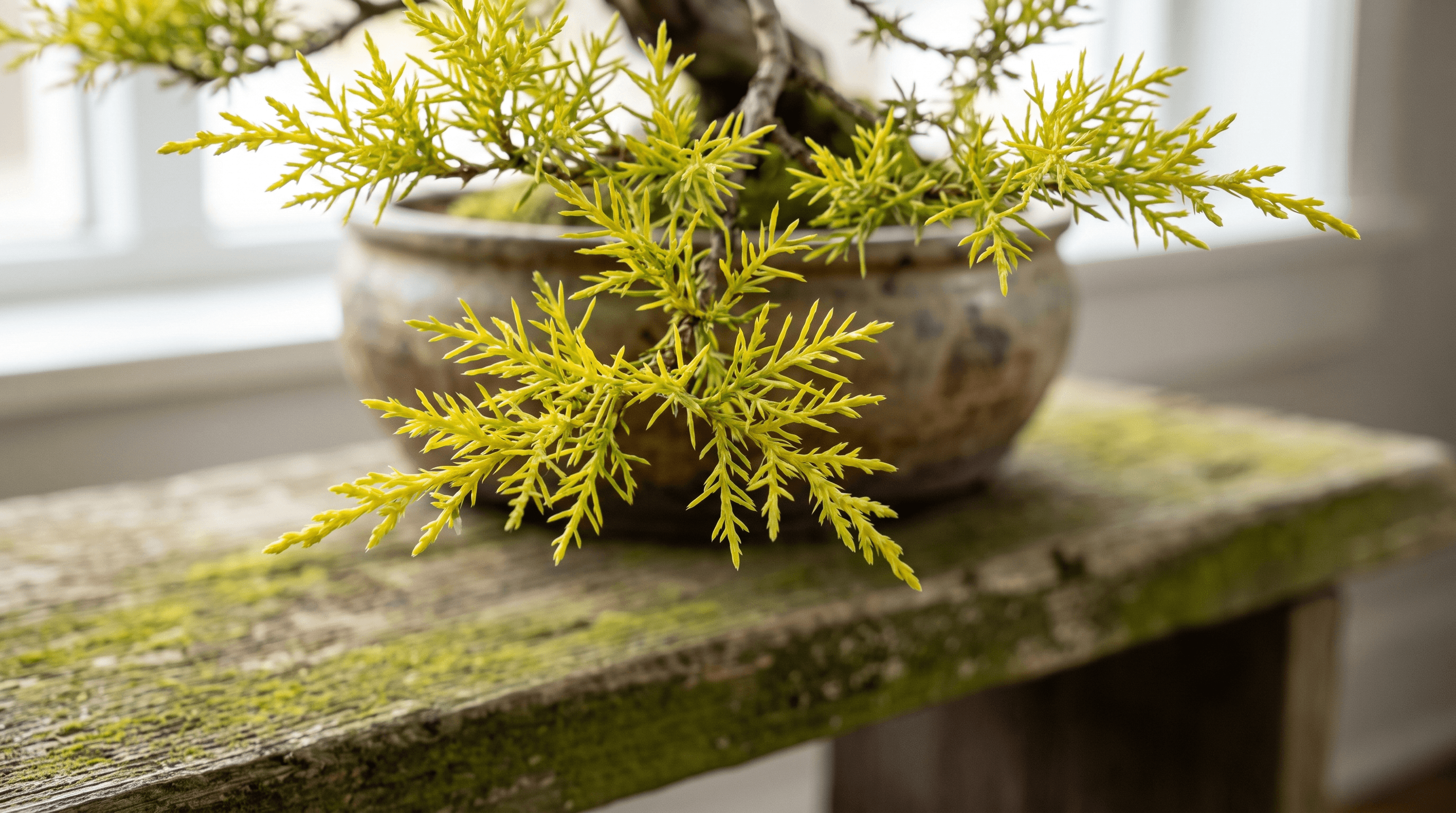
Itoigawa is a geographically distinctive Shimpaku form, or selection, of Chinese juniper that originated around the town of Itoigawa in Niigata Prefecture, reportedly discovered around 1910. It's often grouped with Shimpaku and Kishu because all three trace back to the same regional forms of Juniperus chinensis, but Itoigawa has earned its own name and reputation on the strength of its foliage. What sets it apart on the bench isn't a totally different look, it's degree: the sprays run finer and narrower than a standard Shimpaku's, with a distinctive bright, slightly yellowish green color that's easy to spot once you've seen it next to Shimpaku's slightly darker, bluer green. Growers who work with both cultivars regularly can usually tell them apart from foliage color alone before looking at anything else. I'd be careful calling it more compact than Shimpaku, though, some of the finest Itoigawa specimens I've seen actually read as more open and fan-like in their spray structure, it's the fineness and color that are the reliable tells, not density.
The tradeoff that comes with that very fine mature foliage is a real tendency to throw coarser, juvenile, needle-like growth after hard pruning or other significant stress, and if anything Itoigawa does this more readily than ordinary Shimpaku, not less. I've heard this framed the other way around, as though Itoigawa were the more forgiving of the two, and I think that's backwards based on what I've seen on my own bench and heard from other growers. The practical takeaway is the same one that applies across chinensis cultivars: let the tree grow strongly and allow shoots to extend before selectively pruning, rather than cutting hard, and mature scale foliage is much more likely to hold or return.
Growth rate is another area where I'd push back on the common wisdom. Itoigawa is often described as slower growing than Shimpaku, but that hasn't held up consistently in my own experience or in what other growers report, some see it grow faster, some slower, and climate, age, and root health seem to matter more than any inherent difference between the two. I wouldn't plan wire timing or repotting intervals around an assumption of slower growth. Itoigawa does tend to show up more as pre-developed or semi-refined material and less often as cheap raw nursery stock, which reflects how it's generally grown and sold rather than anything about its growth rate.
Care
Light
Full sun outdoors, same baseline as every juniper on this site. Itoigawa's fine foliage thins out in excessive shade just like any other chinensis cultivar, and given its tendency to throw juvenile growth under stress, it's not a cultivar to treat as shade-tolerant or especially forgiving of compromised light. Give it real, consistent sun for healthy, dense foliage, and rotate the pot if one side of your growing space gets more exposure than the other.
Watering
Water thoroughly when the soil surface starts to dry, then allow the substrate to dry slightly before watering again. Itoigawa's tighter, denser foliage pads can mask surface drying much like Shimpaku's do, shading the pot and making visual checks less reliable on a well-developed specimen, so checking by feel or probe rather than by eye alone is worth the habit. Overwatering in a slow-draining mix remains the bigger long-term risk than the occasional dry spell.
Temperature & hardiness
Genuinely cold-hardy, the same as other chinensis cultivars, and it needs a real outdoor winter with proper dormancy to stay healthy. Nothing about Itoigawa's refinement or value changes this baseline requirement, it's still a fully outdoor conifer, and bringing it indoors to protect an expensive specimen from winter is exactly the kind of well-meaning mistake that actually does the most damage.
Soil & potting
A fast-draining, mineral mix, akadama, pumice, and lava rock in roughly even parts or an equivalent coarse, inorganic local mix, suits Itoigawa well, same as any refined juniper cultivar. Given that Itoigawa specimens are often more developed, more valuable pieces by the time you're working on them, it's worth being a little more careful about mix quality and drainage consistency than you might be on cheap raw stock, since you're protecting more invested time and money against root problems.
Fertilizing
Feed through the growing season with a balanced or slightly nitrogen-forward fertiliser, tapering off into autumn and stopping over winter. Given Itoigawa's tendency to throw juvenile growth under stress, I lean toward moderate, consistent feeding rather than heavy doses on a refined specimen where you're trying to hold compact internodes and controlled extension. Heavier feeding is more appropriate on younger material you're still developing than on a tree you're trying to keep tight.
Pruning & wiring
Let healthy shoots extend through the season, then selectively prune overly long runners back with sharp scissors, cutting to a suitable lateral shoot or deeper within the foliage, rather than repeatedly pinching every tip or shearing the pads like a hedge. This matters more on Itoigawa than on most other junipers, continuous pinching and hard shearing are particularly likely to push this cultivar toward the coarser, needle-like juvenile growth it's already prone to, and once it reverts, restoring the fine mature foliage takes real patience. Thin interior growth occasionally too, so the dense outer foliage doesn't shade out and kill the interior over a season or two. Wiring is well tolerated and holds reliably, check regularly as branches thicken and remove wire before it bites in, growth rate isn't consistent enough on this cultivar to assume you have extra time before that happens. Leave live foliage on any branch you reduce, the same rule as every juniper.
Repotting
Repot in early spring, roughly every two years on younger, actively growing material as a starting point, checking root density and drainage each time rather than assuming a fixed schedule. Growth rate varies too much tree to tree and season to season to predict repot timing from the cultivar alone. Work the outer root mass gently, avoid a full bare-root, and return the tree to a fast-draining mix with a sheltered, lightly shaded spot and reduced watering stress for the first couple of weeks.
Common problems
Foliage reversion is actually more of a live issue with Itoigawa than with ordinary Shimpaku, hard pruning or significant stress can push it toward coarser, juvenile, needle-like growth fairly readily, so it's worth watching for after any heavy pruning session rather than assuming the cultivar is resistant to it. Recovery follows the same path as any reverted juniper: let the tree grow strongly and prune selectively with scissors rather than pinching hard, and mature foliage usually returns over a season or more. Beyond that, the usual juniper concerns apply: browning from watering trouble, spider mites in hot, still, dry air, especially inside a dense canopy with poor circulation, and a soft or discoloured trunk base signalling root rot. Because Itoigawa specimens are often more developed and more expensive than average nursery juniper stock, it's worth inspecting a new purchase's nebari and trunk base carefully before committing, since a problem you'd shrug off on cheap material is a much bigger loss on a refined piece.
Styling
Itoigawa is prized for the same dramatic, wireable styles as Shimpaku, literati, windswept, and semi-cascade forms that lean on strong trunk movement and fine, dense foliage pads to finish the composition, and its foliage arguably reads even better up close in these styles because of how fine and consistent it stays. It's also excellent for deadwood work, the official Itoigawa conservation project in Japan specifically highlights the cultivar's hard, durable wood, so it's not accurate to treat Itoigawa as a foliage-only cultivar next to Shimpaku's deadwood reputation, both are genuinely strong choices for jin and shari. Because specimens are often already semi-developed by the time they're sold, Itoigawa shows up regularly in more refined formal and informal upright compositions too, where the point is showing off dense, fine ramification on a well-established trunk rather than building raw material from scratch.
Common questions
What makes Itoigawa juniper different from Shimpaku?
Both are Shimpaku forms of Juniperus chinensis, but Itoigawa generally has even finer foliage with a brighter, more yellowish green color compared to Shimpaku's darker, bluer green. That fine foliage comes with a tradeoff, though: Itoigawa actually tends to throw coarser, juvenile needle growth more readily than Shimpaku after hard pruning or stress, not less, so it isn't the more resistant or forgiving option it's sometimes described as. Growth rate between the two varies too much by tree and conditions to call one reliably faster or slower.
Is Itoigawa juniper a good species for a beginner?
It's usable by a beginner but it's not the easiest starting point, mainly because it's often sold as more developed, more expensive material where mistakes cost more, and because its fine foliage is quick to revert to coarser juvenile growth if it's over-pruned or pinched hard, a mistake that's more forgivable on coarser, cheaper material. A procumbens Nana or plain chinensis is a gentler and cheaper place to learn fundamentals first.
Why is my Itoigawa juniper's foliage color different from other junipers I've seen?
That bright, slightly yellow-green color is a normal and distinctive trait of the Itoigawa cultivar, not a sign of stress. It's one of the easiest ways to visually tell Itoigawa apart from Shimpaku or plain chinensis, which both tend toward a darker, bluer green.
Is Itoigawa juniper more prone to reverting to juvenile foliage than Shimpaku?
Yes, if anything Itoigawa tends to throw juvenile, needle-like growth more readily than ordinary Shimpaku after hard pruning or significant stress, not less, despite sometimes being described the other way around. The fix is the same as for any chinensis cultivar: let shoots extend and grow strongly, then selectively prune with sharp scissors rather than pinching or shearing hard, and mature scale foliage typically returns within a season or two.
Can Itoigawa juniper be used for deadwood and jin carving?
Yes, and it's genuinely one of the better juniper cultivars for it, the official Itoigawa conservation project in Japan specifically highlights the cultivar's hard, durable wood for jin and shari. It's not accurate to treat Itoigawa as a foliage-only cultivar next to Shimpaku's deadwood reputation, both are excellent choices for carving.
How is Itoigawa different from Kishu juniper?
Both are Shimpaku forms of Juniperus chinensis and closely related, but the real difference is foliage character rather than tree size. Itoigawa tends toward finer, brighter, more open sprays with that distinctive yellow-green color, while Kishu is generally denser and thicker in the spray, and often considered less prone to throwing juvenile foliage than either Itoigawa or standard Shimpaku. Either can be trained at a range of sizes, from shohin up to larger specimens, it comes down to which foliage character and growth habit you prefer for a given tree.
General guidance based on 20+ years of practice. Every tree and every climate is different — when in doubt, ask us.