
Transitioning Out of Winter Dormancy
There isn't a date on the calendar when dormancy ends, there's a tree telling you it's ready, and the two don't always line up the way we'd like.
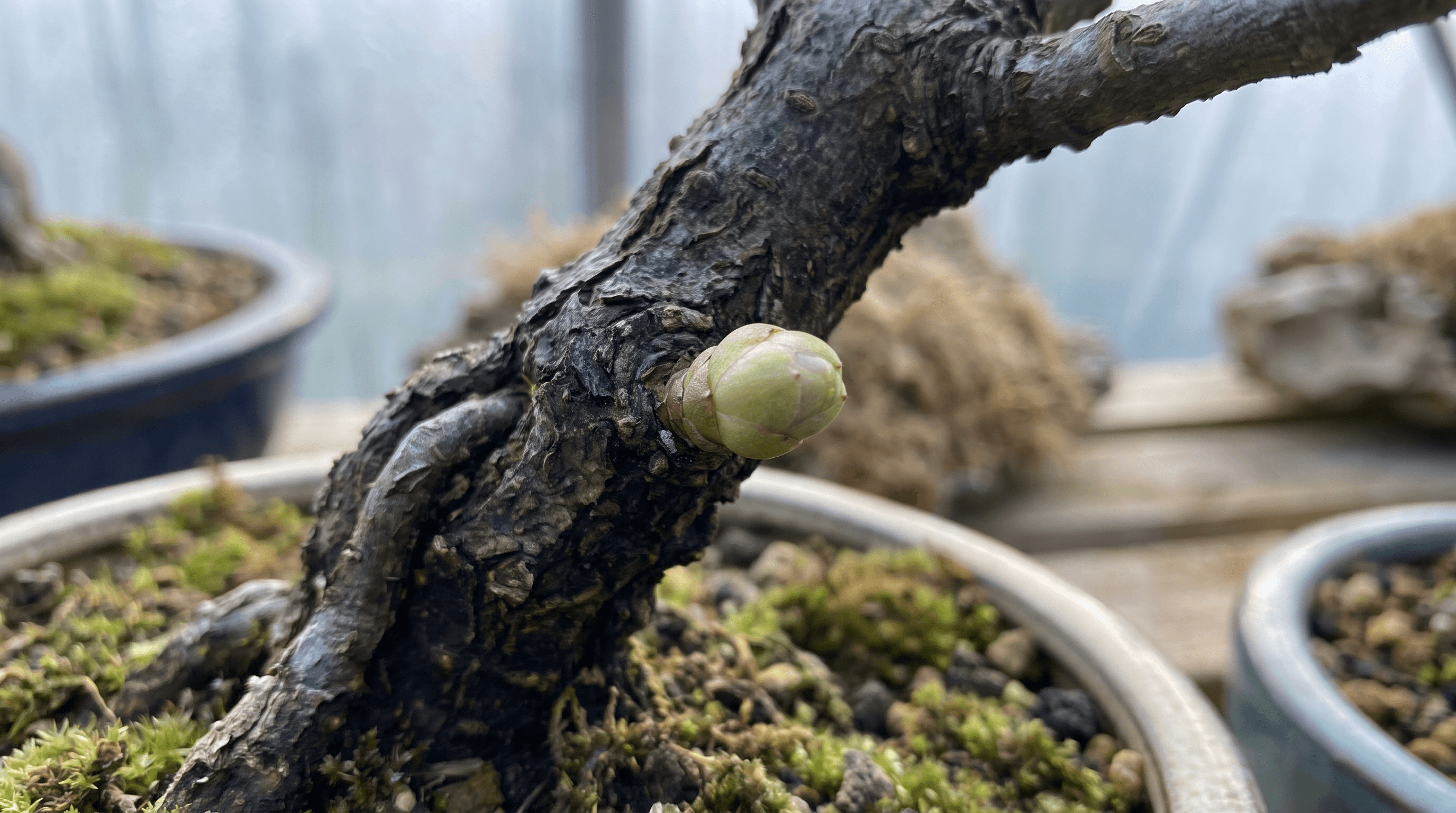
I get asked every year, usually sometime in February, when it's okay to start treating trees like it's spring again. Increase the water, start the light feeding, move things back to their full outdoor position. And every year my answer is the same, it depends on the tree in front of you, not the date on a calendar, because dormancy break timing shifts with how severe the winter was and varies quite a bit between species even in the same collection.
This transition period is really its own small season, sitting between full winter dormancy and the busier stretch of true spring work. Handled well, it's a gradual ramp, water increasing a bit at a time, light exposure building, care adjusting as the tree shows genuine signs of waking up. Handled poorly, usually by jumping straight from winter minimums to full spring treatment overnight, it can stress a tree that hasn't caught up to where you've decided it should be.
So this is about reading the signals rather than following a fixed schedule, and being willing to move at different speeds for different trees even when they're sitting right next to each other on the same bench.
Why the same date doesn't work for every tree or every year
Dormancy break is driven by accumulated temperature and daylight change, not by hitting a specific date on a calendar, which is why the same species can wake up two or three weeks apart in a mild winter versus a harsh one. Species differ just as much as years do. A juniper that stayed semi-active through a mild winter is in a completely different place than a deciduous maple that went fully dormant and dropped every leaf. I stopped trying to apply one timeline to the whole collection years ago, it just doesn't reflect how differently these trees respond to the same conditions.
Watching for real signs instead of guessing
The signals I watch for are swelling buds, any hint of green showing at bud tips, or new root tip activity visible if I check near the surface of the substrate. A few unusually warm days in late winter aren't the same thing as the season genuinely turning, and trees that respond to a brief warm spell with premature growth are often the same ones that end up with frost damage when a cold snap follows, which it usually does. I wait for signs that persist over more than a day or two of good weather before treating a tree as genuinely on its way out of dormancy.
Increasing water gradually, not all at once
Watering frequency should climb steadily as a tree shows real signs of waking, not jump straight from winter minimums to full growing season frequency in one step. I check the soil more often as days lengthen and the tree's activity visibly increases, adjusting gradually rather than switching to a new fixed schedule overnight. Jumping too fast risks oversaturating a root system that hasn't ramped its own water use back up yet, while being too slow to increase can leave a tree that's genuinely waking up short of what it now needs.
Light and position changes should follow the same gradual approach
For anything that spent winter in more sheltered conditions, whether that's a cold frame, under cover, or just tucked against a wall out of the wind, moving straight into full exposure the moment the season feels like it's turning risks a shock the tree isn't ready for. I acclimate gradually, giving a tree a bit more light and exposure over a period of days or a couple of weeks rather than making the full move in one go. New growth that's just starting to emerge is considerably more tender and vulnerable than the hardened growth that got the tree through winter, so a level of exposure the tree handled fine in December can genuinely stress it once new shoots are pushing out in March.
Holding off on feeding until growth is underway
I don't start feeding the moment I see the first sign of bud swell. I wait until new growth is visibly extending, real leaves opening or needles pushing, and then begin light feeding, building up gradually over the following weeks rather than resuming full strength immediately. Feeding too early doesn't speed up the transition, the tree simply isn't set up to use it yet, and it can add unnecessary stress to a root system that's still catching up to the rest of the tree's awakening. This is one of the easiest places to get overeager, and one of the easiest to hold off on if you're paying attention to what the tree is doing rather than what the calendar suggests it should be doing.
Common questions
How do I know when my bonsai is coming out of dormancy?
Look for real, persistent signs rather than a date on the calendar, swelling buds, green showing at bud tips, or new root tip activity near the substrate surface. A brief warm spell isn't the same as the season genuinely turning, so I wait for signs that hold for more than a day or two before treating a tree as truly on its way out of dormancy.
Do all my bonsai come out of dormancy at the same time?
No, timing varies by species and by how each individual tree experienced the winter, sometimes by weeks even within the same collection. I treat each tree on its own schedule rather than assuming that because one is showing activity, the others nearby should be too.
Should I increase watering all at once as spring approaches?
No, watering frequency should climb gradually as the tree shows real signs of waking, not jump straight from winter minimums to full growing season frequency overnight. Increasing too fast can oversaturate a root system that hasn't ramped its own water use back up yet.
When should I start fertilizing again after winter?
Wait until new growth is visibly extending, actual leaves opening or needles pushing, rather than starting at the first sign of bud swell. Begin light and build up gradually over the following weeks, since feeding too early doesn't speed anything up and can stress a root system that isn't ready to use it yet.
Is it risky to move a bonsai out of sheltered winter storage too quickly?
Yes, moving a tree straight into full outdoor exposure the moment the weather feels like it's turning can shock it, especially once new, tender growth has started emerging. I acclimate gradually over a period of days or a couple of weeks rather than making the full move in one step.
What happens if my bonsai starts growing early during a warm spell, then it turns cold again?
This happens most years to some tree in most collections. Premature growth triggered by a brief warm stretch is often the most vulnerable to a following cold snap, which is exactly why I wait for persistent signs rather than reacting to the first mild week of the season.
Can I use last year's dormancy break date as a guide for this year?
As a rough reference, sure, but not as a fixed rule. Dormancy break shifts with how severe or mild the winter was, so the same tree can wake up meaningfully earlier or later from one year to the next depending on conditions, and the actual signs on the tree matter more than last year's date.
You might also like
General guidance based on 20+ years of practice. Every tree, climate, and year is different — when in doubt, ask us.