
Spring Bonsai Care Checklist
Spring is the busiest stretch of the bonsai year, and the order you do things in matters almost as much as the tasks themselves.
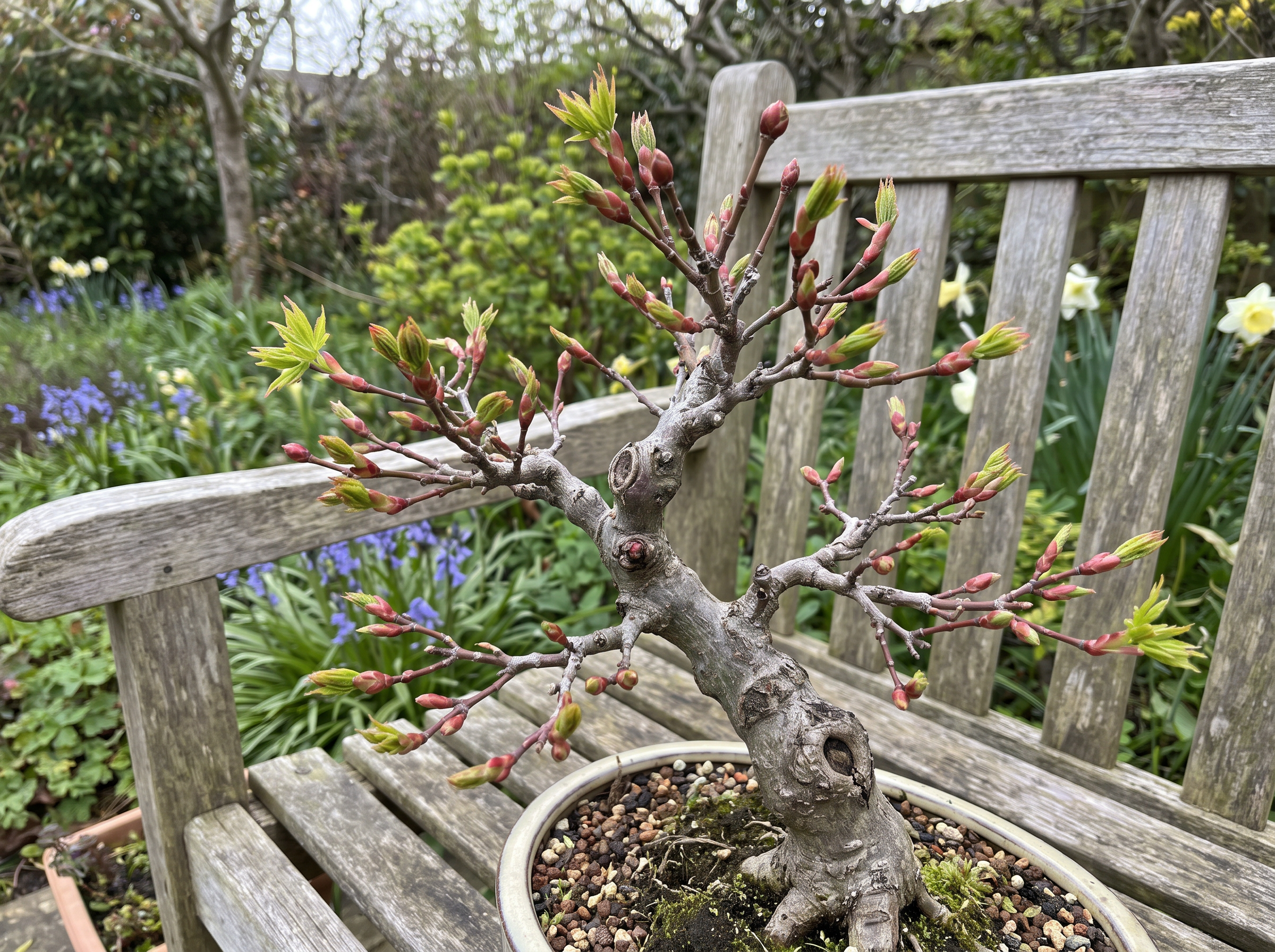
Every spring I get some version of the same message: winter's over, now what? And I get why it's confusing. Spring isn't one task, it's four or five overlapping ones, all with their own timing, and doing them in the wrong order causes more damage than doing any single one slightly wrong.
The trees don't all move at once either. A juniper that never really stopped growing over a mild winter is a different case from a deciduous maple sitting completely bare with tight buds. I treat spring less as a fixed calendar and more as a sequence I watch for on each tree individually, even though the rough order stays the same year to year.
This is a checklist, not a strict timetable. Your actual dates will shift with your climate and with how each species and each individual tree is behaving that year. Use it to know what's coming and in what order, then let the tree tell you when.
First, confirm the tree is actually waking up
Before doing anything else, look for real signs of active growth: swelling buds or the first hint of green at bud tips. On a juniper or pine that stayed semi-active all winter this is less obvious, so I go by the calendar and by local weather patterns instead. Don't treat a warm week in late winter as spring itself. A few mild days followed by a hard frost is common, and trees that get fooled into premature growth are the ones most likely to take frost damage.
Repot before growth gets too far along
For most temperate deciduous species, the repotting window is right as buds swell but before leaves fully open. Wait too long and the tree has already committed a lot of energy to leaf-out, which makes root work more stressful. Conifers often tolerate a slightly later window. This is the single task in spring most tied to a specific, narrow moment, so I prioritize it over everything else once a tree shows it's ready.
Hold off on full feeding until growth is truly underway
I don't feed the moment I see the first bud swell. I wait until new growth is visibly extending, leaves opening or needles pushing, and then start light, building up over a few weeks. A tree that was just repotted gets an even longer pause, usually a few weeks past when an unrepotted tree of the same species would start. Feeding too early doesn't speed anything up and can stress a root system that isn't ready to use it.
Structural pruning and wiring, before or right at bud break
Early spring, while branch structure is still visible on deciduous trees and before the canopy fills in, is a strong window for structural cuts and for wiring. This window applies mainly to deciduous trees, where the bare structure is easiest to read before leaves reopen it. Conifers and other species often have their own separate best windows for major structural work that don't line up with bud break the same way, so I treat this as a deciduous-specific rule rather than a blanket spring instruction. Once leaves are fully out, seeing the actual branch lines gets harder and wiring becomes more about the individual growing shoots than the overall silhouette. I try to get major structural decisions on deciduous trees done in this window rather than waiting.
Watch for the last frost before moving tender trees out
This applies mainly to tropical and subtropical species that spent winter indoors or under heated shelter, not to hardy outdoor species that overwintered outside. If you overwintered anything under cover, don't move it straight into full outdoor exposure the moment the weather turns pleasant. I check the local last-frost date for my area and build in a buffer, then acclimate gradually rather than making the shift in one day. New spring growth is more frost-sensitive than the hardened growth that survived winter, so a frost that wouldn't have touched the tree in February can genuinely damage it in April.
Increase watering checks as the season moves along
Watering frequency in spring should climb steadily, not jump straight from winter dormancy frequency to summer frequency. I check the soil more often as days lengthen and temperatures rise, adjusting as I go rather than switching to a new fixed schedule overnight. A repotted tree in fresh substrate also dries differently than it did in old, compacted soil, so the adjustment period matters there too.
Common questions
What's the very first thing I should do for my bonsai in spring?
Check for real signs of active growth before doing anything else, rather than acting on the calendar alone. Once you see genuine bud swell or new growth starting, that tells you the tree is ready to move through the rest of the spring sequence, starting with repotting if it's due.
Can I repot and prune at the same time in spring?
Many growers do combine them in the same session, since both fall in the same early window. That said, doing major root work and major structural pruning on the same visit is more stress at once than doing them separately, so on a weaker or older tree I sometimes spread them across a couple of weeks rather than stacking everything on one day. That's a personal precaution on my part, not a hard rule most growers follow.
How do I know if my bonsai survived winter?
Buds that are firm and show any swelling are a good sign. If you're unsure, a gentle scratch test on a small area of bark can reveal green cambium underneath, which means the branch is alive even if it looks dormant. Some species are genuinely slow to show visible spring activity, so give it real time before assuming the worst.
Is it too late to do spring tasks if my tree already has leaves out?
Repotting and structural pruning are riskier once leaves are fully open, since the tree has already spent energy on leaf-out and the branch structure is harder to see. It's not necessarily too late, but I'd be more conservative with root work at that point and wait for a better window if the task isn't urgent.
Should I fertilize before or after repotting in spring?
After, and not immediately after either. A freshly repotted tree needs time for its root system to start functioning normally again before it can make good use of fertilizer. I wait a few weeks past repotting, watching for clear new growth, before resuming feeding on that tree.
My tree's buds swelled early during a warm spell, then it got cold again. What now?
This happens most years somewhere. If a hard frost follows, check for blackened or mushy tissue on the swollen buds once temperatures moderate. Some damage may be limited to the outermost, most exposed buds, and many trees push secondary buds if the first ones are lost. Avoid cutting anything back immediately, wait to see what the tree does over the following weeks.
Do all my bonsai wake up at the same time in spring?
No. Species, individual tree vigor, and microclimate around each pot all affect timing, sometimes by weeks. I treat each tree on its own schedule rather than assuming that because one juniper is pushing new growth, the maple next to it should be too.
You might also like
General guidance based on 20+ years of practice. Every tree, climate, and year is different — when in doubt, ask us.