
Moving Bonsai Back Outside After Winter
The move back outside is really two decisions, when to start and how gradually to do it, and rushing either one undoes the good a mild winter shelter did.
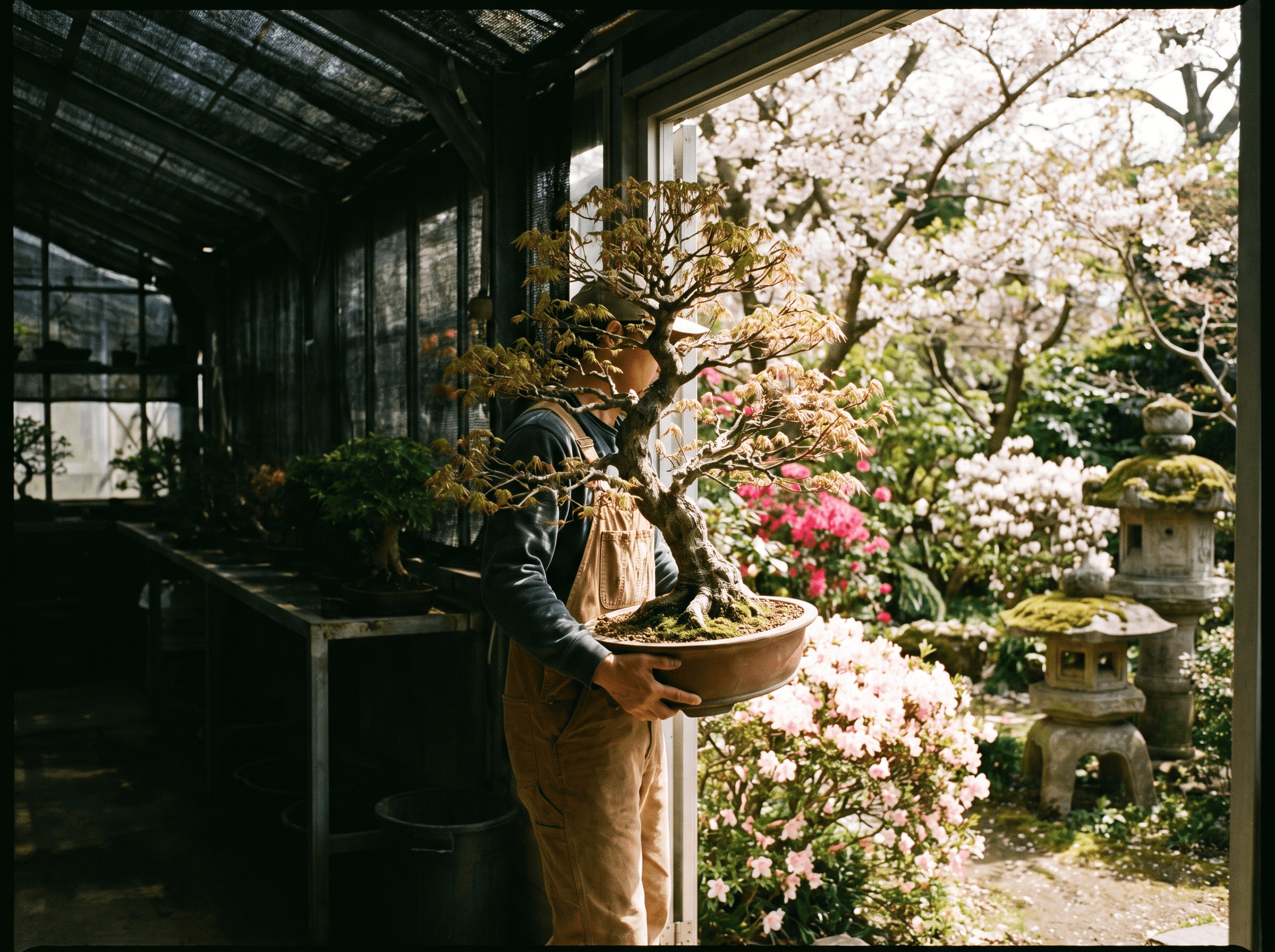
By late winter, people are itching to get their trees back into full outdoor life, and I get it, a season under cover feels like a long pause. But the move outside is worth treating as deliberately as bringing the trees in was, not as a single afternoon's chore once the weather feels nice.
A tree that spent winter in some form of shelter, a cold frame, an unheated garage, a protected corner against a wall, has adjusted to that environment. Full outdoor exposure again means real sun intensity, real temperature swings between day and night, and often more wind than the sheltered spot provided. That's a genuine shift for the tree, not a return to a status quo it never left.
I break this into two separate questions every spring: is it actually safe to move trees outside yet, given frost risk, and once it is safe, how do I get them there without shocking them. Both matter, and skipping either one causes a version of the same problem, avoidable stress right when the tree is trying to start its growing season.
Check the last frost date before committing outdoor species
Before moving any tender or borderline-hardy species fully outdoors for the season, I check the local last-frost date and build in a real buffer past it, since single-date averages hide a lot of year to year variation. Genuinely hardy, temperate outdoor bonsai often don't need to wait for that date at all, since they can come out of a cold frame or garage once the worst of winter has passed. What matters more at that point is growth stage: once buds open and fresh leaves appear, that new growth is vulnerable to even a light frost, so I keep protecting it a while longer even on trees that are otherwise back in their normal spot.
Don't jump straight into full sun
Once the frost risk has genuinely passed, I still don't move trees straight from winter shelter into the strongest spring sun exposure they'll get all year, particularly ones that spent winter indoors, in a garage, or somewhere else with noticeably lower light. Foliage and bark that adjusted to lower light over winter can scorch under a sudden jump to full intensity sun, especially on a clear day. I stage the move, partial shade for a week or two first, before full sun placement, giving the tree time to readjust its tolerance gradually rather than all at once.
Temperature swings matter as much as sun
Outdoor life brings real day-to-night temperature variation that a sheltered spot, especially something like a garage, largely buffered away. This swing itself is a stress a tree needs to readjust to, separate from sun exposure. For trees that came from a particularly buffered environment over winter, I sometimes give a few extra days in a spot that offers partial temperature protection before fully committing them to open outdoor placement, rather than treating sun acclimation and temperature acclimation as the same single step.
Watch for a final hard frost even after the move
Committing a tree to full outdoor placement doesn't mean the frost conversation is over, particularly for tender species. I keep watching overnight forecasts for a while after the move, ready to bring a tree back under cover or throw frost cloth over it if a late cold snap is forecast, rather than assuming that once a tree is outside it's outside for good regardless of what the weather does next.
Signs the move is going well versus poorly
A tree adjusting well to the move outside keeps pushing steady new growth without setbacks, and any minor initial stress, slight leaf curl or a touch of dullness in the first few days, usually settles on its own without further action needed. A tree that's struggling shows scorched or bleached patches on foliage that was fine before the move, or a stall in growth that follows shortly after the transition. If you see the second pattern, easing back to a slightly more sheltered spot for another stretch is usually the right correction rather than pushing through it.
Common questions
When is it actually safe to move my bonsai back outside for spring?
For tender or borderline-hardy species, once your local last-frost date has passed with a reasonable buffer, generally a week or two extra. Genuinely hardy, temperate outdoor bonsai can often come out of winter shelter earlier, but their fresh spring growth still needs protecting from a late frost even after that. Average frost dates hide real year to year variation, so I'd rather wait a bit longer than move a tender tree out too early.
Can I move my bonsai straight from a garage into full sun outdoors?
I wouldn't recommend it. Foliage adjusted to lower winter light can scorch under a sudden jump to full spring sun intensity. Stage the move through partial shade for a week or two first, then move to full sun placement once the tree has readjusted somewhat.
How long does the transition from winter shelter to full outdoor life take?
It varies with how sheltered the tree was and how mild or harsh the shift in conditions is for your setup, but staging through partial shade for a week or two before full sun is a reasonable starting point for a tree coming from a noticeably darker winter spot. Hardier trees coming from a bright cold frame or an already-outdoor sheltered corner often need much less staging.
Do I need to worry about frost even after I've moved my trees outside?
Yes, particularly for tender species. I keep watching overnight forecasts for a while after the move and I'm ready to bring a tree back under cover or use frost cloth if a late cold snap is forecast, rather than treating the move as the end of frost season.
How do I know if my bonsai is struggling with the move outside rather than adjusting normally?
A little initial leaf curl or dullness that settles on its own without further action is normal adjustment. Scorched or bleached patches on foliage that was previously fine, or a growth stall that follows the move, suggest the transition was too abrupt and the tree needs a step back to more sheltered conditions.
Do all species need the same gradual transition outside?
No, hardier species that tolerate a light frost and rapid light changes without much trouble need less careful staging than more tender or shade-adjusted species. I'm more relaxed about hardy trees and more deliberate about tender or slow-adjusting ones.
Should I repot my bonsai right when I move it back outside?
I'd separate the two if possible. Repotting has its own species-specific timing, often right as buds swell, and combining it with the stress of the outdoor transition on the same day is more than necessary at once. Where the timing overlaps naturally that's fine, but I don't force them together.
You might also like
General guidance based on 20+ years of practice. Every tree, climate, and year is different — when in doubt, ask us.