
Waking Your Bonsai Up from Winter Dormancy
A tree that spent winter sheltered from full sun and hard cold needs to be woken up gradually, not switched on all at once.
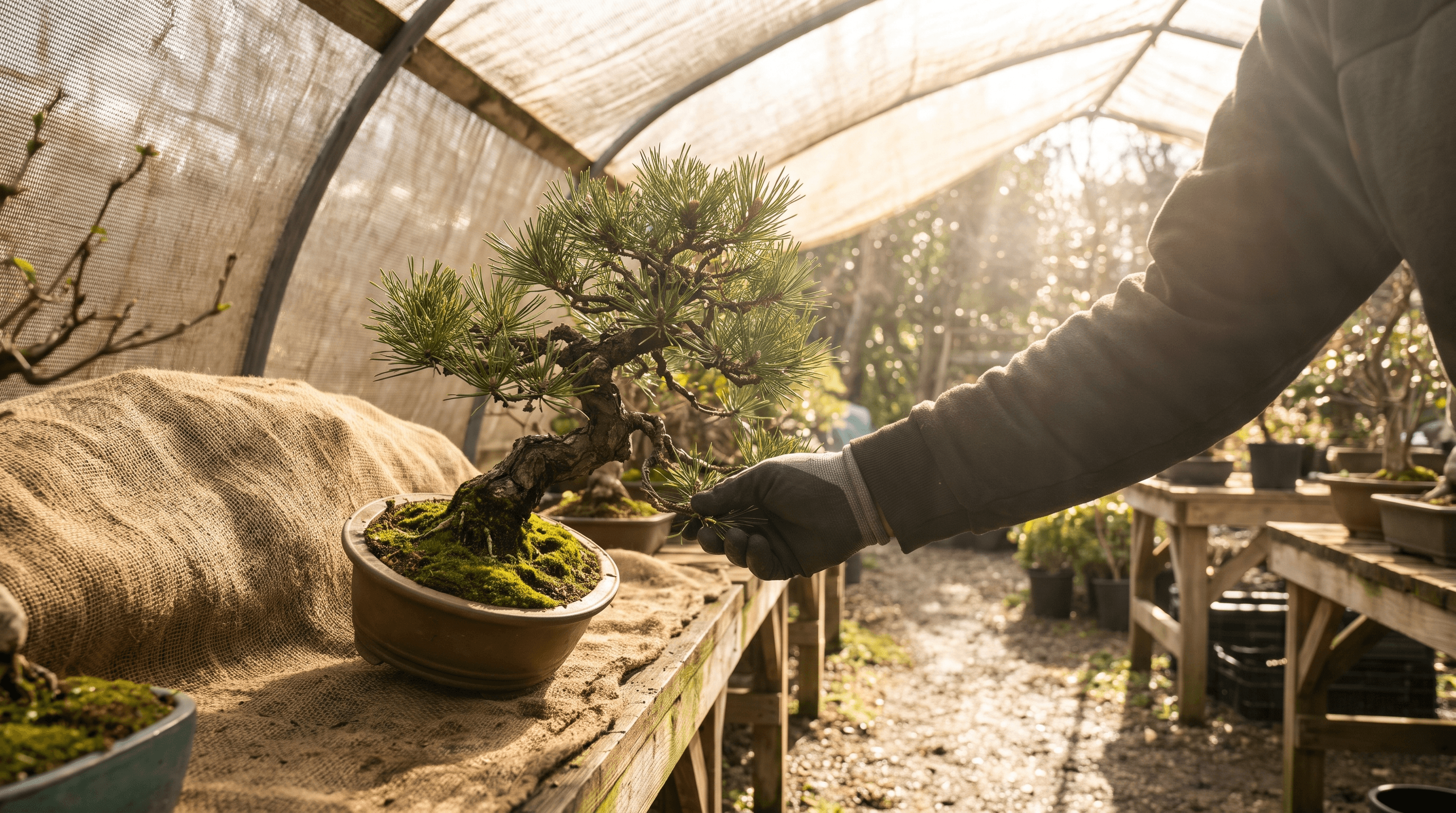
There's a version of spring enthusiasm I understand completely and still try to talk people out of every year: the urge to drag every tree straight out of winter storage and into full sun the first genuinely warm day. It feels like the right thing to do, and it usually isn't.
A tree that's been in a cold frame, a garage, or some other winter shelter has spent months out of direct strong light and out of the temperature swings that come with being fully outdoors. Its foliage, where it has any, and its whole physiology have adjusted to that sheltered state. Moving it straight into full spring sun and normal watering is a bigger jump than it looks like from the outside.
I treat the wake-up itself as a process with its own pace, separate from the other spring tasks. Get this part wrong and you can undo a tree that made it through winter just fine.
Why abrupt transitions cause problems
Foliage and bark that adjusted to lower light levels over winter can scorch when suddenly exposed to strong spring sun, especially on a clear day when light intensity climbs fast even though air temperature is still moderate. Roots that got used to a slower water uptake through winter can also be caught off guard by a sudden jump to full watering before the top growth has ramped up demand to match. Both problems are avoidable with a slower transition.
A gradual light and temperature reintroduction
I move trees out of winter shelter in stages, dappled or partial shade first, for a week or two, before full sun exposure. If the tree was somewhere genuinely cold-protected, like an unheated garage, I also give it a few days in a spot that buffers temperature swings before it faces a full range of outdoor day-to-night variation. It's not a long process, generally a couple of weeks total, but skipping it is where I see the most avoidable damage each spring.
Watering follows the same gradual logic
I don't jump straight from winter's reduced watering frequency to a full active-growth schedule the moment a tree comes out of shelter. I check soil moisture more often through this transition and let watering frequency climb as the tree's actual growth and water use pick up, rather than assuming it needs summer-level watering just because it's back outside.
Signs of a tree waking up well
Buds that are firm and starting to swell, any hint of green showing at the tips, and on conifers a slight loosening or fresh color to the foliage are all good signs of a tree moving into active growth normally. A gentle scratch test on a small area of bark, checking for green cambium underneath, is a reliable way to confirm life in a branch that still looks fully dormant.
Signs a tree didn't make it through winter
Buds that stay dry, shriveled, and don't respond to the scratch test with any green underneath, especially across multiple branches, are the harder signal. Bark that's gone papery or has separated from the wood underneath is another bad sign. I give a tree real time before concluding the worst though, some species and some individual trees are genuinely slow to show visible spring activity even when they're perfectly fine.
Common questions
How long should the transition out of winter shelter take?
I generally plan on a couple of weeks total, moving from partial shade to full sun in stages rather than all at once. The exact pace depends on how sheltered the tree was over winter and how quickly local weather is warming that particular year.
Can I move my bonsai straight from a garage into full outdoor sun?
I wouldn't. Foliage and bark that adjusted to lower light over winter can scorch under sudden strong sun. A staged transition through partial shade first gives the tree time to adjust without that risk.
How do I tell if a tree that still looks dormant died over winter?
A gentle scratch test on a small area of bark is the most reliable check. Green tissue underneath means the branch is alive even if it looks bare and inactive. Dry, brown tissue under the scratch, especially across several branches, is a worse sign, though I still give the tree extra time before giving up on it.
Should I increase watering as soon as I bring a tree back outside?
Not immediately to a full active schedule. I check soil moisture more frequently during the transition and let watering frequency climb gradually as the tree's actual growth picks up, rather than jumping straight from winter to summer watering frequency.
Why did my tree's leaves scorch right after I moved it outside?
This usually happens when foliage that adjusted to lower winter light gets hit with strong direct spring sun too abruptly. It's one of the most common mistakes I see with the wake-up transition, and it's avoidable by moving trees through partial shade first.
Do all species wake up from dormancy at the same pace?
No. Some species and even some individual trees are genuinely slower to show visible activity than others, without that being a problem. I judge each tree on its own signs rather than expecting every tree to look the same at the same point in spring.
Is it normal for buds to swell unevenly across one tree as it wakes up?
Yes, this is common and usually tied to branch vigor and light exposure differences within the same tree rather than being a sign of trouble. Buds on stronger, better-lit branches often move first, with weaker branches following behind.
You might also like
General guidance based on 20+ years of practice. Every tree, climate, and year is different — when in doubt, ask us.