
Signs Your Bonsai Didn't Survive Winter
Before you give up on a tree that looks dead in early spring, check more than one spot on it, because a single scratch test in the wrong place has convinced plenty of growers to throw out a tree that was actually still alive.
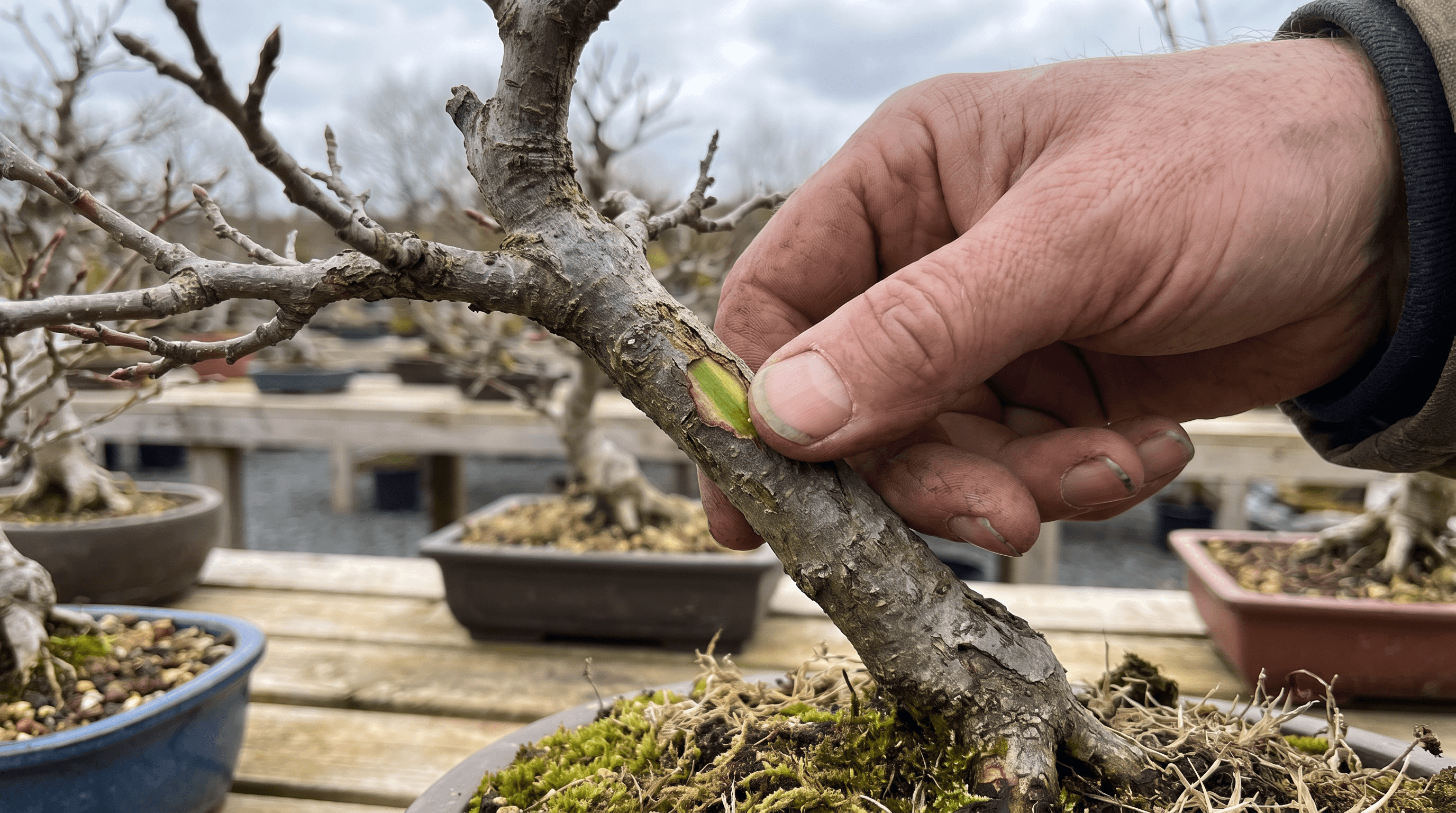
Late winter into early spring is when I get the most messages from worried growers, all some version of the same question. The tree looks bare, looks grey, looks lifeless, and nothing seems to be happening while everything else in the garden is waking up. Some of those trees really didn't make it. A good number of them did, and just haven't shown it yet, or got misread because of where the check happened to be done.
I've made this mistake myself early on, more than once. A branch looked completely dead near the tip, and I assumed the whole thing was gone without checking anywhere else on the tree. Turned out the lower trunk was very much alive, and that tree is still in my collection today, just with a different structure than it had before that particular winter.
So this is really about learning to check properly before deciding anything, and then having the patience to give a tree the time it actually needs to prove one way or the other, which is often longer than people expect. Exactly how long is normal, and exactly what counts as dead, varies by species and by your own climate, so treat what follows as a method rather than a fixed set of numbers.
The scratch test, done properly
A light scratch with a fingernail or the back of a knife blade through the outer bark, just enough to reveal the layer underneath, is the standard way to check if a branch is alive. Green or pale green tissue underneath means that section specifically is alive. Brown, dry, or crumbly tissue means that spot specifically isn't, not necessarily the whole tree. The mistake is stopping at one scratch and drawing a conclusion about the whole tree from it. I check multiple points, a spot near the tip, somewhere in the middle of a branch, and down near the trunk, because it's entirely possible for the outer, most exposed growth to have died back while the lower trunk and main structure are completely fine underneath. A gentle bend of a thin twig helps too, live wood tends to have a little flex while dead wood snaps cleanly and feels brittle, and swelling, live-looking buds are a useful secondary sign even before anything visibly opens. I keep each scratch small and don't repeat it on the same spot, since scratching more than necessary can wound thin bark on a tree that's already stressed.
Why the outer growth often dies before the core does
The thinnest, most exposed parts of a tree, branch tips and the youngest growth, are generally the least hardened and the most vulnerable to whatever caused the damage in the first place, whether that's a hard frost, prolonged dryness, or general winter stress. The trunk and main structural branches, being older and more established, generally tend to have more reserves and greater cold tolerance in their tissue, though this isn't an absolute rule for every species. This is exactly why checking only the tips gives a misleadingly bad picture, and why some trees that look completely finished from a distance turn out to have plenty of living wood once you check further down.
Species that look alarming but often aren't finished
Some species have a habit of looking genuinely dead through late winter and early spring in a way that spooks growers who aren't used to it, staying bare and grey looking well past when other trees in the same collection are budding. I've learned over the years which of my own trees do this every single year and which don't, and it's a good reason to keep notes on your own collection's normal timing rather than comparing every tree to its neighbor. A tree that looks dead by a general standard but has consistently been slow to show growth in past years deserves more patience than one that's genuinely behaving differently from its own usual pattern.
Resprouting from what looks like dead wood
One of the more surprising things about bonsai, especially on hardier deciduous species, is how often a tree resprouts from a point that looked completely lifeless, sometimes low on the trunk or right at the base, even when the upper structure genuinely didn't make it through winter. Conifers are generally less likely to resprout this way from old wood once a section has died, so I don't count on it as much with pines or junipers. I've seen deciduous trees that lost their entire top come back from dormant buds near the base months later, effectively giving you a new tree to work with rather than a total loss. This is part of why I hold off on any drastic decision, cutting the tree back hard or discarding it entirely, until well into spring, giving those dormant buds real time to show themselves if they're going to.
When it's genuinely time to accept the loss
Patience has a limit, and there is a point where continuing to wait isn't doing the tree, or you, any favors. If a scratch test at multiple points across the whole tree, including low on the trunk and at the root collar, consistently comes back brown and dry well into a spring where the rest of your collection is clearly growing, and there's been no resprouting from anywhere on the tree after a reasonable stretch of warm, active weather, that's a fairly reliable sign the tree didn't make it. How long that takes varies by species, by how mild or harsh your own climate runs, and by that particular tree's normal timing in past years, so there's no single week count that applies everywhere. I'd rather confirm that properly with a thorough check across the whole structure than assume it from one bad looking branch in February.
Common questions
How do I check if my bonsai survived winter?
A scratch test is the standard method, lightly scratching through the outer bark with a fingernail or knife to reveal the tissue underneath. Green means that spot is alive, brown and dry means it isn't. A gentle flex of a thin twig, checking whether it bends slightly or snaps dry and brittle, and looking for buds that are swelling rather than shriveled, are useful secondary checks. Check multiple points across the tree, not just one branch tip, before drawing any conclusion.
Why does my bonsai look dead but might still be alive?
The most exposed, thinnest growth, like branch tips, often dies back before the more established trunk and main structure do, since it's less hardened against cold and stress. A tree can look alarming from a distance while still having plenty of living wood lower down or in the main trunk.
How long should I wait before giving up on a bonsai after winter?
Well into spring, generally until the rest of your collection is clearly showing active growth and there's been a real stretch of warm weather for dormant buds to respond to. Some species are naturally slow to show visible spring activity, so comparing timelines across your whole collection rather than judging one tree in isolation helps set realistic expectations. There's no fixed week count that applies to every species or climate, so use your own collection's typical timing as the real benchmark.
Can a bonsai come back from what looks like completely dead wood?
Yes, it happens more often than people expect, particularly on hardier deciduous species that can resprout from dormant buds low on the trunk or near the base, even when the upper structure didn't survive. Conifers are less likely to resprout from old wood this way, so I'm more cautious about waiting on a pine or juniper that shows no green anywhere. This is a big part of why patience matters before making any drastic decision about a deciduous tree.
Should I cut back branches that look dead in late winter?
I'd hold off until spring growth clarifies the picture. Cutting based on how a branch looks in February risks removing wood that's actually still alive, since visible signs of life on a dormant tree can take real time to show, especially after a stressful winter.
What does it mean if the scratch test shows brown at every point I check?
If multiple points across the whole tree, including low on the trunk and near the root collar, consistently come back brown and dry well into spring while the rest of your collection is actively growing, that's a fairly reliable sign the tree didn't survive. A single brown result on one branch tip isn't enough on its own to reach that conclusion.
Is it normal for some bonsai species to look dead longer than others?
Yes, some species are just naturally slower to show visible spring activity than others, and it's worth learning your own trees' typical timing rather than comparing every tree against its neighbors in the collection. A tree that's consistently been a late starter in past years deserves extra patience before you assume the worst.
You might also like
General guidance based on 20+ years of practice. Every tree, climate, and year is different — when in doubt, ask us.