
Cracked or splitting bark on a bonsai
A crack in your bonsai's bark can be completely normal on some species and a real problem on others, so it's worth telling the two apart before doing anything.
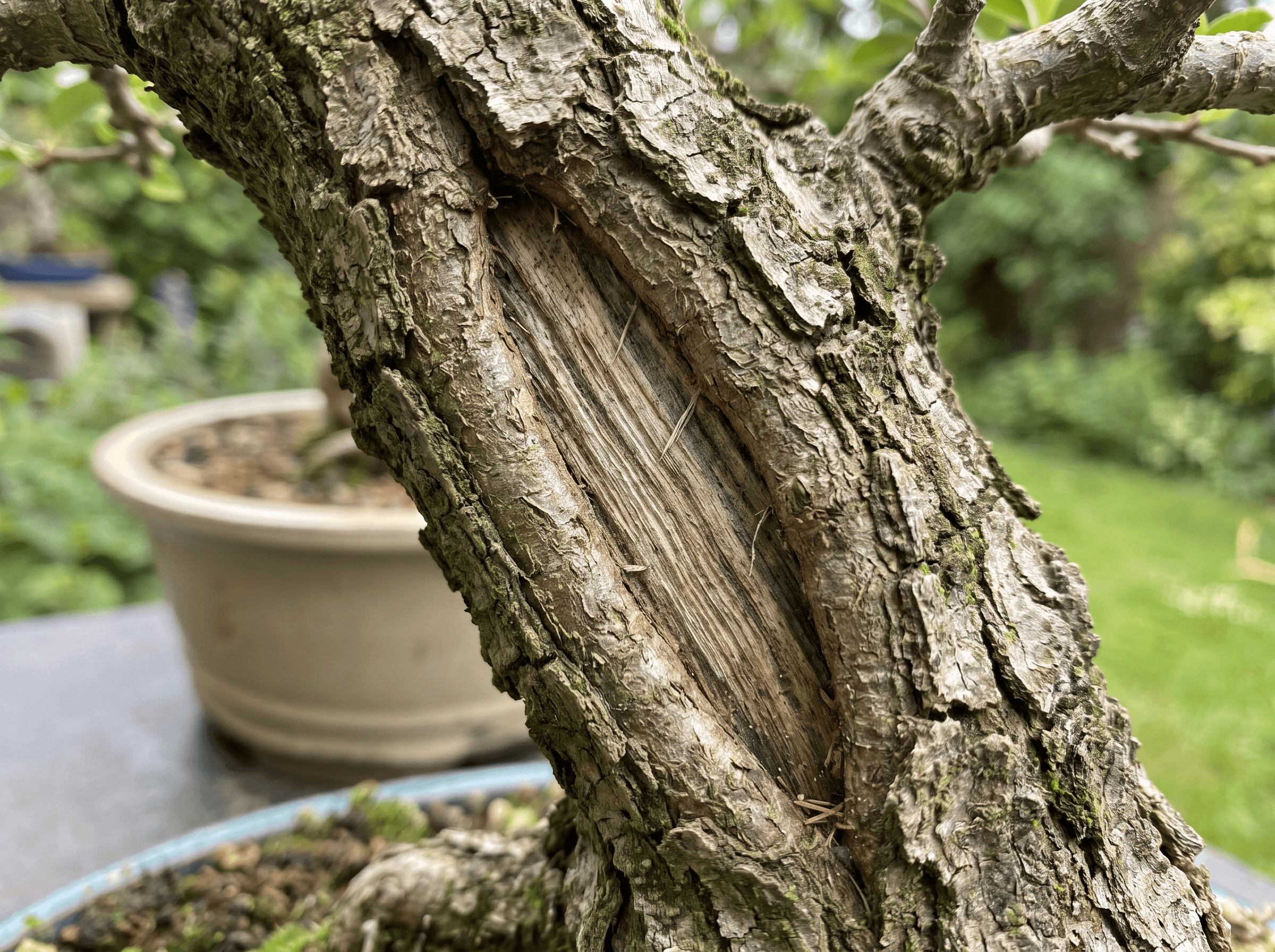
Bonsai bark cracking sends a lot of owners into a bit of a panic, and I understand why. It looks dramatic, especially on a trunk you've spent years developing. But the truth is that bark splits for a whole range of reasons, and only some of them mean trouble. Before you reach for a sealant or start worrying about the tree dying, you need to work out which situation you're actually looking at.
Some species are more or less built for this look. Black pine and Scots pine develop deeply plated, fissured bark as they age, and growers specifically seek out old field-grown or collected material for exactly that texture. Junipers do something similar, especially older collected trees, where the bark splits into long ridges that read as genuine age on the trunk. On these species a cracked, rugged surface isn't damage, it's one of the reasons the tree is valuable in the first place. If you bought a black pine partly for its bark character and then panic the first time a new fissure opens up, you're working against the tree's own design rather than with it.
The way I tell the two situations apart is by looking at what's underneath and around the crack, not just the crack itself. Run a finger along it. If it follows the trunk's natural vertical growth lines, if the wood exposed generally looks pale and firm rather than dark or soft (bearing in mind this varies a bit by species and by how fresh the crack is), and if the tree has been putting on real growth recently, you're almost certainly looking at normal bark behaviour. If the crack looks torn rather than split, if it appeared suddenly after a cold night, or if there's an obvious knock or scrape behind it, then you're dealing with an actual injury that needs some attention while it heals.
Likely causes
Natural bark texture and rapid trunk thickening
How to tell: The crack runs along the trunk's natural vertical lines rather than tearing across them, and the wood you can see underneath generally looks pale, dry and firm rather than soft or discoloured, though the exact appearance varies somewhat by species. This usually shows up on a tree that's been growing hard, often after a season of vigorous growth or a stretch of heavy feeding, and the rest of the tree looks perfectly healthy.
The fix: Leave it alone. On species like black pine, Scots pine and many junipers, this kind of fissuring is simply how the bark matures, and pushing rapid girth increase during development will always produce some surface splitting because the outer bark can't stretch as fast as the wood growing beneath it. Don't seal it, don't wrap it, and don't treat it as a wound needing care. If you want fewer new cracks next season, ease off the aggressive feeding a little and let the trunk thicken more gradually.
Frost damage
How to tell: The crack appeared after a hard, sudden frost, usually running vertically along the trunk or a main branch, sometimes with a strip of bark visibly lifted or peeling away from the wood underneath. It's most common on thin-barked species and on trees moved outdoors too early in spring or caught by an unexpected cold snap.
The fix: There isn't much you can do for the crack itself once it's happened, so put your effort into stopping it getting worse. Avoid picking at bark that's still firmly attached, even if it looks untidy, since disturbing healthy tissue right next to a wound only gives it more to repair. Don't let water sit in any pocket or fold created by the split, and check the area every week or two for signs of dieback in the branch or section above the crack, since that's the real risk with frost splits. If a section of bark has actually separated and died, cut it back to healthy wood with a clean blade rather than leaving a ragged, half-attached flap that invites rot or pests. Going forward, protect the tree from sudden temperature drops with a cold frame, some mulch around the pot, or simply a more sheltered spot on nights when a hard frost is forecast.
Physical injury
How to tell: There's an obvious mechanical cause behind it: the pot got knocked over, the trunk caught on a doorframe while being carried in for winter, a branch clipped by a tool or piece of furniture. The bark at the crack looks torn or gouged rather than cleanly split, and the edges are often ragged.
The fix: Clean up the wound properly rather than leaving it to sort itself out. Use a sharp, sterilised blade to trim any loose or torn bark back to where it's still firmly attached, which gives the callus tissue a clean line to grow from instead of an irregular tear. Once the wound is clean, dry and free of any dirty, rotting or already-dead tissue, many bonsai growers apply a thin layer of bonsai cut paste over a larger wound or any exposed cambium, particularly on deciduous species where a neat callus matters most; on conifers, or on an area you intend to develop as deadwood, treatment can differ, so it's worth checking what's usual for your species before sealing. Keep the tree out of harsh sun and wind while it recovers, and don't wire or work that part of the trunk again until you see new bark forming at the edges.
How to prevent it
Prevention here mostly comes down to knowing your species and guarding against the two real triggers, cold and impact. Learn whether cracked, plated bark is a natural trait of what you're growing. Black pines, Scots pines and many junipers all do this as a matter of course, so once you know that, you can stop treating every new fissure as an emergency. For the trees where cracking genuinely is damage, the single biggest cause I see is frost hitting a tree that was moved outside too early or left unprotected during a cold snap, so watch the forecast and have a sheltered spot or cold frame ready before temperatures drop hard. The second cause is plain carelessness: pots knocked off benches, trunks caught on doorways, tools leaned against a trunk and forgotten. None of that takes much to prevent, it just means paying attention to where the tree sits and how it gets handled when it's moved.
Common questions
Should I seal a bark crack?
Generally only for a genuine injury, not for a natural growth crack on a species that develops rugged bark as a feature, since sealing that kind of crack does nothing useful. For an actual wound, clean it first and make sure it's dry and free of any dirty or dead tissue, then many growers apply a thin layer of bonsai cut paste over a larger cut or exposed cambium, especially on deciduous trees. Conifers and deadwood areas are often treated differently, so it's worth checking what's standard for your species before you reach for the paste.
Which bonsai species are known for naturally rugged or cracked bark?
Black pine and Scots pine are the classic examples, developing deeply plated, fissured bark as they mature that growers specifically value. Many junipers, particularly older collected material, develop similarly craggy bark, and it's one of the traits that makes an aged specimen look genuinely old rather than just tall.
How can I tell if a bark crack is getting worse?
Check it every week or two rather than looking once and forgetting about it. Watch for the exposed wood turning dark, soft or wet, for the crack lengthening or widening, or for any wilting, dieback or reduced growth in the branch above it. A crack that stays static, with wood underneath that still looks pale and firm, isn't something to worry about.
Can wiring cause bark cracking?
Yes, if the wire is applied too tightly or left on too long, it can bite into the bark and cause it to split or scar as the branch thickens underneath. Check wired branches regularly, especially during a strong growing season, and remove or rewire before you see the wire starting to dig in.
Can sunscald cause bark splitting?
It can, particularly on thin-barked species that get moved suddenly from shade into strong direct sun, such as after a hard repot or a change in the tree's position on the bench. The bark on the sun-facing side can crack, discolour or die back, so introduce a tree to more light gradually rather than all at once.
Does a bark crack mean the tree is dying?
Not on its own. Most cracks, especially the ones that follow natural growth lines on species prone to rugged bark, are cosmetic, and the tree carries on growing normally. It only becomes serious if the crack exposes dead or rotting wood, keeps spreading, or is followed by dieback in the parts of the tree above it, at which point it's worth pruning back to healthy wood.
You might also like
General guidance based on 20+ years of practice. Every tree is different — when in doubt, ask us.