
Common Bonsai Wiring Mistakes to Avoid
Almost every wiring problem I've been asked to fix over the years comes down to one of a handful of habits, and most of them are easy to correct once you know to watch for them.
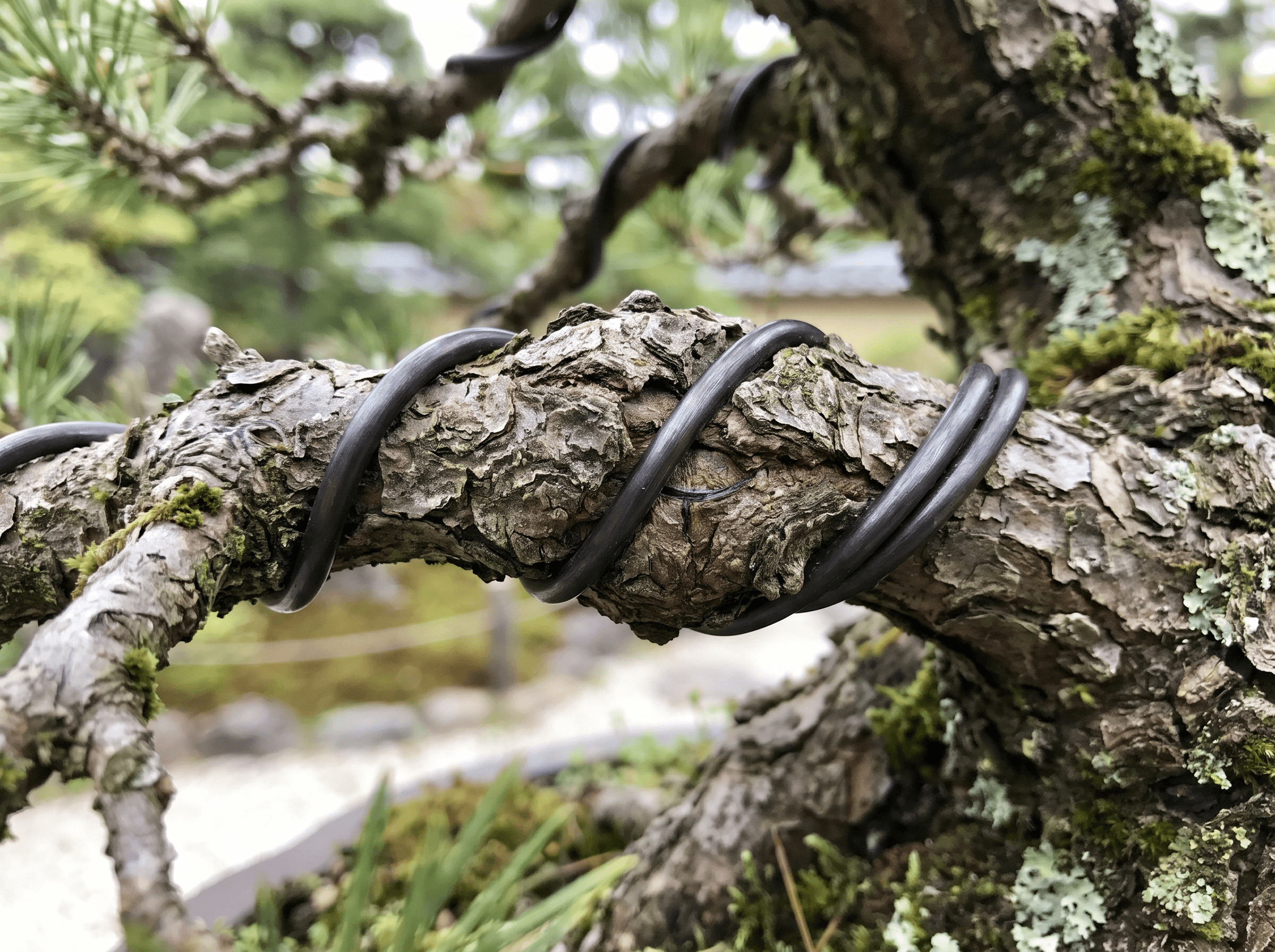
I run a wiring session most weekends at the nursery, and after twenty-odd years of watching people learn this skill, the mistakes are remarkably consistent. New growers worry about the exotic stuff, the fear of somehow ruining the tree in some dramatic way, when really the problems that show up again and again are much more mundane. Wire applied too loosely. Wire applied too tightly. Coils crossing over each other in a mess instead of running in a clean line. Branches checked once and then forgotten about for six months.
None of these mistakes are unique to beginners either. I still catch myself wrapping a coil too loosely when I'm rushing, or leaving a branch unchecked longer than I should during a busy stretch at the nursery. The difference between an experienced grower and someone new isn't that the mistakes stop happening, it's that you start recognizing them faster and the consequences are smaller because you catch them early.
Here are the ones I see most often, and what tends to cause each of them.
Wrapping too loose or too tight
Wire that's wound loosely around the branch doesn't hold the bend, it just sits there looking tidy while the branch slowly moves back toward its original position underneath it. This usually happens when someone is being overly cautious, worried about damaging the bark, and ends up applying wire that has no real grip. The opposite mistake, wrapping too tightly, damages the bark immediately rather than over time, sometimes visibly denting or bruising it the moment the coil goes on. The right tension sits snugly against the bark without pinching it, firm enough that the wire and branch move together rather than the wire sliding loosely around a branch that isn't actually being held.
Messy, crossing coils
Wire should run in a clean, even spiral along the branch, each coil roughly parallel to the last at a consistent angle, usually somewhere around 45 degrees. When coils cross over each other or bunch up unevenly, pressure along the branch can end up uneven, tight in some spots and loose in others, plus it looks rough and makes it harder to judge how the branch is actually being held. This mistake is almost always a symptom of going too fast, trying to get a branch wired quickly rather than working the coil steadily down its length. Slowing down and paying attention to the spacing as you go fixes it almost immediately.
Forgetting to check wired branches
This is probably the single most common mistake I see, and it's not really a technique problem at all, it's a habit problem. Wire goes on, the tree looks great, and then life gets busy and nobody looks at that branch again until the wire has cut a visible groove into the bark. The fix isn't complicated, it's just building a routine of walking the bench regularly and actually checking wired material rather than assuming it'll be fine until you happen to notice.
Bending too fast or too forcefully
Once the wire is on, the temptation is to bend the branch into its final position right away, especially on a tree you're excited about. Brittle species and older, stiffer wood don't tolerate that well, and forcing a bend rather than working it gradually is how branches snap. The safer approach is a slow, steady bend, moving the branch in stages rather than one aggressive push, and stopping the moment you feel real resistance rather than pushing through it. If a branch needs more movement than it wants to give safely in one session, that's exactly the situation guy wires are built for, letting you apply the rest of the bend gradually over days or weeks instead of forcing it all at once.
Using the wrong gauge for the branch
This ties back to almost every other mistake on this list. Wire that's too thin for the branch won't hold, so it either gets left loose, which does nothing, or wrapped extra tight to compensate, which damages the bark. Wire that's too thick fights you the whole way through, tempting you to force the bend and risking a snapped branch. A commonly used starting point is wire that's roughly a third of the branch's thickness, thick enough to hold the bend without excessive force, thin enough not to fight you the whole way through. It's a starting point rather than a fixed rule, since wood hardness and species vary, but taking a moment to actually size the wire to the branch before starting, rather than reaching for whatever roll is closest, prevents a surprising number of the other problems on this list before they happen.
Common questions
How do I know if my wire is too loose?
If you can rotate the wire around the branch without much resistance, or if the branch moves independently of the wire when you nudge it gently, the wire isn't gripping tightly enough to hold the bend. It should sit snugly against the bark, not loosely draped over it.
How tight should bonsai wire be?
Snug enough that the wire and the branch move together as one unit, without a gap between them, but not so tight that it's visibly pinching or denting the bark the moment it's applied. It's a narrower window than people expect, which is part of why it takes practice to get a feel for it.
What angle should wire coils be wound at?
Roughly 45 degrees is the usual guideline, giving an even spiral that provides consistent support along the branch's length. Going flatter or steeper than that tends to either bunch the coils together or spread them too far apart to hold evenly.
Why did my branch snap while I was bending it?
Almost always either the bend was attempted too quickly and forcefully rather than gradually, or the wood was more brittle than expected for the amount of movement being asked of it. Working slowly and stopping at the first sign of real resistance prevents most of these breaks.
How often should I check on branches I've wired?
At minimum weekly during active growth, and every few days on vigorous, thin-barked, young, tropical, or deciduous material, since wire can bite into fast-growing branches surprisingly quickly. Building this into a routine rather than relying on remembering is what actually prevents wire from being left on too long.
Is it better to use slightly too thick wire or slightly too thin?
Neither is ideal. If you end up with wire that's too thin, the better fix is a second wire alongside the first, rewiring with the correct gauge, or a guy wire for extra holding power, not compensating by wrapping it tighter, since that just risks the same bark damage tight wire causes without actually gaining the grip you need. Oversized wire is the riskier direction to guess wrong in, since it tempts you to force the bend and risks snapping the branch. The better fix either way is simply sizing it correctly to begin with.
Can crossed or messy coils be fixed without removing the wire?
Sometimes minor spacing issues can be adjusted slightly by hand, but genuinely crossed or bunched coils usually need to be removed and reapplied cleanly. It's worth taking the extra few minutes to redo it properly rather than leaving uneven pressure on the branch.
You might also like
General guidance based on 20+ years of practice. Every tree and every climate is different — when in doubt, ask us.